In short: when changing phones with an eSIM, the key is not to delete the profile from the old phone until you confirm it works on the new one. Between recent iPhones, it transfers wirelessly in a couple of minutes; between different brands or from Android, you need to reinstall it with a new QR code from the operator. Travel eSIMs, on the other hand, are almost never transferable.
You get a new phone and a question arises: with an eSIM, changing phones is not as simple as taking out a card and inserting it into the new one, because the eSIM is a virtual chip soldered to the phone. The good news is that transferring it to a new phone is quick if you know the method. In this guide, we'll see how to do it between iPhones, between Androids, and from one brand to another, and what to do if something goes wrong.
Why an eSIM doesn't change like a physical SIM
An eSIM is a digital profile stored on a chip integrated into the phone, not a removable card. That's why you can't "take it out" of the old phone and "put it into" the new one: you have to transfer or reinstall the profile, and the method depends on the phones and the operator.
This changes the logic compared to the traditional SIM card. With a physical SIM, it was enough to move the plastic; with an eSIM, the profile can be transferred wirelessly (on compatible devices) or require reinstallation from scratch. The key difference is that a normal operator eSIM (your Spanish plan) can usually be migrated, while a travel eSIM is usually tied to a single device for security. If you're still confused about the concept, review the basics in what an eSIM is.

Before you start: check this
Changing phones with an eSIM almost always goes well if you take two minutes to check four things. Skipping this step is one of the most common causes of problems, especially if you're going to format or sell the old phone.
- That the new phone is compatible with eSIM (most iPhones from XS and many modern Androids are).
- Do not delete or reset the old phone until you confirm that the eSIM works on the new one: if you delete the profile, you may have to request a new one.
- Have both phones charged and, if possible, near each other with WiFi for wireless transfer.
- Check who the eSIM is with: whether it's your Spanish operator or a travel eSIM, because the method changes.
That last distinction is the most important. For your Spanish plan eSIM, you can almost always transfer it yourself or with a call to the operator. For a travel eSIM, the usual thing is to reinstall the profile if it still has data or buy a new one for the next trip.
Transferring an eSIM between two iPhones
If you're changing from one iPhone to another iPhone, Apple makes it easy. During the initial setup of the new iPhone, or later from Settings, you can use the eSIM Quick Transfer: bring the two phones close together, follow the on-screen instructions, and the profile moves wirelessly without scanning any QR code.
If you have already set up the new iPhone, go to Settings, Mobile Data (or Cellular), Add eSIM, and choose to transfer from a nearby iPhone. The system guides you step by step, and the profile automatically stops working on the old one. This method is the most convenient when both are recent iPhones and are updated. If your operator does not support quick transfer, you will have to reactivate the eSIM with a new QR code provided by them. If you want to better understand the difference with traditional roaming before deciding, take a look at eSIM vs. roaming.
Warning: quick transfer between iPhones only moves the eSIM profile, not your data or apps. For that, use iCloud backup or normal iPhone migration; these are separate processes that should not be mixed.

Transferring it on Android or between different brands
On Android, the landscape is more varied because each manufacturer implements eSIM in its own way. Some Google Pixel and recent Samsung phones offer wireless transfer between devices of the same brand, but it's not as universal as on iPhone.
If you change from Android to Android of a different brand, or from iPhone to Android (or vice versa), it's common for there to be no direct transfer: you'll have to reinstall the eSIM on the new phone. For an operator eSIM, that means requesting a new QR code (often free) to reactivate your line. For a travel eSIM with remaining data, contact the provider to have the profile reissued. The rule of thumb: between different brands, expect to reinstall instead of transfer. If something doesn't start, the general guide on how to install an eSIM covers the process from scratch on any phone.
Table: method according to your case
To avoid getting lost, this table summarizes which method applies depending on where you're coming from and where you're going. The type of eSIM (operator vs. travel) is as important as the phones.
| From / To | Likely Method | Needs |
|---|---|---|
| iPhone to iPhone | Wireless Quick Transfer | Both close, updated, WiFi |
| Samsung to Samsung / Pixel to Pixel | Brand-specific transfer (if available) | Compatible and updated models |
| Android to another brand / iPhone to Android | Reinstall with new QR | Operator's QR or provider's re-issuance |
| Travel eSIM (any case) | Reinstall or buy new | Contact provider if data remains |
As you can see, between iPhones everything is a breeze; as soon as you mix brands, you almost always have to reinstall. It's not a problem, just one more step. If your travel eSIM has already expired, don't waste time trying to transfer it: buy a new one for the next destination, for example an eSIM for Europe depending on where you go.
Frequent errors and how to avoid them
Most problems when changing phones with an eSIM are not technical failures, but haste. With a little order, the process is painless and you don't lose your line or your data.
The most costly mistake is to reset or sell the old phone too soon: if you delete the profile without having transferred it, you may need a new QR code from the operator to recover your number. The second is to forget that changing the eSIM does not migrate your contacts or your apps: that's what the backup is for, which is a separate process. And the third, to take for granted that a travel eSIM moves like the operator's: many are tied to a single device and the easiest thing is to buy a new one for the next trip. If your number is what worries you about keeping, the good news is that it lives on the operator's line, not on the chip: as long as you don't delete the profile without having confirmed it on the new phone first, there's no real risk of losing it.
If changing phones catches you about to travel
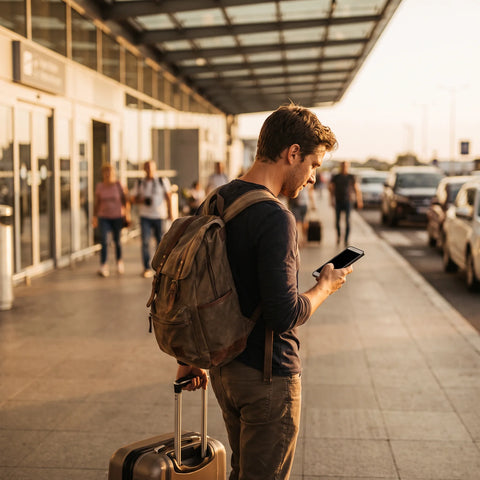
The worst time to discover that your eSIM hasn't transferred correctly is at the boarding gate or, worse, already landed without Wi-Fi. If you're going to get a new phone just before a trip, make the change at home, with plenty of time and stable Wi-Fi, never the night before with your suitcase half-packed.
If your previous travel eSIM still had data when you changed devices, don't give up on it right away: write to provider support before you leave, not when you're already at your destination relying on that same data to communicate. At PuraSIM, for example, 24/7 email and WhatsApp support is designed precisely to resolve these kinds of issues before the trip starts, not in the middle of it.
The destination also matters when calculating how much leeway to give yourself. If you're going to Machu Picchu, coverage on the mountain route is scarce or non-existent, so confirm that the eSIM works on the new phone before leaving Cusco, not when you're already climbing without a signal to fix anything. If the trip is to Seoul or Busan, installation usually goes smoothly because coverage is excellent, but it's a good idea to have the profile active before getting on the plane: Incheon Airport has good Wi-Fi in case you forgot to do it at home. And if the flight is very long, more than twenty hours with layovers, arriving with your phone already configured saves you from wrestling with settings when all you want to do is sleep.
Practical rule: change phones and test the eSIM at least one day before leaving home, never on the same day of the flight. If something goes wrong, you still have time to resolve it calmly instead of with the boarding gate about to close.
Myths and what almost no one tells you
Several half-truths circulate about eSIM changes that only cause unnecessary scares. Let's debunk them one by one.
Myth: "If it doesn't transfer, I've lost my line forever." False. Your Spanish operator's eSIM is associated with your number and your contract, not the phone's chip. If the profile doesn't transfer to the new device, a call or message to the operator is enough for them to reissue a QR code and reactivate the same line in minutes.
Myth: "All eSIMs behave the same across brands." Not true. Each manufacturer implements its own system, and some operators only allow reissuing the QR from their app or by going to a physical store, not by phone. Before changing phones, check your operator's app to see if you can generate the code yourself; it will save you a queue.
One thing almost no one tells you: if you have more than one eSIM installed on your old phone (your Spanish line plus a travel eSIM you use occasionally), quick transfer between iPhones usually only moves the main line. The others are left behind and have to be reinstalled or requested again one by one; don't assume that "everything has moved" just because the main number is already working.
It's also worth knowing that factory resetting your phone does not immediately delete the eSIM profile from the operator's servers: the number may remain reserved for a while. If you're going to sell or give away your old phone, delete the eSIM manually from Settings before the reset, don't rely on formatting to do it for you; this way you prevent the new owner from seeing remnants of your line or your operator taking time to free up the number for the next QR.
And one last thing: if you buy a new phone in another country or as an import, check that it's not "carrier-locked," because some models sold outside the EU limit which eSIMs from other operators can be installed. This is more common than it seems for phones bought outside Europe.
That said, if your new phone arrives just before a long weekend or a short trip to Europe with your usual Spanish plan, don't buy anything new: your EU roaming already covers you just like at home, and complicating things with a travel eSIM for two days isn't worth it. Save that option for trips outside the EU or longer stays, where the difference is really noticeable. If you want to better understand when one thing or another is convenient, compare international SIM vs. eSIM or what data roaming is.
Frequently asked questions
Can I transfer my eSIM to another phone myself?
Between two recent iPhones, yes: quick transfer moves the profile wirelessly in a couple of minutes. Between different brands or from Android, you will usually have to reinstall the eSIM with a new QR code from the operator. It's simple, but varies depending on the devices.
Will I lose my number when changing phones with an eSIM?
No, as long as you don't delete the profile from the old phone before reactivating it on the new one. Your number is linked to the operator's line, not to the physical chip. If you accidentally delete the eSIM, your operator can reissue a QR code to recover the same number.
Are my photos and apps transferred when I move the eSIM?
No. Transferring the eSIM only moves the data and voice line, not your content. To transfer photos, contacts, and apps to the new phone, you must use a backup (iCloud, Google, or the manufacturer's tool). These are two different processes that should be done separately.
What happens to my travel eSIM if I change phones in the middle of a trip?
It depends on the provider. Many travel eSIMs are tied to a single device for security, so they may not transfer. If you still have data left, contact the provider's support; otherwise, it's usually more practical to buy a new eSIM for the new phone.
Do I need internet to transfer the eSIM to the new phone?
Yes, almost always. The transfer or reinstallation of the profile requires a connection, either via WiFi or through the other phone's data. That's why it's advisable to make the change at home with WiFi before a trip, not at the airport in a rush.
Can I have two active eSIMs at the same time on the same phone?
It depends on the model. Recent iPhones and Androids that support eSIM allow saving multiple profiles, but usually only one or two are active for data at the same time (dual SIM). When changing phones, review each profile separately: quick transfer does not always move all saved lines, only the primary one.
What do I do if my operator doesn't offer quick eSIM transfer?
Request a new QR code from the operator's app or website, or by calling customer service; it's usually free and takes a few minutes. Scan it from the new phone in Settings, Mobile Data, Add eSIM, and the line will be active without losing the number.
Conclusion
Changing phones with an eSIM is easy if you follow the order: check compatibility, don't delete the old one until confirmed, and use quick transfer between iPhones or reinstall with a QR between different brands. Remember that the eSIM moves your line, not your photos. If your eSIM was for travel, sometimes starting from scratch is the most convenient: explore our plans for your next destination and arrive with data from minute one.