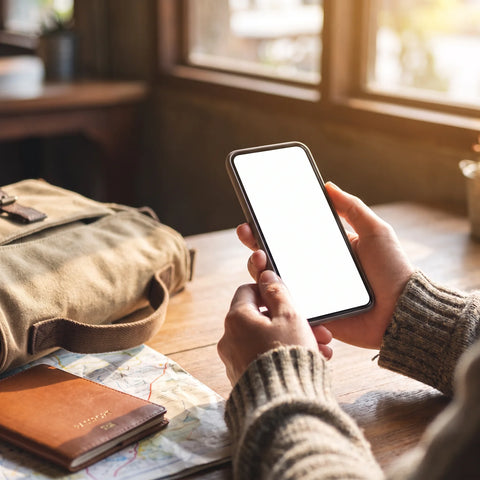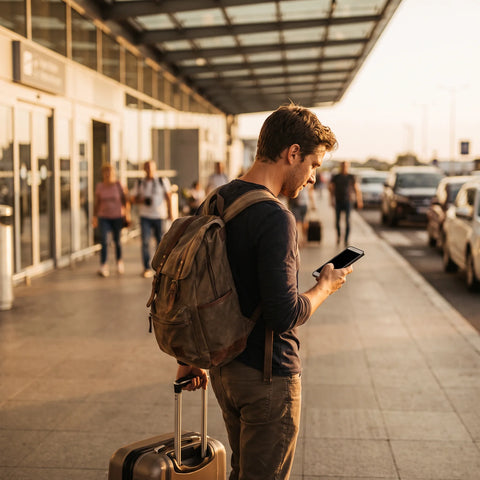
In short: it's best to buy your eSIM before you travel: install it at home using Wi-Fi, without rushing, and just activate data when you land. Buying it at your destination only makes sense if you're still unsure about your itinerary or how many days you'll be away. The purchase doesn't consume data until you connect once in the country.
Before or at destination: the quick answer
Buy your eSIM before you travel. Install it at home using Wi-Fi, without rushing, check that your phone recognizes it, and when you land, simply activate data roaming to be connected in seconds. Buying it at your destination only makes sense if you don't yet know how long you'll be staying or which countries you'll visit, because waiting gives you room to decide on a plan with real-time data.
The big difference from the traditional physical SIM is that the eSIM is a digital product: there's no need to pick it up at a counter or depend on a tobacconist or phone store being open when you arrive. That's why the habit of "I'll buy it there," which made sense when you had to queue at the airport for a plastic card, offers almost no benefit today. With an eSIM, it's natural to have it sorted before packing your suitcase and forget about it as soon as you reach the arrivals terminal.

Buying an eSIM before traveling: real advantages
Buying before leaving home avoids almost all the typical mishaps of the first day of travel. This isn't a generic recommendation: each advantage solves a specific problem that arises exactly when you least want to deal with it, with your suitcase still on the carousel.
- Installation with home Wi-Fi, stress-free: Scan the QR code calmly, check that the data line appears in your phone's settings, and if anything goes wrong, you have time to resolve it before leaving, not in a passport control queue.
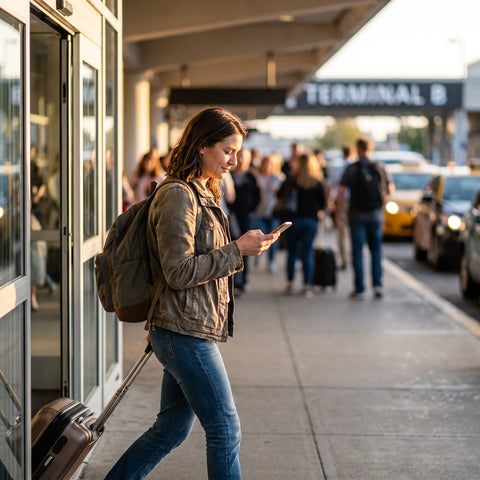
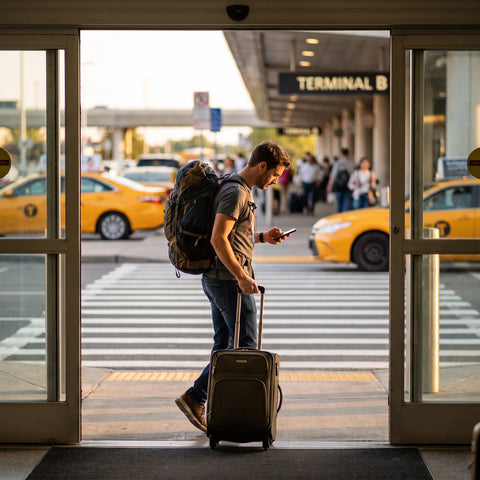
- Connected as soon as you land: You step off the plane, activate data roaming, and you already have maps, messaging, and a translator working, without searching for airport Wi-Fi or asking for the password at information.
- Known price in advance: Compare plans with plenty of time rather than accepting the first thing you find, and avoid inflated prices at arrival counters.
- Support available before traveling: If your phone has trouble installing the profile, PuraSIM offers 24/7 support in all languages via email and WhatsApp, and you can resolve it with time to spare, not with checked luggage and a pressing connecting flight.
This combination of calm and certainty is why buying in advance wins for most trips. Plus, almost all eSIMs allow you to install it right away and start consuming data only when you arrive, so getting ahead costs you nothing. If you're still debating between an eSIM and your Spanish operator's roaming rate, we detail it in eSIM vs. roaming, including cases where your own company's roaming is more advantageous than buying anything.
Buying upon arrival at your destination: when it makes sense
Buying an eSIM once in the country isn't a mistake, and in some specific cases, it's even reasonable. If you're traveling without fixed dates, if you don't know how many countries you'll end up visiting, or if you prefer to decide on a plan once you know your actual data consumption, waiting gives you flexibility that buying in advance doesn't.
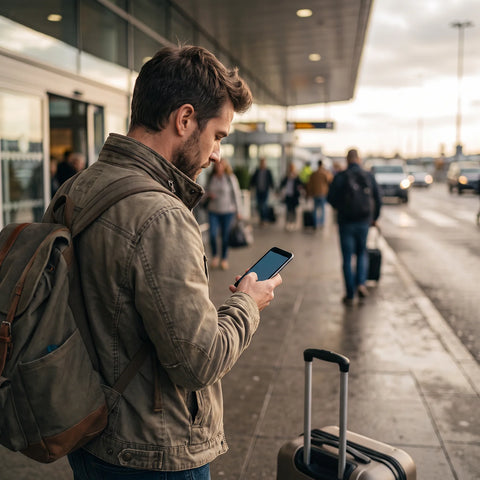
The advantage is that, as it's a digital product, buying at your destination is still easy: as soon as you have a connection to download the QR code—from the hotel, hostel, or airport Wi-Fi—you install it immediately. The problem is precisely that: you need Wi-Fi to receive and install the profile, and in the first few hours after landing, you might not have it readily available. That's why even those who prefer to decide on the fly usually have an account already created and their phone checked before leaving, so that buying at the destination is just a click of a button and not an entire process with luggage in tow.
Beware of airport counters: SIM cards and eSIMs sold at arrivals usually cost much more than buying online in advance. There, you're paying for urgency and lack of comparison, not better service.
There's a nuance that's often overlooked: if your trip combines several countries—for example, a getaway starting in France and continuing through Germany or Switzerland—deciding at your destination forces you to choose between several country eSIMs or find a regional one against the clock. For such open itineraries, looking at an option like eSIM Europe in advance saves you that last-minute calculation, even if you don't activate data until you know where you'll be moving.

Side-by-side comparison
Presented in a table, the dilemma between buying before or at your destination is very clear. For most leisure trips with fixed dates, the left column wins in almost every aspect:
| Aspect | Buy before traveling | Buy at destination |
|---|---|---|
| Connection upon arrival | Immediate, just activate data | Need Wi-Fi first to install |
| Price | Compare plans calmly | Risk of inflated prices at airport |
| Check phone compatibility | With time, at home | On the fly, with less room |
| Plan flexibility | Medium (define destination and GB in advance) | High (decide with real consumption) |
| Support if something fails | With plenty of time before flying | Under pressure, with the trip already started |
| Stress on the first day | Practically none | Possible if no Wi-Fi is available |
Buying early doesn't mean activating early
Here's the most common misunderstanding, and what unnecessarily deters many people from buying in advance. Buying and installing the eSIM before traveling does not consume your data: for most travel data plans, validity starts counting when you connect for the first time to a network in the destination country, not when you scan the QR code or install it. This means you can have everything ready days or even weeks in advance without "burning" a single gigabyte of your allowance.
That's why the most sensible strategy is to buy and install at home, with time and stable Wi-Fi, and activate data roaming only upon landing. This way, you take advantage of the convenience of having everything prepared without losing a single day of your plan due to rushing. The confusion between "buying" and "activating" is precisely what leads many travelers to wait until their destination without any real need, just out of fear that the counter will start running prematurely. You can delve deeper into how data roaming works in what is data roaming, which clearly explains the difference between having the line installed and having it consuming data.
How to buy the right eSIM before you leave
Choosing the right eSIM before your trip comes down to three decisions: the destination, the number of days you'll be away, and the GB you need. With that clear, the purchase takes a minute, and you arrive connected without last-minute surprises. Follow this order:
- Confirm your phone supports eSIM: what is a virtual eSIM explains the difference from a physical SIM and why most recent phones already have it integrated.
- Choose the plan for your country or region. If you're going to the United States, for example, the direct option is eSIM United States; if you're moving through several European countries, check the regional eSIM mentioned above.
- Install the eSIM with your home Wi-Fi following the steps in how to install an eSIM; the QR code arrives by email as soon as you complete the purchase.
- Have your phone checked, and upon landing, activate data roaming. That's all.
The key is to have the purchase sorted before packing your suitcase, not depending on anything upon arrival. If you have doubts about how the complete process is managed from start to finish, how to buy an eSIM details it step by step.
What almost no one tells you
Beyond the "buy it before, it's better" advice, there are nuances that are almost never explained and that make the difference between a peaceful first day and one with avoidable headaches.
Installing isn't the same as having two active lines simultaneously without realizing it. When you add an eSIM, your phone might set it as the default data line even before you travel. This can sometimes cause you to inadvertently continue consuming from your Spanish plan while roaming if you have a layover in another European country. Check your settings to see which line has mobile data activated before getting on the plane.
The first connection attempt is not always instantaneous. In cities with heavy tourist traffic—think Dubai airport at peak time, or central Paris on a long weekend—your phone might take a minute or two to connect to the local network for the first time, even if the eSIM is perfectly installed. This isn't an eSIM fault; it's the phone itself searching for the best antenna. If it doesn't connect immediately, activate and deactivate airplane mode before thinking something is wrong.
Not all plans run out the same way. Some offer total data without speed limits until consumed, while others reduce speed once the limit is reached instead of cutting off abruptly. Before buying, note what type of plan you're choosing, as it changes how you should manage consumption if you're staying for several days.
When NOT to buy anything. If you're going for a short weekend to a country where your Spanish operator already includes roaming at no extra cost—common within the European Union—you don't need to buy an additional eSIM: your own rate covers you, and adding another data line only complicates your phone without adding any benefit. Save the eSIM for destinations outside the EU, long trips, or countries where your operator's roaming charges are very high.
Hotel Wi-Fi is not always reliable for on-the-fly installation. If you decide to wait to buy at your destination, keep in mind that many hotel and tourist accommodation networks require you to register with your room number or block certain types of traffic, which can complicate downloading the eSIM profile exactly when you need it most. This is another strong reason to get it sorted at home.
With over 200 destinations in the catalog, the decision of when to buy is less important than choosing the right plan for your specific itinerary: that's what truly changes your experience on the first day.
Frequently asked questions
Is it cheaper to buy the eSIM before traveling or at the destination?
It's usually more cost-effective to buy it online beforehand, as you can calmly compare plans and avoid inflated prices at airport counters. At your destination, you pay for the rush and lack of readily available alternatives. Always check the current price at the time of purchase, as it may vary depending on the destination and plan duration.
If I buy the eSIM before traveling, will I lose days of data?
No, not with most plans. Validity starts counting when you connect for the first time in the destination country, not when you buy or install the profile. You can have everything prepared days in advance without using a single gigabyte of your allowance.
Can I install the eSIM on the plane?
Installing the eSIM requires an internet connection to download the profile, so do it with your home Wi-Fi before flying. On the plane, without Wi-Fi available, you won't be able to receive the QR code. The ideal is to arrive with the eSIM already installed and only activate data roaming upon landing.
What if I don't know which countries I'll be traveling to yet?
In that case, you can wait and buy the plan once your itinerary is clear, even at your destination using hotel Wi-Fi. Still, it's advisable to have an account created and your phone checked before leaving so that buying on the fly is practically immediate.
Do I need to remove my physical SIM to buy the eSIM beforehand?
No. The eSIM is added as an extra line and coexists with your physical SIM: your Spanish number remains active for calls and SMS. You only select the eSIM as your data line when you arrive at your destination, without removing any card from your phone.
What happens if I buy the eSIM and then change my travel dates?
Since the plan's validity is activated with the first connection at the destination and not with the purchase, a change of dates before traveling does not affect the data: the eSIM remains installed and waiting for you to connect, regardless of whether the trip is brought forward or delayed by a few days.
Is it worth buying the eSIM beforehand if I'm only going to be away for two or three days?
Yes, even more so than for long trips: on a short getaway, you don't want to waste half an hour of your first day looking for Wi-Fi to install anything. Buying it beforehand ensures you're connected from minute one, which is when it matters most on a brief trip.
Conclusion
Buying an eSIM before you travel wins in terms of convenience, price, and peace of mind: you install it at home, check that everything works, and arrive connected without searching for stores or public Wi-Fi. Buying it at your destination only makes sense when your itinerary is still open. Get your eSIM ready before packing your bag and browse plans by country or region to choose yours calmly; if your doubt is more about eSIM vs. your operator's roaming, start with eSIM vs. roaming before deciding.