In short: an eSIM for Dublin gives you internet from the airport terminal itself, without relying on public Wi-Fi or touching your Spanish roaming. For a normal weekend of 2-3 days, 1-2 GB is more than enough, and the same eSIM will work if you venture to Howth, Wicklow, or Galway. Only Northern Ireland is outside the plan.
Dublin is one of those getaways that almost always goes smoothly without much planning: pubs with live music, Trinity College with its Book of Kells, and Temple Bar all within walking distance of any downtown hotel. The only thing that can spoil the trip is landing without data and spending the first twenty minutes struggling with airport Wi-Fi. That's where an eSIM for Dublin comes in: internet as soon as you step into the terminal, with your Spanish number intact in case work calls.
Do you need an eSIM for a weekend in Dublin?
It depends on your plan, and here it's worth being honest: if your Spanish operator includes extensive EU roaming and you're not planning anything unusual with your phone, you probably don't need to buy anything. Ireland is in the European Union, so "roam like home" applies just as it does in France or Portugal. For a weekend seeing Temple Bar and Trinity College with your usual plan, your Spanish contract already covers you sufficiently.
The problem arises in three specific cases: your roaming data allowance is small, you have a low-cost plan that limits roaming to a few megabytes, or you plan to share your connection with a laptop to work for a morning from a café in the Docklands. Something else that many people don't know is that the European "roam like home" regulation allows operators to apply reasonable usage limits tied to the price of your plan, so "included roaming" doesn't always mean "unlimited data." If your plan is modest, dedicated GB for Ireland will save you from checking your data usage every two hours. If you want a complete breakdown of when each option is worthwhile, we have our eSIM vs. roaming comparison with the numbers laid out, and if you've never quite understood how data roaming works in general, this guide on what roaming is explains it in simple terms.

Internet at Dublin Airport upon landing
Dublin Airport (DUB) has free Wi-Fi, but during peak hours it can get saturated, and you also have to go through a captive portal that asks for your email and requires you to accept terms before allowing you to browse. And as soon as you leave the terminal to catch the Aircoach or the 747 bus to the city center, that network disappears with you.
With an already activated eSIM, you save yourself that entire hassle. The trick is to install it at home with Wi-Fi, before you fly, and schedule it to activate on the day of your flight. That way, as soon as you turn off airplane mode after landing, you'll have your own data to call an Aircoach, open Google Maps, or notify your hotel that you're on your way. No searching for passwords or giving your email to a portal you don't know. For a two or three-day getaway, that detail of arriving connected is what makes the difference between starting your trip relaxed or wandering around T2 with your phone in hand.
Coverage in the city and county
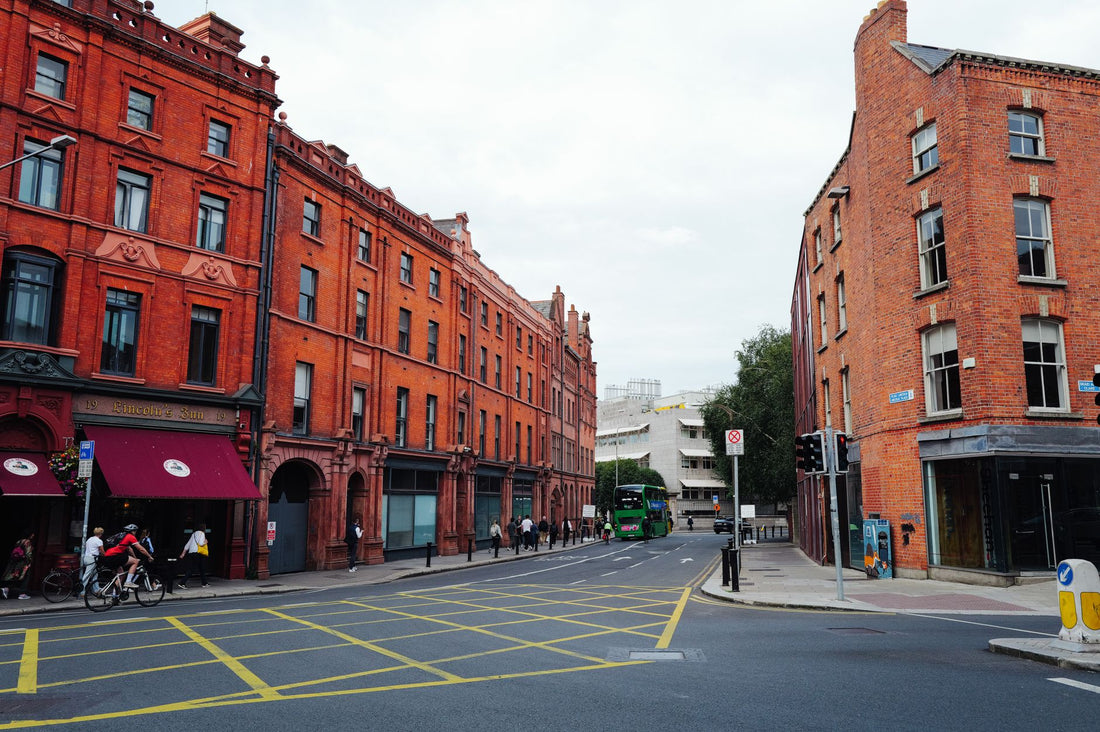
Dublin has very solid mobile coverage, among the best you'll find on a European getaway. The city center, Temple Bar, Trinity College, and the Docklands area have 4G and 5G without interruptions, and Irish networks cover both the city and the surrounding county well.
- City center and tourist areas: excellent signal, ideal for maps, last-minute bookings, and uploading photos instantly.
- Day trips (Howth, Malahide, cliffs): good coverage in coastal towns and on DART train routes, which run along the coast from Connolly to Howth or Bray.
- Rural routes south (Wicklow, Glendalough): generally good coverage, with some weak spots when the valley closes in between mountains, especially near the old Glendalough monastery.
If your plan is just Dublin and its surroundings, you won't miss anything. And since the eSIM covers the entire Republic of Ireland, you can use it just as well if you decide to take a day trip to the Cliffs of Moher or extend your trip to Galway. The Ireland eSIM works for both the capital and any outing across the island, without having to buy anything separately.

Beware of Northern Ireland: it's not the same
This is the detail that catches most people off guard, and for good reason: on the map it looks like the same island, but for mobile purposes, they are two different worlds. The Republic of Ireland (Dublin) is in the European Union and uses the euro; Northern Ireland (Belfast) belongs to the United Kingdom, uses the pound, and is outside the EU after Brexit.
If your itinerary includes a jump to Belfast or the Giant's Causeway, your Ireland eSIM will not cover that part of the trip. You'll need a plan that includes the UK or a separate eSIM for the north.
It's common to combine Dublin and Belfast in the same trip: there are direct trains and buses that cross the border without any visible checks, so it's easy not to realize that you've changed networks and operators. If your plan includes going north, the most convenient option is to get an eSIM that combines Ireland and the United Kingdom, so you don't have to change profiles mid-route or worry about which side of the border you're on. For trips only to the Republic of Ireland, the Ireland eSIM will cover you completely; Belfast and the Giant's Causeway are only included if you add that extra coverage.
How many GB for a Dublin getaway
A getaway to Dublin is one of those trips that consumes the least amount of data, because almost everything is within walking distance and you'll use Wi-Fi in your hotel and many pubs without even realizing it. The usage is concentrated on maps, some last-minute reservations, and the photos you upload of a perfectly poured pint in the right place.
| Type of getaway | Days | Recommended GB |
|---|---|---|
| Weekend | 2-3 | 1-2 GB |
| Long weekend | 4-5 | 3 GB |
| Week + excursions | 7 | 4-5 GB |
If you're going to make a lot of video calls or work from cafes, step up a notch from what the table indicates. And if your plan is to link Dublin with other stops across the continent on the same trip, it's better to look directly at a European coverage eSIM instead of buying a plan per country. To calculate your exact figure according to what you use most (maps, social networks, streaming), take a look at our tips for saving data while traveling. With plans starting at very little per GB, there's no need to complicate things by calculating to the millimeter.
What almost no one tells you before going to Dublin
There are a handful of things you only learn by going, or by asking someone who's already been there. Here they are, direct and without filler:
- Temple Bar is for the photo, not for the pint. Prices there are a tourist trap. If you want a real pub with traditional music and no queues, walk a couple of streets towards Stoneybatter or the Liberties. With real-time maps, it's easy to find them without wandering around.
- The weather changes plans, not just umbrellas. It rains intermittently all year in Dublin, and it's normal to adjust your route on the fly: going from a stroll through Phoenix Park to taking shelter in the National Museum. Having data handy to check schedules and last-minute routes will save you more than one afternoon.
- The Guinness Storehouse and Jameson Distillery sell timed tickets with QR codes. If your phone runs out of data just before entering, you might miss your reserved slot. It's worth having the ticket downloaded offline as a backup, but having active data prevents a scare.
- The DART loses some signal in the short tunnels downtown. Nothing serious, but if you're looking at the map in real-time, don't be alarmed if it freezes for a second between Tara Street and Pearse Station.
- Croke Park and Aviva Stadium saturate the network on match days. If your visit coincides with a big event, coverage in that specific area might feel slower for a couple of hours due to the number of people connected at once. It's not an eSIM fault; it's simply user density in the same cell.
- When you DON'T need any of this: if you're going to spend the entire weekend at the hotel, spa, and some restaurant with decent Wi-Fi, and your Spanish plan already includes extensive EU roaming, don't buy anything. Save your money for another pint.
Buy and activate your eSIM in 1 minute
Getting your eSIM ready before you fly takes just minutes. First, check that your mobile supports eSIM (modern iPhones and many Androids do); if you have doubts, see our step-by-step guide on how to install an eSIM, or if you've never used one and want to understand the concept first, here we explain what a virtual eSIM is.
- Choose the Ireland plan with the GB for your getaway.
- Receive the eSIM by email immediately after payment.
- Install it with Wi-Fi at home and schedule it.
- Upon landing in Dublin, activate data and enjoy.
The entire process takes a minute and requires nothing more than your phone. If anything gets stuck with the QR or the profile doesn't finish installing, 24/7 Spanish support will help you before you take off, not when you're already in the boarding queue.
Frequently asked questions
Do I need an eSIM if my plan already has EU roaming?
Not always. Ireland is in the EU, so if your roaming data allowance is generous, you might be fine with what you already pay. An eSIM is worthwhile if your limit is small, you use a lot of video, or you share your connection with a laptop for work.
Will I have internet as soon as I land at Dublin Airport?
Yes, if you install the eSIM at home and schedule it for your flight day. When you turn off airplane mode at the terminal, you'll already be browsing with your data, without relying on public Wi-Fi or the airport's captive portal.
Does the Ireland eSIM cover Northern Ireland?
Not necessarily. Northern Ireland (Belfast) is part of the UK, not the EU, and is usually outside the Republic's plan. If you're going north, it's most practical to get a plan that combines Ireland and the UK from the start.
How many GB do I use on a weekend in Dublin?
Very few: 1-2 GB is more than enough for two or three days, as you'll have Wi-Fi in your hotel and many pubs. If you make video calls or work from cafes, budget 3 GB just in case.
Can I use the same eSIM for an excursion to Galway or the Cliffs of Moher?
Yes. The Ireland eSIM covers the entire Republic, so you can use it in Dublin as well as on a trip to Galway, the Cliffs of Moher, or the west coast. Only the north (Belfast) is separate.
Which phones are compatible with eSIM?
Most iPhones from the XS onwards and a good number of mid-to-high-end Android phones from recent years. Before buying, check yours in your phone's network settings or consult our installation guide, which also explains how to verify compatibility.
What happens if I run out of data midway through my trip?
You can buy an additional plan or extend your GB from the same app at any point during your trip, without having to reinstall anything or change profiles. It only takes a couple of minutes with Wi-Fi or whatever data you have left.
Conclusion
For a weekend in Dublin, an eSIM removes the only real headache of the trip: arriving and not knowing if you'll have data. You'll land connected, navigate Temple Bar and Trinity College with maps in hand, and if you decide to go to Belfast, you'll know that the north is separate. Get your Ireland eSIM ready before you fly and dedicate your weekend to the pubs, not to searching for Wi-Fi.