Malaysia is one of those destinations that has it all: futuristic skyscrapers in Kuala Lumpur, the multicultural magic of George Town in Penang, and the turquoise waters of Langkawi. And the good news for English-speaking travelers is that it also boasts a telecommunications infrastructure that ranks among the best in Southeast Asia.
Staying connected in Malaysia is no longer the headache it once was. Forget about queuing at the airport to buy a physical SIM, filling out forms in English or Malay, or misplacing your original SIM card. With an eSIM, you can arrive with your data active from the moment your plane touches down at KL International Airport or in Penang.
In this guide, we'll explain everything you need to know: what coverage you'll find in each city, how many gigabytes are sufficient, which areas have weaker signals, and how to get the most out of your data plan so nothing detracts from your exploration time.

1. Internet in Malaysia: what to expect
Malaysia has consistently invested in its digital infrastructure over the past decade. The country holds prominent positions in regional mobile speed indexes and boasts over 90% 4G penetration in urban areas. In major cities, the average download speed exceeds 40 Mbps, which is sufficient for HD video calls, streaming series, and remote work without issues.
The main operators are CelcomDigi (the result of the merger of Celcom and Digi), Maxis, and U Mobile. All three have robust coverage in Kuala Lumpur, Penang, and the tourist areas of Langkawi. 5G technology is available in the metropolitan areas of KL and parts of Penang, though for most travelers, 4G LTE is more than enough.
What is clear is that Malaysia is a country with great geographical contrasts. Peninsular Malaysia has excellent coverage, but in the eastern part (Sabah and Sarawak in Borneo) or the jungle interior, things change. If your trip includes trekking in Taman Negara National Park or the interior jungle of Langkawi, connectivity will be limited or non-existent in certain areas.
For travelers from Latin America or Spain, traditional roaming with their home operator's card can be surprisingly expensive: some Latin American operators charge between 10 and 25 USD per day for roaming in Malaysia, which for a 10-day trip amounts to between 100 and 250 USD just for data. A specific eSIM for Malaysia can cost you between 15 and 30 USD for the same period with sufficient data, a very significant saving.
Another advantage of eSIM over a local SIM: you don't need to go to the airport, queue up, understand instructions in another language, or depend on store hours. You set it up calmly from home, and when you land in KL, your data will already be waiting for you.
2. Kuala Lumpur: the best coverage in the country
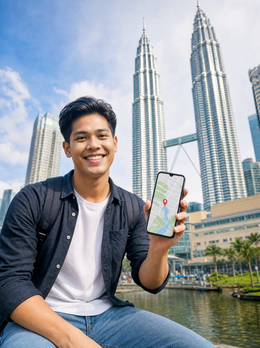
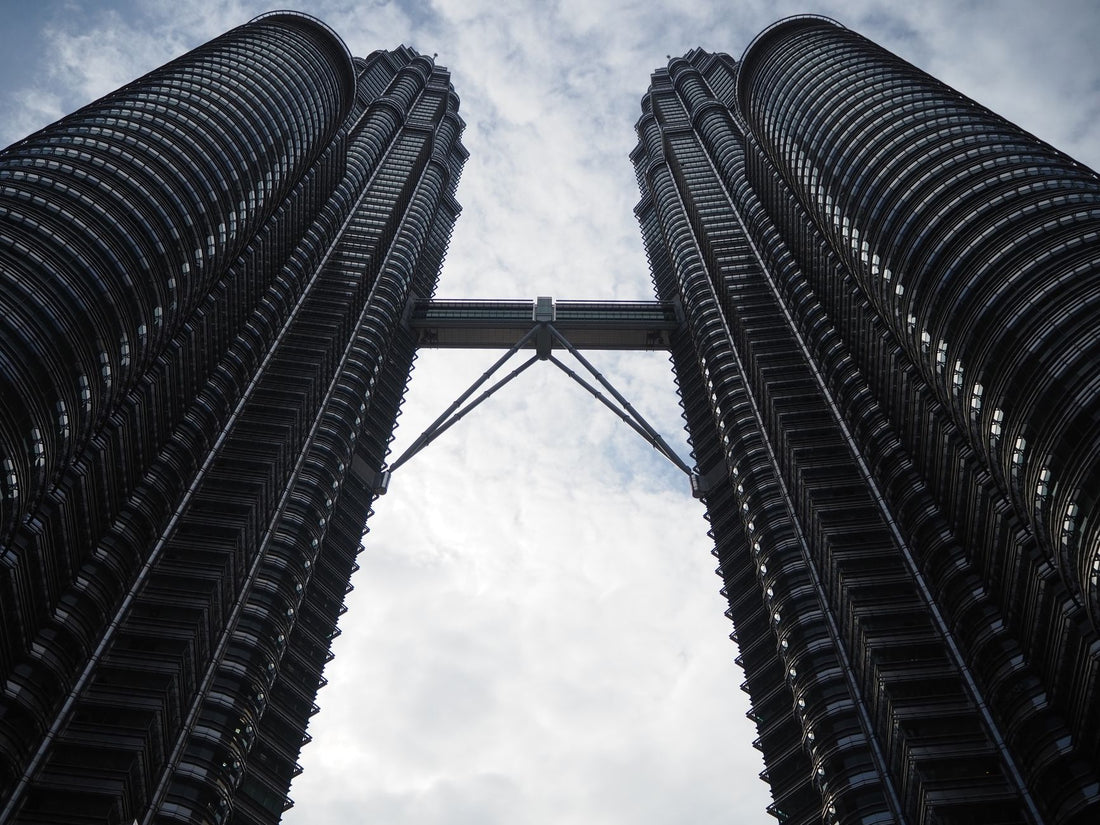
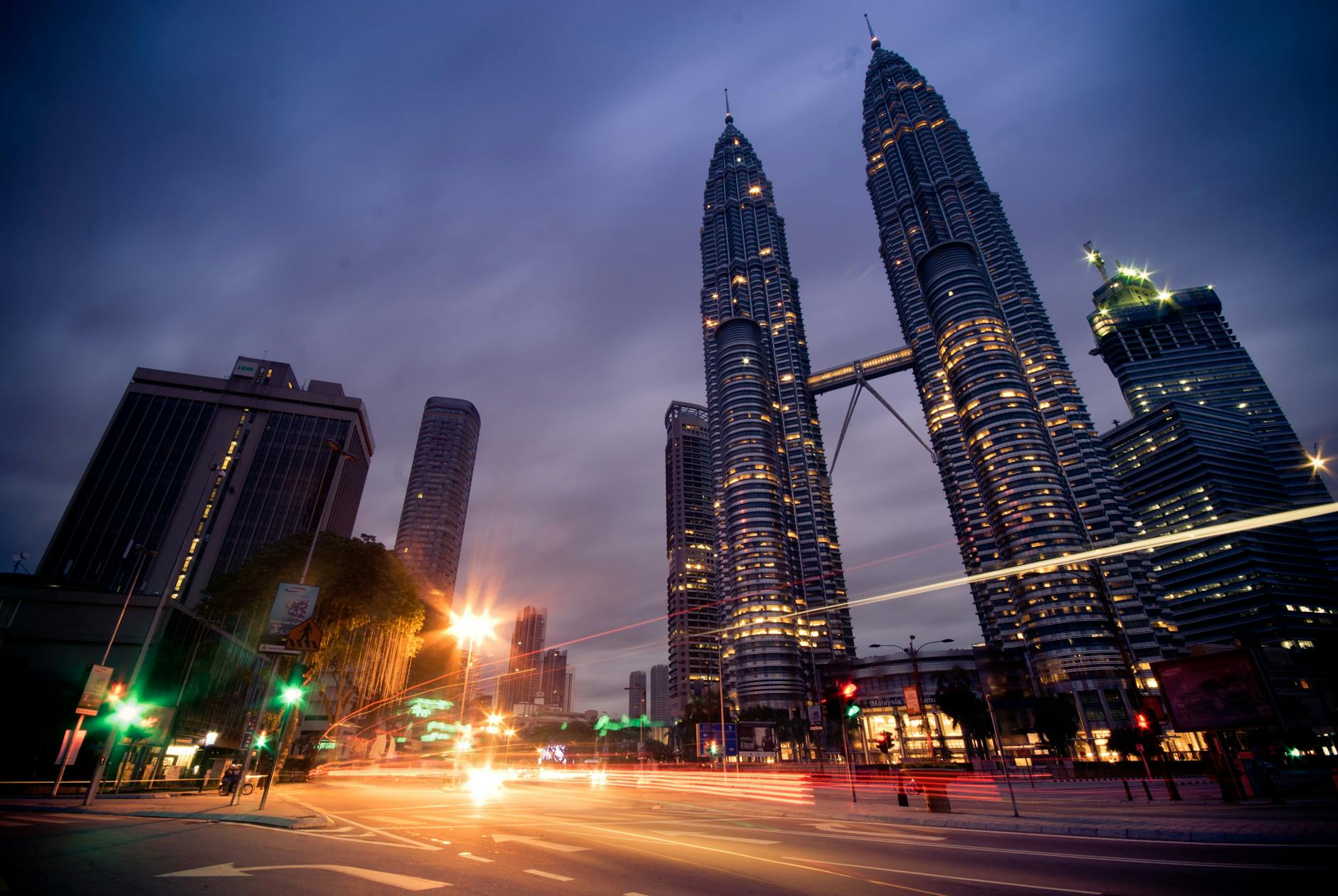
Kuala Lumpur is, without a doubt, the area with the highest coverage density in the entire country. The city center—especially the KLCC area where the Petronas Towers are located, Bukit Bintang, and Chinatown—has virtually omnipresent 4G and 5G coverage. You'll be able to browse without interruption on the subway (MRT and LRT), in shopping malls, and even in public parks.
To get around Kuala Lumpur, you need data constantly: transportation services like Grab (the local equivalent of Uber) work 100% through the app, most restaurants have QR menus, and Google Maps will be essential for navigating a city where walking distances between points of interest can be deceptive due to heat and humidity.
The main tourist areas of KL and their connectivity characteristics:
- KLCC and Petronas Towers: 5G coverage available. Very high speeds.
- Bukit Bintang: Excellent 4G/5G. Shopping and gastronomy hub.
- Batu Caves: Stable 4G outside the temple. Inside the caves, there may be moments without signal.
- KLIA Airport: Free Wi-Fi available, but an already active eSIM gives you independence from the first minute.
- Petaling Street (Chinatown): Good 4G coverage throughout the area.
If you're working remotely from KL, you'll find numerous cafes and co-working spaces with excellent Wi-Fi to supplement your mobile data. The city has a highly developed digital nomad scene, with areas like Bangsar and Mont Kiara particularly well-equipped with infrastructure for remote work.
For a 3-4 day stay in Kuala Lumpur, estimate 2 to 3 GB of consumption if you regularly use navigation, social media, and Grab, and if you upload photos and videos to Instagram or TikTok.
3. Penang: connected between heritage and street food
Penang is probably Malaysia's most photogenic gem. George Town, its capital, is a UNESCO World Heritage site and one of Asia's cities with the best street food. The good news: connectivity in Penang lives up to its attractions.
Penang island has solid 4G coverage in virtually all the areas you'll visit as a tourist. George Town offers constant signal on the Esplanade promenade as well as in the narrow streets of the historic center where the street art murals that have made the city famous are concentrated. The Gurney Drive neighborhood, the Little India area, and the Batu Ferringhi night market also have good connectivity.
To access Penang from the mainland, you can cross the Penang Bridge (one of Asia's longest) or take the ferry from Butterworth. In both cases, you'll have signal during the journey. Penang Airport also has good coverage so you can connect as soon as you land if your eSIM is already activated.
Some specific recommendations for making the most of your data in Penang:
- Use Google Maps to explore Ernest Zacharevic's murals in the streets of the historic center; there are over 50 pieces spread across the city, and a digital map is essential.
- The Grab app is the most convenient and economical way to get between George Town and the northern beaches like Batu Ferringhi.
- For excursions to Penang Hill (Bukit Bendera), the signal is good at the funicular station and at the summit; it may only weaken intermittently in the jungle surrounding the cable car.
A 2-3 day trip to Penang will consume approximately 1.5 to 2.5 GB if you actively share content on social media. The city is so photogenic that it's easy to upload more photos and videos than you plan.

4. Langkawi: paradise with dead zones
Langkawi is Malaysia's most famous beach destination: duty-free, white sand beaches, mangroves declared a UNESCO Geopark, and lush nature that can make you completely forget that the internet exists. And in some parts of the archipelago, that's literally what will happen.
Coverage in Langkawi is good in the main area of Pantai Cenang and surroundings, in Kuah (the island's capital), and in the main resorts and hotels. However, it's important to understand that in Langkawi's interior jungle, the signal disappears or is very weak. If you plan to trek to Telaga Tujuh waterfall, visit the Kilim Mangrove Park, or explore the island's more remote trails, you may lose coverage for hours.
This isn't a problem, but rather a characteristic of the destination. In fact, many travelers appreciate disconnecting in nature. The important thing is to know it beforehand to:
- Download Google Maps offline maps before leaving the hotel.
- Save your hotel and tour operator's phone numbers as favorites in case you need to contact them.
- Inform your companions or family about your itinerary if you're venturing into remote areas.
- Take advantage of hotel Wi-Fi to plan excursions the night before.
The Langkawi Cable Car (Langkawi SkyCab) ascends to 700 meters and offers spectacular views. At the upper station, the signal can be intermittent; a perfect excuse to leave your phone in your pocket and enjoy the scenery.
For Langkawi, a consumption of 1 to 2 GB for 3-4 days is common if you combine beach time (without much mobile use) with browsing and social media in the evenings. If you plan to make video calls from the resort, add an additional GB.
5. How many GB do you need? A guide by traveler type
The million-dollar question: which plan to choose? Our recommendation for a 10-day trip covering Kuala Lumpur, Penang, and Langkawi is an 8-10 GB plan. Here's the reasoning by traveler type:
Light traveler (5-6 GB): If you primarily use your phone for browsing, checking maps, and WhatsApp, and leverage hotel Wi-Fi for video calls and streaming, 5-6 GB is more than enough for 10 days. Ideal for those who plan to actively disconnect in Langkawi.
Standard traveler (8-10 GB): The most common profile. Frequent use of Google Maps and Grab, Instagram posts, occasional video calls, and unrestricted browsing. For 10 days with a mix of city and beach, 8 GB is the sweet spot: you won't run short but also won't pay for data you won't use.
Connected traveler / remote work (15 GB or more): If you need to make work video calls, upload videos to social media, download files, or simply prefer not to worry about consumption, opt for a 15 GB plan or more. In Kuala Lumpur, working from an eSIM is perfectly feasible.
Consumption reference by activity:
- WhatsApp (messages + photos): ~100-200 MB per day
- Google Maps with active navigation: ~50-100 MB per day
- Instagram (scroll + stories): ~300-500 MB per day
- 30 min video call (WhatsApp/Zoom): ~200-400 MB
- Music streaming (Spotify, 1h): ~50-150 MB
- YouTube (30 min in SD): ~300 MB
A useful trick: activate data saver mode on your phone for apps you don't need in real-time. Many applications consume data in the background without you realizing it, which can significantly reduce your autonomy.
Frequently asked questions
Does the eSIM work throughout Malaysia?
The eSIM works with excellent 4G/5G coverage in major cities like Kuala Lumpur, Penang, and the tourist areas of Langkawi. In remote areas like Langkawi's interior jungle or inland Borneo, the signal may be limited or non-existent. For the destinations in this article—KL, Penang, and Langkawi's beaches—you'll have seamless connectivity.
How many GB do I need for 10 days in Malaysia?
For 10 days in Malaysia, we recommend between 8 and 10 GB. With that volume, you can use Google Maps, Grab, social media, occasional video calls, and music streaming without worrying about running out of data. If you work remotely or upload video content, opt for 15 GB or more.
When should I activate the eSIM for Malaysia?
You can install the eSIM before leaving your country (requires Wi-Fi connection) and activate it right after landing at Kuala Lumpur or Penang airport. Installation is done by scanning a QR code from Settings > Mobile Data > Add Data Plan. The entire process takes less than 5 minutes.
Is my phone compatible with eSIM in Malaysia?
Most smartphones released since 2020 are eSIM compatible: iPhone XS and newer, Samsung Galaxy S21+, Google Pixel 3 and newer, and many Motorola models. Verify that your device is carrier-unlocked to use international networks. If you're unsure, check with your carrier before your trip.
Do I get a phone number with the data eSIM?
PuraSim data eSIMs are designed for internet browsing; they do not include a local call or SMS number. For calls, you can use WhatsApp, Facetime, Telegram, or any VoIP app that works over data. If you need a local Malaysian number, you'll need to purchase an additional physical SIM at the airport or any operator store.
Activate your eSIM before you leave and arrive connected from the very first moment. No queues, no physical SIM, no surprise bills.
See eSIM plans →