In short: A Mongolia eSIM gives you mobile data as soon as you land in Ulaanbaatar, with no physical SIM or airport queues. It provides good 4G coverage in the capital and provincial centers; in the steppe and the Gobi, the signal disappears for any operator, so the key is to download offline maps before leaving the city.
Traveling to Mongolia is like changing planets: a modern capital, endless steppe, and the Gobi Desert where the asphalt disappears. A Mongolia eSIM gives you data as soon as you land in Ulaanbaatar, with no queues or local SIM, so you have maps and a translator from minute one. In this guide, we'll look at real coverage, how many GB to get, and how to make the most of it in such an unconnected country.
eSIM in Mongolia: The Essentials
Yes, eSIM works in Mongolia and is the most convenient way to have internet without depending on hostel Wi-Fi. You buy it before you leave, install it in a minute, and it connects to the local mobile network as soon as you arrive in the city, with solid coverage in Ulaanbaatar and provincial capitals.
Mongolia is a huge and sparsely populated country, so the key isn't "if there's an eSIM," but understanding where there's a signal and where there isn't. In the capital and large towns, you'll have 4G without a problem; in the middle of the steppe or the Gobi, coverage becomes intermittent for any operator, local or eSIM alike. That's why the eSIM here shines more for convenience and for giving you data right when you arrive at Chinggis Khaan Airport than for coverage miracles in the desert.
If you're going to connect Mongolia with other Asian countries—common for those doing the Trans-Siberian or Trans-Mongolian to Beijing—don't assume the same eSIM will work for the entire journey: each leg has its own coverage, and if the next destination is South Korea, in eSIM South Korea we review how to chain plans without running out of data between borders.

What the Coverage is Really Like
Mobile coverage in Mongolia is concentrated where people live. Ulaanbaatar accounts for almost half of the country's population and has decent 4G; from there, the signal follows the main roads and provincial centers (aimags). Outside these axes, you enter shadow zones.
On a typical Ulaanbaatar - Karakorum - Khongoryn Dunes tour, you'll have a connection at stops and towns, and radio silence between them. That's not a fault of your eSIM: it's simply that there are no antennas for hundreds of kilometers of steppe. The smart thing to do is work with that reality, not against it: download everything important while you have 4G in the city. A detail almost no one mentions: the Trans-Mongolian train between Ulaanbaatar and the border goes hours without coverage from any operator, so if you're traveling in a sleeper car, it's time to have your podcast, book, or map downloaded, not to rely on catching a passing antenna. To better gauge how many GB to order according to your route and save money without falling short, you can also use how to save data on your travel eSIM.
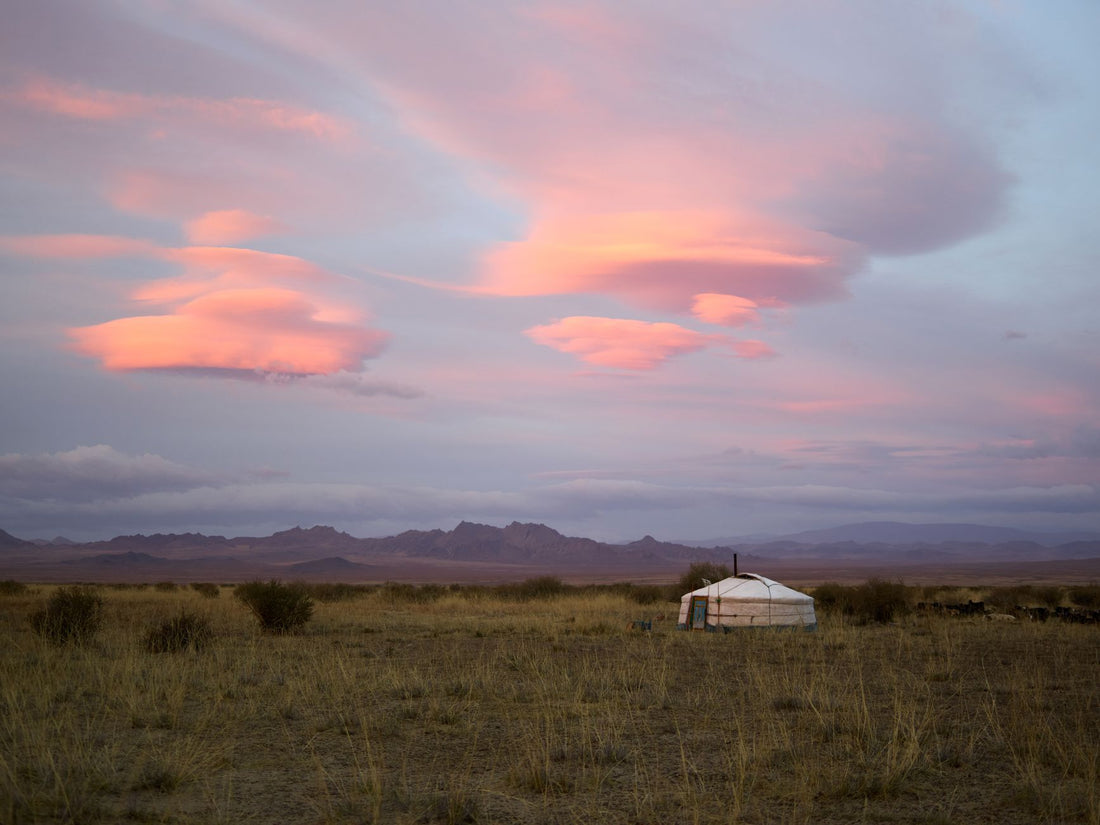
Practical tip: Ger (yurt) camps for tourists usually have some connection or satellite Wi-Fi in the common area, but don't count on it in your ger. Treat any signal in the countryside as a bonus, not a guarantee.
eSIM vs. Local Operators (Mobicom, Unitel)
Mongolia has serious local operators like Mobicom, Unitel, and Skytel, and their prepaid SIMs are cheap. The downside is the process: outside the airport, they usually ask for your passport to register it, the store doesn't always speak English, and you lose valuable time on the first day dealing with paperwork.
The eSIM relies on these same local networks but saves you all the paperwork: you arrive with data already active. The table summarizes the dilemma:
| Option | Coverage | Activation | Advantage | Disadvantage |
|---|---|---|---|---|
| Mongolia eSIM | Local networks (4G in city) | 1 minute, before leaving | Data on landing, no queues or passport | Requires compatible phone |
| Local SIM (Mobicom/Unitel) | Same network, proprietary | In-store, with registration | Mongolian number and local top-ups | Queues, language barrier, lost time |
| Spanish operator roaming | Depends on agreement | Already active | Zero hassle | Usually very expensive (€10-20/day) |
For almost any traveler on a two- or three-week trip, the eSIM wins for convenience and for not losing the first day in a phone store. If you're wondering why to avoid classic roaming, we break it down in eSIM vs. roaming.

How Many GB You Need Depending on Your Route
Data consumption in Mongolia is peculiar: you'll use a lot of data in Ulaanbaatar (WhatsApp, maps, bookings, uploading photos) and almost none in the steppe, where there's no signal. This means a medium plan goes a long way, because desert days are "free" in terms of data out of necessity.
- 5-7 day getaway (capital and surroundings only): 3 GB is usually enough.
- Classic 10-14 day route (capital + Gobi + central): 5 GB is a good cushion.
- Long trip or remote work from Ulaanbaatar: 8-10 GB or a monthly plan.
Since a good part of the trip takes place without coverage, almost no one spends as much as they fear. Even so, always round up: recharging from the desert is impossible, and an emergency top-up in the city negates any savings. You can see the specific data plan for Mongolia on our product page and choose the size that best fits your route.
Activating and Using it in the Gobi
Installation is as simple as for any destination: you buy the eSIM, scan the QR or add it from settings, and in a minute, it's ready. What's specific to Mongolia is the usage strategy, not the technique.
Install the eSIM at home with Wi-Fi, but don't activate it until you land to avoid using up validity days. Once in Ulaanbaatar, take advantage of the city's 4G to download offline maps of your entire route on Google Maps or Maps.me, the Mongolian translator, and any bookings. That way, when you enter an area without coverage, your phone's GPS can still locate you without data using the already downloaded maps. If this is your first eSIM, the complete step-by-step is in how to install an eSIM.
Tips to Avoid Losing Signal
In such an extreme destination, a little preparation makes the difference between a smooth trip and moments of stress. These are the habits you'll appreciate most in the steppe.
Carry a powerful power bank: in the Gobi, there isn't always an outlet, and your phone, searching for a signal, drains faster. Download everything critical in the city (maps, tickets, agency contacts). Share your itinerary with someone at home before you lose coverage. And save emergency numbers and your guide's number in writing, not just in an app that depends on the internet. The eSIM will give you a connection whenever there's a network; your job is to prepare for the stretches where there won't be one. If your route continues to another country with different connection rules—censorship, app blocking, closed networks—it's wise to understand the differences between carrying a spare physical chip or sticking with just the eSIM: we explain it in international chip vs. eSIM.
Myths About eSIM in Mongolia (What Almost No One Tells You)
"Outside of Ulaanbaatar, there's no coverage at all." That's not accurate. The capitals of the 21 aimags (provinces) – Kharkhorin, Dalanzadgad, Moron – have their own antennas and usually provide decent 4G in the town, although it cuts out as soon as you leave on the dirt track. The mistake is assuming that "steppe" is synonymous with "no signal everywhere": the signal mostly follows roads and population centers, not a straight line from the capital.
"Mobicom is better than Unitel, so I'll look for that network." With an international eSIM, you don't choose an operator: the provider connects to the available network in each area, and in Mongolia, that usually means Mobicom because it has the most rural coverage. Don't waste time trying to force a specific operator from your settings; let the phone select the network automatically.
"If I cross into China on the Trans-Mongolian, my eSIM will still work the same." At the Erlian/Zamiin-Uud border, your phone might briefly try to connect to a Chinese network before you resume your Mongolian plan, and China filters many Western apps and websites. If that border is on your itinerary, check beforehand if you'll need a VPN to maintain privacy and access to what you use daily.
"Hotel or train Wi-Fi will get me out of trouble." In Ulaanbaatar, it usually works well, but in ger camps and train cars, it's slow, unstable, or simply non-existent outside the common area. Don't plan anything critical – bookings, video calls, paperwork – counting on that Wi-Fi.
When NOT to Buy an eSIM for Mongolia
To be honest: if your trip is three or four full days within Ulaanbaatar, with a mid-to-high-end hotel, and you plan to move around little, you might get by with the accommodation's Wi-Fi plus a few hours here and there at a cafe. In that case, spending money on a multi-GB eSIM is a waste.
It also doesn't make much sense if your plan is a long, isolated trek through the Altai or deep Gobi with a specialized agency: there, useful connection isn't provided by any eSIM or local SIM, but by a satellite phone or a device like a Garmin inReach carried by the guide. Buying several GB for those days means paying for something you won't be able to use.
Frequently Asked Questions
Does eSIM work in Mongolia?
Yes. The eSIM connects to local networks (Mobicom, Unitel) and offers 4G in Ulaanbaatar and provincial cities. In the middle of the steppe or the Gobi, coverage is intermittent for any operator, not just the eSIM, simply because there are no antennas.
How many GB do I need for two weeks in Mongolia?
About 5 GB is usually more than enough for a classic 10-14 day route. You'll use data mostly in Ulaanbaatar; in the desert, there's no signal, so those days don't consume data. Download offline maps and a translator in the city to use even less.
Will I have internet in the Gobi Desert?
Very limitedly. Outside of towns and main roads, there is no mobile coverage from any operator. Some ger camps have satellite Wi-Fi in the common area, but don't count on continuous connection. Download everything important before leaving the city.
Is eSIM better or should I buy a local Mongolian SIM?
For most, eSIM. A local SIM is cheap but requires going to a store, registering your passport, and often dealing with a language barrier. An eSIM gives you data upon landing without any hassle. The coverage is the same because they use the same networks.
Do I need a special phone to use eSIM in Mongolia?
Only a phone compatible with eSIM (most iPhones from XS onwards and many modern Androids). You don't need anything specific to Mongolia. Check compatibility in your phone settings before buying the plan.
Does the eSIM work on the Trans-Mongolian train to China or Russia?
Within Mongolian territory, yes, as long as there is mobile network coverage near the track. In the deep steppe sections, the train goes hours without a signal from any operator, and when crossing the border, your eSIM loses its purpose unless you've also purchased coverage for the destination country.
What do I do if my battery dies in the middle of the Gobi?
Preventing it is easier than solving it: carry a fully charged power bank, because your phone searching for a signal in weak coverage areas consumes much more than usual. If you're traveling with an agency or guide, confirm they carry a satellite phone or similar for real emergencies; don't rely solely on your personal mobile in sections without antennas.
Conclusion
Mongolia is one of those destinations where connectivity matters precisely because it's scarce: you want guaranteed data in the city and downloaded maps for the steppe. An eSIM solves the first part without queues or paperwork and lets you prepare the second part wisely. Arrive with internet from minute one in Ulaanbaatar and travel peacefully across the steppe with our eSIM for Mongolia.