Poland has become one of Central Europe's most fascinating destinations. Warsaw surprises with its historical reconstruction and modern energy, Krakow captivates with its perfectly preserved medieval old town, and the Masurian Lakes offer an unparalleled natural escape. More and more Latin American and Spanish travelers are discovering this country that combines profound history, stunning nature, and accessible prices.
But to fully enjoy Poland, you need to stay connected. From checking train schedules between cities, booking old town tours in Krakow, finding the best pierogi restaurants in Warsaw, to sharing your photos of Wawel Castle or navigating the Masurian canals. Constant connectivity transforms your travel experience.
This is where an eSIM makes a difference. Forget about searching for phone stores upon arrival, dealing with language barriers, or wasting time on paperwork. With an eSIM for Poland, you activate your plan in minutes and arrive connected from the moment you land at Chopin Airport in Warsaw or John Paul II Airport in Krakow. In this guide, we'll explain everything you need to know to choose the perfect plan and maximize your connectivity in Polish territory.

Why use an eSIM in Poland
Poland has a modern and reliable telecommunications infrastructure, especially in major cities and tourist routes. Local operators offer extensive 4G coverage that spans from urban centers to medium-sized towns and transportation routes. This makes an eSIM the most practical option for travelers seeking immediate, hassle-free connectivity.
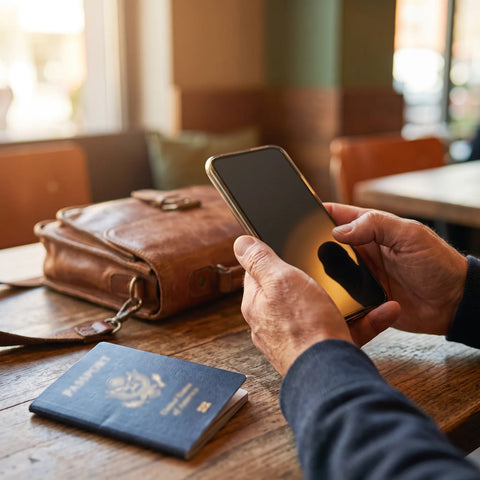
The main advantage of an eSIM is instant activation. Imagine landing at Warsaw airport after a long flight: instead of looking for a phone store (which might be closed if you arrive late), waiting in line, and dealing with forms in Polish, you simply activate your eSIM from your phone, and in minutes you have internet to order your Uber or Bolt to the city center, check your hotel reservation, or let your family know you've arrived safely.
Another important benefit is keeping your main number active. With an eSIM, your usual line still works for calls and messages (via WhatsApp or similar using eSIM data), while you use the Polish plan exclusively for data. This is especially useful if you need to receive bank verification codes or stay available for important contacts without paying international roaming fees.
eSIMs also offer flexibility for multi-country trips. If your itinerary includes Poland and other European countries such as Germany, the Czech Republic, or the Baltic states, many eSIM plans cover all of Europe without needing to change SIMs at each border. You cross from Krakow to Prague or from Warsaw to Vilnius without losing connectivity or worrying about additional configurations.
Finally, there's the ecological and practical factor: you don't generate plastic waste from disposable SIM cards, you don't need to carry a clip to swap cards, and you don't risk losing your original SIM during the trip. Everything is managed digitally from your phone's settings, making the process cleaner and more secure.
Coverage and operators in Poland
Poland has three main operators that offer robust national coverage: Orange Polska, Play, and T-Mobile Polska. These operators have invested significantly in 4G infrastructure and are deploying 5G networks in major cities. Most eSIM providers connect to these networks, ensuring a reliable experience throughout the country.
In Warsaw, the capital, coverage is practically perfect. From the reconstructed Old Town (Stare Miasto) to modern business districts like Śródmieście, and cultural neighborhoods like Praga, you'll have stable 4G signal throughout the city. The Warsaw metro also has coverage in most stations and tunnels, allowing you to use maps or check information while commuting underground.
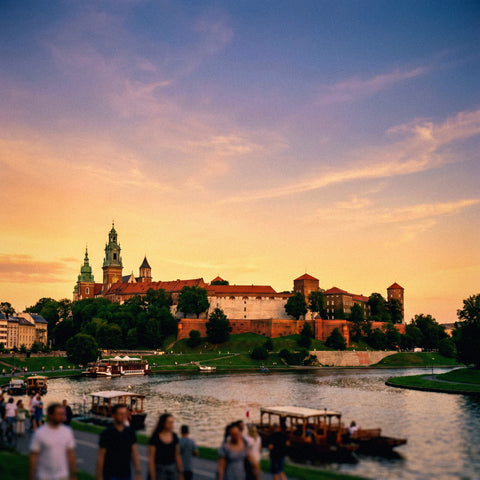
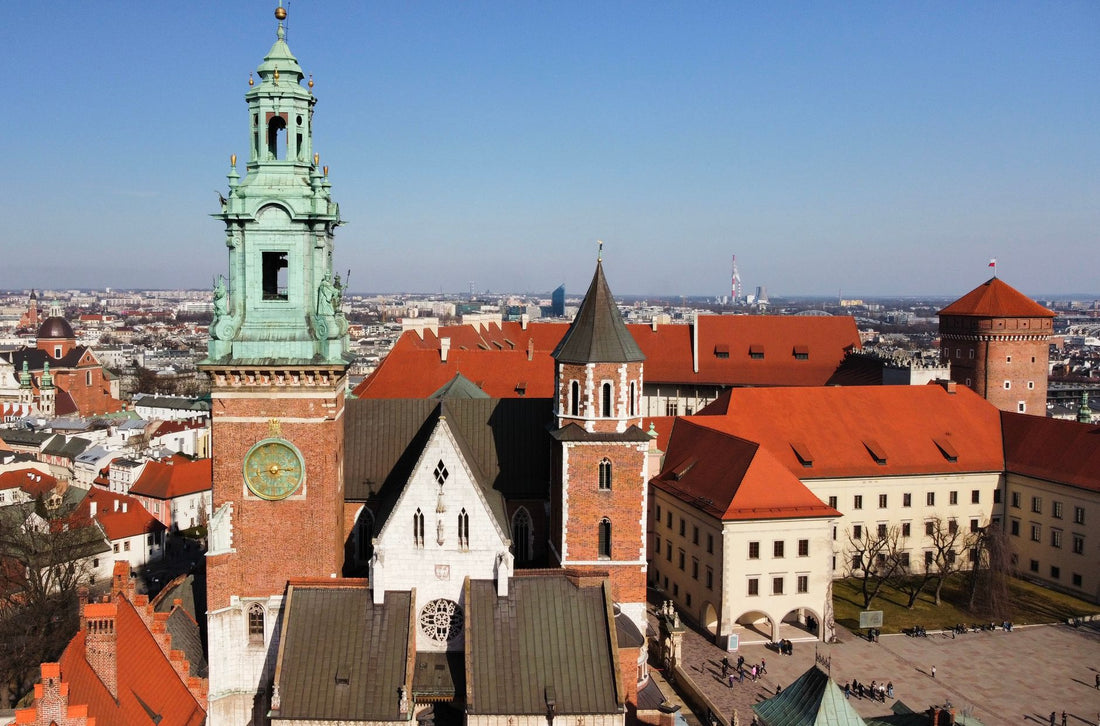
Krakow also offers excellent connectivity. The historic center, a UNESCO World Heritage site, the Jewish Quarter of Kazimierz, the redeveloped industrial area of Zabłocie where Schindler's Factory is located, and even the Wawel Castle area maintain consistent signal. If you visit the Wieliczka Salt Mine (15 km from Krakow), coverage works up to the entrance, although it obviously gets lost in the underground depths of the mine.
Gdańsk, on the Baltic coast, also has full coverage in its beautiful Old Town, the historic port, and the nearby Sopot beaches. The Tri-City tourist area (Gdańsk, Sopot, and Gdynia) is perfectly covered, allowing you to browse while walking along the pier or exploring the Museum of the Second World War.
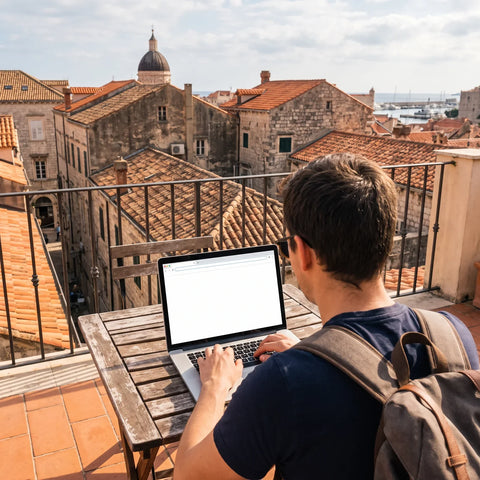
A remarkable feature of Poland is the excellent coverage on intercity trains. Major routes like Warsaw-Krakow (operated by PKP Intercity or the modern Pendolino trains), Warsaw-Gdańsk, or Krakow-Wrocław maintain stable 4G signal for virtually the entire journey. This allows you to work, make video calls, or simply entertain yourself during the 2-3 hours these trips take without frustration from losing connection.
In rural areas such as the Masurian Lakes, coverage is generally good in towns and small cities like Giżycko, Mikołajki, or Węgorzewo, which are tourist centers for sailing and water sports. However, in the middle of lakes, dense forests, or very remote areas, the signal may weaken or become intermittent. If you plan to spend time in isolated natural areas, download offline maps and content beforehand.
How many GB do you need depending on your trip

Calculating the necessary GB depends on your travel style, but for a typical 10-day trip to Poland, we recommend between 6-8 GB. This amount comfortably covers daily use of map applications, social media, instant messaging, web searches, and sharing photos without constantly worrying about running out of data.
Let's break down typical daily consumption: Google Maps or Apple Maps in active use consumes approximately 5-10 MB per hour of navigation with voice directions. If you use maps for about 2 hours daily exploring cities, you would be spending 10-20 MB per day. Transportation apps like Jakdojade (very popular in Poland for public transport) or taxi apps like Uber and Bolt add another 5-10 MB daily.
Social media are significant consumers: Instagram can use 100-150 MB per hour of active browsing watching stories and posts, while Facebook consumes around 80-100 MB per hour. If you spend an hour daily on social media, you would be using 100-200 MB per day. WhatsApp, Telegram, or Signal for text messaging consume very little (5-10 MB daily), but video calls change the equation: a 30-minute video call can consume 300-500 MB depending on quality.
Sharing photos is an essential part of any trip. A high-resolution photo weighs 3-5 MB, so if you upload 10 photos daily to Instagram or send them via WhatsApp, you would be using 30-50 MB per day. Videos consume significantly more: a one-minute video in HD quality can weigh 50-100 MB, so if you upload several videos daily, your consumption will skyrocket.
For a moderate traveler who regularly uses maps, checks social media, shares photos, and makes occasional video calls, daily consumption is around 500-700 MB. In 10 days, this totals 5-7 GB, so a 6-8 GB plan gives you comfortable leeway without restrictions. If you are a heavy user who makes daily video calls, uploads many videos, or works remotely, consider plans of 10 GB or more.
A practical tip: take advantage of free WiFi when available for heavy tasks. Most hotels, many restaurants, and cafes in Polish cities offer decent WiFi. Use it to download content, back up photos to the cloud, or make long video calls, reserving your mobile data for when you're on the go exploring the city or traveling between destinations.
Step-by-step activation and configuration
Activating your eSIM for Poland is a simple process that takes less than 10 minutes. The first step is to check that your phone is eSIM compatible: most iPhones from the XR/XS onwards, and many modern Android phones from Samsung, Google Pixel, Huawei, and other brands support this technology. You can check this in your phone's settings by looking for the "Add cellular plan" or "eSIM" option.
Once you purchase your eSIM plan, you will receive a QR code via email along with detailed instructions. Before activating, make sure you have a stable WiFi connection, as the profile download process requires internet. We recommend installing the profile before traveling (you can do it from home with WiFi), but DO NOT activate it until you arrive in Poland or are about to board your flight.
For iPhone, go to Settings > Cellular > Add Cellular Plan. Scan the QR code you received or enter the activation code manually if you prefer. The system will download the eSIM profile and ask you to label it (you can call it "Poland" or "Travel"). Then select which line you want to use for mobile data (choose the new eSIM) and which line for calls and messages (usually your main line). Activate "Data Roaming" only for the Poland eSIM.
On Android, the process varies slightly depending on the brand. Generally, you go to Settings > Connections > SIM card manager > Add mobile data plan. Scan the QR code and follow the on-screen instructions. Make sure to select the eSIM as your default data connection and enable data roaming only for that profile.
When you arrive in Poland, turn on your phone and wait a few minutes. The device should automatically connect to the local network (Orange, Play, or T-Mobile depending on your eSIM provider). You will see the operator's name at the top of your screen. If it doesn't connect automatically, try toggling airplane mode on and off, or restart your phone.
An important tip: keep your main line active for calls and messages. This means you can receive SMS and calls on your usual number (though receiving them may incur costs depending on your operator), while you use the Polish eSIM data for everything else. For outgoing calls, use apps like WhatsApp, Telegram, or Skype that work with data, avoiding costly international rates.
If you encounter connection problems, verify that data roaming is activated for the eSIM, that you have selected the eSIM as the default data line, and that your phone is not in a low-power mode that might limit connectivity. Most eSIM providers offer chat or WhatsApp support to help you resolve any issues quickly.
Traditional roaming vs. eSIM: cost comparison
The cost difference between using your regular operator's roaming and an eSIM can be dramatic, especially for Latin American travelers. Let's analyze the real options to understand why eSIM offers significant savings without sacrificing service quality.
For travelers from Spain, the situation is more favorable thanks to European roaming regulations. If you have a plan with a Spanish operator like Movistar, Vodafone, or Orange, you can use your usual rate in Poland without additional costs under the "Roam Like at Home" policy. This means your data, calls, and messages work just as they do in Spain. However, there are limitations: some low-cost operators impose data limits on roaming (for example, only 5-10 GB even if your plan has more), and calls to local Polish numbers count as international.
For Latin American travelers, the story is completely different. Let's take concrete examples: a Claro Colombia user might pay around $15-20 USD per day for international roaming in Europe with limited data (sometimes only 100-200 MB daily). For 10 days in Poland, this amounts to $150-200 USD for very limited connectivity that barely covers basic needs.
Movistar Mexico offers roaming packages in Europe starting from $299 MXN (approximately $17 USD) per day with 200 MB, or weekly packages of $1,199 MXN (about $70 USD) with a total of 1 GB. For 10 days, you would need two weekly packages, spending around $140 USD for only 2 GB total, insufficient for comfortable use.
Personal Argentina has roaming rates in Europe that are around $1,500-2,000 ARS per day (approximately $8-10 USD at the official exchange rate, more in real terms) with very limited data. Ten days can easily cost you $80-100 USD or more with severe consumption restrictions.
In contrast, an eSIM for Poland with 6-8 GB valid for 10 days typically costs between $25-40 USD depending on the provider and specific plan. This represents a saving of 60-80% compared to Latin American roaming, in addition to offering 3-4 times more data to use without worries. The economic difference is so clear that there's really no debate: eSIM wins by a wide margin.
Beyond the price, consider the peace of mind: with an eSIM, you know exactly how much you're paying and what you're getting. There are no surprises on your bill when you return, no hidden "excess consumption" charges, and no need to constantly monitor how many MB you have left to avoid astronomical charges. You pay a fixed price upfront and use your data freely within your plan.
For Spanish travelers, although included roaming is convenient, an eSIM can still make sense if your plan has data limits on roaming, if you travel frequently and want to separate personal and travel use, or if you need a local Polish number for reservations or contacts. The additional cost is minimal, and the flexibility is worth it.
Frequently asked questions
How many GB do I need for 10 days in Poland?
For a 10-day trip to Poland, we recommend between 6-8 GB. This allows you to use maps, social media, occasional video calls, and share photos without worries. If you plan to make many video calls or upload videos, consider 10 GB or more. A moderate traveler consumes approximately 500-700 MB daily, so 6-8 GB offers comfortable leeway without constant restrictions.
Does the eSIM work on trains between Polish cities?
Yes, intercity trains in Poland have excellent 4G coverage. Major routes like Warsaw-Krakow, Warsaw-Gdańsk, and Krakow-Wrocław maintain a stable signal throughout the journey, allowing you to work or entertain yourself without interruptions. This is one of the advantages of Polish infrastructure: you can take advantage of the 2-3 hour train journey to be productive or simply enjoy online content while traveling between cities.
Can I use my eSIM in the Masurian Lakes?
Yes, although coverage can be variable in very rural areas. Major towns like Giżycko and Mikołajki have good 4G coverage. In the middle of lakes or remote forests, the signal may weaken, but generally, connectivity is reliable in tourist areas. If you plan to spend time in isolated natural areas, download offline maps and content beforehand so you don't rely completely on mobile connection.
When should I activate my eSIM for Poland?
Activate your eSIM when you arrive in Poland or are about to board your flight. Most plans start counting from activation. You can install the profile before traveling from home with WiFi, but don't activate it until you need it to get the most out of your validity days. Once activated, your plan will start running immediately, so timing is important to maximize the value of your purchase.
Is an eSIM better than buying a local SIM in Poland?
eSIM is more convenient: you activate it upon arrival without searching for stores or completing paperwork. Local SIMs require finding a point of sale, presenting documents, and manual setup. For short trips, an eSIM saves time and offers competitive rates. Local SIMs might be slightly cheaper for very long stays, but for tourist trips of 1-3 weeks, the convenience of an eSIM outweighs any small price difference.
Activate your eSIM before you leave and arrive connected from the very first moment.
View eSIM plans →