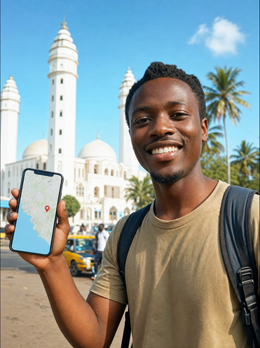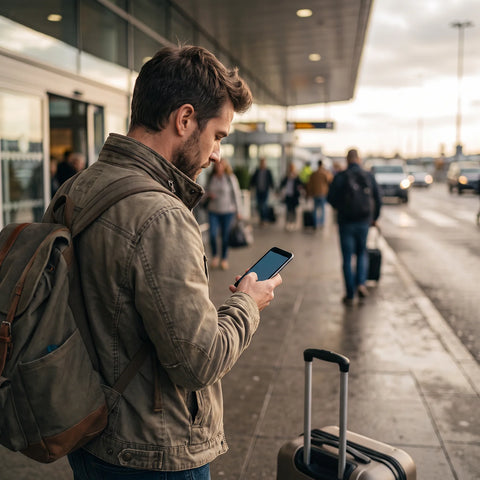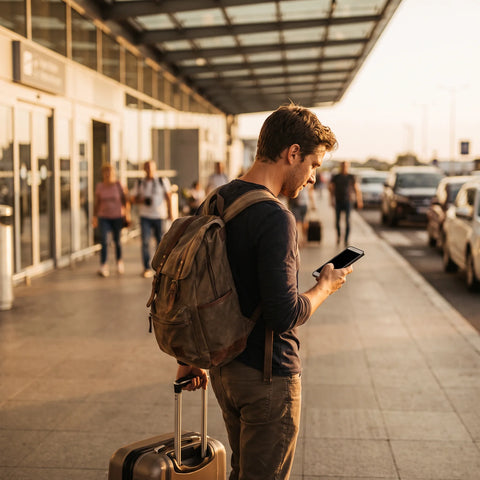

In short: an eSIM for Sierra Leone gives you mobile data from the moment you land in Lungi, without having to find a store or register your passport. It connects to Orange or Africell depending on the signal in each area, covers Freetown and large cities well, and becomes irregular in the rural interior. It can be activated from home in a minute, before you fly.
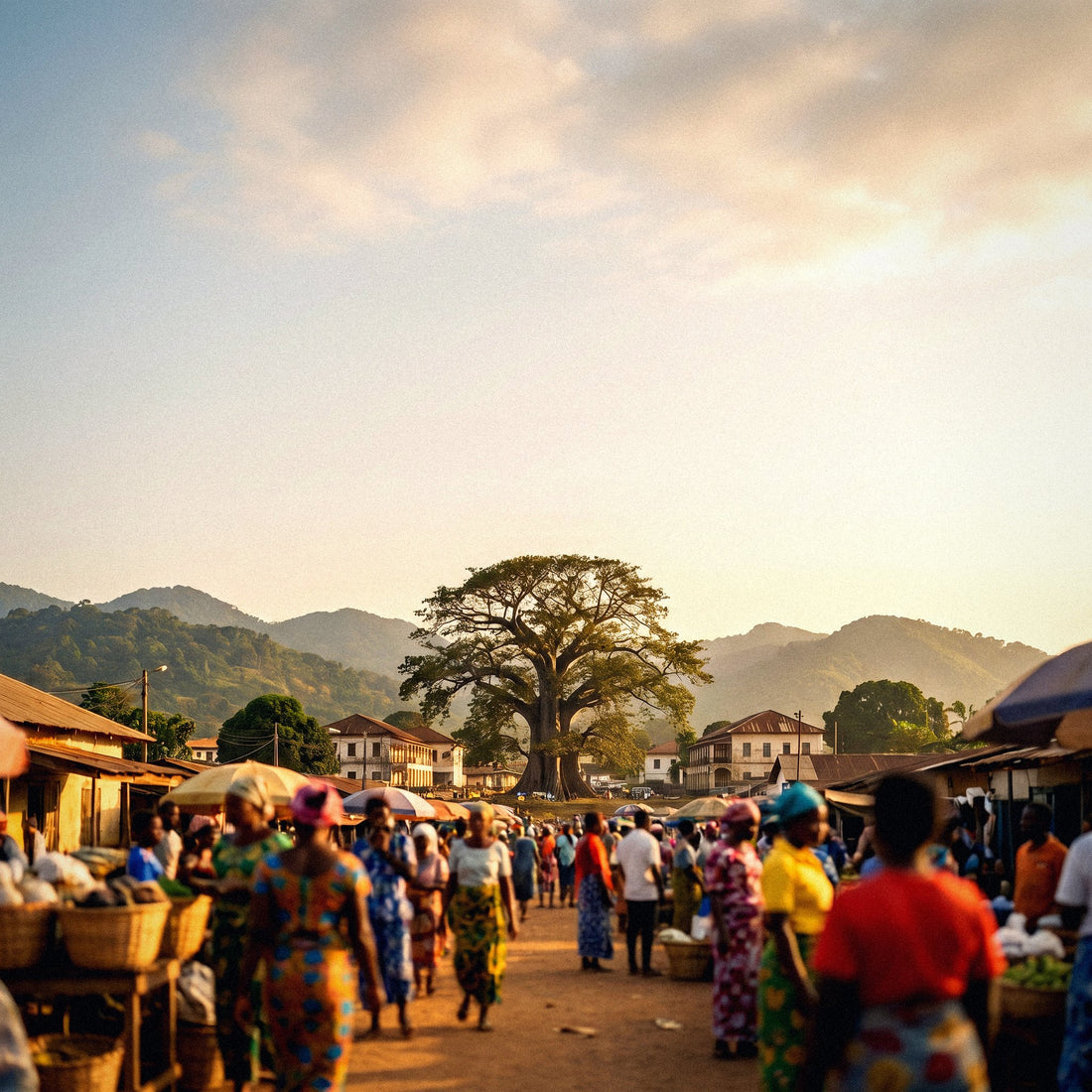
Sierra Leone is not a mass tourism destination, and this is also evident in its telephony: you won't find a tourist SIM card stand on every airport corner like in Morocco or Thailand. If you're traveling for cooperation, mining or port work, or to discover still almost empty beaches like Tokeh or River No. 2, you need to sort out your connection before boarding the plane. An eSIM for Sierra Leone ensures you have active data as soon as you land at Lungi airport, without queues, without changing physical cards, and without depending on whether the operator's store is open that day.
Does an eSIM work in Sierra Leone, and what phone do you need?
Yes, it works just like in any other country: it's a digital profile that replaces the physical card and connects to local mobile networks through roaming agreements. The difference compared to a plastic SIM is that you install it by scanning a QR code, without opening your phone's tray or relying on being sold a card at your destination.
The condition is that your phone must be eSIM compatible and unlocked by your operator. Most mid-to-high-end models from recent years are, but there are important exceptions: some iPhones originally sold in the United States or China come with the eSIM factory-locked, and certain imported Android models do not include the necessary physical chip even if the software suggests it. Before purchasing, check your model with the guide on how to install an eSIM, which also explains the process step-by-step with screenshots.
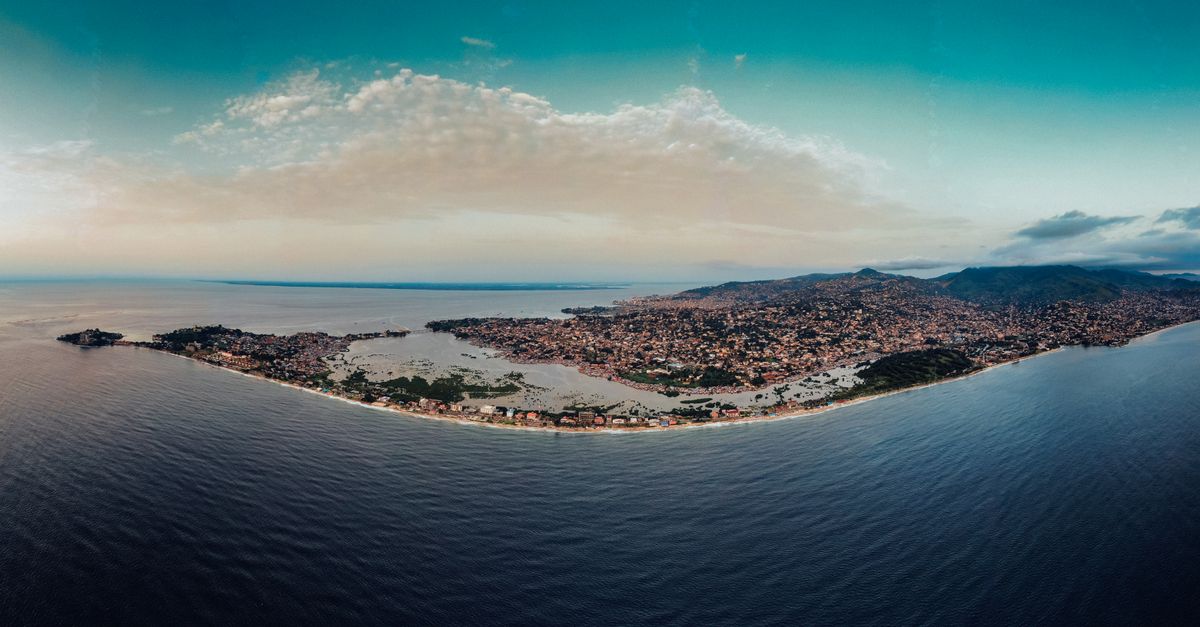
Orange and Africell: the country's two operators
Sierra Leone's mobile market is dominated by two companies: Orange Sierra Leone, which absorbed the former Airtel and now has the broadest national deployment, and Africell, with a very strong presence in the Freetown metropolitan area and a good reputation among local users for its data speed in the capital. There is no third relevant operator for travelers; the real choice is between these two.
With a travel eSIM, you don't have to guess which one is best for you or contract directly with either: the profile automatically connects to the network available with the best signal in each area, without you having to touch any settings. This is precisely the opposite of what happens if you buy a local SIM and are tied to that single network for the entire trip.
- Orange Sierra Leone: broader coverage outside Freetown, a good option if you travel inland.
- Africell: very strong within the capital and its metropolitan area.
- PuraSim eSIM: takes advantage of the best available network without you having to choose or configure anything.
Real coverage: Freetown, the peninsula, and the interior
The signal is concentrated where most of the population lives. Freetown has stable 4G coverage in the center, Aberdeen, Lumley, and commercial areas, and this good signal extends quite well along the peninsula to beaches like Tokeh, River No. 2, or Bureh Beach, which are less than an hour's drive from the capital. If you stay in any of these coastal enclaves, you'll have enough data for maps, WhatsApp, and some video calls without issues.
The large inland cities —Bo, Makeni, and Kenema— also have decent 4G coverage in their urban centers, though somewhat less robust than in the capital. Where things change is on the roads connecting these centers and in natural areas like the Tiwai Island reserve: there, the signal frequently drops to 3G or disappears for long stretches, especially if the journey goes through dense jungle. This is the usual pattern in much of West Africa, where infrastructure follows main roads and doesn't reach the rest of the territory uniformly.
Tip: If your route includes Tiwai Island or any road trip between inland cities, download the offline map and save your accommodation's address in text before leaving Freetown. Trying to regain signal to find it on the fly can cost you more than an hour of lost travel time.
eSIM vs. local SIM: the math isn't the same
Buying a physical SIM in Sierra Leone means finding an official Orange or Africell store—not always easy outside Freetown—, presenting your passport for mandatory registration, and waiting for the line to be activated. After a long flight to Lungi and then the journey to the capital, which usually involves a ferry or speedboat across the Sierra Leone River estuary, this process is precisely what you'd least want to deal with.
The eSIM resolves all that from home, with Wi-Fi, before you check your luggage. Plus, you keep your Spanish number active in parallel to receive bank SMS messages or urgent calls, without paying roaming for it if you keep data turned off on that line. For a business trip, cooperation, or exploration with a tight schedule, arriving already connected makes the difference between losing the first afternoon coordinating transport and having it sorted out from the moment you land.
- No queues or passport registration at a store.
- Data active as soon as you land in Lungi.
- You know what you'll pay before leaving home.
- Keep your Spanish number active in parallel.
That said, if your trip is a short, one-day stopover in Freetown before continuing your journey, consider if you really need to activate full data that day or if hotel Wi-Fi is enough: it doesn't always pay to spend GB for 12 hours of transit.
How many GB to get depending on your trip
The figure depends on your actual usage and whether your accommodation has decent Wi-Fi. In Freetown, many mid-range hotels offer acceptable Wi-Fi in common areas but it's unreliable in rooms, so it's advisable to count on mobile data as your primary connection, not as a backup.
| Traveler profile | Days | Recommended data |
|---|---|---|
| Layover or very short trip | 1-3 | 1-2 GB |
| Tourism in Freetown and the peninsula | 5-8 | 4-6 GB |
| Route including interior (Bo, Makeni, Tiwai Island) | 8-14 | 6-10 GB |
| Work or cooperation with video calls | 10-25 | 10-15 GB or unlimited plan |
If you run out of data on the ground, you can top up the same profile without rescanning any QR code. To calculate your actual consumption based on the apps you use, you have the guide on how to save data on a trip with an eSIM, with tips that work just as well here as in any other destination with limited coverage.
How to activate your eSIM step by step
The entire process takes a minute and requires no technical knowledge. The key is to install the profile at home, with Wi-Fi, and leave the data activation for the moment you land.
- Purchase the eSIM and receive the QR code instantly via email.
- At home with Wi-Fi, go to Settings > Mobile Data > Add eSIM and scan the code.
- Name the profile, such as "Sierra Leone," to avoid confusing it with your Spanish line.
- Upon landing in Lungi, activate the eSIM data and deactivate roaming for your usual line.
Installing the profile does not use data: consumption only begins when you activate the connection at your destination. If this is your first time using an eSIM, it's advisable to review the differences compared to a physical international chip, as some travelers think they need both, which is not the case. And if something goes wrong during installation, 24/7 support is available by email and WhatsApp in all languages.
What almost no one tells you before you go
There are details about Sierra Leone that don't appear in generic eSIM guides but do affect your actual connection on the ground.
Power outages affect signal, not just chargers. Freetown experiences frequent electricity cuts, and many antennas rely on backup batteries that don't last indefinitely. If you notice that your connection worsens in the evening during the rainy season (May to November), it's not your eSIM: it's the local network adjusting to an outage. Always have a charged power bank, because without phone battery, it doesn't matter how many GB you have left.
Heavy rain literally degrades the signal. During the wet season, strong downpours attenuate the 4G signal outdoors, which is more noticeable on the coast. If you're expecting an important video call, seek shelter indoors before it starts raining heavily instead of trying to make it from the street.
The eSIM doesn't work for Orange Money. Many hotels, taxis, and local guides in Sierra Leone charge via mobile transfer (Orange Money), which requires a local line with a Sierra Leonean phone number, not just data. If you plan to rely on local mobile payments, find out beforehand if your accommodation accepts cards or cash in dollars, because an eSIM provides internet, not a local payment method.
Lungi is not "in" Freetown. The international airport is on the other side of the Sierra Leone River estuary, and reaching the city center requires a ferry, speedboat, or a long, multi-hour road detour. Having active data from the airport allows you to coordinate with your accommodation or driver via WhatsApp about which transfer option suits you best, which makes a big difference when your flight arrives at night.
A common myth: thinking you need to buy two SIMs, one for each operator. Since Orange and Africell have different strengths depending on the area, some travelers buy SIMs from both "just in case." With an eSIM, that problem disappears automatically, because the profile already selects the best available network without you having to duplicate anything.
Frequently asked questions
Which operators are in Sierra Leone and which one does the eSIM use?
The two operators in the country are Orange Sierra Leone and Africell. With a travel eSIM, you don't choose which one to use: the profile automatically connects to the network with the best available signal in each area, taking advantage of the coverage of both depending on your location.
Will I have coverage outside Freetown?
Yes, in large inland cities like Bo, Makeni, and Kenema, there is reasonable 4G coverage. On rural roads, jungle areas, and nature reserves like Tiwai Island, the signal is irregular and can drop to 3G or disappear for long stretches. Download offline maps and addresses before leaving the capital.
Do I need to register my passport to activate the eSIM?
No. That process is specific to buying a physical SIM card at a local store. A travel eSIM is purchased online before leaving home and activates automatically with a QR code, without any in-person registration upon arrival in Sierra Leone.
Can I use WhatsApp and make video calls to Spain?
Yes, with mobile data, you'll have plenty for WhatsApp, video calls, email, and maps. If you also want to continue receiving SMS or calls on your Spanish number, keep that line active without mobile data to avoid roaming charges.
What currency is used and does it affect the purchase of the eSIM?
The local currency is the Leone (SLL, redenominated as SLE). This doesn't affect your purchase: the eSIM is paid for from home before flying, using your usual payment method, without having to exchange currency to get internet.
What happens if I run out of data halfway through my trip?
You top up the same profile from the app or website without scanning a new QR or reinstalling anything. That's why it's best to start with a plan suited to your actual days and only extend it if you need to, instead of overpaying for GB you won't use.
Does the same eSIM work if I continue my trip to Europe or the United States after Sierra Leone?
No: each destination requires its own data profile. If your route continues to the European continent, check the eSIM for Europe, and if your next destination is the United States, the eSIM for the United States. Both install just as quickly, and you can have multiple profiles saved on the same phone at once.
Conclusion
Sierra Leone rewards those who arrive prepared: between the journey from Lungi, occasional power outages, and an interior where coverage isn't constant, landing with active data saves you the most uncertain hours of your trip. With an eSIM, you have Freetown, the peninsula, and the main cities covered, a price you know before leaving home, and zero registration procedures upon arrival. Get your eSIM for Sierra Leone before you fly and dedicate your first afternoon to the beach, not to finding a mobile store. If your itinerary includes a stopover in Spain or you want a backup line, also check the eSIM for Spain before you leave, and remember that PuraSIM covers more than 200 destinations with 24/7 support via email and WhatsApp in all languages.