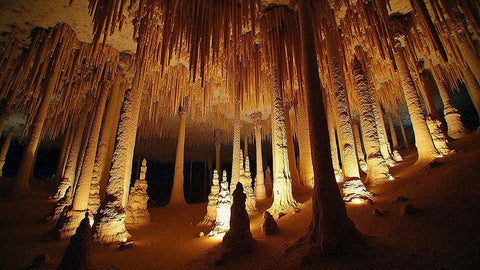
In short: an eSIM Slovenia provides you with mobile data as soon as you land in Ljubljana, with no roaming or physical SIM card changes. 4G/5G coverage is very good in cities and tourist areas (Bled, Piran, Postojna Caves), and only fails in mountain sections of the Julian Alps. With 3-5 GB, you'll cover a typical one-week getaway.
Why install an eSIM before going to Slovenia?
Slovenia is one of those countries where you travel by rental car or regional train, constantly checking your phone: the route to Lake Bled, the train reservation inside the Postojna Caves, a photo of the Dragon Bridge in Ljubljana. All of this requires data, and paying for roaming for every gigabyte or looking for Wi-Fi in every cafe is not the best way to start a short trip.
An eSIM Slovenia solves this before you even leave home: you scan a QR code with Wi-Fi, the profile installs in a couple of minutes, and when you land at Jože Pučnik Airport, you just need to activate it. You keep your Spanish number available for WhatsApp and calls, and add a data line that works from the very first moment. If you've never used one, it's a good idea to first review what a virtual eSIM is to understand the difference from a physical card.
Slovenia has been a member of the European Union since 2004 and the Schengen Area, so your Spanish tariff includes "roaming like at home" within the country: you can use your usual data without extra cost, within the limit set by your contract. The problem is not that it doesn't work, but that this limit is usually short for a trip with daily navigation, photos, and videos, and runs out sooner than expected.
Mobile coverage in Slovenia, area by area
The Slovenian mobile network is one of the best in Central Europe for the size of the country: 4G in almost one hundred percent of inhabited territory and 5G already deployed in Ljubljana, Maribor, and a good part of the coast. The highways connecting the main cities are also well covered, so there are no surprises if you drive the route.
Where the signal changes is in mountain areas and underground. In Triglav National Park, especially above high mountain refuges, coverage is intermittent: there are sections with good signal in the valleys and black holes on the ridges. Inside the Postojna and Škocjan caves, logically, there is no coverage while you are underground; the Postojna tourist train restores the signal as soon as you exit.
| Area | Coverage | What to do |
|---|---|---|
| Ljubljana, Maribor, Celje | Very good (4G/5G) | Nothing to prepare |
| Lake Bled and Bohinj | Good in the main areas | May drop on the less touristy shore of Bohinj |
| Coast (Piran, Portorož, Koper) | Very good | No problems, even in high season |
| Julian Alps and Triglav | Variable, worse at high altitudes | Download offline map before ascending |
| Postojna and Škocjan Caves | No coverage underground | Normal, signal returns upon exit |
| Vintgar Gorge | Weak in the canyon section | Download the route before entering |

For a classic city, lake, and coast itinerary, coverage will not cause any trouble. The only real precaution is to download the offline map before heading into Triglav National Park or Vintgar Gorge, just as you would in any Alpine region of Europe.
Local SIM, roaming, or eSIM: what's best in each case
Several companies with their own network and solid coverage operate in Slovenia, so buying a local SIM is perfectly possible. The question is not whether it works, but whether it's worth it for your type of trip. For a three or four-day stay, it almost never pays off: you have to find a store, sometimes show your passport, manually configure the APN, and, most importantly, lose your number while the chip is inserted.
| Option | Advantage | Disadvantage |
|---|---|---|
| Roaming from your operator | No action required | Limited data within the EU, no margin if you leave the bloc |
| Local physical SIM | Local rates, good network | In-store management, lose your number while inserted | Travel eSIM | Installs before departure, keep your number | Requires an eSIM-compatible mobile phone |
Here it's important to be honest: if you're going for a short weekend in Ljubljana and your Spanish plan has plenty of data for roaming, you don't need to buy anything. European roaming is for that. The eSIM clearly wins when the trip lasts more than three or four days, when you're going to use maps and navigation intensively, or when your route continues to countries outside the European Union, where free roaming doesn't apply.
And here's a nuance that often causes confusion: Croatia, although sometimes mentally grouped with "the Balkans," has been a full member of the European Union since 2013 and is part of the surcharge-free roaming area, in addition to having joined the Schengen area in 2023. If your route goes from Slovenia to the Croatian coast, your Spanish rate will still work the same as in Ljubljana. Where cheap roaming really ends is when entering Bosnia, Serbia, Montenegro, North Macedonia, or Albania: these countries are not in the EU, and the cost of roaming there skyrockets.
For a short getaway, the real saving with an eSIM isn't just about money: it's about not wasting a single minute looking for a phone store as soon as you land at Ljubljana airport.
If you want to better understand the technical difference between these three options before deciding, the guide on eSIM vs. roaming explains it in more detail, and the comparison of international chip vs. eSIM resolves doubts if you are still undecided between a physical chip and a digital profile.
How many GB to get depending on your itinerary
For a typical 4-to-7-day Slovenia getaway, 3 to 5 GB are usually sufficient for normal use: Google Maps or Maps.me, messaging, social media, and uploading photos of Lake Bled or the Piran coast, which you'll have plenty of here. Consumption spikes with video streaming and long video calls, so if you know you'll be making some, factor that in separately.
- Weekend getaway in Ljubljana: 1-2 GB will be more than enough for maps, social media, and messaging.
- Week with Bled, Bohinj, and the coast: 3-5 GB, including daily photos and navigation.
- Longer route combining countries or remote work on the go: 10 GB or more, especially if video calls are involved.
When in doubt, it's better to get a bit more than to run out: topping up data in a hurry from your phone, without Wi-Fi and in the middle of a mountain trail, always turns out worse than having planned your package well before leaving home.
How to activate your eSIM step-by-step
Installation takes just a couple of minutes, but it's best to do it calmly and with Wi-Fi, not standing in a check-in line.
- Purchase the Slovenia plan and receive the QR code via email.
- With Wi-Fi at home, go to your phone's mobile data settings and add a plan by scanning the QR.
- Name the new profile (e.g., "Slovenia") so as not to confuse it with your usual line.
- Keep your main line's roaming deactivated and, upon landing, activate the data for the eSIM profile.
If you get stuck at any step, the guide on how to install an eSIM details it with screenshots for iPhone and Android. One detail often overlooked: some phones allow two data profiles to be active at the same time (dual eSIM or eSIM + physical SIM), but only one transmits data at any given moment; check in your settings which is the active "data profile" before leaving the hotel, as it's easy to lose connection thinking the eSIM is on when your Spanish line is actually still active.

What almost no one tells you before you go
Beyond coverage and GBs, there are details about traveling to Slovenia that are not found in any data plan's technical specifications:
- The rental car's GPS doesn't replace your phone's maps. Many secondary roads to Bohinj or the villages in the Soča valley are poorly signposted on the integrated navigators of some cars; Google Maps with your own data usually does better with temporary detours due to roadworks, which are quite common in the alpine region in summer.
- Online reservations are key for the caves and Bled. Both the Postojna Caves and Predjama Castle, or the traditional boat (pletna) to Lake Bled island, work better if you reserve your time slot from your mobile on the same day, because in high season, morning slots fill up quickly. Without data at the moment, you're left making "blind" reservations via hotel Wi-Fi the night before.
- Ljubljana is for walking, not driving. The historic center is almost entirely pedestrian; if you're coming from Bled or the airport by car, leave the vehicle in one of the parking lots on the outskirts of the center and move around on foot or by public bike: with offline maps or active data, it's much easier to find parking spaces before driving around in circles.
- Card or mobile payments are widely accepted, even at market stalls or mountain huts, but it's advisable to carry some cash in euros for high mountain refuges in Triglav, where sometimes only cash is accepted.
- A common mistake: activating the eSIM too early. If you activate it as soon as you land but take a while to get to the hotel, you start consuming the plan from the airport unnecessarily. Activate it only when you're actually going to use it, or just before leaving the arrivals area if you already know you'll need it for the journey.
And, to be honest: if your trip to Slovenia is two or three days and your Spanish plan has plenty of roaming data, you probably don't need to buy anything. Save the eSIM for trips where it really makes a difference: long routes, multiple countries, or stays where your roaming limit falls short.
Slovenia as part of a longer trip
Few people travel only to Slovenia: it is often combined with Croatia, Italy or Austria on a tour of Central Europe, taking advantage of how small the country is. If your plan includes several borders, a plan that covers them all makes more sense than buying a different eSIM for each country.
For routes within the European Union that combine Slovenia with other countries on the continent, a data plan for the entire region such as the Europe eSIM saves you from having to change profiles every time you cross a border. And if your year of travel will include both Slovenia and Ireland on different dates, there is a combined plan designed precisely for that: the Ireland-Slovenia eSIM.
For a single stop focused on the country, without combinations, the most suitable option remains the Slovenia eSIM, with enough data for the entire stay and without overpaying for coverage you won't use. If you also want to protect your privacy when connecting to public Wi-Fi networks at the hotel or airport, it is also advisable to review the guide on eSIM, VPN and privacy when traveling.
Frequently asked questions
Is there good data coverage in Slovenia?
Yes, and among the best in the region. Slovenia has 4G in practically all inhabited parts of the country and 5G in Ljubljana, Maribor, and a good part of the coast. It only loses strength in high sections of Triglav National Park and, logically, inside the Postojna and Škocjan caves.
How many GB do I need for a week in Slovenia?
For average use over a week with maps, messaging, social media, and photos, between 3 and 5 GB is usually enough. If you plan to make long video calls or work remotely during your trip, it's better to calculate from 10 GB upwards.
Will my Spanish tariff work in Slovenia?
Yes, as it is a European Union country, your Spanish roaming works without additional cost, within your contract's data limit. The problem is not that it fails, but that this limit often falls short on multi-day trips with daily maps and photos.
Does free roaming also work if I cross into Croatia?
Yes. Croatia has been a member of the European Union since 2013 and is part of the same surcharge-free roaming area, so your tariff continues to work the same as in Slovenia. European roaming ceases to apply when entering Balkan countries that are not part of the EU, such as Bosnia, Serbia, or Montenegro.
Do I need to buy a local SIM in Slovenia?
It's usually not necessary. A travel eSIM avoids finding a store, showing your passport, and losing your number while your local chip is installed. You buy it online, install it before you fly, and land with data ready, which for short stays saves time and hassle compared to a local SIM.
Does the eSIM work inside the Postojna caves or in the mountains?
Underground there is no coverage from any operator, so the eSIM will not transmit inside the cave; you regain signal as soon as you exit. In high areas of Triglav, coverage is variable, so download offline maps before going up.
Which mobile phones are compatible with eSIM?
Most mid-range and high-end mobile phones from recent years, both iPhone and Android, support eSIM. It's advisable to check your phone's settings before purchasing the plan, as some models sold outside certain markets may not have this feature activated.
Conclusion
Slovenia has excellent mobile coverage for its size and is best enjoyed with data from minute one: maps to Lake Bled, reservations for the Postojna Caves, and photos of the Piran coast without constantly checking roaming consumption. Calculate your GBs based on your travel days, and if your route crosses multiple borders, consider a regional plan instead of buying country by country. With over 200 destinations in the catalog and 24/7 support in all languages via email and WhatsApp, PuraSIM's eSIM for Slovenia gets you online as soon as you land, with no surprises on your bill when you return.