In short: an eSIM Gibraltar gives you internet as soon as you cross the border, without roaming or surprise bills. Since Brexit, the Rock has been outside the European roaming zone without surcharge, so your Spanish plan may charge you extra-community roaming fees. Install it via QR code in a minute, land with data, and forget about hotel Wi-Fi.
Crossing the border from La Línea and realizing your phone loses its Spanish service is more common than you think. Gibraltar is a tiny destination, but it hides a big trap in the fine print of your contract. This guide provides everything you need: why roaming no longer works as before, what coverage you'll find, how many GB to take depending on your trip type, and how to activate your eSIM step-by-step to land with internet, without roaming, without stress.
What is an eSIM and why is it useful in Gibraltar?
An eSIM is a digital SIM card already integrated into your mobile phone. Instead of inserting a plastic chip, you download a data profile by scanning a QR code, and you're all set. There's no need to go to a store, no waiting for anyone, and you don't have to remove your Spanish SIM from your phone. That's precisely the advantage for a destination like the Rock: your usual number remains active, receiving calls and SMS, while data travels via the eSIM.
In Gibraltar, this matters more than in other places. Being a small territory (just over 6 km²) and usually a short getaway, you don't want to complicate things with a physical SIM or a monthly plan you won't amortize. You want something light, controlled, and functional from minute one, without removing your Spanish chip or changing your usual number.
Do you really need an eSIM in Gibraltar?
Yes, almost always. Gibraltar is not part of the European Union's free roaming zone, so your Spanish plan might charge you international roaming fees at very unfriendly prices. A data eSIM for Gibraltar activates in a minute, works as soon as you land or cross the border, and avoids that surprise on your next month's bill.
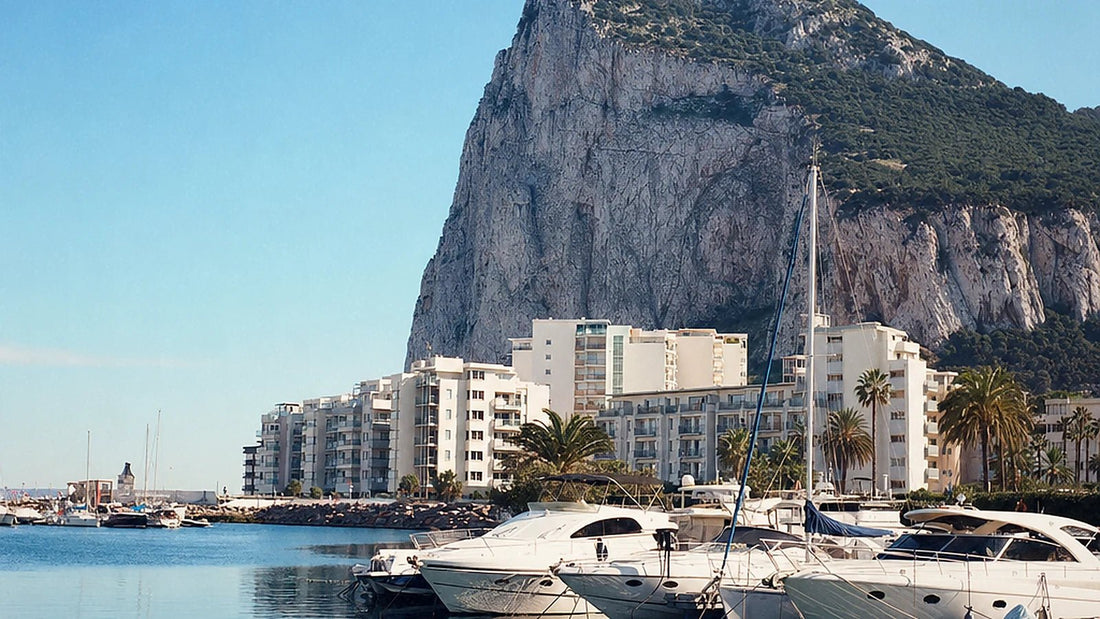
The Rock is tiny, but most visitors come from the Costa del Sol for a day trip: taking the cable car, seeing the famous Barbary apes in the Nature Reserve, walking along Main Street, or duty-free shopping. For all these plans, you'll want Google Maps, messaging, looking up cable car or bus schedules, and sharing photos without thinking about how much each megabyte costs. Since the destination is small and stays are usually short, the key is a light but reliable plan, not an expensive one. With an eSIM, you control your spending in advance and don't touch your Spanish SIM.

Roaming in Gibraltar after Brexit: what changed
Straight to the point: since 2021, Gibraltar ceased to be covered by the European "roam like at home" regulation. This means that Spanish operators like Movistar, Vodafone, Orange, or Yoigo can apply extra-community roaming tariffs. These tariffs are usually significantly higher than within the EU and, depending on your contract, can be billed per day of use or per consumption, easily exceeding several euros per day. The exact price depends on your operator and your specific tariff, so it's advisable to check before leaving home.
The most deceptive detail is network reception from Spain. If you are in La Línea de la Concepción or even Algeciras and your mobile phone mistakenly "hooks" onto a Gibraltarian antenna from the Spanish side, you could be billed for roaming without having set foot on the Rock. This is a real situation that catches many people in the area off guard. That's why many travelers activate an eSIM or directly disable data roaming on their main SIM before approaching the border.
If you are a customer of a Spanish operator and want to know exactly what you are exposed to, we recommend reviewing Movistar roaming prices and alternatives. And if you still have doubts about how roaming works, in what is data roaming we explain it without technical jargon.
Border trick: before crossing the border, deactivate mobile data on your Spanish SIM and let the eSIM handle the internet. This way, no antenna on the Rock will bill you by surprise from the Spanish side.
Coverage and local operators in Gibraltar
Coverage in Gibraltar is excellent for its size. Being an urban and very compact territory, there is 4G and 5G signal in practically the entire core, the port, the airport, and the commercial area. The historical local operator is Gibtelecom (GibTel), accompanied by other mobile providers in the territory. A travel eSIM relies on these local networks to provide you with data without you having to buy a physical SIM in any store or configure anything manually.
- Gibtelecom / GibTel: the main network, with good speed in the center and the port.
- Coverage on the Rock: when climbing the Rock (cable car, Upper Rock) the signal remains good, although in caves like St. Michael's it may drop. This is normal in rocky interiors and does not depend on your plan.
- Border area and airport: at the border and the airport (whose runway literally crosses the main road) there is good coverage for calling a taxi or checking the bus.
With an eSIM, you don't have to choose the antenna yourself: the plan automatically connects to the best available operator at each point, so you don't worry about network names or manually configuring APNs on most modern mobile phones.
How many GB do you need for your trip to Gibraltar?
Gibraltar is usually a day trip or a short stop within a larger trip through Andalusia, so you don't need huge plans. As a general reference, 1 GB is more than enough for a day of maps, photos, and messaging. If you're going to make long video calls or upload many stories to social media, go up to 2-3 GB. Here's a guide by visit type.
| Visit type | Typical use | Estimated data |
|---|---|---|
| Day trip | Maps, photos, WhatsApp | 1 GB |
| Weekend | Social media, some video, navigation | 2-3 GB |
| Work stay (one week) | Email, video calls, maps | 5 GB or more |
| Base for exploring the Campo de Gibraltar | Maps + light streaming | 3-5 GB |
If in doubt, choose a little more than you think you'll need and download offline maps of the area before you leave: it's the simplest way to spend less data without giving up anything. To refine your actual calculation, check out how much data you need for travel, where we break down each app's consumption hour by hour so you can get the plan right the first time.
How to activate your eSIM for Gibraltar step by step
Activating an eSIM is as easy as scanning a QR code. Ideally, do it with Wi-Fi before leaving home, so your data is ready when you arrive in Gibraltar. The entire process takes less than a minute and doesn't require technical knowledge.
- Check that your mobile is eSIM compatible. Almost all iPhones from XS and most mid-to-high-end Android phones are.
- Purchase your eSIM for Gibraltar and you will receive a QR code via email.
- With Wi-Fi, go to Settings > Mobile Data > Add eSIM and scan the QR.
- Label the plan as "Travel," keep your Spanish line for calls, and activate the eSIM data when you cross the border.
That's the summary. If you prefer to see it with screenshots and all the details, you have the complete step-by-step in how to install an eSIM. Remember: your Spanish SIM stays inside your phone to receive calls and SMS with your usual number; you only switch data to the eSIM.

What almost no one tells you about connectivity in Gibraltar
Beyond the basics, there are details that make the difference between a smooth trip and an unpleasant bill. These are the ones that truly matter.
The phantom antenna from the Spanish side
We've already mentioned it, but it deserves its own section because it's the number one mistake. You don't need to set foot in Gibraltar for your mobile to pick up an antenna from the Rock. In areas of La Línea very close to the border, your phone might jump to the Gibraltarian network and start counting as extra-community roaming. The solution is simple: manually set your network to Spain mode or, directly, turn off data on your Spanish SIM when you approach the border.
Install first, travel later
eSIM installation requires an internet connection, but usage does not. This is a nuance that confuses many people. Download and install it at home with Wi-Fi, and then simply pause it. When you arrive, you only need to activate the data: you don't need Wi-Fi to "turn it on." Arriving at a destination without coverage and without the eSIM installed is the classic stumbling block that can be avoided in two minutes.
Beware of "Europe" plans that exclude the Rock
This is where the most expensive mistake lies. Many regional European plans do not include Gibraltar due to its special status after Brexit. If you buy a generic European plan assuming the Rock is included, you might find yourself there with no coverage and resort to roaming. Before purchasing, always confirm that Gibraltar is listed in the coverage. If your route is only Spain plus a hop to the Rock, it's often better to combine your Spanish plan with a specific Gibraltar eSIM than to risk it with a continental package.
Download offline maps
The Rock has narrow streets, tunnels, and an upper part with irregular coverage in rocky interiors. Downloading the map of the area on Google Maps before going up saves you data and prevents you from being without GPS inside a cave or tunnel. Five seconds of foresight, zero hassles.
Gibraltar and the crossing to Spain or Morocco
Many travelers combine Gibraltar with the Costa del Sol or a getaway to Morocco from the port of Algeciras or Tarifa. If that's your plan, keep in mind that each area uses a different network: in Spain your plan works normally, in Gibraltar extra-community roaming comes into play, and in Morocco you need completely separate coverage.
The most convenient option is to carry a specific eSIM for the Rock and, if you continue your journey, another for your destination country. For the Moroccan part, our guide for travelers with eSIM in Morocco will be useful, and if you move around Andalusia, your Spanish plan is sufficient (or an eSIM for Spain if you are a foreigner). This way, each segment of the trip has its own data without relying on public Wi-Fi or surprise bills.
Frequently asked questions about eSIM in Gibraltar
Does EU roaming work in Gibraltar?
No. Since Brexit, Gibraltar is no longer part of the EU's surcharge-free roaming zone. Your Spanish plan may charge you extra-community roaming, which is usually considerably more expensive than within the EU. A local data eSIM avoids this surcharge because it relies on the territory's own networks.
What is the local operator in Gibraltar?
The historical operator is Gibtelecom (GibTel), which offers good 4G and 5G coverage in the urban core, the port, and the commercial area. With a travel eSIM, you don't have to contract with them directly: the plan automatically connects to local networks, without manual management or configuration.
Can I use the same eSIM in Gibraltar and Spain?
It depends on the plan. A specific eSIM for Gibraltar covers the Rock; in Spain, you would use your usual plan. If you are traveling through several countries, regional European plans exist, but it is advisable to confirm before purchasing that they include Gibraltar, as many European plans exclude it due to its special status.
How much data do I use on a day trip?
For a day of maps, photos, and messaging, 1 GB is more than enough. If you make long video calls or upload many videos to social media, estimate between 2 and 3 GB. Downloading offline maps of the area before leaving significantly reduces actual consumption.
Can the eSIM be activated upon reaching the border?
Yes, but it's best to install it with Wi-Fi before leaving home. Installation requires an internet connection; usage does not. Get it ready at home and simply activate the data when you cross the border. The entire activation process takes less than a minute.
Does the eSIM drain my battery or affect my Spanish number?
Battery consumption is practically the same as a normal SIM. And your Spanish number is not affected: the physical SIM remains inside the mobile, receiving calls and SMS while data goes through the eSIM. You can decide at any time which line uses data from the settings.
What happens if I run out of data in Gibraltar?
As stays are usually short, it's rare to run out of data if you choose the right plan. If you do, most eSIMs allow you to top up the same profile or buy a new plan from your mobile (you'll need a temporary Wi-Fi connection to do so). That's why we recommend always getting a little more than you think you'll use.
Conclusion
Gibraltar is a small destination with a big trap: extra-community roaming after Brexit. With a light Gibraltar eSIM, you arrive with data, control your spending, and avoid a surprise bill from a Rock antenna from the Spanish side. Install it at home with Wi-Fi, activate data when you cross the border, and dedicate your trip to the monkeys, views, and shopping, not to monitoring your bill. Land with internet, without roaming, without stress.