In brief: Morocco has good 4G coverage in cities and tourist areas, but roaming with your European provider can cost you much more per day. A Morocco-specific eSIM gives you local data at competitive prices for the entire week, with no bill surprises. Activate it at home and you'll have internet from the moment you land.
Does eSIM work well in Morocco?
The short answer is yes, and quite well. Morocco has three main operators — Maroc Telecom (IAM), Orange Maroc, and Inwi — which together offer 4G LTE coverage to the vast majority of the country's population. For a traveler moving through typical tourist routes, connectivity is more than sufficient.
Quality international eSIMs typically connect to the Maroc Telecom (IAM) network, the country's leading operator with the most extensive infrastructure. IAM has roaming agreements with the vast majority of global eSIM providers, ensuring compatibility with virtually any eSIM you purchase.
An important detail: Morocco is not part of the European Union, so if you have an eSIM or data plan "for Europe only," it will not work here. You need an eSIM that explicitly includes Morocco in its coverage, either a country-specific plan or an international plan with global or African coverage.
The actual 4G speed you will experience in urban areas is more than enough for medium-quality streaming, video calls, and smooth browsing. In rural or mountainous areas of the Atlas, the connection usually drops to 3G, with a more limited but still functional speed for maps and messaging.
Coverage in Marrakech, Fez, and rural areas
Morocco is a country of contrasts, also in connectivity. Here is a realistic coverage map by destination:
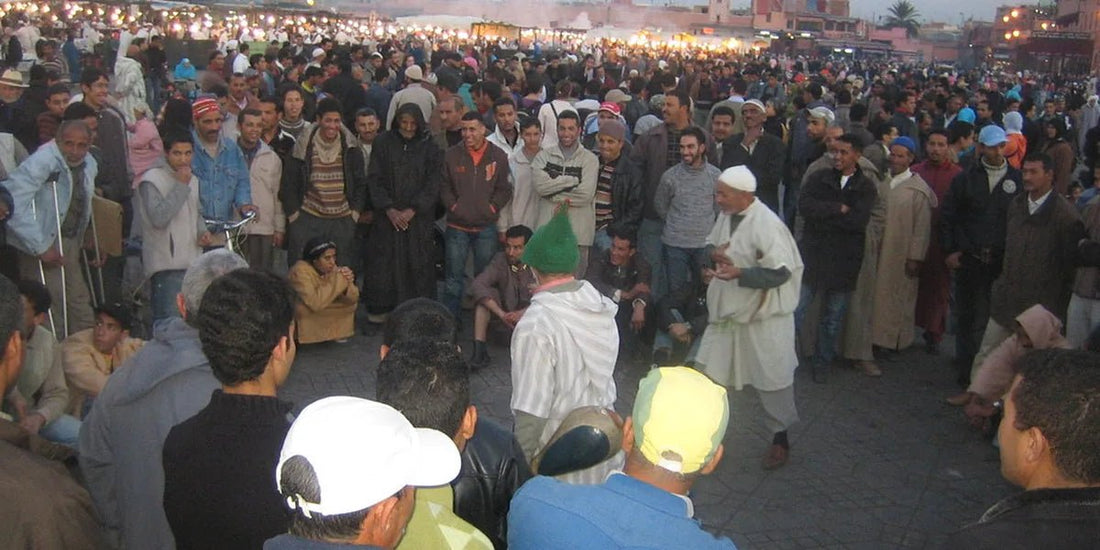
Marrakech — The country's most touristy city has excellent 4G coverage throughout the medina, Jemaâ el-Fna square, the Gueliz district, and the Palmeraie resorts. The signal is stable and fast even in the narrowest alleys of the souk.
Fez — The medina of Fez, a World Heritage site, has 4G coverage in most of its areas, although some deep parts of the old medina may have reduced signal to 3G. The modern center (Ville Nouvelle) has full 4G.
Meknes and Rabat — Both imperial cities have solid 4G coverage. Rabat, as the country's capital, has a particularly well-developed telecommunications infrastructure.
Casablanca — The country's economic city has 4G coverage from all three operators, with good 4G/LTE speeds in some areas of the center and corniche.
Agadir and Essaouira — The Moroccan Atlantic coast has good 4G coverage in Agadir (a consolidated tourist city) and variable 3G/4G in Essaouira. On the beaches south of Agadir, the signal can be more irregular.
Chaouen (Chefchaouen) — The blue city of the Rif has 4G coverage in the center, although excursions to the mountainous surroundings of the Rif may lose signal.
Sahara Desert (Merzouga and Erg Chebbi) — This is the most challenging point. In the village of Merzouga there is 3G/4G signal from Maroc Telecom. In the base camps next to the dunes, the signal is weak but present. However, there is no coverage in the Erg Chebbi dunes. Download your offline maps from Google Maps or Maps.me before heading to the desert.
Route of the Kasbahs and Draa Valley — This southern area has intermittent 3G coverage. Ouarzazate has 4G, but the Berber villages between Ouarzazate and Merzouga may have very limited signal.
How much data do you need in Morocco?
Data planning depends on your travel style. Here's a practical guide based on actual usage:
Light traveler (3-4 GB for 7 days) — You use pre-downloaded offline maps, WhatsApp for communication, and only browse occasionally. Perfect if you plan to disconnect during excursions.
Standard traveler (5-8 GB for 7 days) — The most common profile: real-time maps (Google Maps consumes about 50-80 MB per hour of active navigation), social media with photos, searching for restaurants and hotels, and occasional video calls via WhatsApp.
Connected traveler (10+ GB for 7 days) — If you plan to regularly upload content to social media, make long video calls, use your phone as a hotspot for a tablet or laptop, or watch videos during bus transfers between cities.
A specific tip for Morocco: download offline maps of the medina cities (Fez and Marrakech in particular) before you arrive. The souks are a labyrinth and real-time Google Maps consumes data quickly. Having downloaded maps saves you data and works even if you momentarily lose signal.
Train transfers between cities (Casablanca-Marrakech, Casablanca-Fez, etc.) have variable coverage. The train has Wi-Fi on some lines, but it is often slow and inconsistent — rely on your own eSIM for these journeys.
If you are short on data, there are tricks that make a difference without having to buy a larger plan: disable automatic video playback on Instagram and TikTok (it's the quietest data leak on a trip), download podcast episodes or playlists before leaving the riad with Wi-Fi, and disable automatic app updates in the background. In our guide to data saving tips for travel you have the rest of the settings, and they apply just as well to Morocco as to any other destination.
Alternatives to eSIM in Morocco
If for some reason your device is not eSIM compatible, these are the alternatives:
Local Moroccan SIM — You can buy a physical SIM from Maroc Telecom, Orange Maroc, or Inwi at the airport or in city stores. The process requires presenting your passport and can take between 20 and 45 minutes at the airport. Prices are very competitive for 5-10 GB packages, but it involves changing your SIM and temporarily losing your European number.
Roaming from your Spanish/European operator — This is the most convenient option but, for more than a couple of days, the most expensive: the daily cost of data in a non-EU country like Morocco skyrockets compared to what you pay in Spain, and in a week, the difference is noticeable on the bill. Furthermore, some operators with "unlimited" plans in Spain apply a much lower daily cap in countries outside the EU, insufficient for a normal trip. Always check the current price with your operator before you leave. Read our comparison of roaming versus eSIM to see why it pays off on almost any trip.
WiFi in accommodations and riads — Morocco has WiFi in the vast majority of riads and hotels, even the most traditional ones. However, the speed varies enormously (from 2 Mbps to 50 Mbps) and doesn't solve your connectivity when you're out exploring. Use it for heavy tasks (uploading photos, downloads) and supplement with your eSIM for daily use.
For more international eSIM options with coverage in multiple African and European countries, check our full catalog.
With all this on the table, here's a summarized comparison to help you decide at a glance:
| Option | What you need | When it's convenient | When it's NOT convenient |
|---|---|---|---|
| Morocco-specific eSIM | eSIM-compatible phone and WiFi to activate before departure | You're traveling only to Morocco, for a few days or several weeks | If you enter or leave Spain, Portugal, or another European country during the same trip |
| Europe and Morocco eSIM | Same, with combined coverage | Routes combining Morocco with the Iberian Peninsula or the rest of Europe | If you're only going to Morocco: the specific plan is usually more cost-effective |
| Local physical SIM (IAM, Orange, Inwi) | Passport and time at a store or airport | Long stays or if you need a Moroccan phone number | Short getaways: you lose time with the process and your European number stops receiving data |
| Spanish operator roaming | Nothing, it's already active on your line | A one- or two-day getaway where you don't want to change anything | Stays of three days or more: the cost quickly skyrockets |
| WiFi in riads and hotels | Being inside the accommodation | Heavy tasks: uploading photos, backing up, long video calls | As soon as you go out to explore: it doesn't cover you outside the building |
Myths and what almost no one tells you about connectivity in Morocco
There are several things you only discover once you're there, and it's good to know them before landing.
"WhatsApp calls work the same as in Spain" — Not always. Morocco has, at different times, restricted voice and video calls via WhatsApp, FaceTime, and Skype on local mobile networks, allowing normal use of messaging and data but blocking the VoIP part. If you arrive and can't make a video call even with plenty of data, it's not your eSIM: it's a network restriction. The usual solution is a VPN, something you should have configured before leaving home. You can find out why and how in our guide on VPN and privacy while traveling.
"During Ramadan nothing changes" — If your trip coincides with Ramadan, keep in mind that network activity skyrockets right after sunset, when the fast is broken (iftar): it's common to notice the network a bit more congested during those hours in large cities. It's no cause for alarm, but if you need to do something important online, it's better not to leave it for nine o'clock at night.
"With eSIM, I no longer need taxi apps" — On the contrary: that's when you'll use them the most. In Casablanca, Rabat, and Marrakech, ride-hailing apps like Careem or inDrive work, which avoid negotiating fares with petit taxis (a common source of friction with tourists) and require data to function. Arrive with your eSIM already active and you'll save yourself that haggling from the first trip from the airport.
"If I run out of data, I recharge it at a store like with a local SIM" — With an eSIM, there's no need to go anywhere: you buy an additional or larger plan from your mobile, even if you're in the middle of the desert with some coverage. With a Moroccan physical SIM, on the other hand, recharging requires finding a store or a Maroc Telecom/Orange/Inwi point of sale, explaining what you want (in French or Arabic in many small places), and wasting some time during the day. For a short trip, that difference matters more than it seems.
How to activate your eSIM before you arrive
Activating an eSIM for Morocco is a simple process if you do it in advance. Here are the steps:
Step 1: Verify that your device is compatible — Most iPhones since the XS (2018), Samsung Galaxy since the S20, Google Pixel since the 3, and many other modern smartphones are eSIM compatible. Check your phone settings for the "eSIM" or "Digital SIM Card" option. On iOS: Settings → Cellular → Add Data Plan. On Android: Settings → Connections → SIM card manager.
Step 2: Purchase your eSIM plan for Morocco — Choose an eSIM plan for Morocco based on the number of days of your trip and the data you need. You will receive an email with a QR code.
Step 3: Scan the QR code at home (with WiFi) — Open your iPhone's camera or the eSIM app on Android and scan the QR code. The eSIM will be downloaded and installed on your device. This process requires an internet connection (use your home WiFi).
Step 4: Set up the eSIM as secondary mobile data — Keep your local Spanish SIM active for calls and SMS, and configure the Morocco eSIM only for data. On iOS: Settings → Cellular → select the Morocco eSIM as the data line.
Step 5: Activate data upon landing — Upon arrival at Marrakech-Menara or Mohammed V Casablanca airport, activate the mobile data of your Morocco eSIM. Connection to the local network (usually Maroc Telecom) is automatic.
A key piece of advice: don't wait until the last minute. If you try to activate the eSIM at the airport, you'll need WiFi to download it, and airport free WiFi is usually slow and requires registration. Do it at home, calmly.
Do you have doubts about which eSIM to choose? Consult our general guide on eSIM for travel where we explain all the basic concepts.
Conclusion
Morocco is a fantastic destination that combines imperial cities, desert, Atlantic coast, and the Atlas Mountains in a single trip. Connectivity has improved greatly in recent years, and with the right eSIM, you can stay connected throughout virtually your entire tourist itinerary without paying abusive roaming charges.
The key is to choose a plan with enough data (minimum 5 GB for a week), activate it at home before leaving, and download offline maps of the cities you plan to visit. With that, your mobile will be the best travel guide you can take to Morocco.
Check out our eSIM plans for Morocco and choose the one that best suits your trip. If you are also visiting other Maghreb countries or Europe on the same trip, an international eSIM plan may be more economical.
Frequently asked questions
Does an eSIM work in Morocco?
Yes, international operator eSIMs work perfectly in Morocco, using the networks of Maroc Telecom (IAM), Orange Maroc, or Inwi depending on the provider's roaming agreement. 4G LTE coverage reaches most cities and tourist areas.
How much data do I need for a week in Morocco?
For a week-long trip with moderate use (maps, social media, WhatsApp, and some browsing), a 5 GB plan is sufficient for most travelers. If you plan to make video calls or use your phone as a hotspot, opt for 10 GB or an unlimited plan.
Does eSIM have coverage in the Sahara Desert (Merzouga)?
Coverage in Merzouga and the Sahara is limited but existing. In the village of Merzouga and the base camp, there is 3G/4G signal from Maroc Telecom. Once you venture into the dunes, the signal disappears. It is recommended to download offline maps before leaving.
Can I use my European eSIM in Morocco?
European eSIMs with coverage only in the EU do not work in Morocco, as the country is not part of the European Union. You need a Morocco-specific eSIM or an international eSIM that includes the country in its coverage.
When should I activate the eSIM for Morocco?
Ideally, activate the eSIM at home, before your flight, by connecting to WiFi. Activation can take between 5 and 15 minutes. This way, upon landing at Mohammed V Casablanca or Marrakech-Menara airport, you will have data immediately available.
Why can't I make WhatsApp video calls with my eSIM in Morocco?
It's not a problem with your eSIM or your data: Morocco has, at different times, limited voice and video calls via VoIP (WhatsApp, FaceTime, Skype) on local mobile networks, even if messaging and other data work normally. If this happens to you, the usual solution is to use a VPN.
What is the difference between an eSIM for Morocco and an eSIM for Europe and Morocco?
The Morocco-specific eSIM only covers that country and is usually more cost-effective if your trip doesn't go beyond its borders. The Europe and Morocco eSIM adds coverage in the rest of Europe, so it pays off if you visit Spain, Portugal, or another European country on the same trip before or after crossing the Strait.