
eSIM Southeast Asia
Connect in Thailand, Vietnam, Bali, Singapore, and all of Southeast Asia from minute one, with no roaming or bill surprises and QR activation in one minute. Real data, plans and 24/7 human support so you can focus solely on your trip.







We couldn’t find that destination. Try another name or browse the full list.
Why do you need an eSIM for Southeast Asia?
Southeast Asia is one of the world's favorite travel regions, but also one of the most expensive if you rely on your carrier's roaming. When crossing from Thailand to Cambodia, from Vietnam to Indonesia, or from Malaysia to Singapore, your usual plan can skyrocket to several dollars per megabyte consumed. A simple map, a message, or uploading a photo to the cloud can cost as much as a dinner, and many travelers discover the shock when it's already too late.
An eSIM solves this problem at its root. You buy the plan online, receive a QR code in your email, and install it on your phone from home with Wi-Fi, before you leave. When you land in Bangkok, Bali, or Hanoi, you automatically connect to the local network without changing physical SIM cards, without airport queues, and without language barriers. Your original SIM remains inside for WhatsApp and calls, while data travels via the eSIM at local prices.
How much does roaming cost in Southeast Asia?
Outside of European Union tariffs, roaming in Southeast Asia is among the most expensive available. It is common to pay between $8 and $15 per day with "daily roaming" packages, and if your carrier charges per consumption, you can see figures of $5 to $12 per MB outside of the package. On a two-week trip through several countries, that's easily hundreds of dollars. With a PuraSIM eSIM, you pay local rates and the savings exceed 90%, with plans starting from $3.99.
How much does an eSIM for Southeast Asia cost?
Our plans start at $3.99, with no contracts or hidden fees: you pay once for the days and data you need, and when it's over, it's over. You can choose a single-country plan or a regional plan that covers several destinations with the same eSIM, ideal if you combine Thailand, Cambodia, and Vietnam on the same route. Start with your first stop, for example with the eSIM for Thailand, and add what you need as you go.
How many GB do I need for Southeast Asia?
It depends on how much you use your phone. For maps, messaging, and some social media, a little is more than enough; if you make video calls, share a lot of videos, or use your phone as a router, upgrade your plan. This table serves as a quick guide:
| Duration | Light usage | Normal usage | Heavy usage |
|---|---|---|---|
| 3-4 days | 1 GB | 3 GB | 5 GB |
| 1 week | 3 GB | 5 GB | 10 GB |
| 2 weeks | 5 GB | 10 GB | 20 GB |
What is the best eSIM for Southeast Asia?
The best eSIM is one that relies on the real leading operators in each country: AIS and TrueMove H in Thailand, Viettel and Vinaphone in Vietnam, Telkomsel in Indonesia, Maxis and CelcomDigi in Malaysia, Globe and Smart in the Philippines, Singtel and StarHub in Singapore, Cellcard and Smart Axiata in Cambodia, Unitel in Laos, and DST in Brunei. Our eSIMs connect to these networks to give you the best available coverage:
- Real 4G/5G local network from the leading operators in each destination, not a secondary signal.
- Activation in 1 minute by scanning the QR, no stores or passport paperwork.
- Hotspot included to share data with your tablet, laptop, or travel companions.
- No contracts and with 24/7 human support whenever you need it.
Coverage in Southeast Asia: city by city
- Bangkok and Suvarnabhumi Airport (BKK): strong 4G/5G coverage throughout the city and transport.
- Singapore and Changi Airport (SIN): one of the best 5G networks in the world, excellent signal from end to end.
- Bali (Denpasar) and Ngurah Rai Airport (DPS): good 4G in Ubud, Canggu, and Seminyak.
- Kuala Lumpur and KLIA Airport: solid 4G/5G in the Petronas Towers and throughout the capital.
- Ho Chi Minh and Hanoi (SGN and HAN airports): very broad 4G coverage with Viettel.
- Siem Reap (Angkor temples) and Manila (NAIA): 4G in urban centers and tourist areas.
eSIM, local SIM, or pocket WiFi
A local SIM is cheap for data, but it means finding an official store upon arrival, showing your passport, losing your number, and repeating the process in each country on your route. A pocket WiFi connects several devices, but it's another device to carry, you have to pick it up and return it, and if you move away from it, you lose connection. An eSIM gets the best part: you install it before leaving, keep your WhatsApp on your physical SIM, it works in several countries, and you always have a connection with you, on your own phone.
How do you activate the eSIM for Southeast Asia?
- Purchase and receive the QR by email within minutes after payment.
- Install it at home with Wi-Fi, scanning the QR from your phone settings before traveling.
- Activate it upon arrival at your destination by turning on the eSIM data.
- Connect automatically to the local network and start browsing.
Tips to avoid overspending
- Install and test the eSIM at home with Wi-Fi to be fully prepared upon arrival.
- Disable the original SIM data and leave roaming off on it to avoid surprise charges.
- Download offline Google Maps of each city before you move around.
- Choose a regional plan if you are combining several countries on the same trip: it's more cost-effective than an eSIM per country.
Are you traveling to more destinations?
If your itinerary combines several stops, we have an eSIM ready for each: the eSIM for Vietnam, the eSIM for Indonesia, and the eSIM for Singapore cover the region's great classics. And if your trip takes you around the world, check out our global plans with coverage in dozens of countries with a single eSIM.
Guides for travelling to Southeast Asia
See all guides →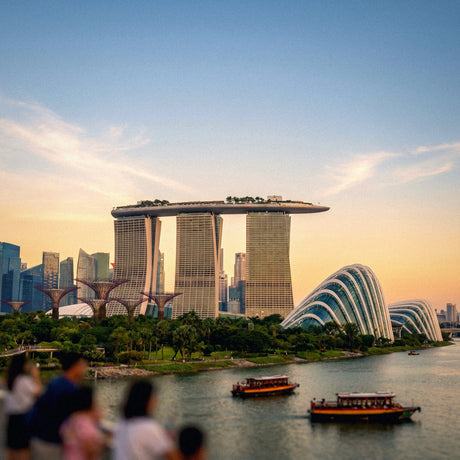 eSIM Singapore: Guide to the Most Connected City-State
 eSIM for Indonesia and Bali: The Complete Guide
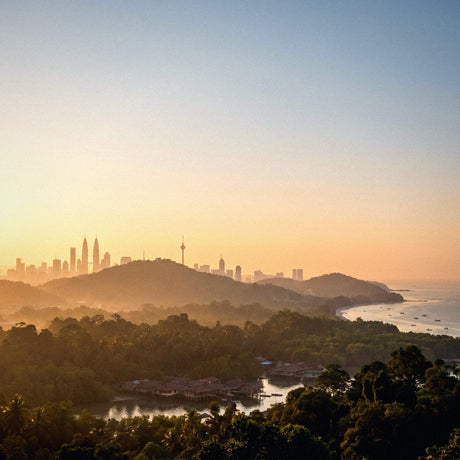 Internet in Malaysia: How to Get Connected (Options and the Best)
 eSIM for Bali (Indonesia): Internet Without Roaming – Coverage, GB Plans & Setup
 eSIM for Kuala Lumpur: internet from KLIA and data for your layover or getaway
 Internet in Indonesia and Bali: how to get connected

