
eSIM plans for Morocco
Get your eSIM for Morocco and arrive connected from the airport: 4G/5G internet with local networks, no roaming, and ready in a minute with a QR code.


We couldn’t find that destination. Try another name or browse the full list.
Why do you need an eSIM for Morocco?
Morocco is not part of the European Union, so your "roam like at home" plan won't work here: as soon as your phone connects to Maroc Telecom, Orange, or Inwi, your Spanish operator will charge you international roaming at exorbitant rates. A simple morning spent looking at the map in the Marrakech medina or searching for your riad in Fes could result in an unpleasant bill when you return home.
Until now, you had three inconvenient options: pay your operator's extremely expensive roaming fees, queue at Casablanca airport to buy a local SIM card (with paperwork and passport), or carry a pocket WiFi device that needs to be reserved, charged, and returned. The eSIM solves this: you buy it online, receive a QR code, install it before leaving Spain, and arrive in Morocco with data working from minute one.
How much does roaming cost in Morocco?
Since it's outside the EU, Spanish operators apply out-of-zone rates: roaming bundles for Morocco cost around €10-15 per day, and if you browse without a bundle, the megabyte rate skyrockets, making it easy to spend several euros for just a few MB. On a one-week trip, that's €70-100 just for data. With a PuraSIM eSIM, the same trip costs a fraction: savings are usually 80-90%.
How much does an eSIM for Morocco cost?
ESIMs for Morocco start with no commitment or hidden fees: you choose the GB based on the number of days you'll be traveling and only pay for what you need. If you run out, you can top up in two taps from your phone. See all eSIM plans for Morocco and pick the one that best suits your itinerary.
How many GB do I need for Morocco?
It depends on whether you'll only be using maps and WhatsApp or uploading stories daily. As a reference, messaging, email, and some social media use little data; watching videos, making video calls, or sharing many desert photos consumes much more. This table provides guidance based on your travel days:
| Duration | Light use | Normal use | Heavy use |
|---|---|---|---|
| 3-4 days | 1 GB | 3 GB | 5 GB |
| 1 week | 3 GB | 5 GB | 10 GB |
| 2 weeks | 5 GB | 10 GB | 20 GB |
What is the best eSIM for Morocco?
The best eSIM is one that relies on networks that truly cover the country. In Morocco, three companies operate: Maroc Telecom (IAM), Orange Maroc and Inwi. PuraSIM eSIMs connect to these local networks with 4G/LTE throughout the territory and 5G in major cities, so you get the same coverage as a Moroccan without changing your card.
- Real local network: direct connection to Maroc Telecom, Orange, or Inwi with 4G/5G, not a slow resold signal.
- Activation in 1 minute: scan the QR and be ready before you even take off.
- Share via hotspot: share your data with your tablet, laptop, or travel companions.
- No commitment and guaranteed: pay once, no contracts, and 24/7 Spanish support if anything goes wrong.
Coverage in Morocco: city by city
- Marrakech: strong 4G in the medina, Guéliz, and Menara Airport (RAK); ideal for moving between souks and riads.
- Casablanca: expanding 5G and full 4G, including the tram and Mohammed V Airport (CMN).
- Rabat and Fes: good urban coverage, Rabat tram, and Fes medina with stable signal.
- Tangier and Agadir: 4G/5G in the center, port, and coast, perfect for work or uploading content.
- Chefchaouen and Essaouira: solid coverage in the historic centers; in very narrow alleys, it may drop intermittently.
- Desert (Merzouga, Erg Chebbi, Sahara): 4G is available near towns like Merzouga or Rissani; inside the dunes, the signal becomes intermittent.
eSIM, local SIM, or pocket WiFi
A local SIM is cheap, but requires going to a store, showing your passport, and changing your number, and sometimes they sell it without data configured. A pocket WiFi provides connection to several devices, but you have to reserve it, charge it, monitor the battery, and return it at the end. The eSIM combines the best of both: you buy it from your couch, keep your WhatsApp with your Spanish number, and arrive connected without queues or deposits.
How do I activate the eSIM for Morocco?
- Buy and receive the QR: choose your plan and the QR code will be sent to your email instantly.
- Install it at home with WiFi: scan the QR from your phone settings before traveling; it won't use data yet.
- Activate upon arrival: land in Morocco and turn on the eSIM line with data roaming activated.
- Connect: your phone will connect to Maroc Telecom, Orange, or Inwi, and you're ready to browse.
Tips to avoid overspending
- Download offline maps of Marrakech, Fes, or the desert before leaving to use less data.
- Disable automatic backups and app updates over mobile data.
- Connect to your riad or hotel's WiFi for long video calls and heavy downloads.
- Check your usage from the settings and top up your eSIM before you run out.
Traveling to other destinations?
If Morocco is just one stop, we have more options: discover our eSIM for Africa if you're continuing on the continent, the eSIM for Spain for your return or layover, or the global plans that cover several countries with a single QR. Still not sure? Check out the best-selling popular destinations.
Guides for travelling to Morocco
See all guides → Best eSIM for Morocco in 2026: Comparison and Buying Guide
 Internet in Morocco: eSIM vs SIM vs roaming – which option is best for your trip
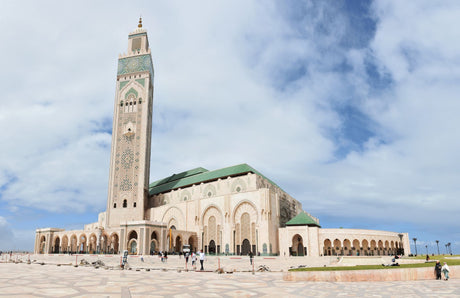 eSIM for Casablanca: Internet from the Gateway to Morocco
 eSIM for Morocco: coverage and plans for your trip
 eSIM for Morocco 10 days — From Marrakech to the Sahara
 eSIM for Morocco — Stay Connected Without Roaming in North Africa

