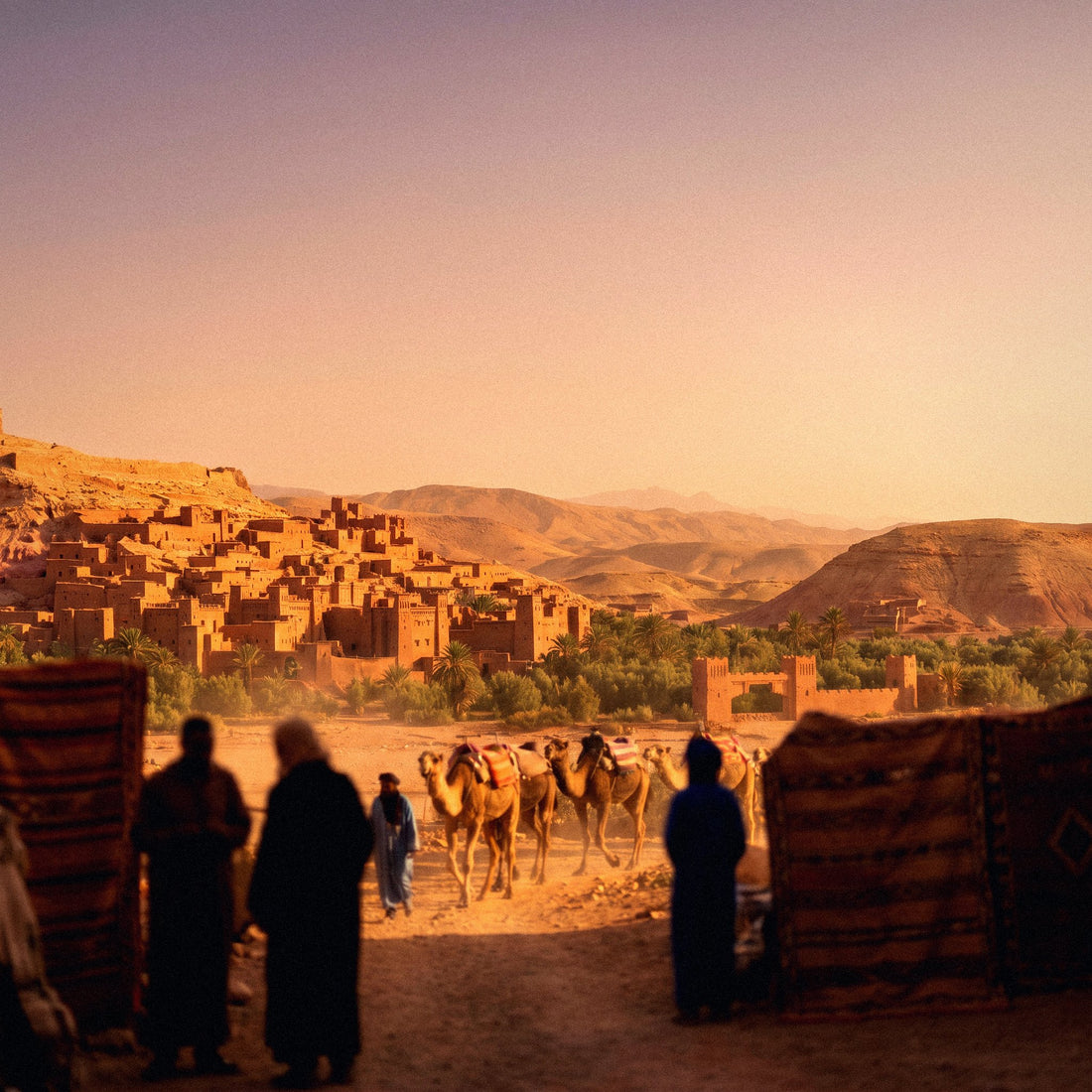
In short: the eSIM for Morocco gives you coverage and data plans from the moment you land, without relying on Spanish roaming (which doesn't apply here, as Morocco is outside the EU) or having to search for a physical SIM store in Tangier or Marrakech. You choose GB and days according to your itinerary, activate the QR before you leave, and arrive connected from the airport.
What is an eSIM for Morocco and why it changes your trip
For any traveler leaving Spain, Morocco is the first "real" destination outside the European Union: a short plane ride or even a ferry trip from Tarifa or Algeciras, but a complete leap in terms of mobile rates. The "roam like at home" regulation that lets you use your phone in France or Italy just like at home does not cover Morocco. As soon as your Spanish operator detects a Moroccan network, you enter non-EU roaming, and per-megabyte rates can skyrocket without you even realizing it until you see the bill.
The eSIM solves this from the opposite direction: instead of relying on your original operator, your phone connects directly to a local data network (or a pre-calculated roaming agreement) using a digital profile that you install before you travel. There's no physical card to insert, no need to look for a point of sale as soon as you land at Mohammed V Airport in Casablanca or Menara in Marrakech. You buy it, scan a QR code from home, and upon arrival, you activate the plan from your phone. If you've never installed one, in this step-by-step installation guide, we explain it calmly for any iPhone or Android model.
For those who frequently travel between Spain and North Africa, or simply want to understand the difference between traditional roaming and eSIM, it's also worth reading this comparison between eSIM and roaming, and if the term "data roaming" sounds like Greek to you, we explain it from scratch in our guides blog.
Coverage by operator in Morocco
Morocco has a much more developed mobile infrastructure than many people expect before arriving. The country's three major operators maintain a 4G network in all major cities and in the vast majority of roads connecting tourist destinations.
| Operator | Presence | Technology | eSIM Compatible |
|---|---|---|---|
| Maroc Telecom (IAM) | National coverage, most widespread in rural areas | 4G in cities and main routes | Yes |
| Orange Maroc | National coverage, strong in the Casablanca-Rabat-Tangier axis | 4G in urban centers | Yes |
| Inwi | National coverage, good coverage-price ratio locally | 4G in cities, more limited in remote areas | Yes |
Your PuraSIM eSIM for Morocco automatically connects to the network with the best signal available in each area, without you having to manually select the operator or worry about which one best covers your specific destination. The profile itself handles that switch.
City-by-city coverage
In Marrakech, Casablanca, Rabat, Fez, Tangier, and Agadir, 4G coverage is solid throughout the urban area, including the ancient medina of each city, where narrow streets and thick walls can sometimes affect the WiFi signal of riads but not so much the mobile network. You can browse, use maps, upload photos to social media, and make video calls without issues in any of these cities.
On road trips between cities (Marrakech-Essaouira, Fez-Chefchaouen, Casablanca-Rabat), coverage remains reasonably stable, with occasional short stretches of lower quality in mountainous Atlas regions. If you're going to drive long distances, especially through the Atlas or southwards, it's good practice to download the route map offline on Google Maps before you leave, as a backup.
Coverage in the desert and rural areas
This is one of the most common questions we receive and deserves an honest answer. In Merzouga and Zagora, the usual gateways to the Sahara Desert, there is acceptable mobile coverage in the villages themselves and in camps near the road. Once you venture into the dunes, in a remote tent camp, the signal can disappear completely or become very limited: it is a real desert area, with no antennas nearby. If you are going on a one- or two-night excursion to the desert, assume you will have little to no connection during those hours and notify whoever you need to before leaving the last town with coverage.
In rural areas of the Atlas, the Rif, or the less touristy Atlantic coast, coverage is usually 4G in population centers and may drop to a more limited network between villages. This is not an exclusive problem of the eSIM: the same applies to any local line or your Spanish operator's roaming.
How many GB you need: plans based on trip type
There's no single valid figure for everyone: it depends on whether you'll be using maps all day, sharing many photos and videos on social media, or if your connection is mainly for WhatsApp and checking email occasionally. This table gives you an approximate reference by traveler profile.
| Trip duration | Profile | Main usage | Data reference |
|---|---|---|---|
| 3-5 days | Short getaway (Marrakech, Tangier, ferry from Andalusia) | Maps, WhatsApp, occasional social media | Light plan |
| 7 days | Standard tourist trip (imperial route, coast) | Constant maps, photos, some video calls | Medium plan |
| 10-14 days | Long trip or backpacker | Intensive browsing, occasional streaming, light remote work | Large plan |
On the eSIM for Morocco plan page, you can see the GB, duration, and current price of each option before purchasing, and adjust it to your actual itinerary. If you have questions about how to make your data last without running out halfway through your trip, this article with tips for saving data with an eSIM has practical advice that works in Morocco as well as any other destination.
eSIM for Spain and Morocco: when your trip combines both countries
A very common question, especially among those who cross the Strait by ferry or combine a few days in Andalusia with a route through northern Morocco, is whether they need two different eSIMs or if there's something that covers both countries at once. The answer is that such an option does exist: PuraSIM has a plan specifically designed for those traveling between Spain and Morocco on the same trip, so you don't have to activate a new profile every time you cross the Strait.
If your route is wider and touches several European countries in addition to Morocco, the most sensible option is a plan that combines Europe and Morocco in a single profile, instead of buying one eSIM per country. It simplifies management and prevents you from having to change active data lines depending on where you are each day. And if your trip is only within European territory without stepping foot in Morocco, the eSIM plan for Europe is the most suitable option.
How to activate your eSIM for Morocco step by step
The process is the same as for any other destination, and once you do it the first time, you won't forget it:
- Buy the plan before leaving home, from purasim.com, choosing GB and days according to your itinerary.
- Install the profile (QR code) with WiFi, ideally several days before the trip, not at the airport just before boarding.
- Leave the eSIM installed but deactivated until you land or cross the border.
- Upon arrival in Morocco, activate it from Settings → Mobile Data (iPhone) or Connections → Mobile Networks (Android), selecting the Morocco data line.
- Keep your Spanish line as your call and SMS line if you want to remain reachable on your usual number; the eSIM only handles data.
This is, no exaggeration, the reason why people prefer eSIM over buying a physical SIM upon arrival: you save queuing at the airport, the passport procedure at the operator's store, and the time without connection while all that happens.
eSIM, local physical SIM, or roaming: comparison
| Option | Cost | Management | When you connect |
|---|---|---|---|
| Roaming from Spanish operator | Cost skyrockets outside the EU; it's advisable to check the exact rate with your operator before traveling | None, it's already active | From landing |
| Local physical SIM (Maroc Telecom, Orange, Inwi) | Local operator price, variable depending on point of sale | In-store process with passport, possible queue | After getting and activating the SIM |
| PuraSIM eSIM | Fixed price indicated on the product page, no surprises upon return | 100% digital, installed before leaving | From landing, no paperwork |
If you're still not clear on the exact difference between an eSIM and a physical chip you buy upon arrival, we break it down in more detail in this comparison between an international chip and an eSIM. And if your priority is to understand what an eSIM is in general before deciding, this article explains the concept from scratch.
What almost no one tells you before traveling to Morocco with mobile data
Beyond coverage and GB, there are a series of details that are usually learned by stumbling upon them, and it's good to keep them in mind beforehand.
Riad and hotel WiFi is not as reliable as it seems
Most riads in the medinas of Marrakech, Fez, or Chefchaouen advertise WiFi, and they do have it, but the signal is usually inconsistent: thick stone walls, inner courtyards, and multiple floors mean that WiFi coverage varies greatly from room to room. Having your own mobile data as a backup prevents you from depending on the riad's router for something as basic as confirming a reservation or sharing your location.
The ferry from Spain already has coverage, but it's not Morocco's
During the ferry crossing from Tarifa or Algeciras to Tangier, you usually maintain coverage from Spanish operators (in roaming, if you don't already have the Moroccan line activated). Your Morocco eSIM comes into play as soon as you disembark and your phone detects a Moroccan network; there's no need to activate it before boarding the boat.
WhatsApp and social media work without restrictions
Unlike other countries where certain messaging apps are blocked or limited, in Morocco, WhatsApp, Instagram, and other social media work normally. You don't need a VPN to use them, although if you are concerned about the privacy of your connection on public WiFi networks, you might be interested in reading about how to combine eSIM and VPN on a trip.
One large plan is not always better than two smaller, more tailored ones
If your trip combines, for example, four days of city exploration with heavy map usage and then three days on the beach in Essaouira with hardly any connection, sometimes it's more worthwhile to buy a plan adjusted to the active part of the trip than a single, oversized one for the entire journey. There's no obligation to use all your GB at once: review your actual itinerary before choosing a size.
The medina disorients you more than you think, and that's where having data makes the biggest difference
In the medinas of Fez or Marrakech, with no grid streets or clear landmarks, it's easy to get lost even with a good sense of direction. It's precisely at that moment, looking for the way back to your riad among identical alleys, when you most appreciate having maps working in real time instead of relying on the WiFi of the last carpet shop.
Frequently asked questions about eSIM for Morocco
What is the best eSIM for Morocco according to coverage and plans?
There isn't a single "best" eSIM valid for all trips: it depends on the duration of your stay and your itinerary. For a short getaway to Marrakech, a light plan for a few days is sufficient; for a long route through several cities including the desert, a plan with more GB and more days is advisable. The important thing is that the operator connects with Maroc Telecom, Orange Maroc, or Inwi, which consistently cover all the main cities in the country.
Do I need a separate eSIM if my trip includes Spain and Morocco?
Not necessarily two independent eSIMs. If your route combines both countries, the most practical option is a plan designed for Spain, Europe, and Morocco simultaneously (as mentioned above), which prevents you from having to switch active data lines every time you cross the Strait or return to EU territory.
I'm searching for "esim marokko" or "esim marrocos", is that the same as eSIM for Morocco?
Yes. "Marokko" is the German word for Morocco and "Marrocos" is the Portuguese word; both searches point to the same destination and the same need: a data eSIM for traveling to Morocco. This guide covers exactly that, regardless of the language searched in.
Does eSIM work in the Sahara Desert?
In Merzouga and Zagora, the usual entry points to the desert, there is reasonable mobile coverage. Once you venture into the dunes, far from the road and any populated areas, the signal can disappear completely: it's a desert area with no nearby antennas. If you're going to spend one or two nights in a desert camp, expect to lose connection during that stretch.
How many GB do I need for a week in Morocco?
For a one-week trip with normal use (maps, WhatsApp, social media, some video calls), a medium plan is usually sufficient. If you plan to do a lot of streaming, upload high-quality video, or work remotely during the trip, you should upgrade. You can check the specific GB and day options on the eSIM for Morocco product page.
Can I activate the eSIM before arriving in Morocco or should I wait until I land?
You can install the profile (scan the QR) anytime before the trip, even weeks in advance, with WiFi. It's advisable to leave it installed but without activating the data line until you land or cross the border, so that the plan starts counting its days exactly when you need it and not before.