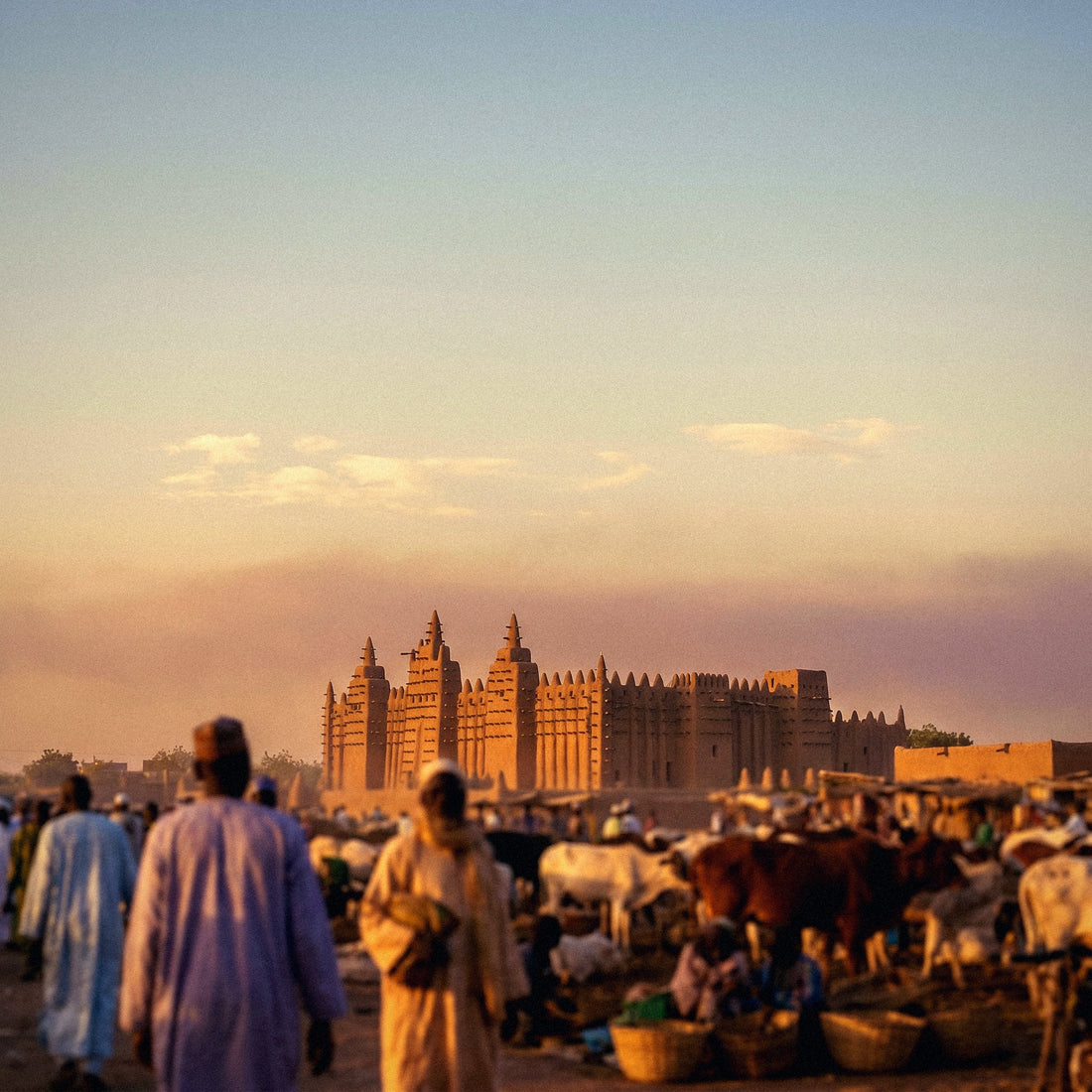

In summary: a Mali eSIM gives you mobile data as soon as you land in Bamako, without buying a local SIM or paying for roaming. You install it from your home country in a minute, activate it upon arrival, and it works well in the south of the country; in the north of the Sahel, coverage is limited, as with any local operator.
What is an eSIM and does it work in Mali?
Yes, an eSIM works in Mali without any problem, as long as your mobile is compatible and unlocked. It's a digital SIM card installed via software: no plastic to insert, no store to visit, just a QR code you scan from Settings. As soon as you do, your phone is ready to connect to a local operator's network as soon as you land at Bamako-Senou airport.
The difference from a physical SIM is that you buy and install it before you fly, from your couch at home, and only activate it when you land on Malian soil. No queues, no searching for a top-up point in the city, no losing your home number while you're away.
For a country like Mali, where a good part of travel is for work, cooperation, or NGO projects, arriving with active data makes a difference: you can coordinate with your team from the terminal, order a taxi with maps, or let your family know you've landed safely, all without relying on hotel Wi-Fi. If your phone is from the last five years, it's very likely to support eSIM; check by dialing *#06# and seeing if an EID number appears, or review what an eSIM is exactly before buying to clear up any technical doubts.

Real coverage: Bamako, the south, and the challenge of the north
Coverage in Mali is not uniform, and it's good to know this before planning your route. In Bamako and in cities in the south and center of the country, the mobile network works normally: you'll have reasonable 4G for browsing, messaging, and occasional video calls. As you go further north and into the Sahel, the signal becomes scarce or directly disappears for long stretches.
Areas with good coverage
The capital concentrates the best infrastructure in the country, by far. Around Bamako, and in cities like Sikasso, Ségou, or Kayes, the signal is reasonably stable and sufficient for daily work, making a Zoom call, or uploading photos without waiting endlessly. This is where the bulk of the Malian population lives and where network investments from operators are concentrated.
Areas with limited or no coverage
In the desert regions of the north and a good part of the central Sahel, the connection is intermittent when it exists, and along stretches of road, there may be no signal from any operator for hours. Added to this is the fact that much of northern and central Mali is subject to travel restrictions and recommendations not to travel for security reasons, and it is precisely in these areas that mobile infrastructure is more fragile and less maintained. The vast majority of work, cooperation, and tourism stays are concentrated in Bamako and its surroundings, where the network responds normally.
Practical tip: Before traveling by road outside the capital, download offline maps, save key contacts, and have offline copies of your documents. In the Sahel, signal is an intermittent luxury, and you won't want to depend on it for directions in the middle of your journey.
If your itinerary includes several countries in the region, consider whether a country-specific plan or a broader one is more beneficial, depending on how much time you spend in each location.
Local operators: Orange Mali and Malitel
Mali's mobile market is dominated by two networks, and a travel eSIM automatically connects to the one with the best signal in your area at any given moment:
- Orange Mali: the operator with the largest market share and, generally, the best 4G coverage in Bamako and major southern cities.
- Malitel (Moov Africa group): the country's historic network, with a wide presence in intermediate cities and along major roads.
Buying a local SIM from Orange or Malitel involves several steps that no eSIM requires: registering your passport at the point of sale, understanding top-up rates in French or Bambara, and temporarily giving up your home number while it's in use. With an eSIM, you save all that: it comes with data already included, Spanish support available if something goes wrong, and reference prices that usually start much lower than what traditional roaming outside the European Union charges. Always check the current price on the plan's details before buying, as it varies depending on the GB and days you need.

How many GB do you need depending on your trip
Data consumption in Mali mainly depends on your type of trip. Someone on a week-long tourist trip in Bamako won't use the same amount of data as someone on a month-long cooperation mission with daily video calls. This table serves as a quick reference to help you choose a plan without running out or overpaying:
| Trip Profile | Typical Use | Recommended Data |
|---|---|---|
| Short trip (up to 1 week) | Maps, messaging, occasional email | 3-5 GB |
| Work stay (2 weeks) | Constant email, occasional video calls, social media | 10-12 GB |
| Long mission or remote work (1 month or more) | Continuous use, sharing connection with the team | 15-20 GB |
| Cooperation with daily video meetings | Daily Zoom, Meet, or Teams, file sharing | 20 GB or more |
If you're still unsure, keep in mind that video calls are, by far, the biggest data consumers: an hour of Zoom with video can easily use several hundred MBs. If your work in Mali involves daily meetings, it's better to stick to the higher end of the table than to run out of data halfway through your stay. And if you're traveling with other team members, check out some tricks to save data abroad that help extend any plan much further than it seems at first glance.
How to activate your eSIM step by step
Setting up your eSIM takes around 1 minute, and it's best to do it calmly at home, using your home Wi-Fi, before heading to the airport:
- Purchase the Mali eSIM and receive the QR code instantly by email.
- Connect to Wi-Fi and go to Settings > Mobile Data > Add eSIM; scan the QR with your camera.
- Label the line as "Mali" so you don't confuse it with your usual SIM when both are active.
- Keep the data plan off until you land.
- Upon arrival in Bamako, activate mobile data and roaming for that specific line, not your main SIM.
The key is to not activate the eSIM until you are in Mali: this way, the plan's day counter starts running when you actually use it, not from when you installed it on your couch. If this is your first time doing this, the complete process with screenshots is explained in the guide on how to install an eSIM, and it's good to have it handy in case your phone model requires any extra steps.
eSIM, local SIM or roaming: what to choose in Mali
You have three ways to get internet in Mali, and not all of them are equally worthwhile depending on how long you stay. Roaming from your home operator outside the European Union can easily exceed several euros per day, an expense that skyrockets if your stay is longer than planned. A local SIM is cheap on paper, but it requires passport registration, changing physical cards, and losing your number while it's in use. A travel eSIM combines the best of both.
- Roaming: zero setup, but can be very expensive if you stay more than a couple of days outside the EU.
- Local SIM: adjusted on-site price, but with paperwork, no English support, and without keeping your number.
- Travel eSIM: fixed price you know before flying, you keep your home number active, and you arrive with everything ready from home.
Before deciding, it's worth understanding what data roaming is and why rates outside the EU are nothing like those you know when traveling in Europe. We break it down in more detail in eSIM vs. roaming, comparing real cost cases based on travel days. And if your work trip also includes a European country before or after Mali, the Europe eSIM covers that part of the journey with the same system, without having to change providers midway through your trip.
Common mistakes and what almost no one tells you
There are several details people discover late, usually already in Mali and without Wi-Fi handy to fix them. Here are the ones truly worth knowing before you fly:
- Installing the eSIM at the airport is a mistake. Bamako-Senou airport Wi-Fi is not always stable, and downloading the eSIM profile requires a quality connection. Install it at home, with your Wi-Fi, and leave it ready but not activated.
- An eSIM-compatible phone doesn't mean it's unlocked. If your phone comes from an operator with a contract or lock, it may reject any eSIM that isn't its own. Check the lock with your operator before buying; don't assume it's unlocked.
- Not all websites confirm it's "data only." A travel eSIM usually doesn't include its own phone number or SMS: it's a data line that coexists with your physical SIM, which continues to handle calls and messages. If you need to receive a Malian verification SMS, it will still arrive via your Spanish line.
- Battery saving matters more than it seems. Having two active lines (your physical SIM plus the eSIM) consumes slightly more battery by constantly searching for a signal on both networks. In a country with frequent power outages outside Bamako, carrying a power bank is not optional.
- Privacy on public networks does not depend on the eSIM. Having your own data frees you from connecting to shared Wi-Fi networks in hotels or offices, which are the weakest security point in any business trip. If you also handle sensitive information, review how to protect your connection with a VPN while traveling to reinforce that extra layer.
- Booking the plan with a margin of days prevents surprises. Flights with layovers to Bamako are sometimes delayed or rescheduled. If your plan starts counting from the first connection and not from the purchase, a delay won't eat into your data days, so always check that condition before paying.
If you're traveling for professional reasons, whether it's a specific mission or a series of frequent trips, you might be interested in how connectivity is managed on business trips and corporate events, which covers cases such as buying multiple eSIMs for an entire team or centralizing billing.
Frequently asked questions
Will I have internet throughout Mali?
You will have internet wherever local operators' networks reach: in Bamako and in the cities of the south and center, with reasonable 4G or 3G. In the north and in the desert areas of the Sahel, coverage is scarce or non-existent, which is the same for any local SIM in the country, not an exclusive limitation of the eSIM.
How much does an eSIM for Mali cost?
The cost varies depending on the GBs and days you contract, and it is usually much lower than what international roaming outside the European Union charges, which can easily exceed several euros per day for long stays. Always check the current price on the plan's details before buying, as rates may be updated.
Can I make work video calls with the eSIM in Mali?
Yes, as long as you have 4G coverage, which is common in Bamako and its surroundings. Video calls via Zoom, Meet, or WhatsApp consume a lot of data, so if you're going to make them daily, get a plan with plenty of GBs so you don't run out mid-mission.
Do I need to register my passport like with a local SIM?
No. A travel eSIM does not require any in-person registration: you buy online, receive the QR by email, and activate upon arrival. You avoid the identification process and the trip to the operator's store that buying a physical SIM in the country does require.
Do I keep my home number while using the eSIM in Mali?
Yes. The eSIM only provides data; your main SIM and your home number remain active for calls, SMS, and WhatsApp verification. You use your home line for your usual identity and the eSIM solely for internet browsing while in Mali.
Does the Mali eSIM work if my phone is an older model?
It depends on the model: eSIM technology is only included in phones from recent years, and it must also be unlocked from your original carrier. Before buying, dial *#06# on your phone and check if an EID number appears; if it doesn't, your device is not compatible and you will need another alternative to connect in Mali.
What happens if my flight to Bamako is delayed after installing the eSIM?
Nothing happens, as long as you haven't activated the data plan. The eSIM profile can remain installed on your phone for days or weeks without starting to count; consumption begins when you manually activate the data for that line, so a flight delay won't reduce your plan time.
Conclusion
Mali is a destination where connectivity shines in Bamako and the south, and falters as you venture into the northern Sahel. With a Mali eSIM, you have reliable data where there's network, without abusive roaming and without giving up your home number, all ready from home and active in a minute. Prepare your eSIM for Mali before flying, leave the rest of the logistics for when you land, and arrive in Bamako connected from the first step out of the plane.