In short: an eSIM for the Democratic Republic of Congo gives you mobile data as soon as you land in Kinshasa, without having to look for a store or register a SIM with your passport. It covers major cities well (Kinshasa, Lubumbashi, Goma, Bukavu) through Vodacom, Airtel, or Orange; outside of these, the signal is scarce, and it's advisable to carry downloaded maps.
The Democratic Republic of Congo is not explored like a small country: it's the size of Western Europe, with roads that often don't exist outside the dry season and internal journeys resolved by small plane. Arriving without data complicates every task, from calling a taxi to confirming a meeting. An eSIM for the Democratic Republic of Congo solves that critical first hour: you activate data upon landing at N'djili airport in Kinshasa, and you already have internet at a fixed price, without queues or paperwork.
What is an eSIM in the DRC and how does it work?
An eSIM is a digital SIM card: it's installed via QR code and doesn't occupy your phone's physical tray. For the DRC, the practical difference is huge compared to buying a local SIM, because registering a Congolese line requires presenting your passport at an operator's store, a process that can take up part of your first afternoon. You buy and activate the eSIM online, so that step disappears completely.
It's important to clarify something that confuses many people when searching for the destination: the Democratic Republic of Congo (capital Kinshasa) is not the Republic of Congo, known as Congo-Brazzaville, its neighbor directly across the river. They are two distinct countries, with two capitals that are among the closest in the world to each other and, even so, without a bridge connecting them: to go from Kinshasa to Brazzaville, you cross by boat. If your destination is Kinshasa, Lubumbashi, Goma, or Bukavu, you need the DRC eSIM, not the one for the neighboring country.
If you've never used an eSIM, it's worth reviewing what a virtual eSIM is beforehand, and if you're torn between the two options, this comparison of physical chip versus eSIM clarifies why, in a country with this level of bureaucracy, digital wins by a landslide.
Real coverage: from Kinshasa to the interior
Kinshasa and major cities
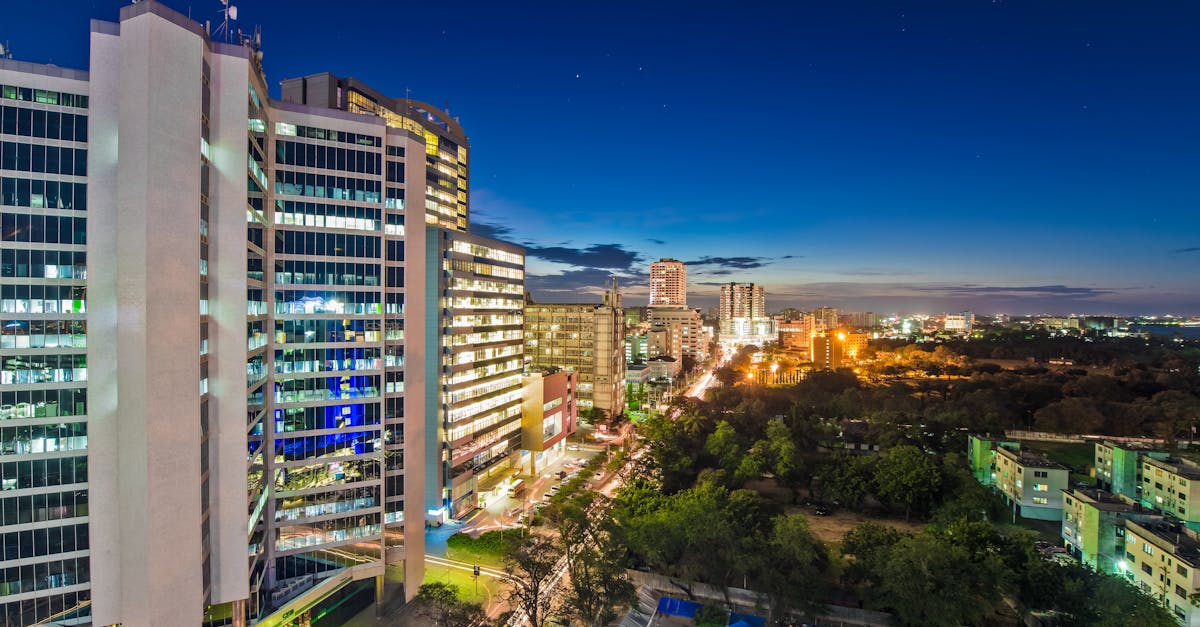
Connectivity is concentrated in urban centers. Kinshasa, one of Africa's most populous cities, has reasonable 4G in the center, Gombe, and areas with diplomatic and business activity; in peripheral neighborhoods, the signal becomes more irregular depending on the time and network load. Lubumbashi, in the mining south, Goma, next to Lake Kivu, and Bukavu have sufficient coverage for maps, messaging, email, and video calls without issues.
Outside cities: jungle, Virunga, and roads
Leave these provincial capitals and the landscape changes quickly. The Congo River basin, a good part of the equatorial forest, and many road routes only have intermittent 3G or directly no signal at all. Goma deserves a special mention: it's at the foot of Mount Nyiragongo, and the seismic and volcanic activity in the area can occasionally affect the electricity supply and, with it, local antennas; if you travel there, don't take connectivity for granted even within the city. If your itinerary includes Virunga National Park or long journeys through the interior, assume you'll be disconnected much of the time and plan accordingly.
Tip: download offline maps, addresses, key contacts, and travel documents before leaving Kinshasa, Lubumbashi, or Goma. Once on the road, the network won't always be there when you need it.
Operators: Vodacom, Airtel, and Orange
The DRC's mobile market is mainly divided among Vodacom Congo, Airtel DRC, and Orange DRC. A travel eSIM doesn't force you to choose a company: it routes your traffic through the network with the best signal at each point, so you don't have to touch settings or compare coverages yourself.
This convenience matters more than it seems when you arrive with a tight schedule. Instead of finding out at the airport which operator best covers your route and queuing for a local SIM with passport registration, the eSIM connects automatically to the best available antenna from day one. For those traveling for work, cooperation, or journalism, having data without going to a store is an advantage that is especially noticeable on the first day, when everything else (transport, accommodation, local contacts) also needs to be resolved.

How many GB you need depending on your trip
For a typical trip to the DRC, between 3 and 10 GB cover most profiles. Consumption skyrockets with constant work video calls or if you upload a lot of audiovisual material from the field.
| Travel profile | Estimated data | Typical duration | For whom |
|---|---|---|---|
| Light use | 3 GB | One week in Kinshasa | Maps, WhatsApp, occasional email |
| Medium use | 5-8 GB | 10-14 days with travel | Video calls, photos, some video |
| Intense use | 10 GB or expandable plan | 3-4 weeks | Fieldwork, cooperation, frequent uploads |
Use hotel or office Wi-Fi for large downloads, backups, and system updates, and save your eSIM data for what you need to do on the go. With this habit, the plan will last longer than you expect when you buy it. If you want to stretch your GB even further, this guide on tips for saving data on a trip has adjustments that really make a difference, especially limiting automatic background updates.
How to activate it step by step
Activating the eSIM takes about a minute. Install it at home with Wi-Fi and don't activate the data until you land in the DRC, to avoid wasting validity time:
- Purchase the plan and receive the QR code by email instantly.
- With Wi-Fi, go to Settings > Mobile Data > Add eSIM and scan the QR.
- Label the line (e.g., "DRC") and leave it installed without activating.
- Upon arrival at N'djili, activate the mobile data for that eSIM and turn off roaming for your Spanish line.
- Check that a local operator (Vodacom, Airtel, or Orange) appears in the status bar, and you're good to go online.
The complete installation process, with screenshots and cases for slightly older phones, can be found in how to install an eSIM. And if you're still undecided between an eSIM and continuing with your Spanish operator's roaming, this comparison of eSIM versus roaming clarifies why the price difference is so great in destinations outside the EU.
Myths and what almost no one tells you
There are ideas circulating about connectivity in the DRC that should be dispelled before traveling, because some make you buy too much and others leave you without coverage where there would be some.
- "If I have 4G in Kinshasa, I'll have it throughout the province." False. The signal on the outskirts of the capital itself is already more irregular than in the center, and a few kilometers from the city, it can disappear completely. Don't extrapolate hotel coverage to the rest of your journey.
- "My Spanish operator's roaming will help me out in an emergency." Technically, it does connect, but the cost in a destination outside the European Union like this one skyrockets per megabyte, so as a real emergency plan, it's very expensive: it's better to have the eSIM active as constant backup than to rely on activating roaming only if necessary.
- "With an eSIM, I no longer need anything else to work with sensitive data." The eSIM gives you a connection, not added privacy. If you are going to handle delicate work information on hotel or cafe Wi-Fi networks, combine it with a VPN to protect your connection while traveling: in shared networks in countries with limited infrastructure, that extra step really makes a difference.
- "Power outages don't affect the mobile network." Yes, they do. In areas with unstable electricity supply, antennas depend on generators or batteries that run out during long blackouts; if you notice the signal dropping for several consecutive hours in a particular province, it's more likely a power outage than a problem with your eSIM.
- "The longer the validity in days, the better." Not necessarily: if your actual stay is ten days, a thirty-day plan with more GB than you'll use is wasted money. Adjust the plan to the actual dates of your trip, not to an exaggerated safety margin.
When you DON'T need to buy an eSIM for the DRC
It's not always advisable. If your stay in the country is a short stopover in N'djili without leaving the terminal, it's likely that the airport Wi-Fi will cover your waiting time without spending on data. And if your organization already provides you with a local line or a satellite connection device for fieldwork (common in cooperation missions and NGOs operating in remote areas of the DRC), adding a general data eSIM can be redundant: in that case, save it as a backup for your personal matters, not as your main connection. Where it almost always makes sense is if you're traveling independently, changing cities, or need to handle tasks (flights, accommodation, contact with the embassy) without relying on third-party Wi-Fi.
Tips for getting around the DRC with data
Traveling through the Democratic Republic of Congo requires planning: distances are enormous, internal travel is often done by small plane or on poor roads, and connectivity varies greatly from one province to another. These habits help you get the most out of your eSIM wherever the network is available.
- Sync everything in the city: Before leaving Kinshasa or Goma, update maps, emails, and documents, taking advantage of Wi-Fi or good urban signal.
- Carry offline routes and contacts: On road trips or flights, coverage disappears; have addresses and phone numbers of your contacts saved before you leave.
- Prioritize lightweight messaging: WhatsApp or Telegram work with low signal and consume much less than video calls when the network is struggling.
- Carry a power bank: With frequent power outages in some areas, a phone without battery is equivalent to not having an eSIM, no matter how good the coverage.
- Reserve GB for important things: Leave room to send reports, field photos, or coordinate with your team from areas with occasional connection, instead of using it all up in the first few days.
With your eSIM ready and these habits, you'll land in N'djili with internet from the first moment and control your connectivity across a country where improvising can be costly. If your route continues to another African destination afterwards, also check out our guide to eSIM for Comoros, and if your return journey includes a stopover in Europe, review the eSIM for Europe so you don't run out of data at the connecting airport.
Frequently Asked Questions
Is the DRC the same as the Republic of Congo?
No. The Democratic Republic of Congo (capital Kinshasa) and the Republic of Congo or Congo-Brazzaville are distinct countries, separated by the Congo River, although their capitals are almost directly opposite each other. To travel to Kinshasa, Lubumbashi, or Goma, you need the DRC eSIM, not the one for the neighboring country.
Is there coverage outside major cities?
Good signal is concentrated in Kinshasa, Lubumbashi, Goma, Bukavu, and some other provincial capitals. In the jungle, the Congo River basin, and much of the interior, coverage is scarce or nonexistent. Download offline maps and documents before leaving the city to avoid relying on a network that isn't available there.
Do I need to register the eSIM with my passport?
No. Local Congolese physical SIMs require registration with an identity document at an operator's store, a time-consuming process. A travel eSIM is activated online without this paperwork: you buy it, scan the QR, and connect, without visiting a store or submitting your documentation at your destination.
Which operator does the eSIM connect me to in the DRC?
The eSIM automatically connects to the network with the best available signal among Vodacom Congo, Airtel DRC, and Orange DRC, depending on your location in the country. You don't manually choose a company or need to configure anything beyond activating mobile data.
Can I make work video calls with the eSIM?
Yes, in cities with 4G, such as Kinshasa, Lubumbashi, or Goma. Outside these areas, expect video calls to be cut off or not connect at all. For an important meeting, try to be in an urban area with good signal and choose a plan with enough GB for video.
What happens if my eSIM runs out of data halfway through my trip?
You can top up your plan or activate a new one without reinstalling anything if you choose a rechargeable plan; the already installed line recharges and continues to work. It's the most convenient option if you can't accurately estimate your consumption before you leave.
Is the eSIM useful for working securely on shared Wi-Fi networks?
The eSIM gives you your own mobile data, which is already more secure than an open public Wi-Fi, but if you're also going to connect to hotel or shared space Wi-Fi with sensitive work information, add a VPN. In networks in countries with limited infrastructure, that extra layer significantly reduces risk.
Conclusion
The Democratic Republic of Congo is a country of continental scale, and in its cities, a connected mobile phone is almost as essential as a passport. With an eSIM for the Democratic Republic of Congo, you avoid expensive roaming outside the EU, passport registration for a local SIM, and first-day queues, and you land in Kinshasa already with data. Adjust the GB to your actual trip, install it before leaving home, and arrive connected without surprises, also knowing where the network will let you down and how to prepare for those stretches.