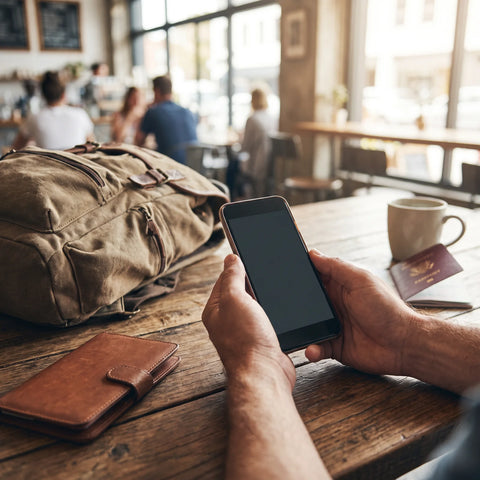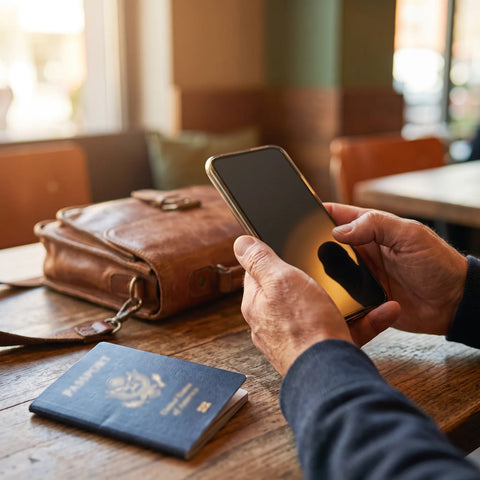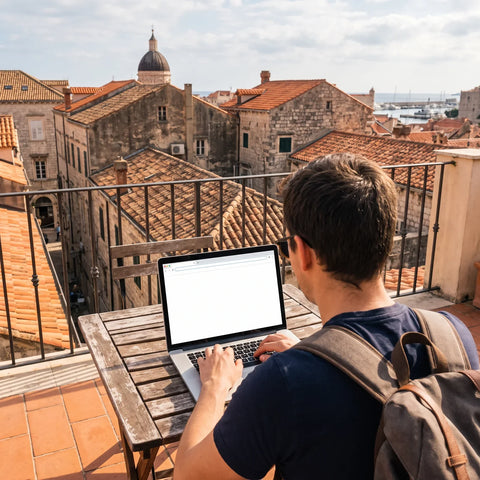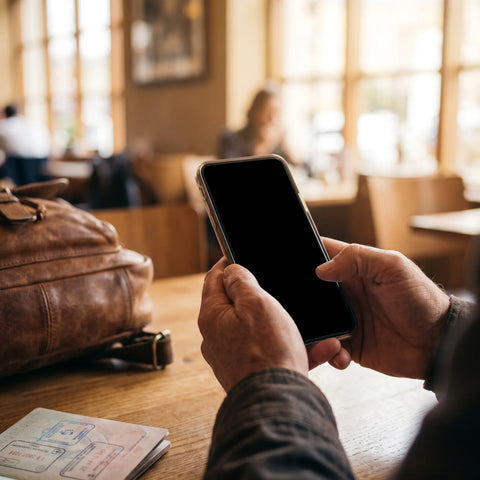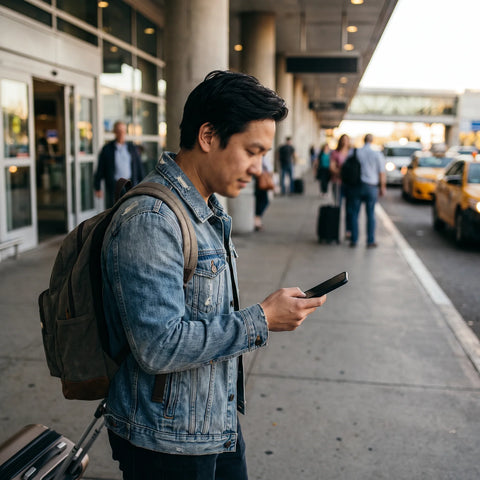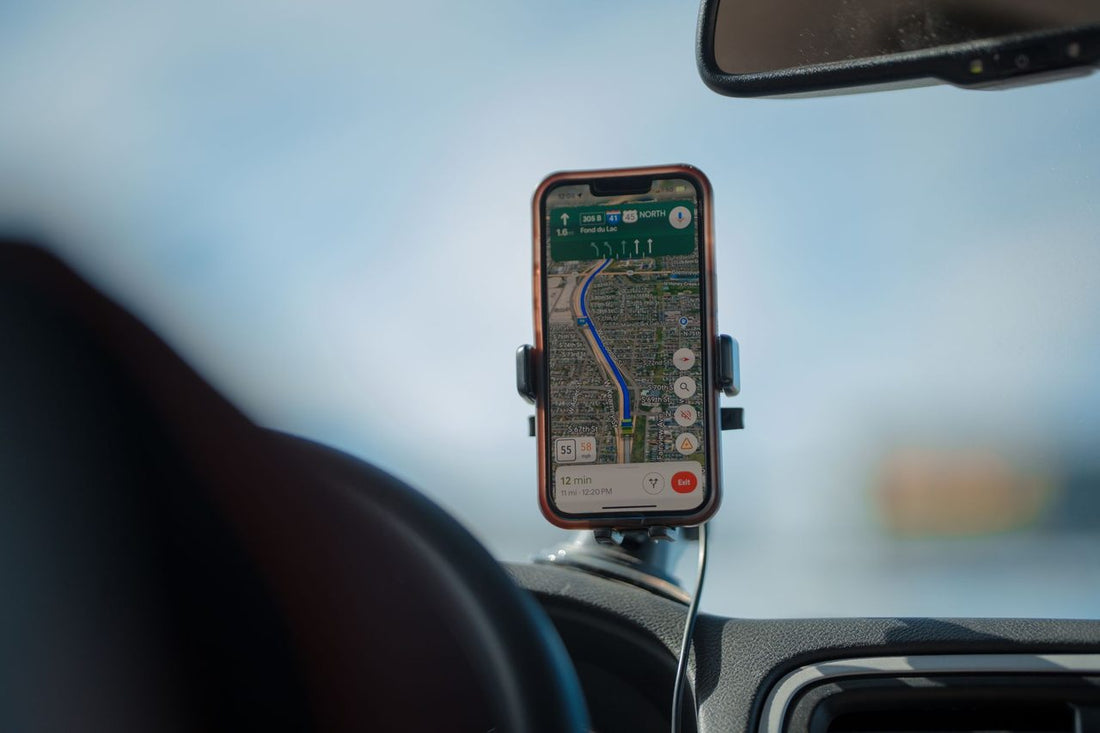
In short: the eSIM for international volunteers and aid workers is the most practical way to land with internet access, no roaming, no stress, and no reliance on finding a SIM card vendor on the first day. It's installed before leaving home, works in cities and areas with 4G coverage, and complements—not replaces—a local SIM if the project lasts several weeks in a rural area.
If you're going to spend weeks or months on a cooperation project, connectivity isn't a luxury: it's how you let people know you've arrived safely, coordinate with the local NGO, and make a quick video call home when you finally find Wi-Fi. Most eSIM guides are designed for two-week tourists, not for someone settling for three months in a rural village in Kenya or a neighborhood in Medellín. Let's get specific: what coverage to expect depending on the destination, what it really costs, when an eSIM is worthwhile and when a local SIM is better, and what to do in areas where your mobile simply has no signal.
Why the eSIM is such a good fit for volunteers
International volunteering has a particularity that distinguishes it from tourism: the arrival date is usually set by the organization, the itinerary changes on the fly (transfers, visits to other projects, free weekends in the nearest city), and often there's no desire to spend half a morning looking for a SIM card vendor with your passport in hand, exhausted after twenty hours of flights and layovers.
The eSIM solves exactly that. You buy and install it on your mobile before leaving Spain, with calm Wi-Fi at home, and it's ready to activate as soon as you land and detect the country's network. There's no physical card to lose, no need to find a store, and you don't depend on the local operator's counter having stock or speaking a language you understand. For those arriving at a small airport in Tanzania or Nepal after a very long flight, that difference is noticeable.
Where it makes the most sense and where it has limitations
That said, we have to be honest: the eSIM relies on the same mobile network infrastructure as any other SIM. If the project is in a rural area with no operator coverage, no eSIM in the world is going to work magic. Where the eSIM really shines is in travel, major and regional cities, and the first few days of any project, while you get your bearings and decide if it's worth getting a local SIM for the rest of your stay.
How to activate your eSIM before leaving (and what to bring as backup)
The process is simple but it's best to do it calmly, at home, not at the airport with your luggage checking in in twenty minutes. You buy the data plan for the destination country or region, receive a QR code, scan it from your mobile settings, and the profile is installed. In most cases, you can delay the activation of data until you land, so you don't waste a single day of the plan while you're still in Spain. We explain the complete process, step by step and with screenshots, in how to install an eSIM on your mobile.
A specific recommendation for aid workers: before you go, check that your mobile supports eSIM and is unlocked (not tied to any Spanish operator), and save a copy of the QR code or confirmation email in the cloud, not just on your mobile. If for some reason you have to reinstall the profile halfway through your stay—changing devices, factory reset, whatever—you'll save yourself a headache without decent Wi-Fi handy.
eSIM, local SIM, or roaming: what's best depending on project duration
This is the decision that really matters, and the answer changes depending on how long you're staying. A two-week work camp is not the same as a six-month cooperation project. To understand the technical difference between these options, you can also review our comparison of eSIM vs. traditional roaming, but here we apply it specifically to the case of volunteering.
| Project Duration | Recommended Option | Why |
|---|---|---|
| Less than 4 weeks | PuraSIM eSIM for the entire stay | Not worth the hassle of a local SIM for such a short time |
| 1 to 3 months | eSIM for the first few days + local SIM afterwards | Immediate connectivity upon arrival, savings for the rest of the project |
| More than 3 months | Local SIM for daily use + eSIM for occasional trips | Local SIM is more cost-effective in the long run |
| Itinerant volunteering (several countries) | Regional or country-specific eSIM depending on route | Avoids processing a new SIM at each border |
Notice the pattern: the eSIM clearly wins the shorter the stay or the more the volunteer moves between countries or cities. The local SIM wins when you're going to stay in the same place for months and the monthly savings outweigh the initial processing time. Many experienced aid workers use a mixed model: eSIM to avoid arriving blind and to decide calmly, local SIM later if the project is extended.
What connectivity really costs during a volunteering trip
Here it's important to be realistic and not give fixed figures that may not be met, because local operator prices change by country, promotion, and season. What we can give you is the order of magnitude for each option, so you can compare with good judgment.
| Option | Approximate Range | Main Advantage | Weak Point |
|---|---|---|---|
| Local country SIM | Usually the most economical option per month | Low price for prolonged use | Passport processing, variable coverage depending on operator |
| PuraSIM eSIM | Medium cost, depending on country and data contracted | Activate before leaving, no paperwork or queues | Slightly more expensive than local SIM for very long stays |
| Spanish operator roaming | Can exceed several euros per day outside the EU | No action required | Very expensive for stays of weeks or months |
| Project/accommodation Wi-Fi + occasional eSIM | Low cost, eSIM only for weekend outings | Very economical for daily use | Completely dependent on project Wi-Fi |
Spanish operator roaming deserves a separate paragraph because it is, by far, the most expensive mistake a novice aid worker makes. Outside the European Union, data roaming rates can easily exceed several euros per megabyte or per day, and it's not uncommon for someone to return from a three-month project with a bill of several hundred euros for not having deactivated mobile data in time. Always check the current price with your operator before leaving, or directly deactivate data roaming and use an eSIM or local SIM from the first minute.
Common cooperation destinations and what to expect from coverage
Volunteer and cooperation programs are concentrated in a few regions of the world, and each has a different coverage profile. In general, capital cities and regional cities in developing countries have reasonably good 4G networks: the problem arises as soon as you move away into rural, mountainous, or jungle areas, where coverage can drop to 2G or disappear entirely.
Latin America is one of the most common destinations for Spanish aid workers, with consolidated social, educational, and environmental projects. If your destination is Colombia, you might be interested in our guide to eSIM for Colombia: Medellín, Bogotá, and Cartagena, with details on coverage by city. And if the project takes you to Peru, many volunteers take the opportunity to visit the highlands: all the information is in eSIM for Peru and the route to Machu Picchu.
What doesn't change by destination
There's a pattern that repeats in almost all projects: the city where the organization is headquartered usually has decent connectivity, road trips are the most irregular part, and the rural areas where the project is actually carried out have the least coverage, almost without exception. Plan assuming that, not the other way around.
When there's no coverage: how to prepare for the field
The part that no eSIM in the world solves is the absolute lack of network in remote areas. Here, what's important isn't the SIM, but prior preparation while you still have Wi-Fi or data:
- Download offline maps of your area before leaving the city; offline map applications work without data and are much more reliable than relying on having coverage when you get lost.
- Save key project documents locally: security protocol, emergency contacts, medical information, exact accommodation address. Don't assume you'll be able to consult them online when you need them.
- WhatsApp works offline: messages are queued and sent as soon as you regain coverage, even if only for a few seconds when passing through a village with an antenna.
- Have a Plan B for communication with the organization: radio, project landline, or the contact of another volunteer who does have regular coverage, in case your mobile loses signal for several days in a row.
Security and privacy when connecting from shared networks
A detail often overlooked: during your volunteering, you'll connect to a lot of shared and free Wi-Fi—at your accommodation, at the project headquarters, at an internet cafe or coffee shop in the nearest city—and these networks usually have little to no security. If you're going to do sensitive tasks, such as accessing your bank or sending personal documentation, it's advisable to use a VPN, especially on public networks shared with strangers. We tell you how it works and when it's worthwhile in eSIM and VPN: privacy during travel.
Tips to make your data last throughout the project
When you rely on a limited data plan for weeks, every megabyte counts more than on a short trip. Disabling automatic app updates, lowering default video quality on social media, and downloading music or podcasts beforehand for long journeys are small actions that add up significantly by the end of the month. We have a complete guide to tips for saving data with your travel eSIM that perfectly applies to long stays like volunteering.
Staying in touch with family without overwhelming them (or yourself)
Limited connectivity during a volunteering trip is also, in part, a relief: it forces you to disconnect from daily noise and focus on the project. But family at home usually needs some predictability to avoid worrying. Some practices that work well in the field:
- Set an approximate weekly video call schedule, instead of promising daily availability that you won't be able to fulfill due to lack of coverage.
- Share the city or region you're in when you have coverage, without needing to detail your exact real-time location.
- Before you leave, leave the project manager's contact information in writing so your family has someone to contact if several days pass without news from you.
- Give advance notice of periods when you know you won't have coverage (an excursion to the countryside, a long transfer) so no one gets alarmed unnecessarily.
Common mistakes and what almost no one tells you
After observing how hundreds of travelers and volunteers organize their connectivity, there are a few patterns that repeat over and over again, and that should be considered before leaving:
Trusting accommodation Wi-Fi without checking it first
Many volunteer accommodation ads promise "Wi-Fi available" which in practice is very slow or cuts out with rain or power outages, common in rural areas. Don't plan important video calls assuming it will work: always have your eSIM as a backup.
Not checking if a regional plan is better than a national one
If your volunteering includes visits to sister projects in neighboring countries, or you cross borders to renew your visa, check if a plan covering several countries in the region is more worthwhile than buying data country by country.
Leaving roaming activated "just in case"
It's the most expensive and most common oversight. Before takeoff, deactivate your Spanish operator's mobile data and confirm that the eSIM is active. A few hours of forgotten roaming outside the EU can cost more than a whole month's data plan.
Not notifying the organization that you have an eSIM
Small but useful detail: if your NGO or coordinator knows you have active data from minute one, they can contact you directly instead of relying on you getting a local SIM in the first few days, precisely when you need the most guidance.
Buying too much data "just in case"
It's tempting to oversize the plan out of fear of running out of data, but you can top up or extend it when you really need it. Start with a realistic estimate for your first few weeks and adjust as you go.
If you combine volunteering with a tourist route
It's common for volunteers, after finishing a project, to take a tourist trip before returning, or for family to visit them halfway through their stay. If that route includes European countries, a single data eSIM for Europe covers dozens of countries without installing a different profile at each border. And if the return passes through North American territory, a United States eSIM activated upon landing avoids relying on airport Wi-Fi for last-minute arrangements.
Frequently asked questions
Does the eSIM work in rural areas of developing countries?
It depends on whether the local operator has coverage in that specific area, not on the eSIM itself. The eSIM uses exactly the same network as a physical SIM from the same operator: if there's an antenna, it works; if there isn't, no card will solve it. It works best in capital cities, regional cities, and travel between them.
Can I use the eSIM for coordination video calls with the NGO?
Yes, as long as you have reasonable 4G coverage. With only 2G, the video call will probably cut out or be choppy, but text messages and WhatsApp will still come through without a problem.
Is an eSIM worth it if my volunteering lasts more than three months?
For such long stays, a local SIM usually ends up being more economical on a monthly basis. The best strategy is to use the eSIM for the first few days while you get your bearings, and then process the local SIM as soon as you have the opportunity.
Do I need an unlocked phone to use an eSIM abroad?
Yes. If your mobile is exclusively tied to a Spanish operator, you may not be able to install eSIM profiles from other companies. Check this point well in advance of your trip, not the night before you leave.
What happens if my volunteering moves to several countries during the project?
If your itinerary crosses borders within the same region, a regional plan covering several countries is usually more worthwhile than buying a new plan every time you change countries.
How do I avoid running out of data when I need it most?
Check your remaining consumption from the eSIM management application itself and locate the top-up or extension option before the plan runs out, not when you urgently need it and don't have Wi-Fi to manage it.
Is it better to buy the eSIM before leaving Spain or wait until I arrive at the destination?
Buy and install it before you leave, with quiet Wi-Fi at home. You can leave data activation pending until you land, so you arrive with connectivity ready without having spent a single day of the plan during the journey.