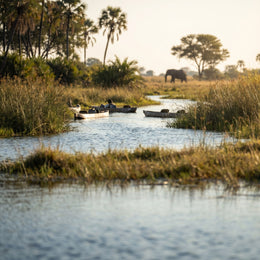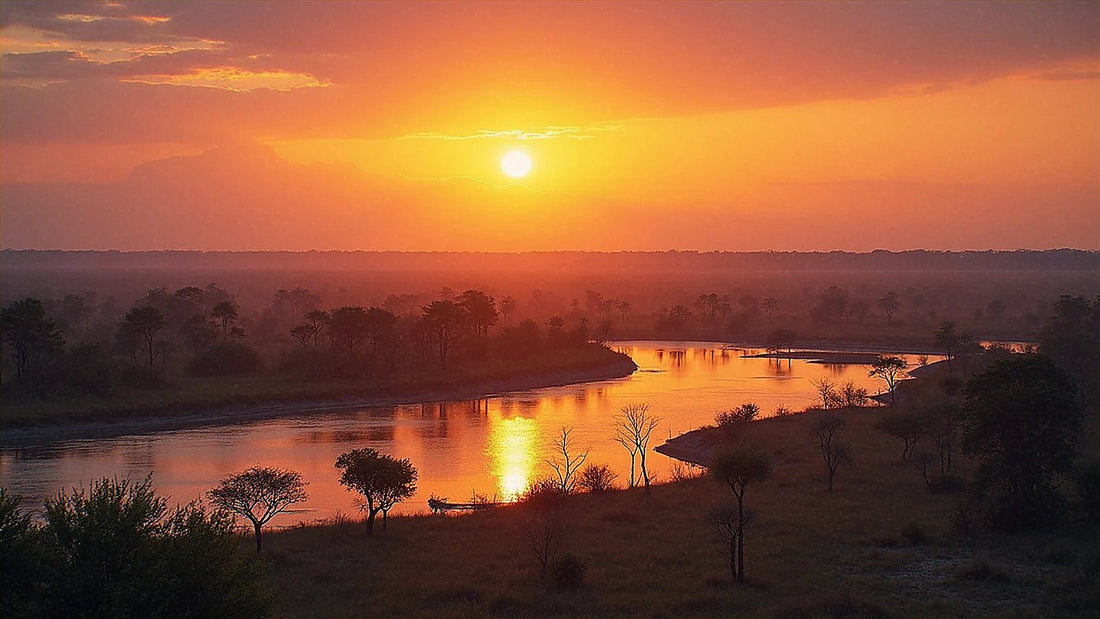
In short: an eSIM for Botswana gives you 4G data in Gaborone, Maun, Kasane, and Francistown from the moment you land, with no roaming or physical SIM to search for. Within the parks—Okavango, Chobe, Makgadikgadi—mobile coverage is almost nonexistent, so the eSIM covers cities, transfers, and safari bases, not the safari itself.
An eSIM for Botswana keeps you connected in Gaborone and in the major safari parks without paying for African roaming, which is usually among the most expensive in the world. In this guide, you’ll see the actual coverage by zone, which operators power the network, and how many GB you need for a trip between the Okavango Delta, Chobe, and the Makgadikgadi salt pans.
Does an eSIM work in Botswana?
Yes. An eSIM works in Botswana and connects to 4G networks in cities and major tourist hubs like Gaborone, Maun, Kasane, and Francistown. You install it before traveling, so you'll have data as soon as you land, without having to search for a local SIM or pay exorbitant roaming fees.
That said, it’s important to understand that Botswana is a huge and sparsely populated country, with vast areas of the Kalahari Desert and Okavango Delta wetlands where mobile coverage is scarce or nonexistent. In towns, cities, and park entrances, you’ll have good signal; within more remote safari camps, you’ll depend on the lodge’s Wi-Fi or be completely disconnected, which many travelers value as part of the experience. An eSIM gives you connection where it exists, which is in transfers, airports, and cities. If you continue exploring the continent after Botswana, at PuraSIM we have eSIM guides for other African destinations, such as the eSIM for Comoros, useful if your itinerary includes an island stopover.

Coverage by zone: city vs. safari
The signal in Botswana varies greatly depending on where you are. This table helps you get a realistic idea before traveling:
| Zone | Coverage | What to expect |
|---|---|---|
| Gaborone (capital) | Good, 4G | Browsing and calls without issues |
| Maun and Kasane | Fair, 4G/3G | Safari bases with stable signal |
| Okavango Delta | Very limited | Lodge Wi-Fi or disconnection |
| Chobe and Makgadikgadi | Scarce outside population centers | Coverage only at entrances and towns |
The practical lesson is simple: take advantage of the connection in cities and safari bases to upload photos, notify home, and download maps, and assume that within the parks you will mostly be without coverage. Maun, the gateway to the Okavango, and Kasane, next to Chobe, do have reliable signal. Download offline maps of the area before entering the park: it's one of the basic tricks to avoid being stranded without data, and you'll find more in our guide to saving data on a trip.
Local operators providing signal
The Botswanan mobile market is shared among three operators, and a data eSIM relies on their networks to offer you the best available coverage at each point:
| Operator | Presence | Technology |
|---|---|---|
| Mascom | Largest national coverage | 4G / LTE |
| Orange Botswana | Cities and main arteries | 4G / LTE |
| beMobile (BTC) | State-owned operator, extensive network | 4G / 3G |
Mascom usually covers the most ground, followed by Orange and the state-owned operator beMobile. For the traveler, the relevant thing is that you don't have to choose a company or buy a physical SIM at Gaborone airport: the eSIM automatically connects to the network with the best signal wherever you are. This greatly simplifies the trip, especially if you're coming from a long flight. You also don't need to carry a spare physical SIM or worry about the card size: if you want to understand the difference from the traditional physical chip, we explain it in detail in our comparison of international chip vs. eSIM.

How many GB you need for your trip
Since you'll be without coverage in the parks for much of the time, data consumption in Botswana is usually moderate. This reference will guide you:
| Travel Profile | Duration | Estimated GB |
|---|---|---|
| Short safari based in Maun | 4-5 days | 1-3 GB |
| Okavango + Chobe route | 1-2 weeks | 3-6 GB |
| Long trip through Southern Africa | 2-3 weeks | 6-10 GB |
As you'll mostly be disconnected during the safari, you'll primarily use data during transfers, at bases, and when you return to an area with a signal to upload your daily photos. The actual calculation depends on your habits: if you upload videos to social media at every stop, you'll use significantly more than if you just send a few photos via WhatsApp. A useful tip: download maps, podcasts, and music in advance, because the long routes between parks—Maun to Kasane is several hours of track—are done without coverage and with spectacular landscapes that you'll appreciate looking at without a screen.
Tip: In Botswana, the currency is the pula (BWP) and safaris are expensive, but connectivity doesn't have to be. A data eSIM gives you internet in the city for a fraction of what roaming would cost.
Roaming vs. eSIM in Africa: the big difference
Here's the fundamental reason to carry an eSIM. Roaming in Africa is among the most expensive there is: Spanish operators usually apply extremely high per-megabyte rates outside the European Union, and Botswana falls squarely into that category. Careless mobile use can skyrocket your bill without you even realizing it.
With a local eSIM, you completely avoid that risk: you pay a fixed rate for your GBs and know in advance how much you're spending. Plus, you keep your Spanish number active to receive bank SMS or important calls while data runs through the eSIM. In a destination where a safari already represents a significant investment, it makes no sense to give the operator the equivalent of a lodge night in roaming data. An eSIM is, simply put, the sensible way to connect in Southern Africa without bill shock when you return.
It's important to understand exactly what data roaming is and why its price varies so much by country: we explain it in detail in what is data roaming. The "roam like at home" regulation that allows you to use your Spanish plan at no extra cost only applies within the European Union; as soon as you step outside that umbrella—and Botswana is well outside—each operator applies its own conditions for the rest of the world, which are almost always much worse than what you have at home.
How to activate it and safari tips
Activating the eSIM takes a minute and it's best to do it before flying, with Wi-Fi at home. These steps and tips will get you ready:
- Purchase the plan for Botswana and receive the QR code by email.
- Go to Settings → Mobile Data → Add eSIM and scan it.
- Label the profile as "Botswana" to find it quickly.
- Upon landing in Gaborone or Maun, activate the data line and deactivate roaming for your home SIM.
If it's your first time, you can find the detailed step-by-step instructions in how to install an eSIM. Once on the road, keep these notes in mind: download offline maps for Maun, Kasane, and park entrances; use lodge Wi-Fi for heavy usage; carry a power bank, as electricity can be limited in camps; and enjoy the disconnection within the Okavango as part of the safari experience. 24/7 Spanish-language support will resolve any questions if something doesn't connect upon arrival.
What almost no one tells you before a safari with an eSIM
There are details that are only discovered on the ground and that it is advisable to know before leaving home:
- Bank SMS don't always go through the eSIM. Many Spanish banks send verification codes via text message to your usual number, not to the data eSIM. If you completely turn off your physical line to save money, that SMS may not reach you; and if you leave it on roaming, check with your operator beforehand if the SMS has a cost in Botswana, because outside the EU it is not always free.
- Electricity dictates the pace of travel. In many safari camps, electricity depends on a generator or solar panels and is cut off at night or at specific times. Carry a fully charged power bank, because there won't always be an outlet available when your phone needs it.
- There is increasingly more satellite Wi-Fi in lodges, but don't count on it: the speed varies greatly from one camp to another, and some reserve it for common areas, not for the rooms. Ask when booking if you really need it.
- Crossing into a neighboring country changes the rules. The Kazungula crossing, near Kasane, connects Botswana with Zambia via a bridge that takes minutes to cross, and it's common to combine Chobe with Victoria Falls. Your Botswana eSIM stops providing coverage as soon as you cross the border: check if you need another plan for the next country before you arrive.
- If you travel with a VPN for work, activate it before entering areas without coverage and don't assume that it will perform the same as at home; in the VPN and privacy in travel guide you have how to configure it well before leaving.
And here's the least commercial advice of all: if your plan is just a two or three-day stopover in Gaborone before flying to another country, the hotel Wi-Fi and a small 1 GB eSIM will be more than enough. Save the real GBs for the part of the trip where you move freely, not for the days when you'll barely leave the hotel.
Frequently Asked Questions
Is there data coverage on safaris in Botswana?
It depends on the area. In Gaborone, Maun, and Kasane, there is stable 4G, but within the Okavango Delta, Chobe, or Makgadikgadi, coverage is very limited or nonexistent. You will depend on the lodge's Wi-Fi or be disconnected. That's why it's advisable to download maps and content before entering the parks.
Do I need an eSIM if I'm going on a safari to Botswana?
It is highly recommended. Botswana is outside the European Union, and African roaming is usually very expensive. With an eSIM, you have internet in cities and safari bases at a fixed price, with no surprises on your bill, and you keep your Spanish number active to receive important SMS and calls.
How many GB do I need for a week-long safari?
Since you'll spend much of your time without coverage in the parks, 3 to 6 GB is usually enough for a one- or two-week trip. You'll primarily use data during transfers, at safari bases, and when you return to an area with a signal to upload photos. Lodge Wi-Fi helps extend your plan.
Which operators does an eSIM use in Botswana?
A data eSIM relies on local networks, primarily Mascom, which has the widest national coverage, in addition to Orange Botswana and the state-owned operator beMobile. You don't have to choose a company: the eSIM automatically connects to the network with the best signal in each part of the country.
When should I activate my Botswana eSIM?
Install it before flying, using Wi-Fi at home, and activate the data line upon landing in Gaborone or Maun. Installing the profile takes a minute and doesn't consume anything until you turn it on. This way, you arrive connected without having to find Wi-Fi at the airport after a long flight.
Do I need an eSIM-compatible phone to use it in Botswana?
Yes, your phone must be eSIM-compatible: most iPhones since the XS and many mid-to-high-end Androids from recent years are. You can check this in Settings → Mobile Data → Add eSIM; if that option appears, your phone is compatible. If you're not sure, check your model before purchasing the plan.
Can I still receive SMS and calls from Spain with the eSIM active?
Yes, that's precisely the strength of eSIM: data goes through the Botswana profile while your Spanish line remains active for calls and SMS. However, if that line is roaming outside the EU, some operators charge for SMS or incoming calls; it's advisable to check with your provider before leaving to avoid a surprise on your bill.
Conclusion
Botswana offers one of the best safaris in the world, with reliable connectivity in cities and bases like Gaborone, Maun, and Kasane, and complete disconnection within the parks. A local eSIM saves you from African roaming, which is among the most expensive available, and provides you with data at a fixed price where it's available. Prepare your eSIM for Botswana before you take off and focus on Chobe's elephants, not your bill.