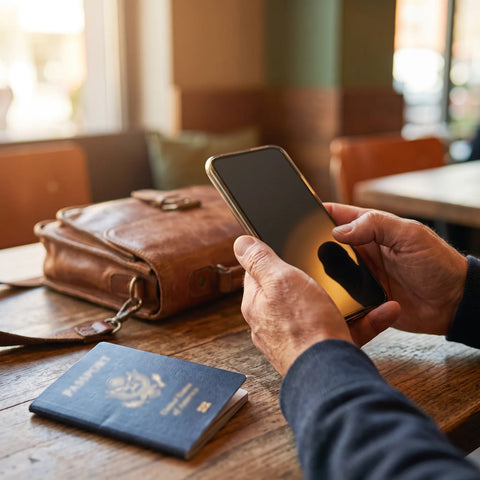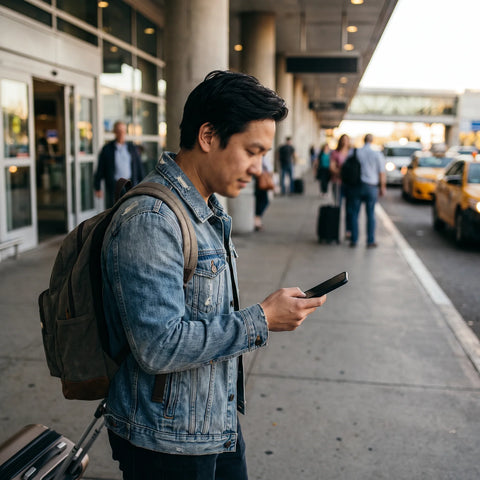
In short: for a trip to Florence, the most practical thing is to activate an eSIM for Florence with an Italy or Europe plan before you fly: it covers the historic center, Peretola and Pisa, and works just as well for day trips to Siena, San Gimignano or Chianti. 2-3 GB is plenty for a weekend; 5 GB gives you enough for a full week in Tuscany.
Getting off the plane at Peretola or Pisa with no data and your Uffizi ticket only in your email is the worst possible start to a Florence trip. Between the narrow streets of the historic center, where Google Maps is almost essential to avoid walking in circles around the Duomo, and the Tuscany excursions that almost everyone adds to their itinerary, having internet sorted from minute one changes the whole trip. Here we look at how much data you need, what real coverage is like by neighborhood, and what mistakes people make when planning it.
Do I need an eSIM just for Florence, or will a broader one do?
There's no "exclusive" eSIM for Florence, and that's a good thing: since the city is in Italy, any data plan that covers the whole country works just as well in the historic center as it does in Pisa, Siena or Rome if you extend your route. The real question you need to ask yourself isn't "which eSIM should I buy for Florence?" but "am I only moving around Tuscany, or will I cross into other countries?".
If your trip is Florence and not much else — maybe a quick hop to Pisa for the tower photo, or a few days in Rome at the end — a plan covering Italy is more than enough. But if your route includes France, Switzerland or any other European country, or you simply prefer not to think about borders, the easiest option at PuraSIM is to go straight for a Europe eSIM: it covers all of Italy, including Tuscany, and you don't have to do anything different if you end up crossing into Nice or Geneva on a whim. To understand what real difference there is between these plans and your carrier's roaming, take a look at our guide on eSIM vs roaming before you decide.

Real coverage in the historic center
Florence has very solid mobile coverage. The historic center, a UNESCO World Heritage site and fairly compact compared to other European capitals, is well served with 4G, and 5G is growing on Italy's strong carriers. From the Duomo to Ponte Vecchio, and from the Accademia to the Uffizi, the signal rarely fails.
Where you do notice a drop in speed is inside buildings with thick walls — Palazzo Vecchio or some rooms in the Uffizi, for example — and in the middle of August, when Piazza della Signoria is packed with phones competing for the same antenna. It's not that you lose coverage; it's that loading a photo takes a little longer than usual. One trick that's not often shared: download the QR code for your Uffizi ticket as an image to your phone's gallery, don't just leave it open in your email. If the museum's Wi-Fi is slow at the entrance queue and your email takes time to load, having the image already saved saves you a headache with the line pushing behind you.
If you're installing an eSIM for the first time, do it calmly over Wi-Fi at home before you leave: in our guide on how to install an eSIM you have the full step-by-step, and that way you arrive in Italy with the profile already loaded, just waiting to activate your data.
Airports: Peretola and Pisa
Most short trips come in through two different gates, and it's worth knowing the difference. Florence-Peretola Airport (Amerigo Vespucci) is just 15-20 minutes from the center on the T2 tram, which leaves practically at the arrivals door and drops you near Santa Maria Novella. It's the most convenient option if your flight lands there directly.
Pisa Airport (Galileo Galilei) has more budget routes, but the journey to Florence is different: the PisaMover takes you to Pisa Centrale station in a few minutes, and from there the regional train to Firenze Santa Maria Novella takes just over an hour. With your eSIM already activated from the moment you land, you have the train schedule, your digital ticket, and, if needed, a Bolt or taxi reservation instantly. No hunting for airport Wi-Fi or queuing at a physical SIM counter with your suitcase in tow.

How many GB to take for a trip to Florence
Florence is, above all, a short-trip destination, and that changes the data calculation a lot compared to a month-long journey. For a long weekend using maps, digital tickets, photos, and some social media, 2-3 GB is plenty. If you add a full week touring Tuscany by car or train, 5 GB gives you plenty of margin without having to watch your usage.
| Trip duration | Expected usage | Recommended GB |
|---|---|---|
| Weekend (2-3 days) | Maps, digital tickets, occasional photos | 1-2 GB |
| Long getaway (4-5 days) | + social media and some short videos | 3 GB |
| Week in Tuscany | Base for several day trips by car or train | 5 GB |
| Florence + rest of Italy | High-speed trains, more cities, more navigation | 8-10 GB |
Wi-Fi at hotels and many cafes in the center takes the pressure off, so you almost never need to buy extra "just in case." If you're on a tight budget and want to stretch your data without running out on the last day, how to save data while traveling has concrete tricks that actually work, beyond the typical "turn off automatic updates."
Download the offline map of Florence in Google Maps before you leave home: the center is almost entirely walkable, and that way you save data even if you wander into some alley in Oltrarno where the signal isn't perfect.
Florence as a Base for Tuscany
Many people use Florence as a base camp to explore Tuscany: Siena, San Gimignano, Pisa, Lucca, or the Chianti vineyards are almost always on the list. This is where having an eSIM that covers the whole country, not just the city, really makes a difference, because the same plan works on all those day trips without changing anything or paying extra for leaving the city limits.
Coverage in the medieval towns is usually good, but on the Chianti roads between vineyard-covered hills —especially the stretch between Radda and Panzano, with tight curves among cypress trees— there are sections where the signal drops or disappears for a couple of minutes. If you're driving a rental car, download the route offline before leaving Florence: losing GPS on a one-lane road with a tractor coming toward you is not the best time to rely on mobile data. San Gimignano, with its medieval towers, suffers the same issue as central Florence in high season: lots of people packed into a small space saturates the local antenna at midday, so if you're planning to upload large photos, it's better to do it first thing in the morning or once you're back at the hotel.
If your Italian itinerary is more ambitious —Florence, Rome, Venice, and some coast— a single eSIM covering the whole trip is still worth it rather than buying separate plans city by city. And if at some point you decide to continue your trip outside Italy, a European coverage plan saves you from having to install a new profile at every border.
eSIM vs. Roaming on Your Local Plan
If your carrier is in the EU with "roam like at home," you could use your usual plan in Italy at no extra cost... up to a certain data limit set by your contract, after which surcharges kick in or your speed gets throttled. And if your plan is one of those with just a few GB per month, that limit runs out faster than you think on a trip where you'll use your phone much more than usual: maps constantly, live photos, digital tickets, last-minute restaurant reservations.
Let's be honest here: for a two-day weekend in Florence where you barely leave the hotel and the city center, if your local plan has EU roaming with plenty of data, you might not need to buy anything extra. An eSIM makes sense when your plan is tight, when you want to keep travel expenses separate from your regular bill, or when you're extending your stay and don't want to risk running out of data in the middle of a Chianti excursion. It's a dedicated data pool with a fixed price and no surprises on your next bill. If you want to understand exactly what data roaming is technically and why those limits exist, we explain it in what is data roaming.
What Almost No One Tells You Before Going to Florence
There are a few details you only learn by traveling or asking someone who's already been, and they don't show up in the generic "activate your eSIM and you're done" guides.
The most common mistake isn't coverage, it's bookings. The Uffizi and the Accademia Gallery sell out weeks in advance in high season, and your ticket arrives by email or through an app: if you don't check before leaving home that you have a stable connection to access that document, you could end up locked out. Activate your eSIM and check your tickets the day before, not while you're in line.
Not all of the city center is equally "dense" in signal. The Santa Croce area and Oltrarno, less crowded than the Duomo-Uffizi axis, usually have a better data experience precisely because fewer people are competing for the same antenna. If you need to make an important video call, it's better from a quiet café in Oltrarno than from Piazza della Signoria at noon.
Piazzale Michelangelo gets packed at sunset, and not just with tourists holding cameras. It's the most photographed viewpoint in the city, and at golden hour the number of people uploading photos and live videos can noticeably affect speed. If you're planning to livestream the sunset, try going up a few minutes before the peak crowd.
The Mercato Centrale isn't just for buying souvenirs. The upstairs floor has good coverage and real free WiFi, so it's a comfortable spot to take a break and catch up without using your eSIM data.
A myth worth debunking: "if my plan has EU roaming, an eSIM is an unnecessary expense." Not always. It depends on how many GB you have left that month and how much you'll be using your phone on the trip. Better to calculate beforehand than to find out with your phone throttled in the middle of a Chianti excursion with no backup coverage.
How to get your eSIM ready before flying
The order matters more than it seems. Buy and install the eSIM profile calmly from your home WiFi a few days before the flight: you need an internet connection to download the profile, so doing it in a rush at the airport or, worse, already in Italy without data, is the most common way to make things complicated. Once the profile is installed, leave the data line deactivated and only activate it when you land at Peretola or Pisa.
If you've never used an eSIM, don't overcomplicate it: most phones from recent years are compatible, and the process boils down to scanning a QR and activating an additional data line without touching your usual number. If you have doubts about what exactly it is compared to a physical card, in what is a virtual eSIM we explain it without jargon. And if you're torn between the eSIM and a prepaid Italian physical SIM bought on arrival, the comparison of international chip vs eSIM helps you decide without getting tangled in carrier store queues on the first day of your trip.
At PuraSIM the catalog covers over 200 destinations, and support is available 24/7 in all languages by email and WhatsApp, so if something doesn't activate properly right after landing, you have someone to write to without relying on an Italian phone switchboard.
Frequently Asked Questions
Is there a specific eSIM for Florence?
No need, and in fact it doesn't exist as a standalone product: since Florence is in Italy, you use a plan that covers the country or all of Europe, and that same plan covers the historic center, Pisa, Siena, or Rome if you extend your route. You buy once and it works for your entire Tuscan getaway.
How many GB do I need for a weekend in Florence?
For 2-3 days with maps, digital tickets, and photos, 1-2 GB is more than enough, especially if you use the hotel WiFi. If you add social media and some video, 3 GB gives more peace of mind. Florence is best explored on foot, so actual usage is usually lower than what people estimate before leaving.
Does the eSIM work right after landing at Peretola or Pisa?
Yes, as long as you install it beforehand from home and leave data activation for the moment you land. At Florence-Peretola you have the T2 tram 15-20 minutes to the center; in Pisa, the PisaMover plus train takes just over an hour to Florence. With the eSIM active from landing, you have schedules and digital tickets without hunting for airport WiFi.
Can I use the same eSIM for excursions around Tuscany?
Yes, as long as it's a plan that covers all of Italy or all of Europe, not an eSIM limited to a single city. It covers Siena, San Gimignano, Lucca, Pisa, and Chianti without changing anything or paying extra for leaving Florence, though on some stretches of road between hills there may be occasional signal drops.
Do I need an eSIM if my local plan has EU roaming?
It depends on how many GB you have left that month. EU roaming works up to a limit set by your contract; if your plan is small or you'll use your phone a lot on the trip, that limit runs out sooner than expected and you get surcharges or reduced speed. An eSIM gives you dedicated data with a fixed price and doesn't touch your main plan, which is usually the most predictable option.
Can I use the eSIM and my home number for calls at the same time?
Yes, that's exactly the advantage over swapping a physical SIM: the eSIM adds a data line and your home number remains active for calls and SMS on the other line. You can keep receiving calls from home while using the eSIM data to navigate Florence.
What happens if I run out of GB in the middle of the trip?
You can buy an additional plan from the app itself whenever you need it, without waiting to return home. That's why it's a good idea to calculate GB with some margin from the start, especially if you add unplanned excursions to Tuscany.
Conclusion
Florence is best enjoyed with your phone sorted: museum tickets at hand, maps of the historic center without doubts, and excursions to Tuscany without connection drops. Choose a plan that covers Italy or all of Europe depending on your route, adjust the GB to the actual days of your getaway, and activate it right after landing at Peretola or Pisa. Get your Europe eSIM ready before flying and dedicate the trip to what matters: art, food, and sunset from Piazzale Michelangelo.