In short: an eSIM for diving and remote islands connects you on land and on the boat, not underwater: coverage depends on the destination, is good on main islands and capitals, and low or nonexistent on isolated atolls and remote resorts, where the accommodation's Wi-Fi usually fills the gap.
If your trip combines diving and remote islands—Maldives, Fiji, Seychelles, Philippines—you're probably wondering what kind of connection you'll actually have. Let's be honest: underwater, there's no coverage for anyone, and on isolated atolls, the signal can be unreliable. But with realistic expectations and a travel eSIM, you'll be connected where it matters and make the most of every spot with Wi-Fi or coverage. Here's the unfiltered truth.
The truth about coverage on remote islands
Coverage on remote islands is real but uneven: on main islands and capitals, there's usually decent 4G, while on isolated atolls and remote resorts, the signal is weak or disappears. A travel eSIM connects you to local operators, so you'll have the same as a resident: good in the core, just enough at the extremes.
This isn't a flaw of the eSIM, but of the geography. An atoll in the middle of the Indian Ocean or a Pacific island with hardly any population doesn't have cell towers everywhere. The key is to understand where you'll be: if you're staying at a resort on a hotel island, you'll often rely on its Wi-Fi, and the eSIM will shine during travel, on the main island, and at the airport. Don't buy an eSIM expecting 5G at 40 meters deep; buy it to stay connected on dry land when you get out of the water.

No signal underwater: and that's okay
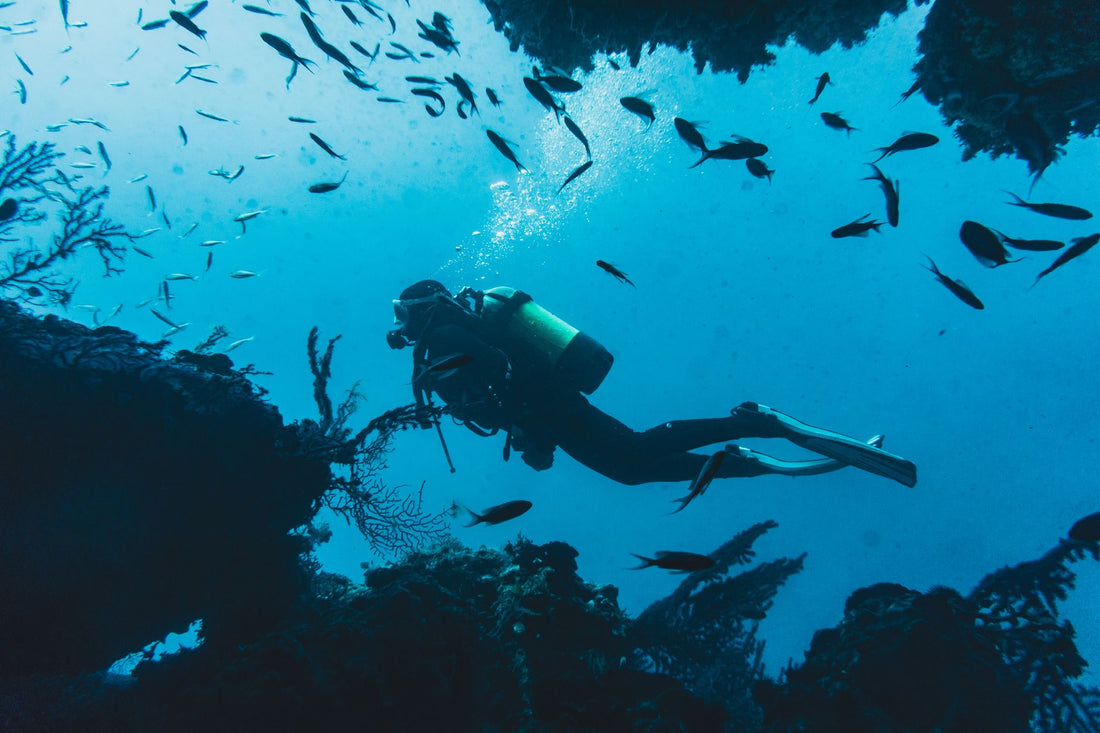
Let's start with the obvious that sometimes gets forgotten: no eSIM, SIM, or mobile network works underwater. Radio waves don't penetrate the sea, so during the dive, you'll be completely disconnected, just like with any other technology. And honestly, it's part of the charm of diving.
The goal of an eSIM for a diving trip isn't to have data while submerged, but to connect instantly as soon as you return to the boat or land: upload the dive video, let people know you're okay, and check the next day's sea report.
What you can do underwater is capture content and share it later. When you surface to the dive boat, that's where your eSIM makes a difference compared to relying on absent Wi-Fi at sea:
- When you return to the boat, if there's coverage from the nearby island, you can upload photos and messages instantly.
- On the surface near the coast, you sometimes pick up a signal from an island; on the high seas, no.
- Airplane mode underwater doesn't matter: there's no network to look for anyway.
Coverage by diving destination
Every diving paradise has its own coverage reality. Here's an honest guide to what to expect in the most popular destinations, so you can choose your eSIM wisely and without surprises.
| Destination | General coverage | Reality in diving areas |
|---|---|---|
| Maldives | Good in Malé and large islands | Variable in atolls; many resorts use Wi-Fi |
| Fiji | Good in Viti Levu and Nadi | Unreliable in smaller islands and Yasawa |
| Seychelles | Good in Mahé, Praslin, and La Digue | Solid on the main islands |
| Philippines | Good in cities and Cebu | Fair in diving islands like Malapascua |
The golden rule is simple: always choose the eSIM of the country where you're diving, because coverage is provided by its local operators, not a generic network that "covers islands." If your diving route passes through the Pacific—Fiji, Vanuatu, smaller islands—check our eSIM guide for Australia and New Zealand beforehand, because many flights layover there and it's advisable to arrive with active data already at the connecting airport, not wait until you're on the final island to sort it out.

How to maximize your connection on a diving trip
With geography against you, strategy is everything. These habits make the difference between feeling out of touch and being connected exactly when you need it, without obsessing over your phone in paradise.
- Download offline maps and guides before heading to the island; don't rely on having a signal there.
- Sync photos and videos when you get coverage or Wi-Fi, don't try to upload them in the middle of the sea.
- Schedule important messages for when you return to an area with signal, on the main island or at the airport.
- Combine eSIM and resort Wi-Fi: use Wi-Fi for large downloads and the eSIM to stay reachable when out and about.
To get the most out of your data, our tips for saving data on a trip with an eSIM will come in handy, because on islands, actual consumption is usually low: messaging, a few photos, and little else, especially if you save large downloads for the resort's Wi-Fi.
Myths and what almost no one tells you
Among divers and island travelers, there are ideas that need to be debunked before they lead you to make bad purchases or worry too much. Here are the ones that cause the most confusion, without embellishment.
- "The more GB I buy, the better." False on a diving trip: you spend a good part of the day underwater or directly without coverage, so a modest plan is usually enough and you can always add more data if you run out. Buying too much "just in case" only makes you pay for gigabytes you'll never use.
- "The dive boat will have Wi-Fi like on land." Many liveaboards and day boats have their own satellite Wi-Fi, but that doesn't change anything for your eSIM: on the high seas, far from any coast, there's no mobile operator antenna to connect to, whether or not the boat has its own satellite link for other things.
- "If I see one bar of coverage, I have data." Not always. In border areas between islands, you sometimes detect the network of a neighboring country without being able to use it, because your eSIM doesn't have an agreement with that operator. Check in the settings what network is selected before assuming you're browsing.
- Small archipelagos, small networks. In countries with many islands and sparse population, practical coverage is concentrated in the capital and little else. If your diving route passes through the Indian Ocean, check our eSIM guide for Comoros before assuming you'll have the same coverage as on a large, touristy island.
- "My diving insurance covers me if I'm out of communication." Confusing the eSIM with a security system is a common and dangerous mistake. For dives in truly isolated areas, data connection does not replace a satellite emergency device: the eSIM is for communicating when there is already coverage, not for calling for help on the high seas.
- "My Spanish operator's roaming will work for me." It might, but usually the cost skyrockets outside the European Union. Before assuming you're covered, understand what data roaming is and compare what it will cost you versus a local destination eSIM.
One detail almost no one plans for: if your flight to the Maldives, Seychelles, or Fiji has a long layover in Europe, don't waste days of your final destination eSIM at the connecting airport. Activate a Europe eSIM there just for the layover and keep your diving destination eSIM intact for when you land where you're actually going to dive.
What to do when there's no coverage
There will be moments without a signal, and accepting that from the beginning makes the trip more peaceful. Disconnecting on a remote island is not a flaw to fix, but part of the experience. Still, there are ways to be prepared:
- Notify your loved ones that you will be out of communication for certain hours or days, so they don't worry.
- Have critical information downloaded: reservations, maps, contacts for the dive center.
- Use WiFi Calling when there's Wi-Fi to make calls and receive SMS from your bank with your Spanish number.
- Don't force the network manually: leave automatic selection so your phone picks up any available signal.
If your eSIM doesn't connect when you arrive at an island with coverage, first check that the network selector is on automatic and that data roaming for the eSIM profile is activated. If you still have doubts, understanding the difference between relying on your Spanish operator's roaming and carrying a travel eSIM versus roaming usually explains why some boat companions navigate without problems and others don't.
Preparing for your diving trip before you leave
A trip to remote islands is won at home. Getting your connection ready before you fly saves you trouble when you arrive at a place where you might not even be able to search for help online. This is the ideal order:
- Check that your phone is eSIM compatible before buying anything.
- Buy and install the destination country's eSIM with Wi-Fi, in Spain.
- Download maps, dive guides, and offline reservations in case you lose signal.
- Activate data upon landing on the main island and verify that you can browse before continuing to the resort.
If you're still not sure what an eSIM is exactly or if your phone supports it, start with what a virtual eSIM is and how it works and install it by following how to install an eSIM. If you're looking for a destination, explore all options in our country-specific eSIM collection.
Frequently asked questions
Can I use my phone underwater with an eSIM?
No. No mobile network, neither eSIM nor physical SIM, works underwater, because radio waves do not penetrate the sea. During the dive, you will be disconnected with any technology. The eSIM serves to connect you instantly as soon as you return to the boat or land, where there is island coverage.
Is there coverage on the remote islands of the Maldives or Fiji?
It depends on where you are. In the main islands and capitals (Malé, Nadi) there is usually decent 4G, but in isolated atolls and remote resorts the signal drops or disappears. An eSIM gives you the same coverage as a resident: good in the core, unreliable at the extremes. Many resorts complement with their own Wi-Fi.
Which eSIM should I buy if I'm going diving in several islands of the same country?
The eSIM of the country where you are diving, because the coverage is provided by its local operators and usually covers the entire national territory. For example, an eSIM for the Philippines works for Cebu, Malapascua, and other islands in the country. If you combine different countries, consider a regional eSIM or buy one per destination.
How much data do I need for a diving trip?
Normally little. On islands, you spend much of the day diving or without coverage, so consumption is low: messaging, uploading a few photos, and checking the sea forecast. With moderate plans, you usually have plenty, especially if the resort has Wi-Fi for large downloads and video calls.
How do I notify my family if I will be out of contact?
Before heading to the remote island, let them know that you will be out of contact for certain hours or days. When you get coverage or the resort's Wi-Fi, activate Wi-Fi Calling to make calls and receive SMS with your Spanish number, and schedule messages to send them as soon as you return to an area with signal.
Do I need Wi-Fi calling to stay in touch on a dive boat?
It is highly recommended to have it activated. Wi-Fi Calling allows you to make and receive calls with your Spanish number as soon as the boat or resort has its own Wi-Fi, without relying on the country's mobile network. However, on a boat on the high seas without its own Wi-Fi, neither Wi-Fi Calling nor the eSIM will work, because there is no network to connect to. For real emergencies in very isolated areas, what truly protects is a satellite communication device, not your mobile phone.
Does the same eSIM work for island hopping between several countries?
No, unless you buy a regional eSIM that explicitly covers those countries. Each eSIM is designed for the territory of its plan, so if your route mixes, for example, the Philippines and another nearby country on the same trip, you need to activate a different eSIM when crossing the border. Check the coverage map of each plan before buying to avoid running out of data just when changing countries.
Conclusion
Diving in remote islands is best enjoyed with realistic expectations: underwater, no one has a signal, and on isolated atolls, coverage is unreliable, but an eSIM connects you instantly where there is one. Choose the eSIM of the country where you dive, have maps and reservations downloaded, and travel with the peace of mind of being connected when you emerge from the water.