In short: A Bhutan eSIM connects you as soon as you land in Paro with data from a local carrier, without having to look for stores or present your passport for a physical SIM. Coverage is solid in Thimphu, Paro, and Punakha, and becomes spotty on mountain routes like the climb to Tiger's Nest.
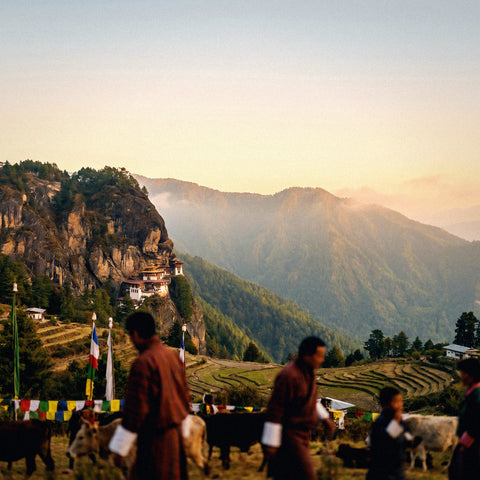
Bhutan is one of those destinations that seem to be from another time: monasteries perched on cliffs, Himalayan valleys, and a national philosophy that measures Gross National Happiness. But no matter how analog the trip feels, you'll want maps, messaging, and some shared photos. With a Bhutan eSIM, you arrive connected to Thimphu without having to look for local SIMs or rely solely on hotel Wi-Fi. Here we tell you about the actual coverage, the country's carriers, and how many GB to carry.
How eSIM works in Bhutan
A Bhutan eSIM is a data plan that you buy online before your trip and activate with a QR code in 1 minute. It connects to a local carrier in the country, so you can browse with a data plan without changing your physical card or going through a store upon arrival at Paro International Airport.
Convenience matters especially in Bhutan, because many trips are made with an organized tour and a tight schedule, and losing the first morning looking for a local SIM is not worth it. With the eSIM, you install the profile at home with your Wi-Fi and only activate it when you land. The country takes great care of its sustainable and orderly tourism model, and arriving with your connection resolved fits perfectly with that seamless travel style. If you've never used one, start by understanding what a virtual eSIM is to be clear before you leave.

Coverage in Thimphu, Paro, and the valleys
Mobile coverage in Bhutan is good in inhabited areas and spottier in the mountains. In Thimphu, the capital, and in Paro, where the international airport is located, you will find stable 4G signal for maps, social networks, and video calls. In tourist valleys like Punakha, there is also decent coverage in the main settlements.
Where the signal becomes unreliable is on mountain routes and hiking trails. The climb to the famous Tiger's Nest (Taktsang) monastery, above Paro, or high mountain passes can lose data for stretches. This is normal in a Himalayan country with extreme terrain: no carrier covers every corner of the valleys. The eSIM for Bhutan connects you to the best available local network, but it's advisable to download offline maps for excursions. If your route goes further east, for example to the Bumthang or Trashigang valley, coverage loosens considerably once you leave the village center: there, B-Mobile usually maintains a better signal than TashiCell, so don't count on constant data outside the classic Thimphu-Paro-Punakha circuit.
Tip for Tiger's Nest: download the map of Paro and the hiking trail before starting the trek. On the climb to Taktsang monastery, the signal comes and goes, and an offline map gives you peace of mind.
Local carriers in Bhutan
The Bhutanese mobile market is shared by two carriers: Bhutan Telecom (B-Mobile) and TashiCell. Between them, they cover cities and main valleys with 4G networks, with B-Mobile as the historical operator with wider reach in rural areas.
Here's some practical information to keep handy when traveling:
| Aspect | Situation in Bhutan |
|---|---|
| Main operators | Bhutan Telecom (B-Mobile) and TashiCell |
| Available networks | 4G in cities and main valleys |
| Best coverage | Thimphu, Paro, and Punakha |
| Official language | Dzongkha (English widely spoken) |
| Currency | Bhutanese Ngultrum |
With a travel eSIM, you don't have to choose a carrier or look for where to buy a SIM: the plan automatically connects to the local network with the best signal. This simplifies connection in Bhutan, where time is often limited by the tour schedule.

How much data to take to the Himalayas
For a tourist trip to Bhutan, you don't need large amounts of data, because much of the time you'll be on routes and visits without your phone in hand. Normal use of maps, messaging, and a few photos averages 1 GB every 2-3 days. If you make video calls home or upload many videos, calculate more.
As a rough guide based on trip duration:
- Short getaway (4-6 days): 2-3 GB for maps and social media.
- Classic route (a week or more): 3-5 GB with moderate use.
- Long trip or for work: 5-10 GB if you rely on your phone.
Almost all hotels in Thimphu and Paro offer Wi-Fi, so you can save mobile data for travel and excursions. To extend your plan during trekking sections without coverage, apply these tips to save data on a trip with an eSIM: disable automatic app updates and download maps before leaving the hotel. If Bhutan is part of a larger regional route and you're crossing a land border, understanding how data roaming works will prevent billing surprises when your phone jumps from one country to another.
eSIM vs. local SIM and roaming
You have three ways to connect in Bhutan, and each has its price and convenience. Roaming with your Spanish operator can be very expensive in a distant destination like this: check the current rate with your operator before leaving, because outside the European Union, the cost per megabyte can skyrocket your bill on a trip of a week or more. A local SIM is cheap for data, but it requires passport registration and wastes travel time with paperwork upon arrival; if you have already bought a physical chip in other destinations, the process in Bhutan is no different: counter, queue, and paperwork.
The travel eSIM offers the most convenient balance: no local paperwork and connection ready from landing in Paro. You don't hand your document to a seller or improvise at the airport. Compare the options in eSIM vs. roaming and in international chip vs. eSIM to see why fewer and fewer travelers carry a spare physical SIM. For a trip with a tour itinerary, the eSIM is the option that distracts you the least — and if your stop in Bhutan is just a short one-day layover within a longer regional route, don't complicate things: activate the plan for those specific days and you're all set.
Activating your eSIM before you fly
Activating the eSIM is the simplest part of the trip and requires no technical expertise. The process takes 1 minute, and it's ideal to have the profile installed before leaving home, using your home Wi-Fi, so you don't have to depend on anything when you arrive in Bhutan.
- Check compatibility: Confirm that your mobile supports eSIM before purchasing the plan.
- Choose the Bhutan plan: Select the GB and days according to your itinerary in the country.
- Install the profile with Wi-Fi: Scan the QR at home following the instructions.
- Activate upon landing: Turn on the eSIM in Paro to take advantage of all plan days.
- Select it for data: Set the eSIM as the data line, and you're ready to browse.
If you get stuck at any step, the guide on how to install your eSIM explains it in detail, and 24/7 Spanish support resolves any questions. Before buying, confirm in your mobile settings that it supports eSIM (on iPhone, Settings > Mobile Data; on Android, it's usually in Settings > Connections > SIM Manager) to avoid surprises on the day of purchase.
What almost no one tells you before connecting in Bhutan
Bhutan is not visited independently like Thailand or Vietnam: the vast majority of foreign visitors (those from India, Bangladesh, and Maldives have a different regime) enter with a closed itinerary, managed by a local tour operator with an included daily rate. This changes how you think about connectivity: you won't be improvising routes or looking for internet cafes, so the eSIM makes sense mainly for what the tour doesn't cover — texting home, saving photos, checking return flight times.
A couple of myths worth debunking before you leave:
- "There's no coverage in Bhutan, I shouldn't even try." False for the usual tourist circuit: Thimphu, Paro, and Punakha have decent 4G. Spotty coverage is the exception on trekking routes and eastern valleys, not the norm.
- "I'll buy a local SIM at the airport and be all set." Paro's terminal is small — only Drukair and Bhutan Airlines operate, with flights conditioned by the valley's topography — and there isn't always a carrier counter ready as soon as you get off the plane. If you need a connection from minute one to find your guide or confirm your hotel, an eSIM activated before flying saves you that initial blind stretch.
- "Hotel Wi-Fi is enough for me." It's enough at night, but during the day you'll be in the car, in a dzong, or climbing to a monastery, where it doesn't reach. And even on the hotel's own Wi-Fi, shared with other guests, it's worth considering privacy and VPN during travel before accessing online banking.
A little-known detail: the cold at high altitudes (Paro and Thimphu are around 2,200-2,300 meters, and some mountain passes exceed 3,000) drains battery faster than usual, and searching for signal in weak coverage areas consumes even more. Carry a charged power bank, especially if you plan a full-day excursion to Taktsang. And leave some margin in your data plan for dzongs and monasteries: there, you'll be asked to silence or turn off your phone, so don't count on those times to consume data — rather, count them as time not spent.
Frequently asked questions
Does an eSIM work well in Bhutan?
Yes, especially in Thimphu, Paro, and tourist valleys like Punakha, where there is stable 4G coverage for maps, social media, and video calls. On mountain routes and hiking trails like the climb to Tiger's Nest, the signal can drop, which is normal in a Himalayan country with extreme terrain.
Which operators does the eSIM use in Bhutan?
It connects to local networks such as Bhutan Telecom (B-Mobile) or TashiCell, the two operators in the country. You don't have to choose manually: the eSIM selects the network with the best available signal in your location, which is very practical when traveling with a tight organized tour schedule.
How many GB do I need for a trip to Bhutan?
For a one-week tourist route, 3 to 5 GB are usually sufficient, as hotels in Thimphu and Paro offer Wi-Fi, and much of the day you'll be on excursions without your phone. If you make video calls or upload many videos, estimate more and leave some margin.
Do I need to register the eSIM with my passport in Bhutan?
No. A travel eSIM is purchased online and activated with a QR, without going to any counter or handing over your passport to a local operator, unlike buying a physical SIM in the country. You provide your data to the provider during the purchase and arrive with your connection ready to activate.
Is there Wi-Fi in hotels in Bhutan?
Yes, most hotels in Thimphu, Paro, and other tourist towns offer Wi-Fi, although the speed can be modest. That's why it's convenient to combine it with an eSIM: you use Wi-Fi for large downloads and mobile data for maps and messaging during travel and excursions.
Can I buy a physical SIM from B-Mobile or TashiCell as soon as I land in Paro?
You can get one in stores in Thimphu and other cities, but it's not common to find a ready operator counter right in the small Paro terminal. That's why many travelers solve their initial days' connectivity with an eSIM and only consider a local SIM if they stay longer than planned in the country.
Does the eSIM work near the border with India, for example in Phuentsholing?
In border areas, it's common for your phone to also pick up antennas from the Indian side. Check your mobile data settings to ensure your eSIM is still connected to a Bhutanese operator (B-Mobile or TashiCell) and not an Indian network, to avoid accidental roaming charges.
Conclusion
Bhutan is a trip best enjoyed without logistical worries, and connectivity is one of those things best resolved at home. Coverage is solid in Thimphu and Paro and spottier in the mountains, so combine your eSIM with offline maps for routes. Buy your plan and arrive with your Bhutan eSIM activated in 1 minute, ready for your Himalayan adventure.