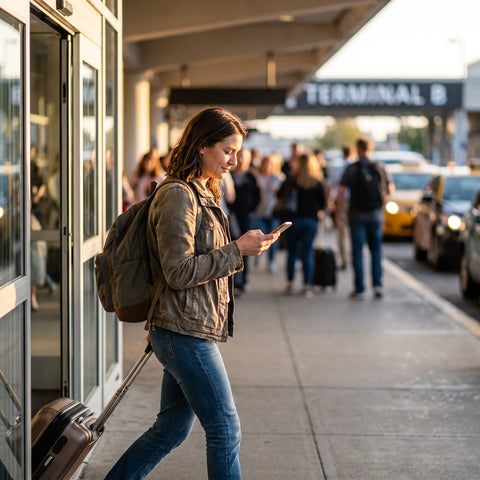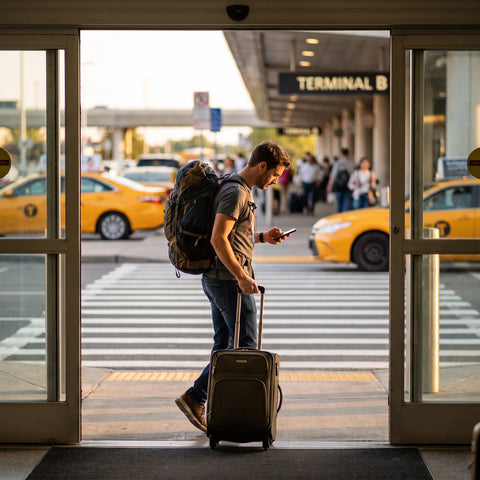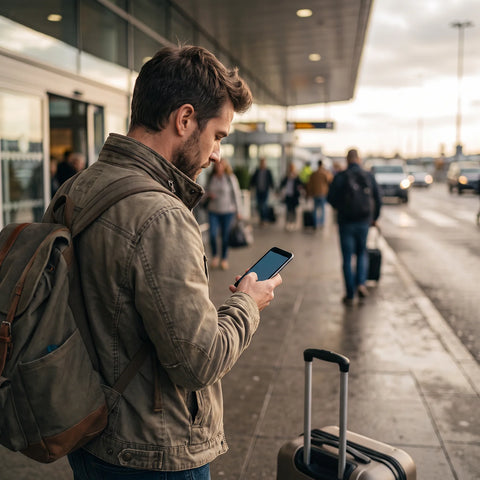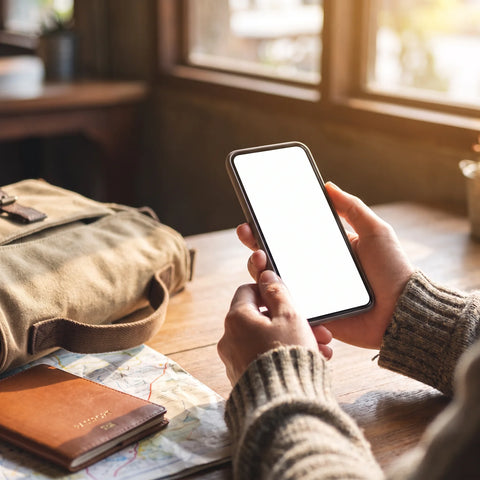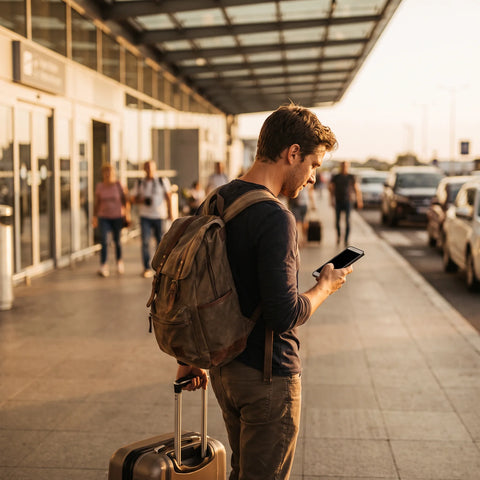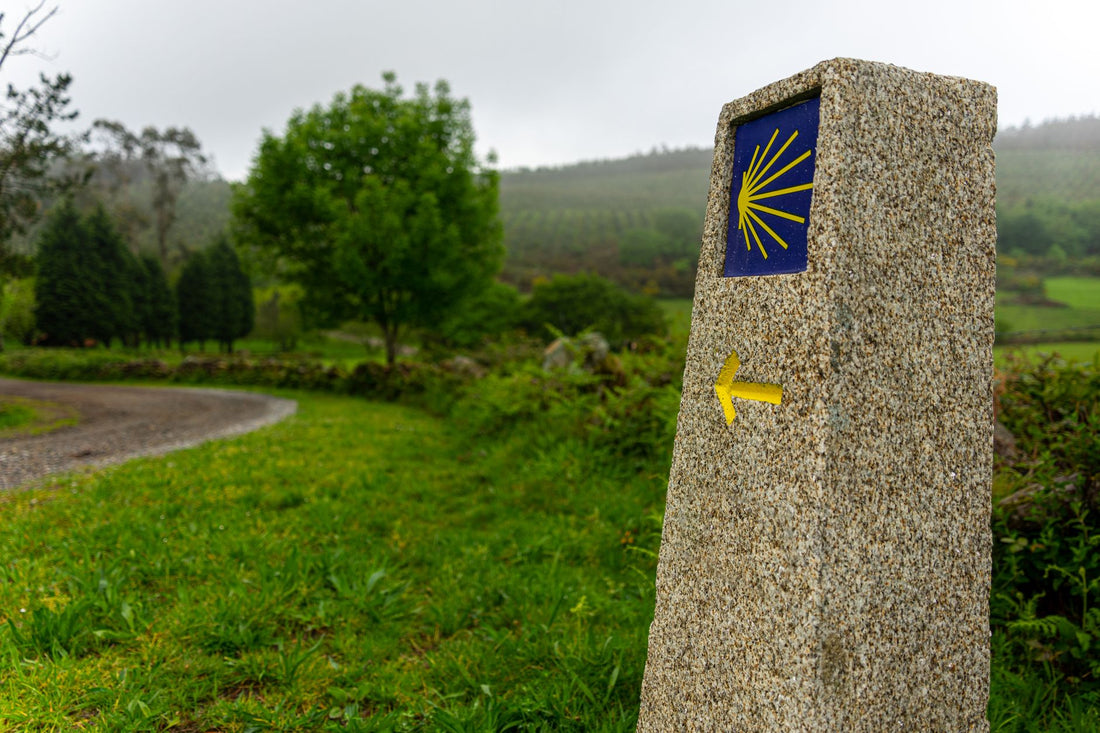
In short: an eSIM for pilgrims gives you mobile data from the first step of your journey, without having to look for stores or change physical cards, whether on the Camino de Santiago, on the way to Mecca, or on the Japanese Kumano Kodo. It's installed at home with Wi-Fi, activated when you start your stage, and avoids expensive roaming outside your operator.
What is an eSIM and why is it suitable for a pilgrimage?
An eSIM is a digital SIM card, integrated into the mobile phone itself, which you activate by scanning a QR code instead of inserting a physical card. If you've never used one, in our guide on what a virtual eSIM is, we explain it step by step with simple examples. For walkers, this detail changes the trip: there's no need to locate a tobacconist or a phone shop in a remote Galician village, or to take out the SIM tray with cold or muddy hands during a break on the trail.
You buy the plan online before leaving home, receive the QR by email, and install it calmly, with Wi-Fi and no rush. When you cross the border or start your route, you activate the data and you already have coverage. Your usual number stays on the physical SIM, so family and friends can still call you while you use the eSIM only for browsing.
Is an eSIM worth it for a pilgrimage?
For the vast majority of pilgrims, yes. The usual alternative is roaming from your Spanish operator, which can become very expensive in countries outside the European Union and can come as a surprise when the bill arrives. If you want to understand how this surcharge works, in what data roaming is, we break down why it happens and in which destinations it hurts the most. You also have the full comparison in eSIM vs. roaming, with the real differences between both options.
For a pilgrim, connection is not a luxury: it's for reserving the next bed when the hostel is full, letting family know that the stage went well, or opening the map when the path forks without a single yellow arrow in sight. The other option, relying solely on Wi-Fi in hostels and cafes, works sometimes, but leaves you blind exactly where you need it most: in the middle of the mountains, between stages, or right after landing at an unfamiliar airport.

Real coverage on the three major pilgrimage routes
Camino de Santiago
The French Way crosses rural areas of Navarre, La Rioja, Castile and León, and Galicia. In towns and on stages near roads, 4G coverage is usually solid; weak spots appear in mountain sections like the Montes de León or the ascent to O Cebreiro, where the signal drops to 3G or disappears for several kilometers.
If you're starting from outside Spain, having active data from Madrid or Bilbao airport avoids the classic predicament of landing without internet and not knowing how to get to the first hostel. You can prepare your connection with our eSIM for Spain, designed precisely for travelers who need data as soon as they set foot in the country. Always download the map of the stage the night before: that way, even if you lose coverage on a mountain pass, you'll still know where you are and how much further you have to go.
Pilgrimage to Mecca: data and roaming
The Hajj and Umrah bring millions of people to Saudi Arabia each year, a destination where roaming from a Spanish operator can easily skyrocket. A local eSIM connects you to Saudi networks as soon as you activate data, without extra queues at Jeddah airport after a long flight.
During peak times in Mecca and Medina, networks get saturated due to the large number of people concentrated in a small area, so it's advisable not to rely solely on your mobile for orientation: have schedules, area maps, and your group's contacts downloaded in advance. With available data, you can use translation apps, coordinate with your group, and share your location if you get separated in the crowd, which happens more often than one might expect.

Kumano Kodo routes, Japan
The Kumano Kodo pilgrimage routes, on the Kii Peninsula, run through dense forests and mountain valleys south of Osaka. Japan generally has a very advanced mobile infrastructure, but deep in the forest trail, the signal drops; strong points are in towns with onsen and at bus stops, not in the middle of the forest.
Since you'll be walking for hours among trees without signal bars, the pattern is the same as on the Camino de Santiago: download the stage map and bus schedules before starting each morning. When you reach a town, you'll regain data to book the ryokan for the night or check the train back to Osaka or Kyoto.
How much data does a pilgrim need?
Less than usually thought. You walk most of the day, so real consumption focuses on offline maps, messaging, some photos uploaded to social media, and accommodation bookings in the afternoon. The table below serves as a rough reference based on your travel style, not an exact figure: adjust it to how you normally use your phone.
| Pilgrim Profile | Typical daily usage | Rough reference (two-week route) |
|---|---|---|
| Minimalist | Offline maps and basic messaging (WhatsApp, some voice messages) | Small plan, designed only for essentials |
| Moderate | Photos, occasional social media, and accommodation bookings | Intermediate plan, with room for days with more usage |
| Highly Connected | Frequent video calls, video uploads, remote work in free time | Large or unlimited plan, to avoid constantly checking the meter |
To calculate in more detail according to your own route and habits, check out how to save eSIM data on a trip, with tips that also apply to a multi-week pilgrimage. The advantage of an eSIM over a physical prepaid card is that if you run short halfway through the route, you can recharge data from your phone without looking for a store.
Battery: the silent enemy on the route
On a pilgrimage, battery life is as important as data, because you spend many hours without a power outlet nearby. The good news is that having an eSIM active consumes practically the same amount of power as a physical SIM; what truly drains your phone's battery is real-time GPS, high screen brightness, and the phone constantly searching for a signal in areas with poor coverage.
Tips that work well on the ground:
- Activate power saving mode as soon as you leave the hostel in the morning.
- Use the downloaded offline map instead of real-time GPS for the entire stage.
- Turn on airplane mode during long stretches without coverage: a phone searching for a signal where there isn't one drains the battery much faster than one with data turned off.
- Carry a medium-capacity power bank, enough for a couple of full charges if the day gets long.
The problem is almost never the eSIM itself, but rather having the screen on taking photos and videos of the landscape for hours, which happens to any phone, with or without an eSIM.
How to install your eSIM before you leave
The pilgrim's golden rule: install the eSIM at home, with Wi-Fi and without rushing, not in the middle of a stage with your phone almost out of battery. We explain it with screenshots in how to install an eSIM, a process that on most phones is completed in a couple of minutes by scanning the QR code that arrives by email.
Before starting, it's advisable to check that your mobile phone is eSIM compatible, as not all models are, especially if they are a few years old. Keep your Spanish SIM active for calls and SMS, and use the eSIM only for data: this way you keep your usual number in case the hostel or your family calls you while you are walking. Save the email with the QR code and take a screenshot in case you ever need to reinstall it on another device.
Myths and common mistakes: what almost no one tells you
There are a series of ideas circulating among pilgrims that should be dispelled before leaving, because some of them can unnecessarily complicate your stage.
"With an eSIM, I no longer need to download anything offline." False, and it's the costliest mistake. The eSIM gives you data where there's coverage, but on a mountain pass or a forest stretch, there's no antenna. The habit that truly makes a difference is downloading the next stage's map every night, whether you have data or not.
"The more GB, the better, just in case." Not necessarily. Paying extra for an oversized plan doesn't give you better coverage or faster speed, just margin that you probably won't use if you're walking most of the day. It's better to adjust the plan to your actual consumption profile and top up if needed, rather than overestimating from the start.
"In destinations with public Wi-Fi networks, I can do without mobile data." Here, caution is advised for another reason: open Wi-Fi networks in hostels, airports, or crowded pilgrimage areas are not always secure for entering passwords or making banking transactions. If you plan to connect to public networks during your route, it's worth reading eSIM, VPN, and privacy on your travels before you leave, especially if you plan to use online banking from your mobile.
"My usual operator's roaming will do, I don't need anything else." While you might not notice a big difference in some nearby European destinations, in Saudi Arabia or certain parts of Japan, the cost of traditional roaming can skyrocket without you realizing it until you see the bill. Always check the current price with your operator before assuming that roaming is cost-effective for you.
"Pilgrimage dates don't affect the network." Yes, they do, and quite a lot. During peak religious seasons, whether it's Holy Week in Spain or the central days of Hajj in Saudi Arabia, networks get saturated because there are so many people connected in the same place at the same time. If your route coincides with these dates, in eSIM for Holy Week travel, we talk about how to better plan your connection during busy seasons.
If your trip continues after the pilgrimage
Many pilgrims take advantage of the trip to get to know more about the country or region before returning home. If after the Camino de Santiago you continue exploring other areas of Europe, a data plan designed for several countries will save you from buying a new one every time you cross a border. And if your pilgrimage is an excuse for a longer trip, it is advisable to plan the connection for each section with the same calm with which you plan the stages: checking coverage, necessary data and, above all, installing everything before leaving, not on the go.
Frequently asked questions
Is there coverage throughout the Camino de Santiago?
In towns and on stages near roads, 4G coverage is usually solid. In mountain sections like O Cebreiro or the Montes de León, the signal drops to 3G or disappears for several kilometers. That's why it's advisable to download the map of each stage offline the night before, whether you have data or not.
Can I use the same eSIM for multiple pilgrimages in different countries?
With an eSIM, you purchase a data plan per destination or region. If you do the Camino and then go to Japan, you activate one plan for Spain and another for Japan on the same mobile, without changing physical cards at any time. Some regional plans cover several countries at once, useful if your route crosses borders.
How much battery does it consume to have the eSIM active?
Practically the same as a physical SIM: the technology itself is not what drains the mobile. What truly drains the battery on a route is real-time GPS, high screen brightness, and the phone constantly searching for a signal in areas with poor coverage. With power-saving mode and offline maps, the battery usually lasts well throughout the day.
Do I need internet in Mecca during Hajj or Umrah?
It helps a lot to coordinate with your group, translate, and share your location among the crowd, which is common when the group separates during peak times. A local eSIM avoids expensive roaming from your Spanish operator. Keep in mind that during peak days, networks get saturated, so download maps and contacts in advance; don't rely solely on having data at that moment.
How many GB do I need for two weeks of pilgrimage?
It depends on your usage profile: if you're using maps and basic messaging, a small plan is more than enough; if you upload photos and make reservations every day, an intermediate plan is advisable; and if you make frequent video calls or upload videos, a large or unlimited plan is better. With an eSIM, you can recharge data on the go if you run short halfway through the route.
What if my mobile phone is not eSIM compatible?
It's advisable to check before leaving home, as not all models support it, especially older ones. If your phone isn't compatible, the alternative is a local physical prepaid SIM, although you lose the convenience of installing and activating everything from home before the route.
Can I still use WhatsApp and make calls with my Spanish number while using the eSIM?
Yes. The eSIM is used only for data, while your physical Spanish SIM remains active for calls and SMS. This way, you keep your usual number so that family or the hostel can reach you, and you use the eSIM solely for browsing and using messaging apps with data.
Conclusion
A pilgrimage is more enjoyable when your connection is sorted: you can book your bed without stress, let folks back home know you've arrived, and download the map when the trail gets tough. Conserve battery with power-saving mode and offline maps, adjust your GB to your actual travel pace, and get the installation done before you leave, calmly and with Wi-Fi. Prepare your travel eSIM with PuraSIM and set off on the Camino, to Mecca, or to Kumano with one less worry in your backpack.