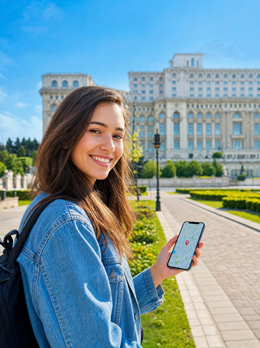
Traveling to Bucharest, Transylvania, or the Black Sea coast without running out of data is easier than you think: with an eSIM for Romania, you can connect as soon as you land, without looking for local operator stores or paying exorbitant roaming fees. In this guide, we'll tell you about real coverage, how many GB you need, and why an eSIM beats buying a physical SIM card in the country.
In summary: it's a good idea to bring a Romania eSIM if you'll be staying longer than a weekend or if your Spanish plan has limited data. The country has solid 4G/5G in cities and main roads, so a 5-10 GB plan for a typical two-week trip will be more than enough without touching European roaming.
Do I need an eSIM to travel to Romania?
Yes, if you want to use Google Maps, messaging, and mobile data without bill shocks. Romania is in the European Union, so your Spanish plan works with "free" roaming within your limit, but that limit quickly runs out, and then you pay extra. A local data eSIM gives you a fixed amount at a set price.
You'll notice the practical difference on long trips or if your Spanish plan has few gigabytes. For a weekend in Bucharest, European roaming might be enough, but for two weeks exploring Transylvania, Sibiu, Brasov, and the Danube Delta, you'll use a lot of data between maps, cloud-uploaded photos, and videos. That's where an eSIM with dedicated GB saves you from surprises. Plus, it installs in a minute and activates whenever you want, so you can have it ready at home and turn it on when you land at Henri Coandă Airport. If you're unsure whether your phone supports it, check your network settings beforehand to see if your model supports eSIM (almost all smartphones from recent years do).

Coverage and local operators in Romania
Romania has a modern mobile network with excellent 4G/5G coverage, even in rural areas of Transylvania. The three major operators in the country are Orange România, Vodafone România, and Digi Mobil (the most popular low-cost operator). A travel eSIM relies on these same networks, so the signal quality you'll get is the same as a local's.
In large cities (Bucharest, Cluj-Napoca, Timisoara, Iasi), 5G is widespread, and speeds are excellent. In the Carpathians and mountain villages, there may be stretches with only 4G or irregular coverage, which is normal in any country with varied terrain. The advantage of a travel eSIM is that it usually connects automatically to the network with the best available signal at each point, without you having to manually change anything. For the traveler, this means stable data for 99% of their tourist route. If you're combining Romania with neighboring countries, you might want to consider a European eSIM that covers the entire area with a single plan.
How many GB you need according to your trip
The amount of data depends on how many days you're staying and your usage. As a reference, an average traveler uses between 1 and 1.5 GB per day using maps, WhatsApp, social media, and some browsing. If you make video calls or watch series, it goes up to 2-3 GB per day. This table gives you a practical guide:
| Trip Duration | Light Usage (maps + chat) | Medium Usage (social media + photos) | Intensive Usage (video) |
|---|---|---|---|
| Weekend (3 days) | 1-2 GB | 3 GB | 5 GB |
| 1 week | 3 GB | 5 GB | 10 GB |
| 2 weeks | 5 GB | 10 GB | 20 GB |
| 1 month (nomad) | 10 GB | 20 GB | Unlimited |
A tip: it's better to run a little short and top up than to pay extra for gigabytes you won't use. Almost all eSIMs allow you to top up in seconds from the app if you run out of data midway through your trip. And if you connect to hotel WiFi to download offline maps and upload photos, your mobile data consumption drops significantly. To maximize every gigabyte without running out mid-route, we have a guide with tricks to save data with your travel eSIM.
eSIM vs. local Romanian SIM card
The classic alternative is to buy a prepaid SIM card from Orange, Vodafone, or Digi at the airport or a downtown store. It works, but it has friction: you have to queue, sometimes they ask for your passport and registration, you have to take out your Spanish SIM (and risk losing it), and the process is in Romanian. With an eSIM, you avoid all that.
With an eSIM, you arrive in Romania with data already working. With a local physical SIM, you lose the first hour looking for a store, queuing, and activating, precisely when you most need your phone for transport and the hotel.
The other big advantage of the eSIM is that you keep your Spanish number active at the same time, because your phone works in dual mode: your usual line for calls and bank SMS, and the eSIM for data. With a physical SIM, you'd have to choose. If you want to understand how data roaming works and how it differs from a local eSIM, check out our guide on what data roaming is, and if you're interested in a complete comparison with other physical options, here we compare the international chip versus the eSIM.
Estimated data prices in Romania
Travel eSIM prices are very competitive, especially the larger the GB plan you choose. Compared to roaming outside your European bundle, which skyrockets without warning as soon as your operator charges you off-tariff, the difference is abysmal. This table summarizes typical options for Romania:
| Option | Estimated Price | Convenience | Risk of Surprise |
|---|---|---|---|
| Travel eSIM (data) | Fixed price according to plan | High (1 minute) | None (fixed price) |
| Roaming within EU bundle | Included (limited) | High | Low until limit exhausted |
| Roaming outside bundle | Skyrockets uncontrollably | High | High |
| Local prepaid SIM | Cheap but with paperwork | Low (queue, registration) | Medium |
The important thing is that with an eSIM, you know from minute one how much you're going to pay: you choose your GB and day plan, you pay once, and there are no hidden charges or end-of-month bills. For trips across several European countries, calculate whether a regional plan is better for you or if you should stick with your Spanish plan's roaming; we cover this in detail in the guide on eSIM versus roaming.
How to activate your eSIM before leaving home
Activation is simple and done at home with WiFi before traveling. You buy the plan, receive a QR code (or a direct installation link), scan it from your phone's settings, and that's it: the eSIM is installed. Many plans activate automatically when they detect the Romanian network, so you don't spend data until you land.
The complete process takes about a minute. You just need to make sure your phone is unlocked and eSIM compatible (almost all iPhones since the XS and most mid-to-high-end Android phones are). Once installed, in the settings, you choose your Spanish line for calls and the eSIM for mobile data, activate data roaming ONLY on the eSIM, and you're all set. If it's your first time, follow our step-by-step tutorial on how to install an eSIM to make sure you don't miss any settings. And remember: save the QR or purchase email in case you need to reinstall it.
Myths and what almost no one tells you
"The eSIM QR code can be scanned as many times as I want." This is not true: almost all installation QR codes are for single use. If you delete the eSIM profile mid-trip "to free up space" or because you changed phones, you may not be able to reinstall it with the same code and will have to buy another one. Install it once, at home, calmly, and don't touch it until you return.
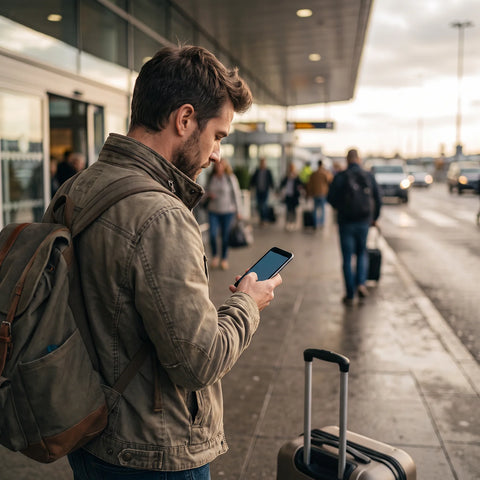
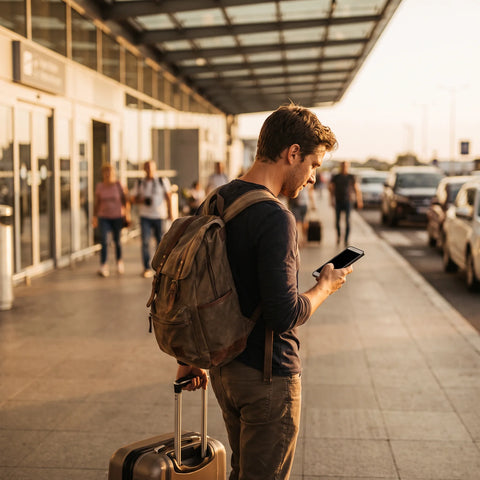
At Henri Coandă airport there is free Wi-Fi in arrivals, but it's the kind that gets saturated with passengers queuing to connect all at once first thing in the morning. If you have your eSIM already active before landing, you can order your Bolt (the most used ride-hailing service in Romania, more than Uber in many areas) directly from the tarmac without relying on that Wi-Fi. It's the difference between leaving the airport in ten minutes or fifteen looking for coverage.
Strong city coverage is not the same as constant coverage on the road. If you're driving from Bucharest to Sighisoara or crossing the Transfagarasan mountain passes, there will be stretches of several minutes without signal due to the terrain of the Carpathians, with any operator and any eSIM. It's not a fault of the plan you've purchased: it's the landscape. Download the route map offline before leaving the city.
Another surprising detail: most data eSIMs do not include a Romanian phone number, so they cannot be used to receive verification SMS from local services (for example, some banks or Romanian apps). For that, you continue to use your Spanish line in dual SIM mode, which is precisely the advantage of not having to choose between one or the other. If you also connect to open Wi-Fi in hostels or cafes, it's advisable to maximize privacy; you can find specific guidelines in our guide on eSIM and VPN for traveling with privacy.
And a curious fact for planning dates: if your trip coincides with Orthodox Easter (which in Romania doesn't always fall on the same weekend as Catholic Holy Week), you'll see nocturnal processions with candles and painted eggs in any village with an Orthodox church, even outside the usual tourist routes. This is one of the few times when it's convenient to have data handy to check mass and transport schedules, which change on those days. If you usually travel during those dates, check out our guide to eSIM destinations for Holy Week.
Frequently asked questions
Does Spanish roaming work in Romania?
Yes, Romania is in the European Union, so your Spanish plan works with roaming within your plan's limit. The problem is that this limit is quickly depleted on long trips, and once exceeded, you pay extra. A data eSIM gives you dedicated gigabytes at a fixed price and without surprises.
Which operator has the best coverage in Romania?
The three major ones are Orange România, Vodafone România, and Digi Mobil. All three offer very good 4G/5G coverage in cities and main roads. A travel eSIM relies on these networks and usually connects automatically to the one with the best signal in each area, so you'll have a quality equivalent to a local's.
Can I use the eSIM in Transylvania and rural areas?
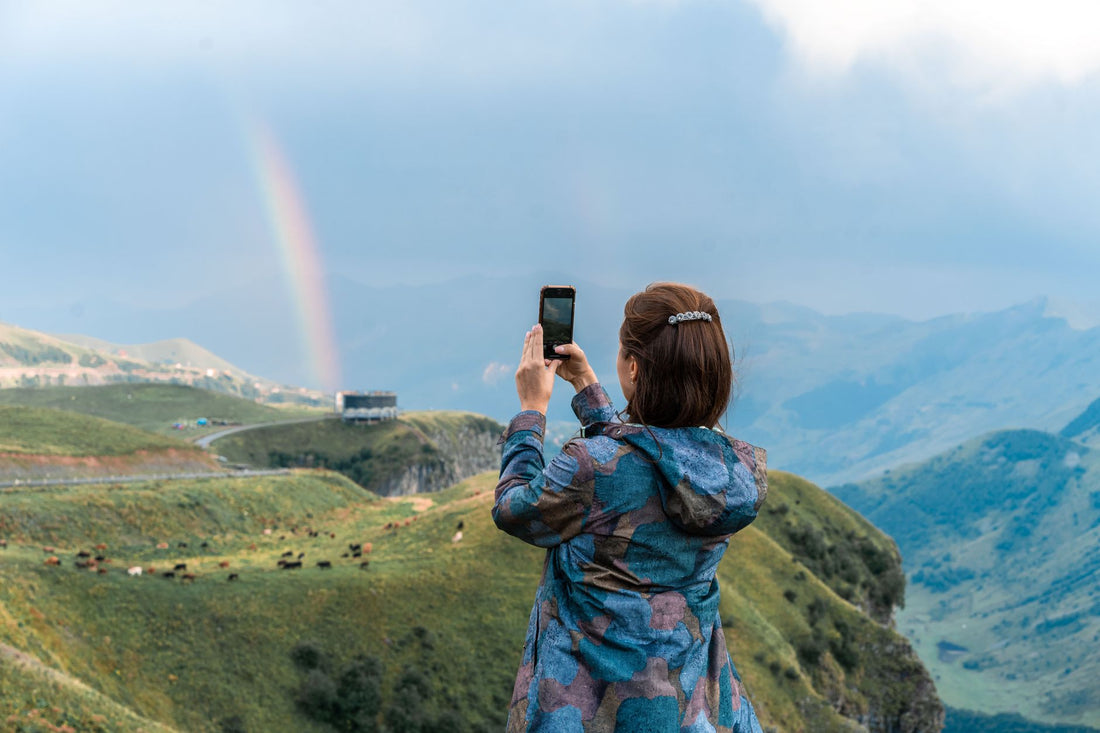
Yes. 4G coverage is widespread even in mountain villages in the Carpathians, although in very isolated sections, the signal may be weaker. For hiking routes, it's advisable to download offline maps in advance in case you temporarily lose coverage in a valley.
How many days does an eSIM for Romania last?
It depends on the plan you choose: there are options for 7, 15, or 30 days, among others. The period begins counting from the first connection to the Romanian network, not from the purchase. Choose according to the actual duration of your trip, and if you run short, almost all can be topped up in seconds from the app.
Can I share the eSIM data with another mobile?
Yes, by activating your phone's internet sharing function (hotspot/WiFi zone). This way, the mobile with the eSIM acts as a router for a tablet or your travel companion's mobile. Keep in mind that sharing consumes data faster, so adjust the GB plan for that usage.
Will I have internet as soon as I land in Bucharest?
If you activated the eSIM before leaving home (which is recommended), yes: as soon as the plane lands and your mobile detects the Romanian network, the eSIM connects automatically. You won't depend on the crowded airport Wi-Fi to order a Bolt, open the map to your hotel, or announce your arrival.
What happens if I run out of data mid-trip in Romania?
You won't be stranded: the vast majority of travel eSIMs allow you to top up the same plan or a new one from the app in seconds, without having to reinstall anything. It's a good idea to have the app downloaded and your payment method ready before you leave, so you don't have to rely on Wi-Fi if you run out of gigabytes mid-route.
Conclusion
Romania is a convenient destination for connectivity: modern networks, good coverage, and an eSIM you install in a minute from home. Compared to out-of-bundle roaming and the hassle of buying a local SIM, an eSIM gives you data at a set price while keeping your Spanish number. Choose your GBs, activate it when you land in Bucharest, and forget about searching for WiFi throughout your trip.