In short: A Samoa eSIM gives you mobile data as soon as you land in Faleolo, with no roaming or shops closed for Sunday rest. It covers Upolu and Savai'i using Digicel and Vodafone, installs in a minute from home, and 3-5 GB is plenty for a week of independent exploration.
Traveling independently in Samoa means moving between Upolu and Savai'i, searching for hidden waterfalls, and sleeping in fales by the sea. To avoid getting lost, an eSIM for Samoa activated as soon as you land in Apia gives you maps, translations, and WhatsApp from day one, without hunting for a local SIM or paying Pacific roaming fees. We'll tell you about coverage, operators, and how much data to bring.
Independent Samoa: what you need to know before connecting
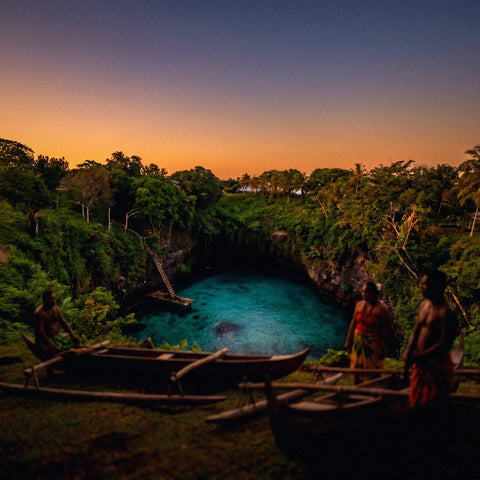
Samoa is an independent country in the South Pacific made up of two large islands, Upolu and Savai'i, with Apia as its capital. To travel independently, you need reliable data, and an eSIM installed before you leave is the cleanest way to have it.
Faleolo International Airport is on Upolu, about 40 minutes from Apia, and almost everything is organized from there: ferries to Savai'i, local buses, and transfers to southern beaches like Lalomanu. Traveling independently in Samoa means improvising boat schedules, finding accommodation on the fly, and consulting maps without guaranteed coverage on the road. That's where having your own data makes the difference between enjoying the island rhythm or being stranded without knowing when the next bus will arrive. If your Pacific itinerary includes more stops, also check out our guide to eSIMs for Australia and New Zealand, a common stopover to Samoa.

Samoa and American Samoa: don't confuse them
They are two different territories. Samoa is an independent country; American Samoa is a US territory, with a different flag, currency, and telephone system. Choose the correct destination or your eSIM will not cover where you are going.
This confusion is more common than it seems and has practical consequences. If you fly to independent Samoa (Apia, Upolu, Savai'i), you need coverage from local Samoan networks. American Samoa, with its capital in Pago Pago, operates with US carriers and different plans. Before buying, be clear about your actual destination by looking at the airport on your ticket: Faleolo (Apia) is independent Samoa. Checking this detail prevents the classic error of contracting the wrong connection. And while you're checking technical requirements, also confirm that your phone supports eSIM before buying: almost all recent models do, but it's worth checking calmly from home and not in the boarding line.
Tip: save a screenshot of your ferry and accommodation booking on your phone. In many parts of Savai'i, the signal is intermittent, and having offline information will help you out of more than one tight spot.
Local operators: Digicel and Vodafone in Samoa
The two main networks in the country are Digicel and Vodafone Samoa (formerly known as Bluesky). Together, they provide coverage to the inhabited areas of Upolu and Savai'i, and a good eSIM connects to whichever offers the best signal where you are.
Digicel has a strong presence in the Pacific and good coverage in tourist areas and Apia, while Vodafone Samoa competes with its own network on both islands. For the independent traveler, the important thing is that in the capital, in Faleolo, and on the most visited beaches in the south of Upolu, you will have normal data. Coverage becomes more irregular when you go into the mountainous interior or small villages in Savai'i, which is to be expected in an island country with a dispersed population. An eSIM that relies on the best available network gives you more flexibility than being tied to a single local operator. If you want to understand the difference with traditional roaming, see eSIM vs. roaming.

Coverage in Upolu, Savai'i, and rural areas
Upolu, the most populated island, has the best coverage: Apia, Faleolo, and the tourist southern coast are fine. Savai'i, larger and more rural, has solid signal in the main coastal villages and gaps in the interior and some roads.
In Apia and its surroundings, you'll navigate without problems to book, find restaurants, or check the map. On the south coast of Upolu, where the postcard beaches and fales are, coverage is good in tourist accommodations. When crossing by ferry to Savai'i, you'll notice that the connection depends heavily on the area: towns along the coastal road usually have signal, but the jungle interior and remote waterfalls may leave you without data. Download offline maps of your route before boarding and apply these tricks to save data with your eSIM while traveling to stretch your plan between areas with coverage.
How much data you need for your Samoa trip
When traveling independently, you spend more on maps and searches than on streaming, because you're out all day. For a week between Upolu and Savai'i, 3-5 GB covers navigation, messaging, and some social media without running out.
Usage goes up if you share many photos or make video calls to show the landscape back home. This table serves as an honest reference based on your travel style:
| Route | Main use | Recommended GB |
|---|---|---|
| Only Upolu (5 days) | Maps, buses, WhatsApp | 2-3 GB |
| Upolu + Savai'i (one week) | Navigation and coordinating ferries | 3-5 GB |
| Long trip (12-15 days) | Photos, social media, planning on the go | 5-8 GB |
| Nomad or working from Apia | Intensive daily use | 10 GB or more |
Since independent travel involves improvisation, it's better to have an extra GB than to run out of data halfway through your trip: the price of upgrading a plan always pays off compared to being without a map on a road in Savai'i without coverage.
What almost no one tells you before traveling to Samoa
There are details about Samoa that don't appear in general eSIM guides but will affect you if you travel independently. They go beyond coverage and relate to how the island actually works.
Samoa observes Sunday rest seriously: most shops in Apia, including those selling physical SIMs, close all day Sunday, and in Savai'i villages, absolutely nothing is open. If your flight lands in Faleolo on a Sunday afternoon, buying a local card that same day is practically impossible. With an eSIM installed from home, the problem disappears: the data is already on your phone before takeoff, so the day of the week you land doesn't matter.
Another curious detail that matters for practical purposes: Samoa crossed the international date line in 2011 and today is practically a day ahead of American Samoa, its neighbor less than 100 km away. If you calculate the validity of your data plan by looking at your home country's clock without realizing this, it's easy to get confused about the actual arrival day. Always count the days from Samoa's local date, not your home country's.
The ferry between Upolu and Savai'i (the Mulifanua-Salelologa route) is delayed or cancelled quite frequently due to bad weather, and then you stay an extra day without having planned for it. With a physical SIM, you would have to find where to top up your balance in a small village, if there is even a shop open. With an eSIM, you simply extend your data from your own phone, without leaving your fale or depending on something being open.
A typical and avoidable mistake: leaving your Spanish line's data roaming active in addition to the eSIM. If you don't deactivate it, your phone can alternate between the two and generate data roaming charges without you realizing it. Before landing, go into the settings and deactivate the mobile data of your physical SIM, leaving only the eSIM active for browsing; the Spanish line will still receive calls and SMS normally.
And it must also be said: if your plan is to stay only two or three nights in a resort in Upolu with decent Wi-Fi and you don't plan to leave the premises much, you probably don't need to contract separate data. The accommodation's Wi-Fi covers you and you can save the expense. The eSIM makes sense especially if you are going to move freely, cross to Savai'i by ferry or depend on your mobile to navigate outside the tourist area. If you are debating between an international physical SIM and an eSIM for such a remote destination, the difference is noticeable in logistics: the physical one has to be found, bought and activated on site; we review the differences in international chip vs. eSIM.
How to get your eSIM ready before flying to Samoa
Installation takes less than a minute and can be done from home with your Wi-Fi. You buy the plan, receive a QR or link, add it in your phone's settings, and leave it ready to connect when you land in Faleolo.
Given that getting to Samoa usually involves long flights with a layover in Auckland or Sydney, it's best to install the eSIM calmly before leaving home. Add it and activate the data only when you land in Samoa: this way, you take advantage of the full validity days and don't consume anything during layovers. The procedure is identical on iPhone and Android; you have the step-by-step in how to install an eSIM. If this is your first trip with this technology, start with what a virtual eSIM is. You can check the available data plans directly on the Samoa eSIM product page. And if you have any questions, our Spanish-speaking support is available 24/7.
Frequently asked questions
Does the Samoa eSIM also work for American Samoa?
No. They are different destinations with different networks: Samoa is an independent country and American Samoa is a US territory. If you are traveling to Pago Pago you need a solution for the US; for Apia, Upolu, and Savai'i, the Samoa eSIM will work for you. Check your destination airport before purchasing.
Will I have coverage when crossing to Savai'i?
In the coastal villages and along Savai'i's main road, there is usually a Digicel or Vodafone signal. In the mountainous interior and remote waterfalls, coverage fails, so download offline maps before taking the ferry from Upolu.
How many GB do I need for a week in Samoa?
Between 3 and 5 GB is more than enough for a week of independent travel between Upolu and Savai'i, because the biggest data usage is for maps and messaging, not video. If you share a lot of photos or work remotely, upgrade your plan to 8-10 GB.
Do I need the eSIM active during flight layovers?
It's not advisable. Install the eSIM at home but activate data only when you land in Faleolo. This way, you use the full validity days in Samoa and don't spend anything during layovers in Auckland or Sydney, where you can use the airport's Wi-Fi.
Can I still receive SMS from my Spanish bank?
Yes. The eSIM only handles data, and your Spanish SIM remains active for receiving SMS and calls. This is useful for bank verifications while you use the Samoan connection to browse and use WhatsApp with your usual number.
Can I buy a physical SIM in Apia if I arrive on a Sunday?
It's complicated. Samoa observes Sunday rest, and most shops, including those selling SIMs, remain closed all day Sunday, both in Apia and in the villages of Savai'i. If you land on that day, the most practical thing is to arrive with the eSIM already installed and activate it when you get off the plane.
What happens if the ferry to Savai'i is cancelled and I stay longer than planned?
You can extend your data from your mobile without having to look for an open shop. The Mulifanua-Salelologa ferry is delayed or cancelled quite frequently due to bad weather, so it's advisable not to push your data plan to the limit and leave some leeway for last-minute contingencies.
Conclusion
Exploring Samoa independently requires autonomy, and arriving with data on your mobile gives you that: offline maps for the interior, WhatsApp to coordinate ferries, and all of Upolu and Savai'i at your fingertips. Confirm that your destination is independent Samoa, calculate 3-5 GB for a week, and install the eSIM before flying. Discover Samoa connected with PuraSIM's eSIM.