In short: an eSIM for skiing gives you local-priced data at the resort without roaming, activates before you leave without touching the SIM tray with gloves on, and keeps your Spanish number for calls. Outside the EU (Andorra, Switzerland) is where it pays off most; in the Spanish Pyrenees, your usual plan is usually more than enough.
A ski eSIM solves two problems at once when you head to the snow: internet at the resort without expensive roaming and a mobile phone that doesn't rely on the physical SIM slot, which is so awkward to handle with gloves and cold hands. In this guide, I'll tell you about the real coverage on the slopes, why the cold drains your battery and how to prevent it, and which plan suits you best depending on whether you're going to the Alps, Andorra, or the Pyrenees. All designed so you can stay reachable on the chairlift without bill shocks.
Is an eSIM suitable for the snow?
Yes, and twofold. If you ski outside of Spain (Andorra, France, Switzerland, Austria, Italy), an eSIM gives you local-priced internet instead of roaming, whose cost skyrockets as soon as you cross the border. And since it's a digital card, you don't have to take your phone out of your inner pocket to change SIMs with frozen hands: you activate it before you leave and it works automatically.
The other advantage is dual line: you keep your Spanish number active to receive calls and use the data eSIM for browsing. This way, if a group member calls your usual number, it rings as normal, while the resort maps and WhatsApp use the eSIM. For trips to the Alps, where you can ski between two countries in the same day, this avoids surprises every time your phone jumps from one network to another. If you're not sure what exactly a virtual eSIM is and why it doesn't depend on a physical tray that can fall into the snow, that's the article that clarifies the doubt before buying.

Real coverage on the slopes
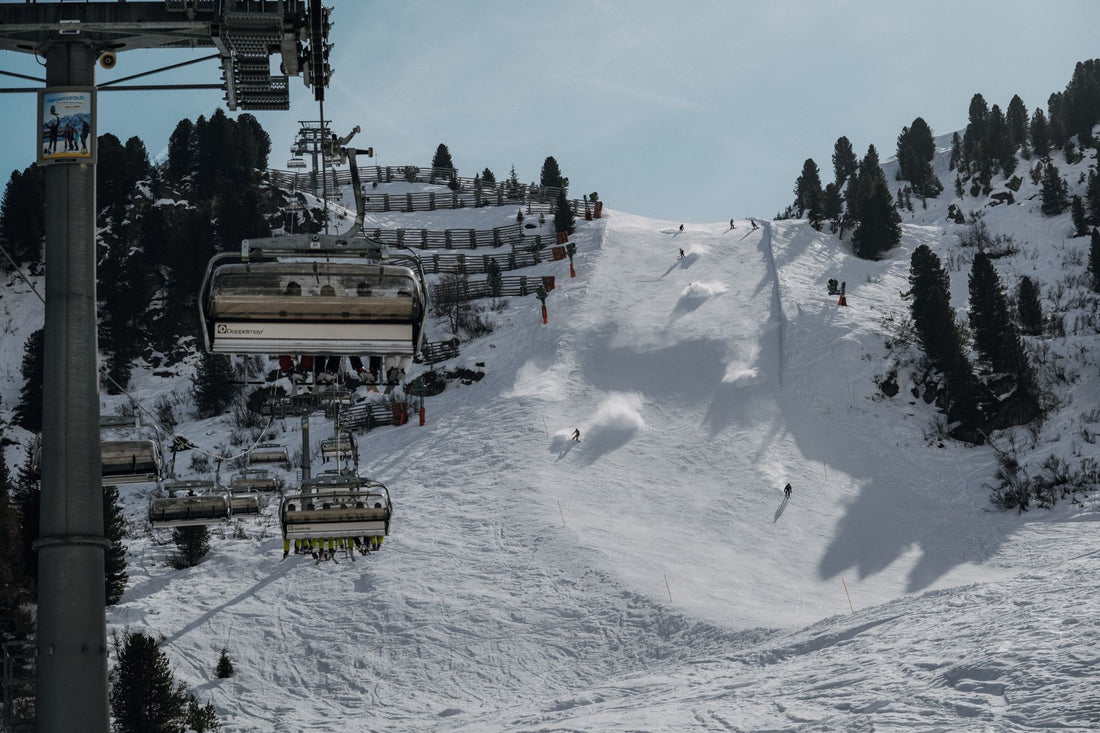
Coverage at European ski resorts is better than people imagine. Large areas of the Alps, the Pyrenees, and Andorra have antennas in the main villages, in the lift areas, and at many high altitudes, because the resorts themselves need communications for slopes and rescue. On the chairlift and on the main slopes, you'll have 4G without a problem most of the time.
Mountain reality: the signal drops in enclosed valleys, on off-piste routes, and behind ridges that shade the antennas. It's not the eSIM's or the operator's fault; it's physics. Download offline maps of the resort just in case.
The trick to a good ski plan is that the eSIM connects to the best available network at each point (roaming between local operators), not just one. This way, if one side of the mountain is dominated by one operator and the other by another, your mobile chooses the one with the strongest signal. That makes the difference between having a map on the lift or being left in the dark.
The cold and mobile battery life
Here's the problem that catches most skiers off guard: the cold doesn't drain the battery, but it makes the phone think it's more discharged than it is. Lithium batteries perform worse at sub-zero temperatures, so a phone at 40% can suddenly shut down on a slope at -8°C. It's not an eSIM failure: it happens to any phone.
The solution is simple and very effective: keep your phone close to your body, in an inner jacket pocket, not an outer pant pocket. Body heat keeps the battery within its operating range. These habits help ensure you have charge until the end of the day:
- Inner pocket, close to your chest, and only take your phone out when absolutely necessary.
- Small power bank in your backpack for midday.
- Low power mode activated from breakfast.
- Offline maps downloaded: searching for network uses a lot of battery.
- If it turns off due to cold, warm it up before turning it back on: it usually recovers charge.
How much data will you use while skiing?
Good news for your wallet: skiing consumes little data. You spend the day in the snow, not watching series, and the apps you'll use (resort map, group WhatsApp, a few short photos or videos) consume little. A modest plan is more than enough for a weekend or a white week.
- Ski weekend (2-3 days): 1-3 GB is plenty.
- White week (6-8 days): 3-5 GB covers normal use with photos and messaging.
- High usage (uploading daily videos, streaming in the apartment): 5-10 GB.
Data usage only skyrockets if you stream at night in the apartment. For that, it's better to use the accommodation's Wi-Fi and save the eSIM for the slopes. If you want to maximize your plan without overspending, apply these tips to save data while traveling: deactivate automatic app updates and lower the quality of photos you share in the WhatsApp group while on the slopes, which tends to consume the most data without you realizing it.
Destinations: Alps, Andorra and Pyrenees
The ideal plan changes depending on where you ski, and this is where the eSIM shines compared to roaming. These are the most common options for Spanish skiers:
| Destination | Roaming situation | Recommended plan |
|---|---|---|
| Spanish Pyrenees | No roaming (your plan) | Your SIM is enough; eSIM optional |
| Andorra | Outside the EU: expensive roaming | Andorra or regional eSIM |
| French / Italian Alps | EU: included but with limits | Europe eSIM for generous use |
| Swiss / Austrian Alps | Switzerland outside the EU | Switzerland or broad Europe eSIM |
Be careful with two surprising cases. Andorra is not in the European Union, so roaming is charged separately despite being next to Spain; a Europe eSIM there is very worthwhile. And Switzerland is also not part of the EU, something many skiers discover with the bill. For trips through several Alpine countries, a regional Europe eSIM that covers the area is the most convenient. If you are not clear about why the price skyrockets when crossing the border, we explain it in what data roaming is, and if you still doubt between your usual plan or an eSIM, compare eSIM vs. roaming well before leaving home.
For the Spanish Pyrenees, where your usual plan is normally sufficient, some skiers prefer to carry a backup data line in case the operator fails in high areas or on a busy weekend on the slopes: for this, the Spain eSIM is the simplest option to have ready without relying on anyone else.
Safety and mountain apps
In the snow, your phone isn't just for photos: it's a safety tool. Being connected allows you to alert if a companion separates from the group, check snow and avalanche reports, and share your location in real time. That's why it's convenient for the eSIM to have good coverage and for you to have battery for the whole day.
Apps like those from the resorts themselves show open slopes, lift waiting times, and your route. For the group, sharing location via WhatsApp or maps avoids endless waits at the meeting point. If several of you are going and only one has data, the phone can share connection via hotspot, but on the slopes, it's better for everyone to have their own eSIM: if you separate, the one who runs out of battery or coverage also leaves the others without a map. And before connecting to the free Wi-Fi of a refuge or gondola, it's good to know what you're exposing yourself to: for those open networks, take a look at our guide on privacy and VPN while traveling.
Tips for your ski day
I'll summarize the essentials so that a day on the slopes doesn't end with a dead phone or a bill surprise. Prepare everything the night before: charge your phone to 100%, the external battery too, and download the offline map of the resort. Activate low power mode first thing in the morning and carry your phone in the inside pocket of your jacket.
Before your trip, check that your phone is eSIM compatible (almost all recent ones are) and follow these steps to install the eSIM using your home Wi-Fi, not in the resort parking lot with the group waiting. Have it ready to activate upon arrival. With your eSIM prepared in advance, your only job at your destination will be to activate it with a tap and enjoy the snow connected and without roaming.
Myths and what almost no one tells you when skiing with an eSIM
There are ideas about snow and mobile phones that are repeated from chairlift to chairlift and are not always true. Here are the ones that usually confuse people the most.
"Andorra uses the euro, so it must be in the EU." No. Andorra has a monetary agreement that allows it to use the euro, but it is not part of the European Union or its single telecommunications market. That's why roaming there is charged separately, even though the currency misleads more than one.
"If I buy an eSIM, I no longer need to keep my phone close to my body." False, and it's the mistake most people make. The eSIM solves coverage, not battery physics: a phone at 30% in the outer pocket of your pants, at ten degrees below zero, will turn off with or without an eSIM. The power bank also suffers from the cold: if you carry it in the outer part of your backpack, it may arrive with hardly any useful charge in the mid-afternoon. Put it in an inner pocket or wrap it in a buff.
Stone refuges in high mountains are a curious case: due to their solid stone or metal structure, they act almost like a Faraday cage and the signal drops sharply inside, even if you have plenty of coverage twenty meters outside. If you need to make an important call, go outside before trying.
Ski tracking apps (those that draw your route with live GPS, like Strava or the resort's own apps) are among the biggest battery consumers in cold weather, even more so than video, because they keep the GPS active throughout the descent. If your goal is to make it to the end of the day with charge, activate them only on the descents you really want to save, not all of them.
And here's the honest part, the one almost no one tells you because it's not in their interest: if you're going skiing for a weekend in the Spanish Pyrenees or Sierra Nevada, you don't need to buy anything. You're still in Spain, your usual plan covers you without roaming, and there's no surprise bill. Spending on an eSIM there is a waste of money; save it for when you actually cross a border.
Frequently Asked Questions
Is there coverage on the ski slopes?
In the major resorts of the Alps, Pyrenees, and Andorra, yes, with 4G in villages, lifts, and main slopes. The signal drops in enclosed valleys, off-piste, and behind ridges. Download an offline map of the resort in case you lose coverage in some areas.
Does the cold damage the eSIM?
No. The eSIM is a chip integrated into your phone and is not affected by the cold. What does suffer is the battery: it performs worse below freezing, and your phone can turn off even if it shows charge. Keep your phone in your inner jacket pocket to keep it warm.
Do I need an eSIM to ski in Andorra?
It is highly recommended. Andorra does not belong to the European Union, so roaming is charged separately even though it is next to Spain, and the cost skyrockets the more days you are connected. An Andorra or regional eSIM gives you local internet at local prices without surprises on your bill.
How much data do I use while skiing?
Little. A weekend can be covered with 1-3 GB and a white week with 3-5 GB, because on the slopes you only use maps, messaging, and a few photos. Usage only goes up if you stream at night; for that, it's better to use the apartment's Wi-Fi.
Can I keep my Spanish number and use the eSIM at the same time?
Yes. Your phone works in dual mode: you keep your Spanish SIM active for calls and use the eSIM for data. You receive calls on your usual number while browsing with the eSIM at local prices. It's the ideal setup for group ski trips.
Do I need a different eSIM for each country if I ski in several on the same trip?
Not necessarily. If your route passes through several Alpine countries on the same trip, for example one day in France and another in Switzerland, the most practical option is a regional European eSIM that covers the entire area, instead of buying a different one every time you cross a border.
Can I activate the eSIM at the resort, without Wi-Fi?
You can, but it's best not to risk it. Install the eSIM profile using your home Wi-Fi before you leave for your trip: installation requires data, and in the resort parking lot, with poor coverage and the group waiting, is not the best time to do it for the first time.
Conclusion
A ski eSIM gives you internet on the slopes at local prices, keeps your Spanish number active, and saves you from handling your SIM with gloves on. Protect your battery from the cold by keeping your phone close to your body, download offline maps, and choose your plan based on your destination (beware of Andorra and Switzerland, outside the EU). Prepare your eSIM before heading to the snow and ski connected without fear of bill shock.