The Netherlands is one of Europe's most connected destinations, and that's no accident. From the canals of Amsterdam to the beaches of Scheveningen in The Hague, passing through Rotterdam's modern architecture, you'll need internet constantly: to book the famous OV-fiets bicycles, buy tickets to museums like the Rijksmuseum or the Van Gogh, use public transport apps, and of course, to not get lost in that network of charming, labyrinthine streets.
The good news is that the Netherlands has one of the best telecommunications infrastructures in the world. 5G coverage reaches almost the entire country, not just the big cities. This means you'll have a fast and stable connection both in the center of Amsterdam and at the windmills of Kinderdijk or in the fishing villages of Volendam and Marken.
An eSIM allows you to take advantage of all this connectivity from the moment you land at Schiphol, without looking for phone stores or dealing with physical cards. In this guide, we'll explain everything you need to know to choose the right plan, how much data you'll actually consume, and how to get the most out of your connection in Dutch territory.

Why use an eSIM in the Netherlands
The Netherlands is a country where everything works digitally. The public transport system uses the OV-chipkaart, but many services like OV-fiets shared bicycles require online booking. Popular restaurants often have digital waiting lists, and many museums offer discounts if you buy tickets online. Without a data connection, you'll be missing out on conveniences that make the difference between a smooth trip and a complicated one.
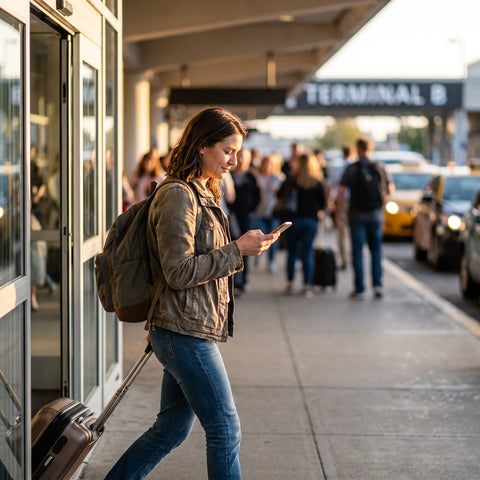
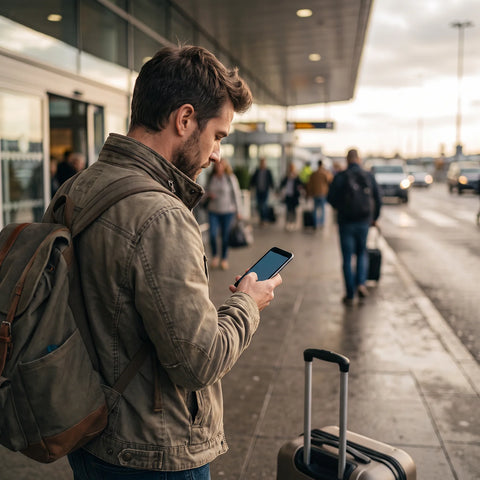
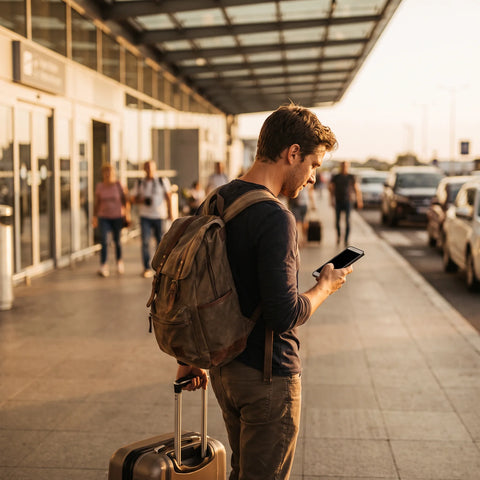
An eSIM eliminates the stress of finding a connection as soon as you arrive. Imagine landing at Schiphol after a long flight, with your luggage, tired, and having to find a phone store that's open, queue, explain yourself in English (or worse, try in Dutch), hand over your passport for registration, and wait for your SIM to be activated. With an eSIM, you simply turn on your phone and you're connected. You can order your Uber, look up your hotel on Google Maps, or let your family know you've arrived safely, all while walking towards the airport exit.
Another important benefit is that you keep your original number active. The eSIM works as an additional line on your phone, so you can continue to receive bank verification messages or important calls on your usual number, while using the eSIM for all your mobile data. This is especially useful if you need to confirm transactions with your bank or receive two-factor authentication codes.
Furthermore, the flexibility is incomparable. If you run out of data halfway through your trip, you can top up or buy a new plan from your phone in seconds, without looking for stores or dealing with opening hours. And if your trip includes other European countries, many eSIMs work throughout the European Union, which means you can cross into Belgium or Germany without worrying about changing cards or running out of connection.
The value for money also favors eSIMs. Plans for tourists are usually cheaper than international roaming from Latin American or Spanish operators, and definitely cheaper than local physical SIMs that are designed for residents with monthly contracts. With an eSIM, you pay exactly for what you need, without long-term commitments or hidden charges.
How many GB you need for your trip
The million-dollar question: how many gigabytes do I really need? For a week in the Netherlands, our recommendation is between 6 and 8 GB, but this largely depends on your travel style. Let's break it down with concrete examples so you can calculate your consumption.
Google Maps navigation is probably your biggest daily use. Amsterdam, The Hague, and Rotterdam are walkable cities, but also extensive. Actively using Google Maps for 3-4 hours a day consumes approximately 200-300 MB daily. If you visit for a week, we're talking about 1.5 to 2 GB just for navigation. This includes looking up directions, checking restaurant reviews, and consulting museum opening hours.
Social media and messaging are the second largest consumers. Uploading photos of canals to Instagram, sharing stories, sending photos via WhatsApp to your family, and scrolling while waiting in line at the Anne Frank Huis can easily add up to 100-150 MB per day. In a week, that's another 700 MB to 1 GB. If you also make video calls via WhatsApp or FaceTime, each hour consumes approximately 300-400 MB, so add that up according to your plans.
Transport apps and local services also add up. The 9292 app for public transport, the NS (Dutch railways) apps, Uber, Bolt, and museum apps consume data moderately but constantly. Calculate about 500 MB for the week if you use these apps regularly. The OV-fiets app for booking public bicycles is light, but if you use it several times a day, it also adds up.
Streaming music or podcasts while walking or cycling can consume a lot. Spotify in high quality uses approximately 150 MB per hour. If you listen to music 2-3 hours a day during your trip, we're talking about an additional 2-3 GB. The solution is to download your playlists with Wi-Fi at the hotel, but if you prefer the convenience of streaming, consider a plan with more data.
For moderate travelers who primarily use navigation, messaging, and social media without video streaming, 6 GB is sufficient. If you plan to make frequent video calls, watch YouTube videos, or use music streaming without downloading, aim for 8-10 GB. And if you're traveling with children who will want to use Netflix on the train or watch videos during waiting times, consider 12-15 GB for the whole family or individual plans for each device.

Coverage and operators in the Netherlands
The Netherlands has three main mobile network operators: KPN, Vodafone, and T-Mobile (which operates under the Odido brand in the country). All three offer excellent coverage, but there are differences worth knowing, especially since your eSIM will connect to one of these networks depending on the provider you choose.
KPN is the historic operator and has the most extensive network in the country. Its 4G coverage reaches 99.9% of the territory, and its 5G network covers all major cities and most urban areas. If your eSIM connects to KPN, you'll have excellent signal in Amsterdam, The Hague, Rotterdam, Utrecht, and practically wherever you go. Even in rural areas like Friesland or Zeeland, coverage is solid. KPN also has roaming agreements with operators in neighboring countries, which means better signal in border areas.
Vodafone Netherlands offers comparable coverage, with particular strength in dense urban areas. Its 5G network is particularly fast in Amsterdam, Rotterdam, and The Hague, with speeds regularly exceeding 200 Mbps in central areas. For tourists who mainly travel between large cities, Vodafone is an excellent choice. Its coverage on NS trains is also very good, which is important if you plan to travel a lot by rail within the country.
T-Mobile/Odido has good general coverage, although historically it has been slightly inferior to KPN in very rural areas. However, for a typical tourist trip focused on Amsterdam, The Hague, Rotterdam, and other cities, you won't notice a difference. Its 5G network is constantly expanding and offers very good speeds in urban areas.
The practical reality is that with any of these operators, you'll have an excellent experience. The Netherlands is a small and densely populated country, with a first-class telecommunications infrastructure. Most eSIMs for tourists automatically connect to the network with the best available signal at any given time, so you don't need to worry too much about choosing a specific operator.
An important fact: 5G coverage in the Netherlands is impressive. According to 2025 data, over 85% of the population has access to 5G networks, and this percentage includes practically all tourist areas. This means your eSIM will work at very high speeds in museums, train stations, shopping centers, and most streets in major cities. Typical 5G speeds in the Netherlands are around 150-300 Mbps, enough for anything you need to do from your phone.
How to activate and use your eSIM
Activating an eSIM is surprisingly simple, but there are some steps you should follow to avoid problems. The first is to confirm that your phone is compatible. Most iPhones from XS onwards, and most Samsung Galaxy phones from S20, support eSIM. Also many Google Pixel, Huawei P40 and higher models, and several recent Xiaomi and Oppo phones. If you are not sure, look in your phone's settings for the "Add mobile plan" or "eSIM" option in the mobile data section.
The installation process is similar on all phones, but with slight variations. On iPhone, go to Settings > Mobile Data > Add Data Plan > Use QR Code. Scan the QR code you receive when you buy your eSIM (usually by email), and the profile installs in seconds. On Android, the path is Settings > Connections > SIM card manager > Add mobile plan > Scan QR code. Some Android models also allow you to install the eSIM using a manual activation code if you prefer not to use the camera.
We recommend doing this installation before you travel, connected to your home Wi-Fi. This gives you time to resolve any technical issues without the pressure of the airport. Once the eSIM profile is installed, it will appear on your phone as a second line, but it will not connect or consume data until you arrive in the Netherlands. You can travel with peace of mind knowing everything is ready.
When you land at Schiphol, simply activate the eSIM as your main mobile data line. On iPhone, go to Settings > Mobile Data > and select the eSIM as "Line for Mobile Data". On Android, go to Settings > Connections > SIM card manager > and activate the eSIM. In 30-60 seconds, your phone will automatically connect to the local network and you will see the signal bars appear. If 5G is available, you will see the "5G" indicator at the top of your screen.
An important tip: keep your original SIM active for calls and messages. Configure your phone to use the original SIM for calls and SMS, and the eSIM only for data. This way you can continue to receive calls on your usual number (although you will be charged for receiving them while roaming), but all your mobile data will go through the inexpensive eSIM. For messages, use WhatsApp, Telegram or iMessage, which work with data and do not incur roaming charges.
If at any time you need to check how much data you have left, most eSIM providers have an app or a web portal where you can check your balance in real time. You can also see the consumption in your phone's settings, although this figure may have a small delay compared to the actual consumption registered by the operator.

International roaming vs eSIM: cost comparison
Here's where you realize how much money you can save. Let's compare the real costs of using international roaming from different Spanish-speaking countries versus buying an eSIM specifically for the Netherlands.
If you travel from Spain, the main operators offer roaming in the European Union without additional charges thanks to the "Roam Like at Home" regulation. This sounds perfect, but there's fine print. Movistar, Vodafone, and Orange include roaming in Europe in their most expensive plans (generally from 30-40 euros monthly), but basic or prepaid plans usually have strict limits. For example, a 15-euro-a-month plan might only include 2-3 GB of roaming, insufficient for an intense week of tourism. If you exceed that limit, you pay approximately 6-10 euros per additional GB. For 8 GB, you could pay 30-50 euros extra, when an 8 GB eSIM typically costs 15-25 euros.
From Mexico, the situation is more expensive. Telcel charges approximately 12-15 USD per day for roaming in Europe with its "Viajero Amigo" package, which includes unlimited data but at reduced speed after a certain limit. For a week, we're talking about 84-105 USD (about 1,500-1,900 Mexican pesos). AT&T Mexico offers packages of 100 MB for 10 USD, completely insufficient for actual tourist use. Movistar Mexico has similar rates. An 8 GB eSIM for the Netherlands costs between 20-30 USD, a saving of over 70%.
From Argentina, the three main operators (Movistar, Claro, and Personal) charge roaming in Europe at rates around 15-20 USD per day for packages with limited data. A week of roaming can easily cost you 100-140 USD. Considering the volatility of the Argentine peso and exchange restrictions, an eSIM purchased in advance gives you cost predictability and substantial savings.
From Colombia, operators like Claro, Movistar, and Tigo charge approximately 40,000-60,000 COP per day for roaming in Europe (about 10-15 USD). For a week, that's 280,000-420,000 COP (70-105 USD). An 8 GB eSIM costs the equivalent of 80,000-120,000 COP (20-30 USD), a significant saving that you can invest in a dinner in Amsterdam or museum tickets.
From Chile, Entel, Movistar, and Claro charge around 8,000-12,000 CLP per day for roaming in Europe. A week is 56,000-84,000 CLP (about 60-90 USD). Again, an eSIM for 20-30 USD represents a saving of over 50%.
But beyond the money, there's peace of mind. With roaming, there's always the risk of unexpected charges if your phone connects to premium services, if you receive calls that charge you, or if automatic app updates consume data without you realizing it. With a prepaid eSIM, you pay a fixed amount and know exactly how much you'll spend. No surprises on your monthly bill when you return home.
Frequently asked questions
How many GB do I need for a week in the Netherlands?
For a week in the Netherlands, we recommend between 6 and 8 GB. This allows you to use Google Maps constantly, book OV-fiets bicycles, share photos on social media, use WhatsApp, and look up information about museums and restaurants. If you plan to make frequent video calls or stream music without pre-downloading, consider 10 GB or more. For very intensive use with video streaming, aim for 12-15 GB.
Does the eSIM work throughout the country or only in big cities?
The eSIM works throughout the Netherlands. The country has one of Europe's best telecommunications infrastructures, with virtually total 4G coverage (99.9%) and 5G available in over 85% of the territory, including all urban areas and most rural areas. You'll have a stable connection in Amsterdam, The Hague, Rotterdam, but also in small towns, rural areas, trains, and even at the famous Kinderdijk windmills.
Can I activate my eSIM before arriving in the Netherlands?
Yes, and in fact, it's recommended. You can install the eSIM profile on your phone before traveling using Wi-Fi at home. The profile will be installed but will not be activated or consume data until you arrive in the Netherlands and turn on your phone there. This allows you to complete the process calmly, resolve any technical questions without pressure, and ensure everything works correctly before you travel. When you land at Schiphol, you simply activate the eSIM and you'll be connected in seconds.
Does the eSIM work at Schiphol Airport?
Yes, the eSIM works perfectly at Schiphol Airport from the moment you land. 5G coverage is available throughout the airport, both in the terminals and in the baggage claim and departure areas. This allows you to immediately order an Uber or Bolt, look up directions to your hotel on Google Maps, book your OV-fiets bike, or let your family know you've arrived safely, all while walking towards the exit. Speeds usually exceed 150 Mbps, which is more than enough for any need.
Is an eSIM better than buying a physical SIM in the Netherlands?
For tourists, eSIM is generally more convenient and economical. It activates instantly without needing to search for stores, doesn't require complex documentation, and you can compare and purchase it before you travel with complete peace of mind. Local physical SIMs in the Netherlands usually require passport registration, are designed for residents with monthly plans that are not ideal for short stays, and you'll mainly find them in specialized stores that may not be open when you arrive. The eSIM eliminates all these frictions and connects you from minute one.