If you searched for "eSIM T-Mobile USA," you probably have an upcoming trip and want to know if you can get your phone's internet set up with that carrier before boarding your flight. The short answer is yes, it exists, but it doesn't function like a tourist data plan, which changes things quite a bit. Here, we explain what it is, what it covers, what it doesn't, and what alternative exists for those who only need data during a trip.
Can I buy a T-Mobile eSIM?
Yes: T-Mobile allows the use of eSIM, but as part of a line on its network in the United States, not as an independent product for tourists. To activate it, you need to already be a customer (or sign up) with them, with the procedures of a US plan. If you are only looking for data for a short trip, it is not the simplest way.
T-Mobile is one of the three major carriers in the United States, along with AT&T and Verizon, and like most national carriers, it offers eSIM as another way to have a line: instead of giving you a physical card, they provide (or you download) a digital profile that serves the same function within their network. The important detail is that this profile is designed for someone who will use the service continuously, with an account in their name, not for someone who lands for three days and needs data immediately.
Therefore, when someone searches for "T-Mobile eSIM" from outside the United States, they are actually often looking for something else: a way to have mobile data on their phone during their trip, without having to go through the process of opening an account with a local carrier. This need has its own name and does not depend on any US carrier: it is called a travel eSIM, and it works differently from a traditional carrier's eSIM.
Can I activate a T-Mobile eSIM outside the United States?
In general, activating a new T-Mobile line usually requires the activation process to be completed within the United States or with data that only applies to residents or customers already registered in their system. Once the line exists, some plans do allow data usage in other countries as part of their international coverage, with carrier-specific conditions that should be checked directly with them and with a consultation date, as they change over time.
That is precisely the key difference compared to a travel eSIM: while the former is designed for someone who lives in the United States and occasionally travels abroad, the latter is designed exactly the opposite, for someone who lives abroad and is visiting. If your situation is the latter, you should also read about the difference between using a travel eSIM and activating international roaming with your usual carrier, because these are different paths with very different results in terms of speed and how quickly you get internet access.
Does T-Mobile have a free eSIM?
This is a frequently asked question, and the short answer is that there isn't a "free" T-Mobile eSIM in the sense of no-cost data for anyone: what exists are specific promotions, linked to a paid plan, a carrier change, or a device purchase, and these conditions change constantly. Any concrete offer must be verified directly on T-Mobile's website, with the date, because a promotion valid today may not exist next week.
If you're interested in this topic, we've already covered it in more detail in this guide on T-Mobile's free eSIM promotions, including what can and cannot be stated. What can be said in general is that no promotion from a US carrier is designed for someone who will only be visiting for a few days: that use case is better covered by an international travel eSIM, designed to be installed before leaving home and activated immediately upon arrival.

How to install an eSIM on your phone, step-by-step?
The process of installing an eSIM is practically the same regardless of which company provides it, because it is defined by the phone's operating system (iOS or Android), not the carrier. In general, there are four steps:
- Confirm that your phone is eSIM compatible. You can check this in Settings; no need to ask anyone.
- Obtain the QR code or activation link provided by the carrier (via email, an app, or within your account).
- Scan the code from Settings → Cellular Data → Add eSIM (the exact menu name varies slightly between models, but the path is always similar).
- Activate the new line and choose which one to use as the primary for data.
A less obvious detail that will save you trouble: install the profile a few days before you travel, while still on your home Wi-Fi, even if you don't activate it until you land. Downloading the eSIM profile requires an internet connection, and if you wait until you're at the destination airport without Wi-Fi or data, you might be unable to install it when you need it most. Activating it is a separate step and you can do that later, without a prior connection.
For complete details with screenshots for iPhone and Android, refer to the step-by-step eSIM installation guide.
Carrier eSIM vs. Travel eSIM: The difference that changes your plan
A carrier eSIM, like T-Mobile's, is designed for someone who will live in that country and needs a permanent line: calls, messages, and data, with a contract or monthly plan, and activation procedures designed for residents. An international travel eSIM is designed for the opposite: someone who will be in a place for a short time and only needs mobile data, without a local phone line, without a contract, and without a local address in that country.
If your phone already comes with an eSIM from the factory, you don't need to visit any store or wait for a shipment: the entire process of getting data for your trip happens within the phone itself, from start to finish.
This difference in purpose explains why comparing prices between the two doesn't make much sense: they don't compete for the same customer. A traveler who only needs data for a few days saves time and avoids paperwork by using a travel eSIM. Someone moving to the United States who needs a permanent local line does need a carrier like T-Mobile. Both coexist; they don't replace each other. If you're still wondering about the fundamental difference between eSIM and physical SIM in general, that full comparison deserves its own space, but the central idea is the same: choose based on how long you'll be there, not based on which "sounds better."
A real example: from Bogotá to New York with data from the moment you land
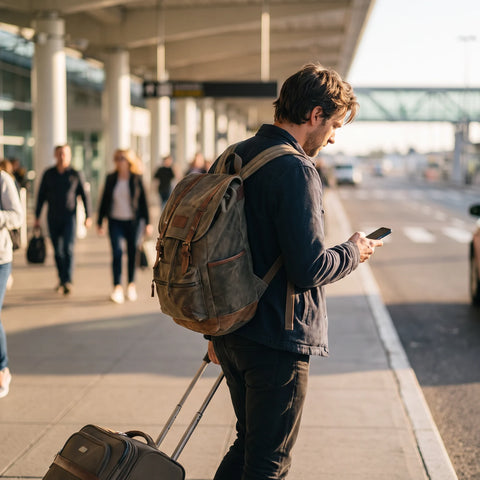
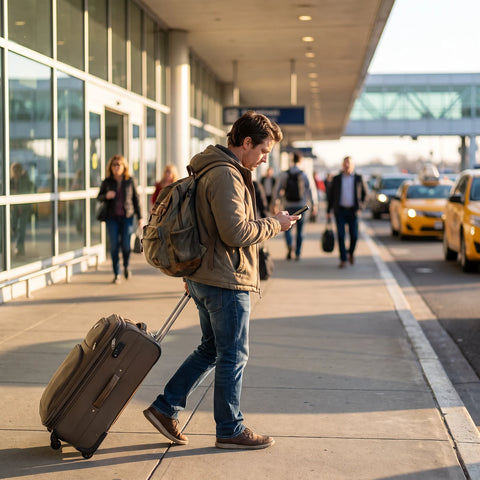
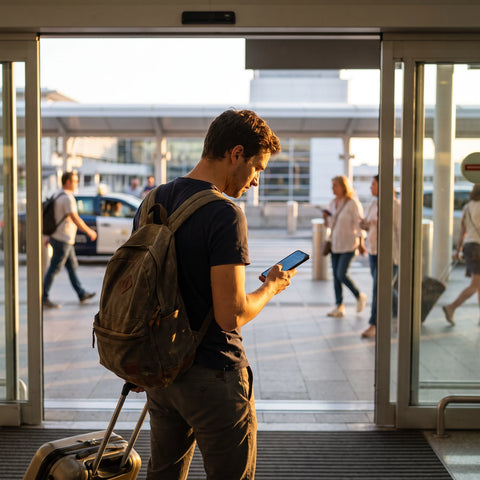
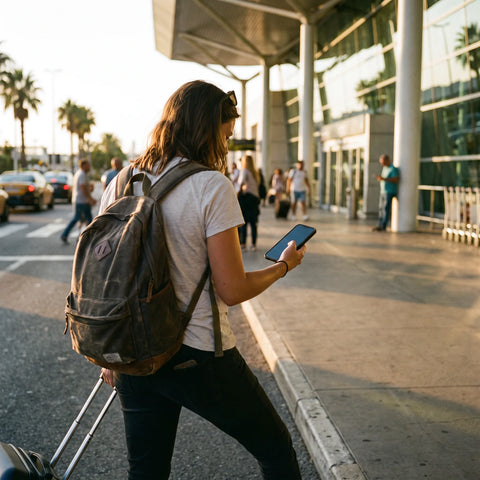
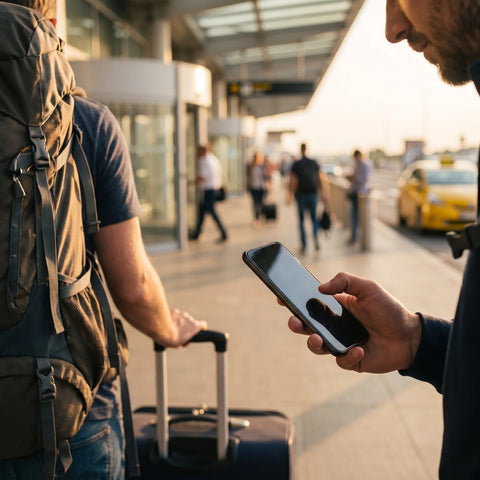
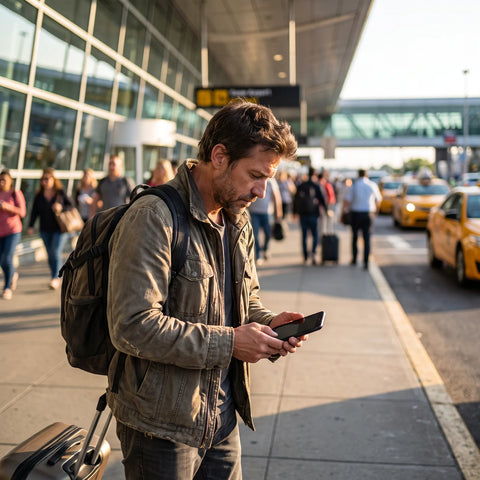
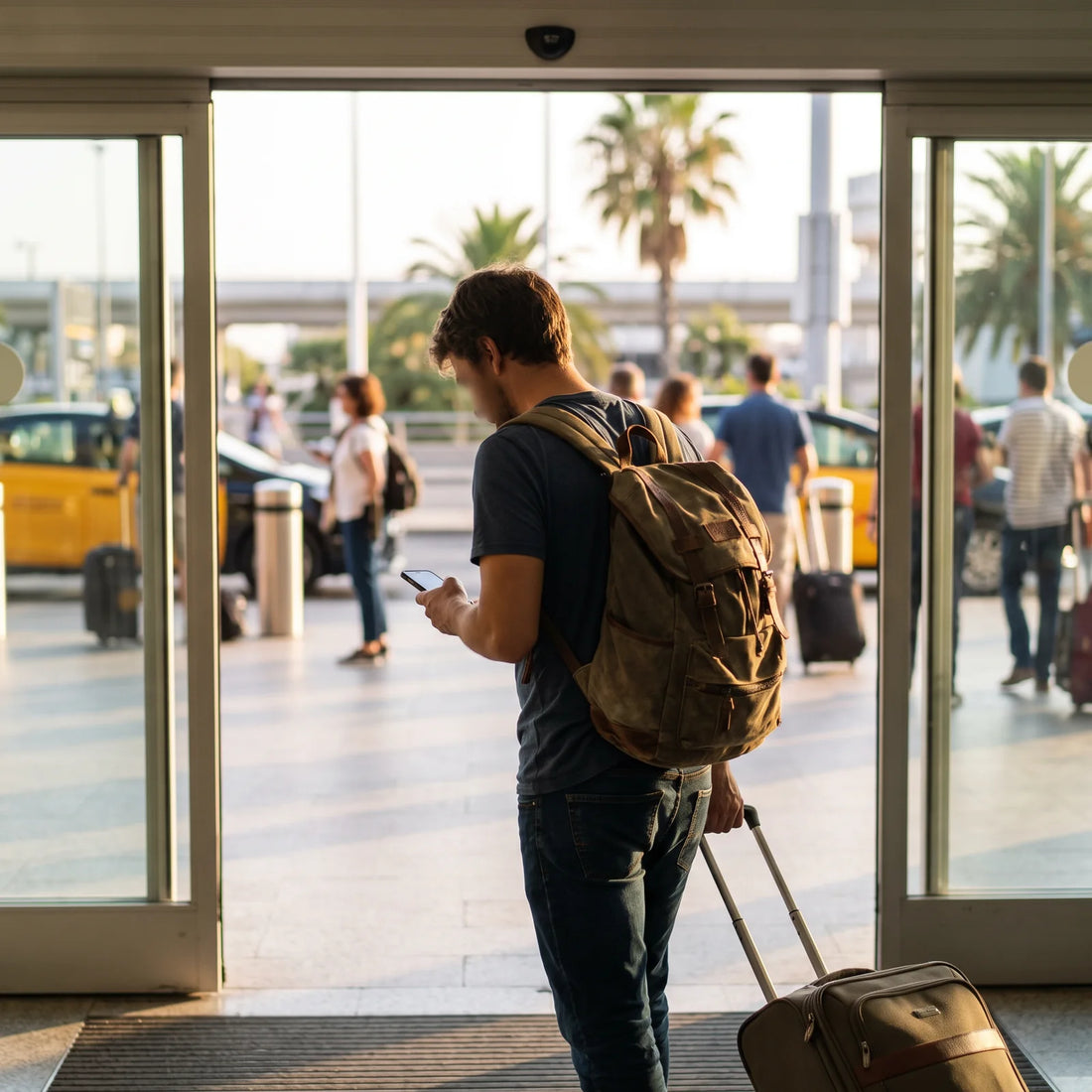
Consider a typical trip: you leave Bogotá on a Thursday night and land in New York the next morning. You'll need a map to get to your hotel, WhatsApp to let people know you arrived safely, and you'll probably order a ride via an app from the airport. That first moment, with luggage in one hand and your phone in the other, is not the time to be looking for a carrier store or filling out a form with a US address.
With a travel eSIM, this same scenario changes: you install the profile from Bogotá, using your home Wi-Fi, before you leave. Upon landing, you activate the data and within minutes you have internet working, without going through a carrier counter or relying on airport Wi-Fi. This is exactly the kind of situation for which PuraSIM's international eSIM collection exists, designed to cover the United States and other destinations with the same profile.
Which phones are eSIM compatible?
Most mid-range and high-end phones launched in recent years come with eSIM, but not all, and some models sold in certain countries or with the phone unlocked in a certain way may have the function blocked by the manufacturer or the original carrier. The safest way to find out is to check directly on your phone, in Settings.
| Brand | Model range that usually includes eSIM |
|---|---|
| Apple | iPhone XS / XR and later |
| Samsung | Galaxy S20 series and later (not all regional versions) |
| Pixel 3 and later | |
| Motorola | Newer high-end models |
Since compatibility varies by regional version and whether the device was sold unlocked or tied to a carrier, it's best to confirm it before purchasing any eSIM. We provide complete details, with more brands and how to check on your own device, in the eSIM compatible phones guide.

Comparison: Carrier eSIM vs. International Travel eSIM
To make it clear at a glance, here's how the two options compare based on what you need to solve:
| Aspect | Carrier eSIM (e.g., T-Mobile) | International Travel eSIM |
|---|---|---|
| Designed for | Residents who need a permanent line | Travelers who need data for a limited time |
| Activation process | Account with the carrier, generally tied to the US | Online purchase, no address or contract needed |
| Includes local phone number | Yes | No, data only |
| Coverage | Depends on the contracted plan | Can cover over 200 destinations with different plans |
| Time until internet access | Varies depending on activation process | Activation in approximately 1 minute once installed |
| Time limit to use from purchase | Depends on the carrier | 180 days to activate from purchase |
In other words: if your priority is to have a stable line because you're going to live in the United States, the local carrier route makes sense. If your priority is to have data as soon as you land and not deal with paperwork, the travel eSIM route solves exactly that, with nothing extra.
Common eSIM problems (and how to avoid them before traveling)
Almost all eSIM stumbling blocks are repetitive, and almost all can be avoided by doing things in the correct order. The most common ones are: installing the profile at the destination without available Wi-Fi, activating the line prematurely and having the plan run out before the trip begins, or confusing "install" with "activate" and arriving without data thinking everything was ready.
Another frequent issue is having your phone locked by the original carrier, which sometimes prevents adding an additional eSIM profile even if the device is compatible with the technology. We review these and other cases, with solutions for each, in the guide to common eSIM problems. And if something doesn't go as expected during your trip, PuraSIM offers 24/7 support in all languages via email and WhatsApp, so you don't depend on finding a physical store or office hours.
Frequently asked questions
Do I need my phone unlocked to use a travel eSIM?
Not necessarily, but if your phone is completely locked to a single original carrier, that lock may also prevent adding an additional eSIM profile. It's advisable to check this in Settings before purchasing.
Can I have both a T-Mobile eSIM and a travel eSIM at the same time?
Yes, most modern phones allow you to install more than one eSIM profile and switch which one uses data, or even use two lines simultaneously if the model supports it.
What if my phone is not eSIM compatible?
Then you will need a physical SIM card for that function, either from the local carrier or from a travel data provider that offers that option.
How long do I have to activate a travel eSIM after purchasing it?
With PuraSIM, you have 180 days from the purchase to activate it, so you can buy it in advance without fear of it expiring before your trip.
Do I need Wi-Fi to activate the eSIM once I'm at the destination?
Not to activate it; you only needed it beforehand to install the profile. The activation itself occurs in approximately 1 minute once you have the profile installed.
Does a travel eSIM work for multiple countries on the same itinerary?
It depends on the plan you choose: there are options for a single destination and others that cover several countries within the same region, depending on the itinerary.
What happens if I have a problem with the eSIM during my trip?
You can write via email or WhatsApp: support is available 24/7 in all languages, without depending on office hours or finding a physical store.
Is a T-Mobile eSIM useful if I'm only visiting the United States for a few days?
Generally, it's not the simplest route because it's designed for customers who are setting up a permanent line. For a short visit, a travel eSIM solves the same problem without that paperwork.
Conclusion: which eSIM is right for your trip
If you're going to live in the United States and need a local number, voicemail, and a line that lasts months or years, a carrier like T-Mobile is the right path, with its own activation procedures. But if your situation is like most people who arrived here searching for "eSIM T-Mobile USA" — a trip of days or weeks, no need for a local number, just wanting data as soon as you land — an international travel eSIM solves exactly that, without opening an account with any carrier.
To start, first check if your phone is compatible and follow the installation steps calmly, before traveling. Then choose your plan from the international eSIM collection, where you can cover the United States and other destinations with the same process: install before leaving, activate upon arrival.