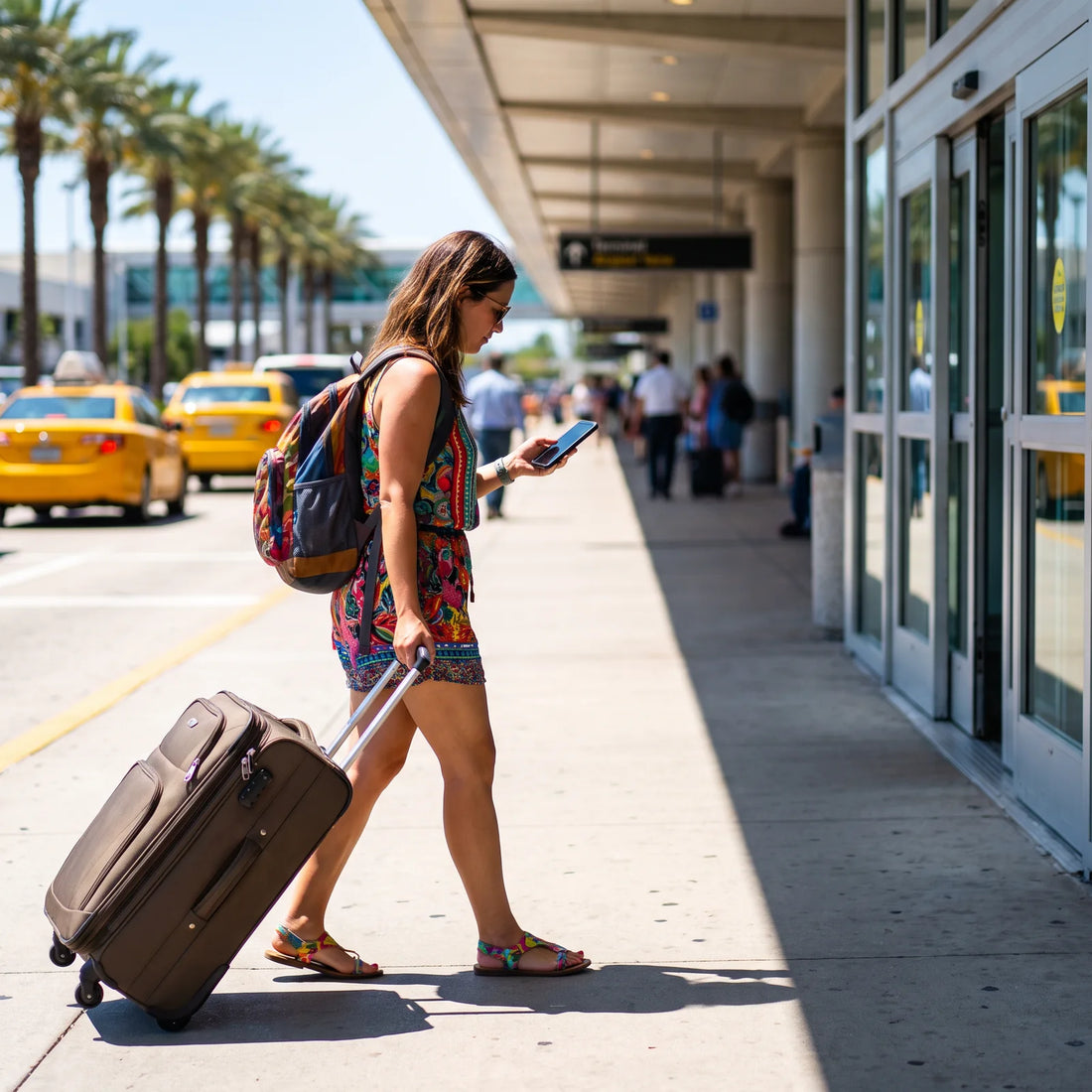
What is roaming and how does it work when you travel with Movistar?
Roaming is the service that allows you to use your Movistar line outside your home country because your operator has an agreement with a local network, in this case, a Japanese one. You don't change your number or SIM card: your phone automatically connects to that network, and your usage is charged according to the roaming plan or package you have active.
In practice, when you land in Japan and turn off airplane mode, your phone searches for a compatible network through Movistar's agreement with a Japanese operator. If the agreement exists and your plan allows it, you'll see a signal bar appear almost identical to what you'd see in your home country, but with the name of the Japanese network instead of Movistar. Everything you do from that point on (calls, messages, data) is registered as roaming usage and billed according to the terms of your line.
It's important to distinguish between two situations: automatic roaming, which is activated by almost all post-paid plans as soon as they detect a foreign network, and roaming that needs to be manually activated by purchasing a package or bundle before traveling. Which of these applies to you depends on your country of origin and the type of plan you have, so it's advisable to check your operator's app before boarding the plane, not after landing.
How much does roaming in Japan cost with Movistar?
There is no single figure: Movistar operates with different pricing structures depending on the country where you contracted your line (Argentina, Chile, Colombia, Peru, Uruguay, and other markets where the brand is present), the type of plan, and the roaming modality you choose. A daily bundle for Japan does not cost the same on a pre-paid plan as it does on a post-paid business plan, and rates change frequently.
Therefore, any figure you see repeated in forums or comparisons may be outdated for your country or your plan. The only reliable way is to consult the current price directly in your country's Movistar app or official website, looking for the international roaming section or "Worldwide Roaming," just before traveling.
What you can anticipate, however, is the charging logic: most operators, including Movistar, offer two paths. One is payment for actual consumption (per minute, per SMS, per megabyte), which tends to be the most expensive option if you don't monitor it closely. The other is a fixed bundle or package for a number of days with a certain amount of data included, which is generally more predictable for a short trip to Japan.
Movistar Roaming Japan Price: What factors determine it?
Before calculating how much you're going to spend, it's worth understanding what drives the final price. It's not just the megabytes you consume: it also depends on where you contracted your line and how you use your phone during your trip.
| Factor | How it affects the cost |
|---|---|
| Country where you contracted your Movistar line | Each country has its own tariff tables and roaming bundles; there is no single "regional" price. |
| Plan type (prepaid, postpaid, business) | Postpaid plans usually have automatic roaming (sometimes with high surcharges); prepaid plans almost always require purchasing a bundle beforehand. |
| Trip duration | Daily bundles are cheaper per day for longer stays but can make very short trips more expensive if the minimum doesn't fit your dates. |
| Type of consumption | Maps, translation, and messaging consume little; high-quality video, video calls, or music streaming significantly increase data usage. |
| Whether you use voice, SMS, or just data | Calls and SMS in roaming usually have separate rates from data and are not always included in the same bundle. |
You can't fully control any of these factors except two: how much you plan to use your phone and which roaming option you choose. Adjusting these two points before you travel will have the biggest impact on your final bill.
Which countries have roaming with Movistar?
Movistar is a Telefónica brand present in several Latin American countries—including Argentina, Chile, Colombia, Peru, Uruguay, and other markets in the region—and each of these local operators negotiates its own roaming agreements with networks in other countries, including Japan. This means that "having roaming with Movistar" is not a fixed condition: it depends on which country you contracted your line and what agreements that specific operator has in your destination.
The complete and updated list of countries and networks with which your line has roaming is only available from the Movistar operator in the country where you contracted the service, usually under the name "Worldwide Roaming" or similar within their app or website. If your trip to Japan is coming up, that's where you should confirm if your specific line has coverage there and under what conditions, rather than assuming that the same applies as in another country.
Roaming is not a feature of the phone or the SIM card: it is a contract between two operators. If that contract does not cover your destination or your plan does not include it, no roaming signal is possible, no matter how good the Japanese coverage is.

Which Movistar plans include international roaming?
Some post-paid plans and most business plans from Movistar include international roaming activated by default, often with a limited amount of data or with an additional charge for extra usage. Pre-paid plans, on the other hand, almost always require you to purchase a specific roaming bundle before traveling; without this step, your phone may lose data signal upon arrival in Japan even if your line works perfectly in your home country.
The quickest way to find out if your specific plan includes worldwide roaming is to open your country's Movistar app and review your plan details or the "Roaming" section. It usually indicates whether roaming is included, if it needs to be activated manually, or if you need to purchase a separate package specifically for Japan. Confirming this a few days in advance prevents you from being without data right after getting off the plane.
Why is Japan a different destination for roaming?
Japan has two peculiarities that set it apart from other tourist destinations. The first is technical: Japanese networks stopped operating under 3G technology years ago, so voice calls run on 4G/5G via VoLTE. If your phone is old or doesn't have VoLTE enabled, data might work, but roaming calls might fail or not connect, even with a good signal.
The second is practical: unlike other countries where buying a pre-paid SIM card at any store is easy, it's not common to find physical pre-paid SIM cards for tourists in Japan outside of specific counters at airports, and free public Wi-Fi outside large stations and convenience store chains is limited. That's why many visitors resort to their own line's roaming, a rented portable Wi-Fi router, or a travel eSIM activated before leaving home.
None of this makes traveling to Japan complicated, but it does explain why it's advisable to sort out connectivity before boarding the plane and not leave it until arrival at the airport.
Real-life example: 12 days in Tokyo, Kyoto, and Osaka
Imagine a 12-day trip: four in Tokyo, three in Kyoto, three in Osaka, and two travel days. From day one, you'll rely on your phone for almost everything: the subway map (which doesn't always have complete English signage), the translator for reading menus and signs, the train app for calculating connections and schedules, and a message or video call to let your family know you arrived safely.
If you rely solely on your Movistar line's roaming, each of these uses will be deducted from your bundle or charged per consumption, and a day with heavy map and real-time translation usage can lead to considerable data consumption, especially if you also share photos or videos on the spot. Without a fixed bundle, it's easy to lose track of how much you've spent halfway through your trip.
With a travel eSIM installed before you leave, however, you have a fixed data plan that's active from the moment you land, without depending on your home operator's roaming agreement or finding Wi-Fi at every stop. Your Movistar line remains on your phone for whatever you need (e.g., receiving a verification code), while the eSIM handles your daily data needs.
Traditional roaming vs. travel eSIM: direct comparison
Neither option is inherently bad; they address different needs. The following table summarizes the most important differences when deciding.
| Aspect | Roaming with your Movistar line | Travel eSIM |
|---|---|---|
| Phone number | The same number is maintained, useful for verification SMS | Voice number is maintained; data goes through the eSIM |
| Cost | Varies by country of origin, plan, and chosen bundle | Fixed data plan, defined before traveling |
| Activation | Automatic or via bundle, depending on the plan | With a QR code, activation in approximately 1 minute |
| Dependence on a bilateral agreement | Yes: if your operator doesn't have an agreement with a Japanese network, there is no service | Does not depend on the roaming of your original line |
| Voice and SMS usage | Included, depending on the plan | Does not include voice or SMS; the original line is maintained for this |
| Compatibility | Any phone with an active line | Requires an eSIM-compatible phone |
Many travelers end up combining both: the Movistar line active for calls or specific codes, and a travel eSIM like an eSIM for Japan for daily data, without touching the original operator's roaming plan. If you want to understand the difference in more detail, you can review this comparison between eSIM and traditional roaming.

How to install an eSIM before flying to Japan?
Before buying any eSIM, it's a good idea to confirm that your phone is compatible; most mid-range and high-end models from recent years are, but it's always best to check. You can consult the list of eSIM-compatible phones before deciding.
- Confirm your phone's compatibility and that it has space for an additional eSIM profile.
- Purchase the eSIM for your destination, in this case an eSIM for Japan, from home with a Wi-Fi connection.
- Install the profile by scanning the QR code you receive by email; you don't need to wait until you're in Japan to do so.
- Leave the eSIM installed but without activating the data plan until you arrive, to avoid using up validity days prematurely.
- Upon landing, activate the eSIM's data line and select it as the primary data line in your phone's settings.
If this is your first time using this technology, the complete step-by-step guide is available at how to install an eSIM, and if something doesn't work as expected upon arrival, this guide on common eSIM problems covers the most frequent issues.
How to avoid bill shock after your trip?
Most roaming shocks don't come from a hidden fee, but from not knowing exactly which plan you had active. These steps significantly reduce the risk:
- Before traveling, check your Movistar app to see if your plan has automatic roaming or if you need to activate it and purchase a bundle.
- If your plan charges for actual consumption, consider deactivating mobile data on your Movistar line as soon as you land and using Wi-Fi or an eSIM for everything else.
- Set up a roaming consumption alert or limit within the app, if your operator allows it.
- Write down or save a screenshot of the contracted bundle (days, included data, expiration date) so you can make a claim if something doesn't match what was billed.
- If you opt for a travel eSIM, confirm how many days of validity it has from purchase: with PuraSIM, for example, you have 180 days to activate it from the moment you buy it, so you can purchase it as soon as you book your flight without fear of it expiring before your trip.
That last point is more useful than it seems: since validity starts from activation and not from purchase, you can have your eSIM ready months in advance and forget about it until the day of departure.
Frequently asked questions
Do I need to notify Movistar before traveling to Japan?
It's not always mandatory, but if your plan is prepaid or requires activating a roaming bundle, it's advisable to do so before leaving. Checking your country's app a few days in advance prevents you from being without data upon landing.
Will my Movistar phone work in Japan without doing anything?
It depends on the plan. Some postpaid plans activate roaming automatically when detecting a foreign network; others, especially prepaid, require you to purchase a bundle or manually activate the option before traveling.
Can I use WhatsApp and Google Maps with roaming in Japan?
Yes, as long as you have active mobile data via roaming or an eSIM. Both applications work the same as in your home country; the only thing that changes is the network your phone connects to.
What happens if I run out of roaming data in Japan?
Depending on the plan, you might lose connection until you buy an additional bundle, or the operator might start charging for consumption outside the contracted package. It's advisable to check this condition before traveling to avoid surprises halfway through your trip.
Can I combine roaming with an eSIM on the same trip?
Yes. It's common to keep the Movistar line active for calls or verification messages, while a travel eSIM handles data, without needing to touch the original roaming plan.
Does eSIM work throughout Japan, including rural areas?
Coverage depends on the local network the eSIM connects to, which generally covers urban areas and main tourist routes well. In very rural or mountainous areas, any type of mobile connection, including traditional roaming, may have limitations.
Do I need a special phone to use eSIM in Japan?
Not special, but compatible: most mid-range and high-end models from recent years already include this feature. It's advisable to confirm this before buying any travel eSIM.
When should I activate the eSIM for my flight to Japan?
You can install the profile from home, but it's best to activate the data plan only when you arrive in Japan, to make the most of the contracted validity days.
Conclusion and next steps
Movistar roaming can be sufficient for a short trip with low data usage, provided you confirm in advance if your plan includes it, what bundle you need, and how much it costs in your specific country. For a longer trip to Japan, with constant maps, translation, and messaging, a travel eSIM activated before departure usually provides more control over spending and doesn't depend on your operator having a good agreement with a Japanese network.
If it's your first time traveling with this technology, the ultimate eSIM guide for travelers is a good starting point before you decide. And if you already have your flight to Japan booked, you can check the available eSIM for Japan, activate it with a QR code, and have it ready up to 180 days in advance. Should you have any questions during your trip, support is available 24/7 in all languages via email and WhatsApp, and PuraSIM covers more than 200 destinations in addition to Japan, in case your itinerary includes other stops.