In short: PuraSIM's Bolivia eSIM gives you local data from the moment you land in El Alto, without roaming or a physical SIM. For a typical route through La Paz, Salar de Uyuni, and Sucre (10-14 days), 4-6 GB is usually enough; in the salt flats, the signal disappears in the salty center, although it is available in the towns at the entrance and exit.
The classic Bolivian route—La Paz, Salar de Uyuni, and Sucre—combines a city over 3,600 meters high, a salt desert where your phone becomes almost useless, and a peaceful, colonial constitutional capital. Three very different environments for connectivity, and that's the problem with arriving without having thought it through: at El Alto airport, you won't find the same SIM kiosk as in Cancun or Bangkok, and wasting the first hour of your trip trying to connect is not ideal.
This guide goes straight to what you need to know to get around Bolivia with data: what real coverage you can expect in each area of the route, how many GB to purchase, how to activate your eSIM before leaving home, and what mistakes most travelers make when they arrive at the salt flats thinking they'll have four bars of 4G in the middle of nowhere (spoiler: you won't, and that's okay, there are ways to manage it nonetheless).
How an eSIM Changes a Trip to Bolivia
An eSIM is a virtual chip integrated into your phone: there's no physical card to insert or lose at the bottom of your backpack. You buy the plan, scan a QR code, and in minutes you have local data, without going to any Bolivian phone store or depending on your flight arriving on time to wait in line at the airport.
The traditional alternative—roaming from your usual provider—remains by far the most expensive option. In Bolivia, outside the European Union, roaming can cost several euros or dollars a day just for active data, with speed limits that practically prevent you from loading a map properly. If you want to understand the technical difference between the two models, we explain it in detail in our guide on what data roaming is and also in the eSIM vs. roaming comparison.
With PuraSIM's eSIM for Bolivia, you keep your usual number active in the physical slot for calls and SMS, while the eSIM handles only data. You don't have to choose between being reachable for your people and having decent internet: they run in parallel.
Coverage in La Paz and El Alto
La Paz is surprisingly good: despite being almost 3,700 meters above sea level at its highest point, data coverage in the city and El Alto is among the most robust in the country. The cable car, the South Zone, the city center, and a good part of the peripheral neighborhoods have stable 4G, enough for browsing, uploading photos, and making video calls without issues.
You will notice occasional drops in coverage when descending into the valley (the road to Coroico or the Yungas) and in some areas of the old town with very narrow streets between tall buildings, where the signal bounces less effectively. Nothing that a pre-downloaded map app can't solve while you walk from one neighborhood to another.
A Note on Altitude and Mobile Phones
Altitude does not directly affect the data signal, but it does affect battery life: the nocturnal cold in La Paz is real, even in the dry season, and batteries perform worse at low temperatures. If you're going to rely on your phone for everything—maps, photos, translation—bring a charged power bank; you'll need it more due to the cold than the data consumption itself.

The Salar de Uyuni: Where the Signal Drops Out (and Why It Doesn't Matter)
This is the part that really requires planning. The town of Uyuni has reasonable coverage, similar to any medium-sized Bolivian town: enough to check the weather, confirm your tour reservation, or send a message before leaving. The problem begins as soon as the 4x4 enters the salt flat itself.
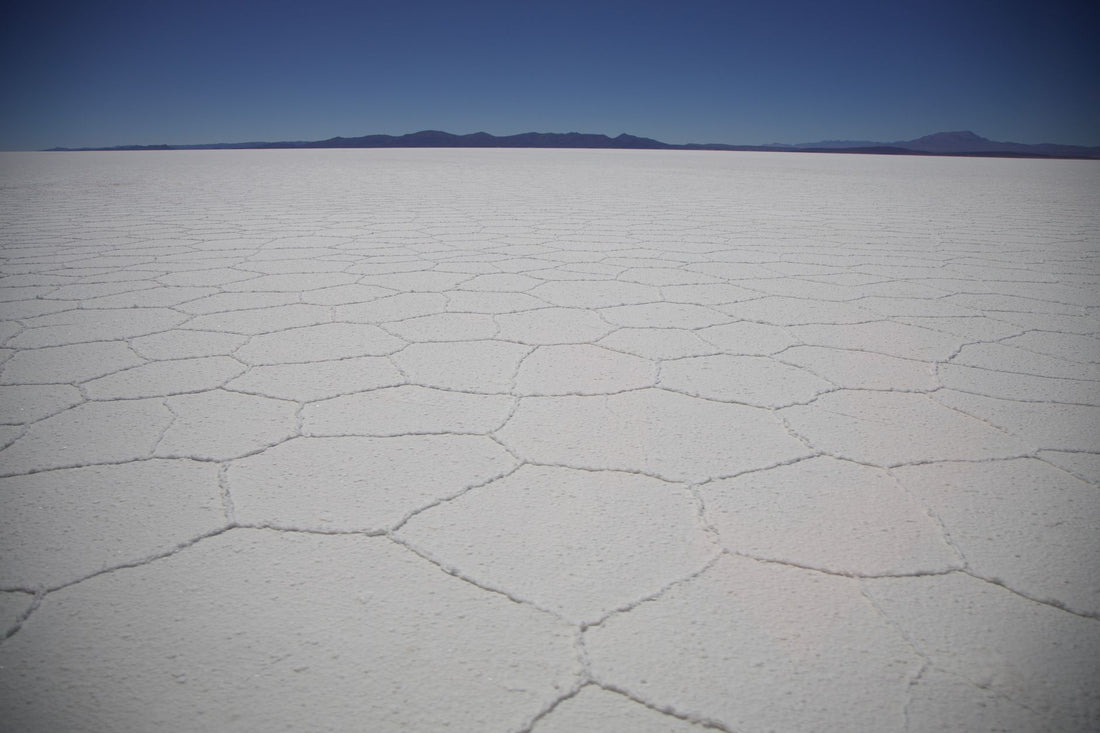
In the center of the Salar de Uyuni—where the Ojo de Agua, Isla Incahuasi, and most of the iconic perspective photos are—there is no coverage from any operator. It's a salt surface of over 10,000 km² without antennas, so it doesn't matter what eSIM you have: there will be no signal. The same thing happens to any tourist with any Bolivian company; it's not a limitation of PuraSIM or any specific eSIM.
What does change with good planning is everything surrounding those hours without coverage: multi-day tours to Laguna Colorada, the Siloli Desert, or the Sol de Mañana geysers also cover long stretches without a signal, and that's where you notice who downloaded offline maps and who didn't.
Sucre and the South of the Country
Sucre, the constitutional capital, has good and consistent urban coverage: it's a smaller, more manageable city than La Paz, with the historic center, markets, and viewpoints well covered by 4G networks. If your route continues to Potosí before or after Uyuni, keep in mind that Potosí, being a high-altitude mining city, has decent urban coverage but it degrades quickly as you head towards the Cerro Rico mines or surrounding towns.
| Zone | Typical Network Type | What to Expect |
|---|---|---|
| La Paz / El Alto (center and neighborhoods) | 4G | Stable, sufficient for light streaming and video calls |
| Yungas / road to Coroico | 3G / intermittent | Occasional interruptions in mountain sections |
| Uyuni town | 4G / 3G | Adequate for basic tasks before the tour |
| Center of Salar de Uyuni | No coverage | No operator has a signal; essential to have everything downloaded |
| Laguna Colorada / Siloli / geysers route | No coverage for most of the journey | Long isolated stretches, typical of 2-3 day tours |
| Sucre (historic center) | 4G | Good and consistent for normal use |
| Potosí (city) | 4G / 3G | Adequate in the center, degrades towards mines and periphery |
How Many GB You Need for Your Trip to Bolivia
It mostly depends on how many days you'll spend in areas with actual coverage (La Paz, Sucre, cities) versus days on tours without a signal (Uyuni, Laguna Colorada). As a reference for daily consumption in covered areas:
- Basic use (offline maps as backup, messaging, occasional searches): 300-500 MB/day
- Moderate use (social media, photos, active browsing): 800 MB - 1.5 GB/day
- Intensive use (remote work, video calls, streaming): 2-4 GB/day
For a standard 10-14 day route through La Paz, Salar de Uyuni, and Sucre, with moderate use and considering that several of those days will be spent without coverage in the salt flats, 4-6 GB is usually more than enough for the entire trip. If you'll be working remotely from La Paz or Sucre, upgrade to the next plan: the tour days in the salt flats consume nothing, so that extra allowance is saved for the cities.
If you run short, you won't suddenly lose coverage: you can top up data from the PuraSIM app at any time, without changing plans or installing a new eSIM. To make the most of every GB—especially if you're doing the long tour of the Bolivian southwest—take a look at our tips for saving data while traveling.
eSIM vs. Roaming vs. Physical SIM in Bolivia
Not all options for internet in Bolivia are equal. Here's a quick comparison of the three most common alternatives:
| Option | Cost | Activation Time | Keeps Your Number |
|---|---|---|---|
| Roaming from your home operator | Can exceed several €/day; check current rates with your operator | Immediate, but expensive | Yes |
| Bolivian physical SIM | Local price, but must be purchased on-site | Requires queuing, identification, and sometimes biometric registration | No (takes up the physical slot) |
| PuraSIM eSIM for Bolivia | Depends on the data plan purchased, you pay for what you use | Minutes, from before traveling | Yes, in parallel with data |
If you're also comparing with an international physical chip you already brought from another trip, we have a detailed comparison in international chip vs. eSIM.

How to Activate Your eSIM for Bolivia Step-by-Step
The process is the same as for any destination and takes only a few minutes:
- Purchase your plan for Bolivia on purasim.com. You will receive an email with the activation QR code.
- Install the eSIM: on iPhone, Settings → Cellular → Add Data Plan; on Android, Settings → Connections → SIM Manager (the exact menu varies by manufacturer).
- Scan the QR code or manually enter the activation data if scanning fails.
- Select the PuraSIM eSIM as the default data line, leaving your physical SIM for calls and SMS.
- Activate data roaming in the eSIM's own settings: this is a step many people forget, and without it, the eSIM won't connect to local Bolivian networks.
You can install it at home, days before your flight, and configure it to activate automatically upon detecting a Bolivian network, or activate it manually upon landing in El Alto. If this is your first time using an eSIM and you want step-by-step instructions with screenshots, you can find the complete guide on how to install an eSIM.
Before purchasing, check that your phone is compatible: most iPhones from XS, Samsung Galaxy from S20, and Google Pixel from 3 support eSIM. You can verify this in Settings → General → About, looking for "eSIM" among the device options.
Common Mistakes and What Almost No One Tells You
After seeing how hundreds of travelers organize similar routes, these are the most common and easily avoidable mistakes:
- Relying on having a signal in the salt flats because "last time I had it in another desert." The Salar de Uyuni is different: there are no towns or antennas in its interior. Download everything—maps, music, tickets, reservations—before leaving Uyuni city, not when you're already in the 4x4.
- Not informing the tour agency that you won't have coverage. On multi-day tours to the Bolivian southwest, meeting points and schedule changes are sometimes communicated via WhatsApp the night before. Confirm logistical details while you still have a signal in Uyuni town; don't assume they'll be able to notify you en route.
- Underestimating the nighttime cold and its effect on battery life. Between La Paz, Uyuni, and high-altitude tours, nights can be freezing. A cold phone drains faster and sometimes shuts down with seemingly remaining battery. Keep it close to your body at night if you're sleeping in high-altitude areas.
- Thinking that activating data roaming on the eSIM affects the physical SIM. These are independent settings: you can have data roaming activated only on the eSIM and deactivated on your physical line, thus avoiding any accidental charges from your home operator.
- Not reserving enough data for the return journey. Many travelers spend all their data allowance in the salt flats (photos, uploading content to social media) and run short for the departure airport. If you plan to share a lot of content, calculate that consumption separately from daily map and messaging use.
And if you're concerned about privacy when connecting to unknown networks or hostel Wi-Fi during your trip, it's good to know when it makes sense to use a VPN over an eSIM: we explain it in eSIM, VPN, and travel privacy.
Frequently Asked Questions
Does the eSIM work in the Salar de Uyuni?
In Uyuni town, yes, with coverage similar to other medium-sized Bolivian towns. In the center of the salt flat, no: no operator has antennas there, so no eSIM or physical SIM will have a signal. This is a characteristic of the terrain, not the company. Download maps and everything you need before entering the salt flat.
When should I activate the eSIM for Bolivia?
You can install it on your phone days before you travel, from home. It is configured to activate automatically upon detecting Bolivian networks when you arrive, or you can activate it manually whenever you prefer, for example, as soon as you land in El Alto.
Is my phone compatible with the eSIM for Bolivia?
Most smartphones from 2018-2019 are compatible: iPhone XS onwards, Samsung Galaxy S20 onwards, Google Pixel 3 onwards, and many other models. You can check this in Settings → General → About, looking for the "eSIM" option on your device.
Can I keep my usual phone number while using the eSIM in Bolivia?
Yes. The eSIM occupies a virtual slot independent of your physical SIM, so you can keep your usual line active for calls and SMS while PuraSIM's eSIM manages data. You won't lose contactability or have to notify anyone of a new number.
What happens if I run out of data in Bolivia?
You won't suddenly lose coverage. From the PuraSIM app or customer panel, you can purchase a data top-up, which is applied in a few minutes without needing to change your plan or install a new eSIM.
Does the altitude of La Paz affect coverage or the eSIM?
No, altitude does not affect data connection or eSIM functionality. What can be affected is your phone's battery, which performs worse in the cold nights typical of high altitudes. Bring a power bank if you'll rely on your phone for maps and photos throughout the day.
I'm crossing from Peru to Bolivia via Lake Titicaca, do I need to change eSIMs?
Yes: each destination eSIM is designed for the country you purchase, so if your route combines Peru and Bolivia (e.g., via Puno-Copacabana), you'll need a plan for each country or consider if a regional eSIM is more suitable. If your itinerary starts in Peru, first consult our guide on eSIM for Peru and Machu Picchu to plan both segments.
Activate your eSIM before you leave and land with internet, no roaming, and no stress.
View eSIM plans for Bolivia →