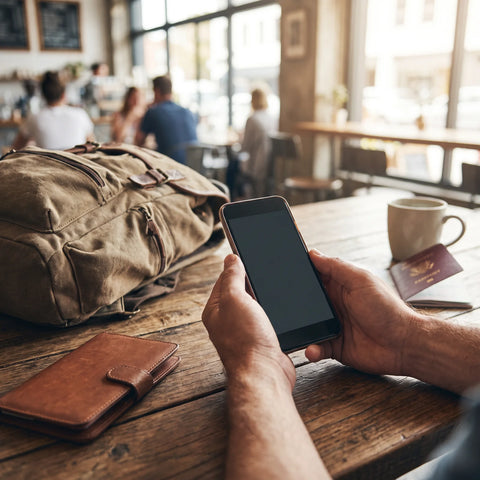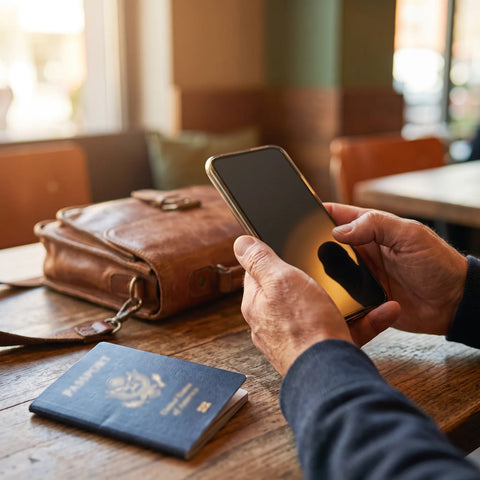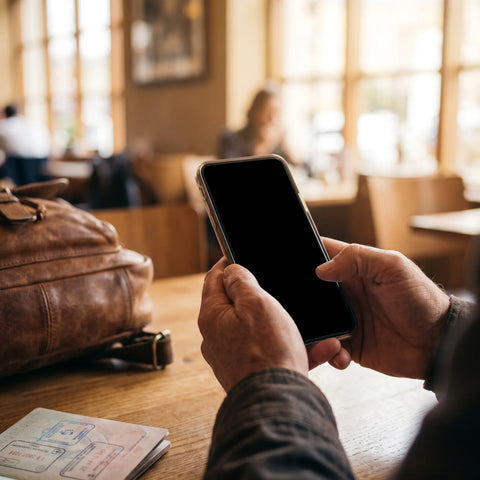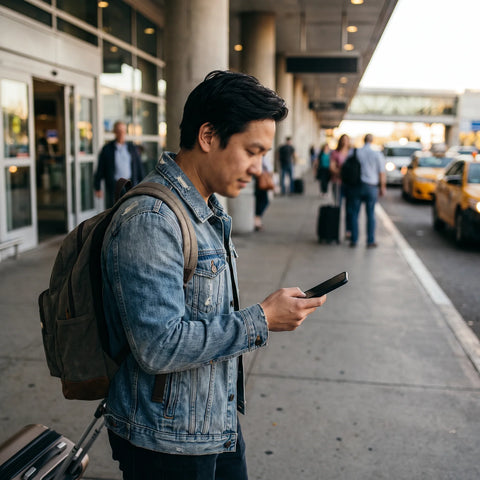
In short: An eSIM for senior travelers over 60 is the easiest way to have internet as soon as you land, without changing physical cards or relying on your usual operator's roaming. It's installed calmly at home, activates automatically upon arrival, and avoids surprise bills and queues at mobile phone stores.
Traveling after 60 has advantages that twenty-somethings take years to achieve: time, calm, and a genuine desire to enjoy each destination without rush. The only thing that usually spoils this plan is the technical part of the trip: what to do with your phone, how to avoid a skyrocketing bill, or how to manage if the hotel's operator doesn't have decent Wi-Fi. That's exactly where the eSIM comes in.
If you've never used one, the name might sound more complicated than it is. There's no tray to pull out with a paperclip, no card that can get lost or damaged when changing countries. It's a digital SIM that lives inside your phone and, once installed, activates automatically when you land. In this guide, we'll explain it without technical jargon, step-by-step, designed for anyone who wants to travel connected without relying on a grandchild to sort things out from home.
What is an eSIM and why is it such a good idea for travelers over 60?
An eSIM (digital SIM or "embedded SIM") is a chip that is already integrated into your phone. Instead of inserting a physical card, you install a digital profile by scanning a QR code. This profile works exactly like a normal SIM: it gives you mobile data in the country you are in.
The big advantage for a senior traveler is not technological, it's practical: you save yourself the most annoying part of traveling with a mobile phone. There's no need to search for a store at the destination airport, no queuing, no filling out forms in a language you don't master, and no risk of losing your usual SIM card by removing it from the phone with those tiny clips that are never found when needed.
eSIM vs. physical SIM: the difference that truly frees you from hassles
With a traditional physical SIM for travel, you have two options, and neither is convenient: activate your Spanish operator's roaming (which can skyrocket in certain countries outside the European Union) or buy a local SIM upon arrival, with the stress of finding a store, communicating in another language, and in the meantime, being without coverage. You can read the full comparison in our guide on international chip vs. eSIM if you want to see all the details.
The eSIM eliminates that step. You buy and install it from home, calmly, with someone who can help you if you need it, and days before traveling. When you land, you just have to activate it: no stores, no queues, and no depending on the language of the country you're visiting.
Is your phone compatible? How to check in two minutes
First of all, an important piece of information that many guides skip: not all mobile phones support eSIM. Older models, especially those that have been in use for several years, may not have this feature. It's worth checking before buying anything.
- iPhone: from iPhone XS and XR (2018) onwards are compatible. Earlier models are not.
- Samsung: most of the Galaxy S20 range onwards, and several newer A series models.
- Other Android: Google Pixel from Pixel 3, and recent mid-to-high-end Xiaomi, Oppo or Honor models.
The most reliable way to check is to go to your phone settings and look for "Add eSIM" or "Add data plan" within the mobile network section. If that option appears, your phone is compatible. If you have any doubts, any family member with a slightly more modern phone can help you check it in less than a minute.
How to install and activate your eSIM step by step (without complications)
Here's the good news: the entire process can be done from the comfort of your home, with plenty of time, no rush, and Wi-Fi. You don't need to do anything at the airport or upon arrival at your destination except for one very simple final step.
Before leaving home
- Choose your plan based on your destination and travel days at purasim.com. If you're unsure how many GB you need, it's better to err on the side of caution: it doesn't cost much more and avoids unpleasant surprises.
- You'll receive an email with a QR code. Go to your phone Settings and look for the option to add an eSIM or a data plan.
- Scan the QR code with your phone's camera. The system will guide you, step by step, in Spanish.
- Leave the eSIM installed but not yet activated. There's no need to activate it until you land at your destination: this way, you don't waste a single day of validity prematurely.
If the QR scanning process is inconvenient for you, it's perfectly fine to ask a trusted person to help you just once, calmly, before your trip. Once installed, you won't need to repeat it every time you fly to that destination with the same phone.
Upon landing at your destination
- Deactivate airplane mode.
- Go to Settings and activate the eSIM you installed as your data line.
- Check that data roaming is activated for that specific eSIM.
- Open any app or browser to confirm you have a connection.
The entire process takes less than two minutes. You land with internet, without your usual operator's roaming, without stress or surprises on your next bill. If you prefer a step-by-step guide with detailed screenshots, we explain it more calmly, image by image, in our guide on how to install an eSIM.
How much does it cost and when is it worth it compared to regular roaming?
It's difficult to give a single figure because each Spanish operator has its own conditions, and these can change. What can be said with certainty is that roaming outside the area with regulated rates (outside the European Union, for example) can exceed several euros per megabyte or minute in some countries, and these charges accumulate quickly without you realizing it until the bill arrives.
Before any trip outside the included roaming zone, it's advisable to consult the current price directly with your operator, as rates vary by destination and contract. What is predictable with a travel data eSIM is the cost: you pay it before you leave, you know exactly how many GB you have, and there are no hidden charges that appear later. To better understand how this roaming works and why it can be so expensive, we have a dedicated guide on what is data roaming.
eSIM vs. roaming vs. local SIM vs. pocket Wi-Fi: a comparison
To decide which option to choose, this table summarizes the real differences, keeping in mind the convenience of a traveler who doesn't want complications:
| Option | Ease of installation | Risk of high cost | Works immediately upon landing | Requires physical manipulation of the phone |
|---|---|---|---|---|
| Travel eSIM | High (installed at home, calmly) | Low (price set before travel) | Yes, with immediate activation | No, physical SIM is not touched |
| Regular operator roaming | Very high (nothing to do) | Can be high outside regulated zones | Yes | No |
| Local physical SIM | Low (need to find a store and queue) | Variable, depends on the country | No, until purchased at destination | Yes, your usual SIM must be removed |
| Pocket Wi-Fi (portable router) | Medium (device must be collected and returned) | Variable depending on rental | Yes, if you already have it with you | No, but it's one more device to carry and not lose |
For most senior travelers, the eSIM wins precisely because of what you don't have to do: no stores, no messing with physical cards, no extra device to carry and keep an eye on. And if you compare eSIM with classic roaming step by step, we have a more detailed analysis in eSIM vs. roaming.
What you'll use the connection for during your trip
You don't need a giant data plan to travel with peace of mind. Most common uses during a trip consume relatively little:
- Video calls with family: seeing and talking to children and grandchildren while you're away, without relying on finding Wi-Fi at every corner.
- Google Maps: to navigate on your own, without relying on asking for directions or on paper brochures that get lost.
- Camera translator: pointing your phone at a menu or a sign and understanding it instantly, very useful if the local language is a barrier.
- Messaging (WhatsApp): letting people know you've arrived safely, sending trip photos, reassuring those back home.
- Health or travel insurance apps: having the insurer's contact or the travel medical insurance app at hand in case of any unforeseen event.
- Location sharing: some families prefer the traveler to share their real-time location during the trip. With active data, this works in the background without you having to do anything.
Precisely because of this last point, the peace of mind that constant connection provides matters more than speed: it's not so much for watching videos, it's about feeling accompanied and reachable at all times, and for your family to feel the same.
Common mistakes and what almost no one tells you
There are a series of details that are common among first-time eSIM users and that are worth clarifying beforehand:
- Installing the eSIM at the airport, in a rush. This is the most common mistake. Install it at home, with stable Wi-Fi and without the pressure of the boarding queue. The process is identical but much less stressful sitting on the sofa.
- Thinking you lose your usual line. This is not the case: your phone number and your usual physical SIM are still there for calls and SMS. The eSIM is added as a second line, only for data, and you can have both active at the same time.
- Believing you need to change your phone. If your phone is from recent years, it's almost certainly already compatible. There's no need to buy a new one.
- Not notifying your bank of the trip. This has nothing to do with the eSIM, but it's worth remembering: notify your bank of your travel dates and countries to prevent them from blocking your card due to "suspicious" movements abroad.
- Using public Wi-Fi for banking transactions. With active mobile data (either from the eSIM or roaming), your online operations are more secure than on an open Wi-Fi network at a hotel or cafe, where it's easier for someone to intercept your connection. If you're concerned about privacy when connecting away from home, in eSIM and privacy on your trip, we explain how to better protect yourself.
- Not checking remaining GB. Many plans allow you to check consumption from an app or customer area. Checking it a couple of times during the trip prevents running out of data on the last day, just when you need it most for your return flight.
If you're not very tech-savvy: tips for stress-free travel
You don't need to be a mobile expert to use an eSIM with ease. These tips are especially helpful if you prefer not to complicate things:
- Do it with time. Install the eSIM at least two or three days before traveling, never the night before. This gives you room to resolve any questions without feeling overwhelmed.
- Write down the steps on paper. Although it sounds old-fashioned, many travelers prefer to have "activate eSIM upon landing" written down as a reminder, especially on a trip with jet lag.
- Ask for help just once. The installation step (scanning the QR) is the only one that might truly require assistance. Activating upon arrival is as simple as flipping a switch.
- Keep the confirmation email handy. Save the email with the QR code as a screenshot too, in case you need to consult it again without relying on a connection.
- Practice at home before leaving. Go into your phone's settings a while before the trip just to familiarize yourself with where each option is. That way, when the actual moment comes, it's no longer unfamiliar territory.
And a final tip with your destination in mind: if your trip includes a cruise or a route with several stops and countries in a row—something common in itineraries designed for unhurried enjoyment—it's worth checking the coverage for each segment carefully before you leave, as not all plans cover several countries with the same profile.
Frequently asked questions
Do I need to know a lot about technology to use an eSIM?
No. The entire process comes down to scanning a QR code and, upon arrival, activating an option in your phone's settings. If you know how to make a video call on WhatsApp, you know how to install an eSIM. And if you have any doubts, you can ask for help just once, calmly, before leaving home.
Can I still receive calls from Spain on my usual number?
Yes. The travel eSIM is added as an additional data-only line. Your physical SIM and your usual number remain active on your phone for calls and SMS, unless your operator charges roaming for those calls, which you should check with them before traveling.
What if my phone is old and doesn't support eSIM?
In that case, you will need to resort to a local physical SIM or your usual operator's roaming. Before purchasing any travel data plan, check your phone's network settings for the "Add eSIM" option; if it doesn't appear, your model is probably not compatible.
Is an eSIM safer than hotel Wi-Fi for checking my bank account?
Yes, generally. Public and hotel Wi-Fi networks are more vulnerable to someone intercepting your connection. Mobile data, whether via eSIM or roaming, offers a more closed and secure connection for sensitive transactions like online banking.
Can I install the eSIM and activate it several days before traveling?
You can install it whenever you want, even weeks in advance. The important thing is not to activate it until you reach your destination: the plan's validity starts counting with the first data usage, not with the installation, so installing in advance doesn't deduct a single day.
Does the same eSIM work for several countries if my trip has multiple stops?
It depends on the plan you choose: some cover a single country and others cover several regions or continents. Before purchasing, carefully check which countries each plan includes if your itinerary combines more than one destination, so you don't run out of coverage at some stage of your trip.
What should I do if I run out of data before my trip ends?
You can buy a top-up or a new plan from the customer area at any time, and it will be applied in a few minutes. There's no need to wait until you get home or search for a physical store to sort it out.
If you want to see the plans available for your next destination, you can start with the options for eSIM for Europe or, if your trip crosses the Atlantic, the eSIM for the United States. And if you also want to maximize every gigabyte without complications, in how to save data while traveling you'll find simple tricks that make a difference.