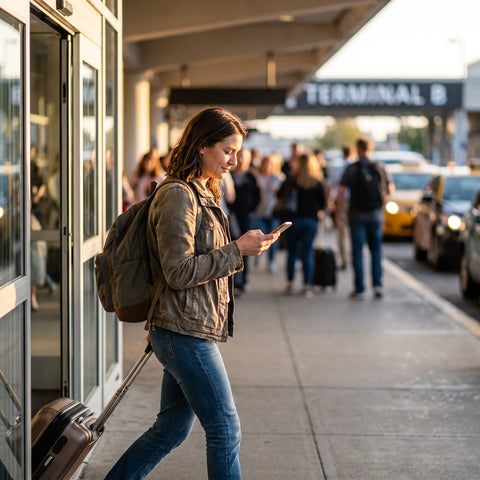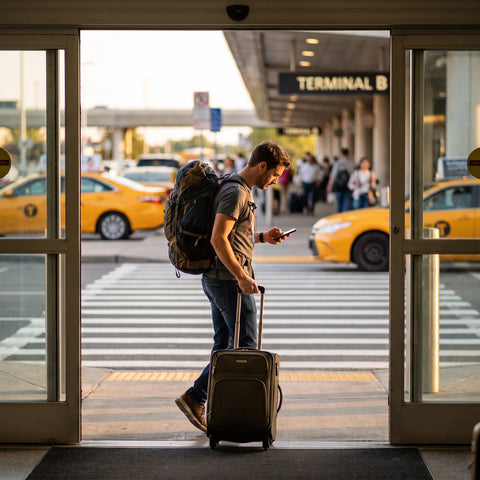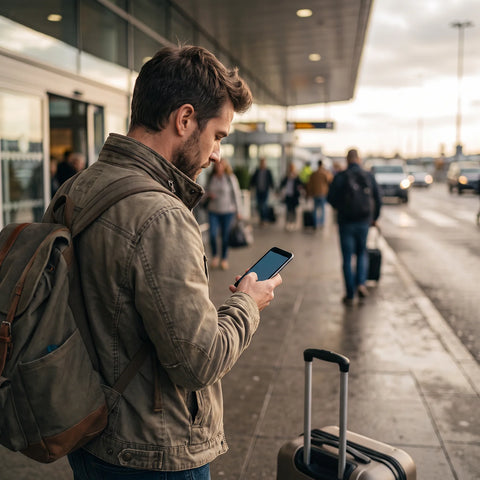
In short: the best eSIM for Brazil connects to Vivo or Claro, gives you just enough GB for your travel days, and activates in a minute without queues or CPF. Compare it by coverage and data, not just price, and you'll land with internet, no roaming, and no stress from Copacabana to the Amazon.
Brazil is huge, so "what's the best eSIM for Brazil?" doesn't have a single valid answer for everyone. Spending five days between Rio de Janeiro and Sao Paulo is not the same as traveling for three weeks through the Northeast, Bonito, and the Amazon. In this guide, we review what to really look at before buying: operator coverage, how many GB you need depending on your route, how the profile is activated, and what mistakes most travelers make when choosing.
What is the best eSIM for Brazil?
The best eSIM for Brazil is one that relies on the networks with the most coverage in the country (Vivo and Claro), gives you enough GB for your days, and activates before landing, without having to search for a local store or queue with your passport in hand. For most travelers, a data plan with pre-trip activation is the most convenient option and, in the long run, the most cost-effective: you don't pay roaming from your usual operator or waste hours on the first day looking for a local SIM card.
That said, "the best" is not a single product, it's a criterion: it changes depending on your travel profile, the days you're staying, and whether you move between cities or stay in an area with hotel Wi-Fi. More than focusing on a specific name, what matters is choosing the right network and GB, which is exactly what we're going to break down. If you're also traveling through several countries in the region, further down we'll tell you when a regional plan is better than one just for Brazil.

Real Coverage: Vivo, Claro, TIM, and Oi
Brazil has four main operators, and although all of them sell "national" coverage, they don't cover the same areas equally. Vivo usually leads in reach, especially in the interior; Claro is very strong in large cities and throughout the Southeast; TIM offers good urban coverage and 5G in capitals; and Oi has lost ground, although it appears in specific areas. A good travel eSIM doesn't tie you to a single operator: it connects to the best available network at all times, so you want the profile to support Vivo or Claro as primary networks.
The key lies in Brazil's enormous distances: in Rio, Sao Paulo, Brasília, or Salvador, you'll have 4G and 5G without any problems. But on Pantanal roads, remote Northeastern beaches, or deep in the Amazon jungle, the signal drops, and no operator is perfect there, whether it's an eSIM or a physical SIM card. It's advisable to download offline maps and save important addresses before leaving large cities, especially if you're going on long car or boat trips.
How many GB you need based on your trip
The most expensive mistake is buying too many GB "just in case" or, conversely, running short and having to pay for top-ups in the middle of your trip. As a realistic reference: if you use Wi-Fi at the hotel at night for heavy tasks (uploading photos, watching series, long video calls), between 1 and 2 GB per week is more than enough for maps, messaging, and social media with moderate use during the day. If, on the other hand, you use Google Maps a lot between cities, upload videos on the go, or make video calls outside the hotel, you'll need significantly more margin.
Practical rule for Brazil: 1 GB covers 3 to 4 days of light use (maps + WhatsApp + some social media). If you're glued to your phone and upload content daily, calculate at least 1 GB every 1-2 days of travel.
If you're unsure about your usual consumption, don't guess: check how much you normally spend on a similar day of use at home and multiply it by your travel days. Almost all travel eSIMs, including Brazil's, allow you to save data with simple tricks like deactivating automatic app updates or lowering streaming quality while you're away from Wi-Fi. And remember: almost all allow you to top up on the fly from the app itself, so starting with a conservative plan and extending if needed is usually cheaper than having leftover GB you'll never use.

Plan comparison by days and travel profile
These are approximate data by travel profile so you can get an idea of what GB to look for before buying. Exact prices vary depending on the time and operator, so always check the current price on the plan's details, but the GB-per-day logic remains quite stable:
| Trip type | Duration | Recommended GB | Usage profile |
|---|---|---|---|
| City break | 5-7 days | 3 GB | Rio + Sao Paulo, Wi-Fi at the hotel at night |
| Classic trip | 10-14 days | 5-8 GB | Cities + beaches, daily maps and social media |
| Long route | 3-4 weeks | 15-20 GB | Northeast + Amazon, high usage and long journeys |
| Remote work / nomad | 1 month or more | 20 GB or high data plan | Video calls, hotspot, and daily work from mobile |
If your trip fits the urban or classic profile, an eSIM for Brazil with adjusted GB and a top-up option will cover you perfectly. For long routes or remote work from the beach, aim for plans with more GB from the start, because topping up on the go in areas with less Wi-Fi coverage can be more inconvenient than planning it before you leave.
Travel eSIM vs. roaming vs. local SIM card
Before comparing products, it's worth understanding exactly what each option is. Data roaming means your usual line continues to work outside your country thanks to an agreement between your operator and a local one; a travel eSIM is an independent data profile that you install only for that destination, without touching your main line or number.
You can buy a prepaid SIM card from Vivo or Claro directly in Brazil, but it involves paperwork, queues, and sometimes a local CPF: passport, sometimes a CPF (the Brazilian tax number), and queuing in a store with your improvised Portuguese on the first day of your trip. The travel eSIM saves you all that: you install it before leaving home, with Wi-Fi, and when you land, you just have to activate the data.
Local prepaid may be slightly cheaper for very long stays, but you lose time, support in your language, and the convenience of having everything ready before boarding the plane. The complete comparison of eSIM vs. roaming helps you decide if it's worth activating your usual operator's roaming or buying a specific profile for Brazil. For most, the balance tips towards the eSIM, and if you're going to move around several South American countries, it gains even more weight.
How to activate it upon arrival in Brazil
The process is simple and does not require technical knowledge. In general, this is how it works with any modern travel eSIM:
- Buy your eSIM before traveling and receive the QR code by email, comfortably from home with Wi-Fi.
- Install the profile by scanning the QR in your phone settings (it will be saved on your phone without using data yet).
- Upon landing in Brazil, activate the eSIM data line and turn on data roaming for that specific profile.
- Wait a minute for the phone to connect to the local network and you're good to go, browsing from the baggage claim.
If it's your first time using this system, the step-by-step guide on how to install an eSIM details it with screenshots for iOS and Android. A tip that makes all the difference: install the profile at home, calmly, and leave data activation for when you land.
Are you going to visit several South American countries?
Many trips to Brazil don't end in Brazil: they combine with Argentina, Chile, Peru, or Colombia on the same route. If that's your case, compare the total price against a regional plan that covers the entire itinerary. If your trip passes through the Andes, the guide to eSIM for Peru and Machu Picchu will help you calculate what's most cost-effective, and if it includes Colombia, the guide to eSIM for Medellín, Bogotá, and Cartagena follows the same logic.
The general rule: if you only visit Brazil, a country-specific plan is usually more economical per GB. If your route includes three or more countries in a few weeks, a South America plan that automatically switches networks at each border starts to become more worthwhile.
What almost no one tells you before buying an eSIM for Brazil
Beyond the theory, there are details that you only learn by traveling and that don't usually appear in product specifications:
- Wi-Fi in Brazilian hotels is unreliable outside of large chains. In small pousadas in the Northeast or rural accommodations near the Amazon, the signal can be slow or drop at night. Having your own data provides a backup plan for maps and messaging.
- Shared transport (Uber, 99) is entirely dependent on having active data. In Brazil, it's common to use ride-hailing apps instead of traditional taxis, and without a connection, you can't request a car or know if the driver has arrived.
- Keep a second backup profile installed, but not activated, if you're staying for a month or more. This way, if your main plan runs out far from Wi-Fi, you won't depend on finding coverage to buy on the fly.
- Also consider the privacy of your connection on open networks. If you're going to use public Wi-Fi in airports or cafes, reviewing how an eSIM combined with a VPN for travel works adds an extra layer of peace of mind for banking transactions.
Direct answers to the most common searches about eSIM and Brazil
Two of the most common searches around this topic are, literally, "best eSIM for Brazil" and its Portuguese version, "melhor eSIM Brasil." It's worth answering them directly, as they summarize everything above well.
What is the best eSIM for Brazil, in one sentence?
The best eSIM for Brazil is one that connects to Vivo or Claro, gives you the right amount of GB for the actual duration of your trip, and activates in a minute before leaving the airport, without the need for a CPF or local paperwork.
Best eSIM Brazil: what to consider
If you are looking for the best eSIM for Brazil, the most important thing is to choose a profile that uses the Vivo or Claro networks, with enough GB for your travel days and simple activation before landing. This way you avoid expensive roaming and stay connected from the first moment, without queues or local bureaucracy.
Typical mistakes when choosing an eSIM for Brazil
These are the stumbles that travelers tell us about most often and that you can avoid with a little foresight:
- Buying only by price. A very cheap eSIM that relies on a weak network will leave you without a signal as soon as you leave the city.
- Ignoring the Amazon and remote areas. No matter what plan you buy, coverage will be spotty for everyone there. Download offline maps before leaving cities.
- Not checking phone compatibility. Not all phones support eSIM. Check this before buying, not after.
- Overestimating GB "just in case." It's better to start with an amount adjusted to your actual usage and top up if necessary.
- Leaving the purchase for the destination airport. Without data, you can't install the profile comfortably. Do it from home, calmly.
- Not checking if you need other destinations on the same trip. If in addition to Brazil you have a stopover in the United States or continue your route through Europe, check beforehand if an eSIM for the United States is more cost-effective instead of buying individual plans without considering the entire trip.
With these points clear, choosing is no longer a lottery. Before buying, confirm that your phone supports eSIM and all that's left is to enjoy the first sunset in Copacabana with your phone working from minute one.
Frequently asked questions
What is the best mobile network in Brazil?
Vivo generally offers the widest national coverage, especially inland, while Claro and TIM stand out in large cities and for 5G. A good travel eSIM connects to the best available network at all times, so you want to choose a profile that relies on Vivo or Claro to move around the country with peace of mind.
How many GB do I need for two weeks in Brazil?
For a two-week urban trip with hotel Wi-Fi, between 5 and 8 GB is usually enough for maps, messaging, and social media with normal use. If you make video calls or use your phone as a hotspot, count on 10 GB or more. Almost all eSIMs allow you to top up if you run short.
Does eSIM work in the Amazon and remote areas?
It depends on the local operator's coverage in each area, and in the Amazon interior or on very isolated beaches, the signal drops for everyone, not just for eSIMs. The most sensible thing is to download offline maps and save important addresses before leaving population centers.
Do I need a CPF or passport to buy a Brazil eSIM?
No. A travel eSIM is purchased online without local formalities: you don't need a CPF, you don't queue, and you don't hand over your passport. That's one of its big time-savers compared to a local prepaid SIM card, which usually requires documentation and in-person registration at a physical store.
Can I use the same eSIM in Brazil and other South American countries?
Yes, if you choose a regional plan that includes several countries. If your route passes through Argentina, Chile, Peru, or Colombia in addition to Brazil, a regional plan saves you from buying and installing several different profiles. If you only visit Brazil, a country-specific eSIM is usually more affordably priced.
What is the best eSIM for Brazil if I'm only traveling for a few days?
For short trips of a week or less, the most cost-effective option is a small plan focused on urban coverage (Rio, Sao Paulo, Salvador), relying on hotel Wi-Fi for heavy tasks. Don't overpay for GB you won't use.
Can I activate the eSIM before arriving in Brazil?
You can install the profile (scan the QR) at any time before traveling, without using data. It is recommended to activate the data line only when you land, to avoid consuming GB while still in your home country.
Conclusion
The best eSIM for Brazil is one that relies on Vivo or Claro, gives you just enough GB for your type of trip, and activates in a minute without paperwork or queues. Adjust the data to your actual route, download offline maps for the Amazon and the Pantanal, and you'll arrive connected from the first selfie at Sugarloaf Mountain. Prepare your trip with your Brazil eSIM ready before takeoff: land with internet, no roaming, no stress.