Does Barcelona Airport have free Wi-Fi?
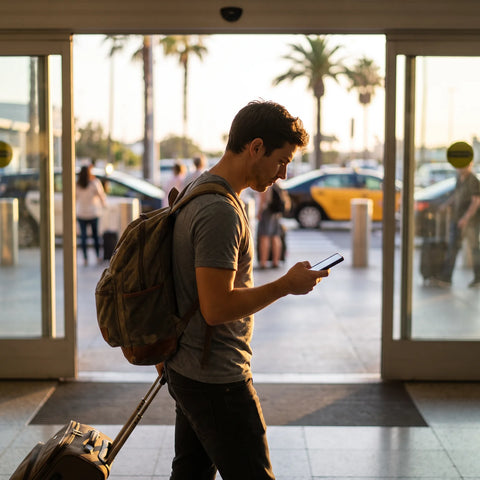
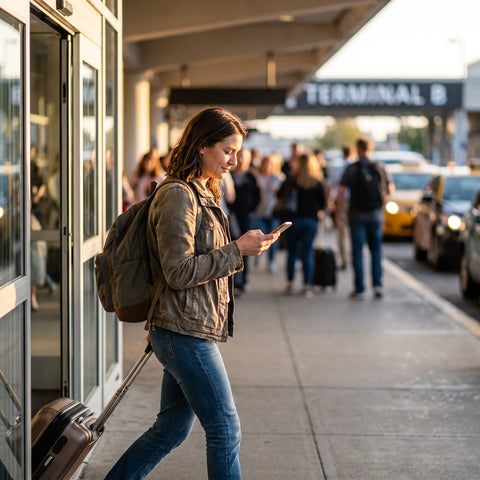
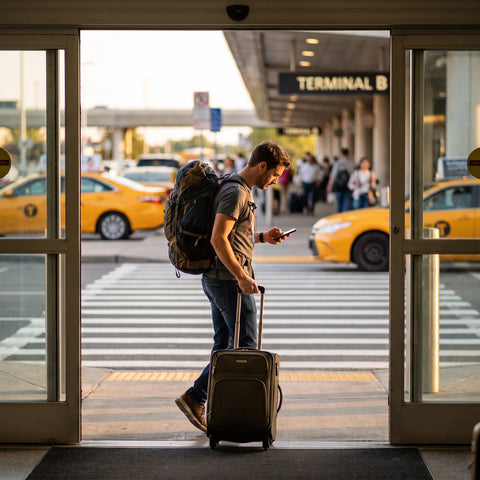
Yes, Barcelona-El Prat Airport offers free Wi-Fi in its terminals for passengers, like most large international airports. It's useful for checking your flight, notifying arrivals, or requesting a ride while you're connected, but it's not intended to cover the rest of your stay in the city.
This nuance is what most travelers looking for "Barcelona airport Wi-Fi" before a flight miss. The right question isn't just whether there's free Wi-Fi (there is), but how long it's useful for, which areas it works in, and what you do when you leave the terminal and the Wi-Fi disappears from your screen. We're going to answer the four most common questions, and then we'll show you an alternative that solves the underlying problem: how to connect outside the airport, not just within it.
How to connect to Barcelona Airport's free Wi-Fi?
The process is the same as in most airports with free public Wi-Fi, and it doesn't require any app:
| Step | What you do |
|---|---|
| 1 | Activate your phone's Wi-Fi and search for the available network in the terminal. |
| 2 | Select the network and wait for the captive portal (welcome screen) to open in your browser. If it doesn't open automatically, open any webpage. |
| 3 | Accept the network's terms of use. In some airports, including this one, you may be asked for an email or phone number to validate access. |
| 4 | Once connected, you can browse. If the signal is lost when moving between areas within the airport, it's normal: you'll have to repeat the process. |
If the portal doesn't load, try opening a page without "https" (e.g., an old version of a search engine) or restart your phone's Wi-Fi. This is the most common failure and is almost always resolved this way, without needing to restart the entire phone.
How to access free airport Wi-Fi in the different terminals?
Barcelona-El Prat Airport has more than one terminal, and it's common for each to manage its own public Wi-Fi signal independently. This means that if you move between airport zones (for example, between the arrivals and boarding areas), you may have to reconnect or accept the terms again, even within the same building.
It's not a technical failure: it's simply how these networks work in most large airports, divided by zones to distribute the load of simultaneous connections. If your Wi-Fi "drops" when you move, before assuming there's a problem, try forgetting the network and reconnecting from scratch.
| Aspect | Common in large international airports | What it means for your trip |
|---|---|---|
| Connection time | Usually limited to a specific period (e.g., during your layover or wait) | Not suitable for staying connected all day |
| Speed | Compressed when there is a lot of simultaneous passenger traffic | May fail precisely when you need it most, during peak hours |
| Registration | Often requests email or phone number to validate access | You share personal data in exchange for the connection |
| Coverage | Limited to the terminal, not the parking area or outside the building | Cuts out as soon as you cross the exit door |
Is there free internet at the Airport for use throughout the trip?
No. And this is the most common confusion among those looking for free Wi-Fi before traveling: airport Wi-Fi is a temporary solution, not a travel solution. It's designed for you to handle specific tasks (hotel check-in, how-to-get-there map, notifying someone you've landed), not to accompany you while you explore Barcelona, take the subway, visit the Sagrada Familia, or get lost looking for a restaurant in the Gothic Quarter.
As soon as you leave the airport, that network ceases to exist for you. From then on, your connection depends on something else: your own data plan, either from your cell phone contracted in your home country (with roaming, almost always expensive) or an alternative that you activate specifically for the trip.
The limits of free Wi-Fi that almost no one considers
In addition to coverage limitations, there are three things worth knowing before relying on public Wi-Fi for anything important during your layover or arrival:
- It is a shared and open network. Anyone with the same access is on the same network as you, which makes it less suitable for banking transactions or entering sensitive passwords without a VPN.
- The speed is not constant. The more passengers connected at once (during peak season, for example), the slower browsing becomes for everyone.
- You cannot reserve or schedule it. If your connecting flight leaves soon and you need to download your boarding pass, you depend on the network working at that exact moment.
Airport Wi-Fi solves the problem of the first twenty minutes of your trip. It doesn't solve the problem of moving around an unfamiliar city, renting a space, requesting a ride, or sending your location in real-time.
What happens to your connection as soon as you leave the terminal?
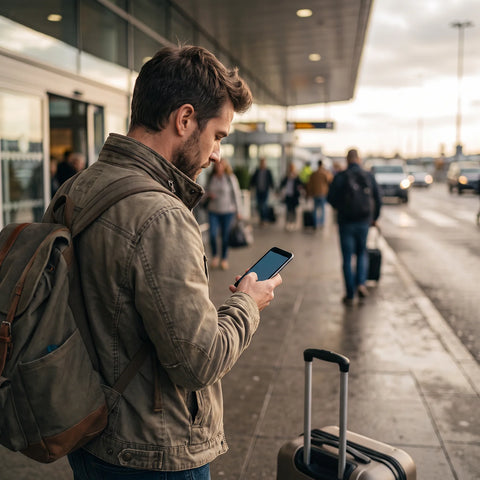
This is where most travelers encounter the real problem. You leave the arrivals area, get into a taxi or the subway, and your cell phone loses internet. If your home data plan doesn't include that country, you're left without a map, unable to request a ride through an app, unable to notify that you've arrived, and often, without even knowing how to get to your accommodation.
The traditional solution (buying a physical SIM card at the airport or activating your home operator's roaming) has known frictions: waiting in line at a counter while tired from the flight, physically changing the card in your cell phone (with the risk of losing your original number while traveling), or incurring roaming charges without knowing exactly how much you'll pay until the bill arrives.
The eSIM: the solution you probably didn't know about
There is a third, more recent option that solves precisely the problem that airport Wi-Fi leaves uncovered: the data eSIM. It is a digital SIM that is installed directly on your cell phone, without a physical card, without going to any counter, and without touching your main line.
It works in parallel with your usual number: your cell phone can have your physical SIM (or eSIM) from home for calls and messages, and at the same time a second data eSIM active only for internet in the country you are visiting. Nothing is replaced, nothing is lost. It is installed by scanning a code or with a few taps in the phone's settings, it is activated when you decide, and from that moment you have mobile data outside the airport, in the taxi, on the subway, walking around the city, at any point where you would have previously been without a signal.
If you've never installed one, in this guide on what an eSIM is we explain it from scratch, and in this other one on how to install it you'll go step by step with screenshots of the complete process.
How a data eSIM works in practice: a Barcelona travel example
Imagine flying from Mexico City, Bogotá, or Buenos Aires to Barcelona, with a layover along the way. This is what the same trip looks like with an eSIM already activated, compared to relying only on airport Wi-Fi:
- Before leaving home: you buy the eSIM for Spain and install it using your home Wi-Fi. No need to activate it yet.
- During the layover: you use the free Wi-Fi at the layover airport as usual, without relying on the eSIM.
- Upon landing in Barcelona: you activate the eSIM from your phone's settings. Activation takes approximately 1 minute, and you already have mobile data without needing to find, connect to, or rely on Barcelona Airport's Wi-Fi.
- Leaving the terminal: you request your ride on your preferred transportation app, follow the map to your accommodation, and notify that you've arrived, all with your own data, without searching for a public network.
Here's a practical detail that few take advantage of: since you have 180 days from purchase to activate the eSIM, there's no reason to leave it for the last minute at the airport. Install it and get it ready with your home Wi-Fi a few days before traveling, and activate it as soon as you land; this way you avoid the step of looking for a public Wi-Fi signal precisely when you're tired from the flight and least want to deal with a captive portal that won't load.
Free airport Wi-Fi vs. data eSIM: comparison
| Aspect | Free airport Wi-Fi | Data eSIM |
|---|---|---|
| Where it works | Only within the terminal | Anywhere with mobile coverage in the country |
| When you can use it | Only upon arrival and manual connection | You can install it before traveling and activate it whenever you want, within 180 days of purchase |
| Stability | Varies depending on how many people are connected at once | Depends on the local mobile network, not other passengers |
| Network security | Public, shared, and open network | Individual mobile data connection |
| Outside the airport | Not available | Continues to work in the city, on transport, and for the rest of your journey |
| Support if something fails | Not applicable (it's a public network without its own customer service) | 24/7 support in all languages via email and WhatsApp |
It's not about choosing one or the other: Barcelona Airport's free Wi-Fi is perfect for quick tasks while you're inside the terminal. The eSIM picks up right where Wi-Fi leaves off, and it's what keeps you connected for the rest of your trip. If your itinerary also includes more than one country, it's worth checking the difference between activating an eSIM and relying on your home operator's roaming, because the latter is usually more expensive without you knowing until the bill arrives.
Frequently Asked Questions
Is Barcelona Airport Wi-Fi free in all terminals?
Yes, free public Wi-Fi is available in the airport terminals for passengers. Each zone may manage the signal independently, so it's normal to have to reconnect when moving between areas within the same airport.
Do I need to create an account to use the free Wi-Fi?
In many cases, you will be asked to accept the terms of use and, frequently, an email address or a cell phone number to validate access to the captive portal. It usually does not require downloading any application.
Is airport Wi-Fi safe for making payments or logging into my online banking?
As it is a public and shared network, it is preferable to avoid sensitive transactions such as online banking without additional protection (for example, a VPN). For browsing, checking your flight, or requesting a ride, it is a practical and sufficient option.
Can I make video calls with the airport's free Wi-Fi?
It depends on how many people are connected to that network at that moment. During peak passenger traffic, the speed is shared among all connected users and may not be stable enough for a long video call.
What is the real difference between airport Wi-Fi and a data eSIM?
Free Wi-Fi only works within the terminal. The data eSIM works anywhere with mobile coverage in the country you visit, including the city, transport, and the rest of your journey, not just the airport.
Do I need to buy and install the eSIM before arriving in Barcelona?
You can do it before or after landing. You have 180 days from purchase to activate it, so many travelers install it using their home Wi-Fi before traveling and activate it as soon as they land, in approximately 1 minute.
Is every cell phone compatible with eSIM?
Not all models support it yet. Before buying, it's a good idea to check if your specific cell phone is compatible; we explain it with the complete list in this guide to eSIM compatible phones.
What do I do if the airport Wi-Fi doesn't load or keeps cutting out?
The most common solutions are to restart your phone's Wi-Fi, forget the network and reconnect from scratch, or try opening a new page to force the access portal to appear. If the problem persists, it's a good time to resort to your own data plan instead of relying on the public network.
Conclusion: what to do with this information
Barcelona-El Prat Airport's free Wi-Fi exists, it works, and it's useful for specific tasks: checking your flight, notifying your arrival, or requesting a ride while you're still inside the terminal. What it doesn't do, because it's not designed for that, is accompany you for the rest of your stay in the city.
If your plan is just to spend a few hours on a layover, the airport Wi-Fi may be sufficient. But if you're staying in Barcelona, moving around the city, or continuing your journey to another destination, it's wise to have an alternative that doesn't depend on being inside a specific terminal. That's where a data eSIM comes in: you install it before leaving home, activate it when you land (in approximately 1 minute), and you have your own connection throughout your journey, with 24/7 support in all languages via email and WhatsApp if something doesn't work as expected.
If you want to start from scratch, this definitive eSIM travel guide takes you step-by-step from what it is to how to choose it, and this other one on eSIM vs. physical SIM clarifies the difference if you're still debating between the two. If you prefer to go straight to it, PuraSIM has data eSIMs for over 200 destinations, including Spain: you can check the available options in the international eSIM collection and arrive in Barcelona already connected, without relying on any public network.