Belgium is one of those destinations that surprises everyone: perfectly preserved medieval cities, world-class chocolates, centuries-old breweries, and a unique cultural mix of Flemish and Walloon influences. Whether you arrive directly in Brussels, plan to get lost in the canals of Bruges, or discover the secrets of Ghent, there's one thing you'll need from minute one: reliable internet.
Forget about searching for public Wi-Fi in every cafe or paying exorbitant international roaming fees. An eSIM for Belgium connects you automatically when you land, with no need to change your physical SIM card or set up anything complicated. It's the solution used by travelers who value their time and want to avoid surprises on their phone bill.
In this guide, I'll tell you exactly how much data you need based on your trip type, how coverage works in the main Belgian cities, which operators offer the best service, and how to activate your eSIM in minutes. I also include specific tips known only by those who have already traveled to Belgium, such as the excellent coverage on the Eurostar or why Bruges is perfect for navigating with maps without worrying about data.

Why use eSIM in Belgium
Belgium is a small but super connected country. It has one of the most advanced telecommunications infrastructures in Europe, which means you'll have signal almost anywhere: from the historic center of Brussels to the smallest villages in the Ardennes. But to take advantage of that connectivity without spending a fortune, you need the right tool.
An eSIM is basically a virtual chip that is installed on your phone using a QR code. You don't have to go to a phone store, you don't have to wait in lines, and you don't run the risk of losing your original SIM during your trip. You buy it online before you leave, receive the code by email, scan it, and that's it. When you arrive in Belgium, your phone automatically connects to the local network as if you were just another user.
Why is this especially useful in Belgium? First, because many travelers combine Belgium with other nearby European destinations. If your eSIM includes regional coverage (like most), it works just as well in Paris, Amsterdam, or Cologne at no additional cost. Second, because Belgium is a perfect country for exploring on foot or by bicycle, and you need maps working all the time. Google Maps, Citymapper, or the SNCB train app are essential for moving efficiently.
Third, and this is key: public Wi-Fi in Belgium exists but is not as ubiquitous as in other European countries. Many cafes and restaurants offer it, but sometimes it's slow or requires registration. Having your own data gives you total freedom to look up museum hours, make last-minute reservations, or simply share those photos of the colorful houses in Bruges without relying on anyone.
Finally, the eSIM allows you to keep your original number active to receive important calls or messages (like bank verification codes), while using the data from the Belgian eSIM. It's the best combination of connectivity and practicality, especially if you're traveling from Latin America or Spain and don't want to deal with the complications of traditional roaming.
How much data you need based on your trip
This is probably the most common question, and the answer depends on how you travel. But after analyzing the behavior of thousands of travelers in Belgium, we can give you pretty precise recommendations that will help you choose the right plan without overpaying or running out.
For a one-week trip focused on the three main cities (Brussels, Bruges, and Ghent), most travelers consume between 5 and 8 GB. This includes regular use of maps throughout the day, moderate social media, searching for restaurants and attractions, WhatsApp with short photos and videos, and occasional video calls with family or friends. If you're someone who constantly uploads Stories or makes long video calls every day, consider 10 GB.
Now, if your trip is shorter (3-4 days, like a long weekend), 3-5 GB will be more than enough. Belgium is compact and distances are short, so you don't need to have GPS on constantly like on a road trip. Plus, many hotels and some public spaces offer decent Wi-Fi that you can use to download heavy content or make long video calls.
Traveling for work or need to be super connected? Then think about 10-15 GB. This allows you to make video conferences without worrying, upload heavy files, and use productivity applications without restrictions. It's also the ideal amount if you're traveling with family and multiple devices share data via personal hotspot.
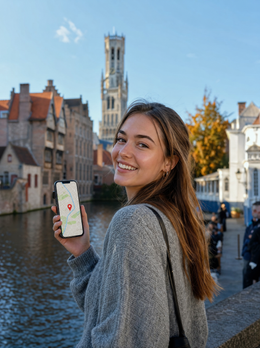
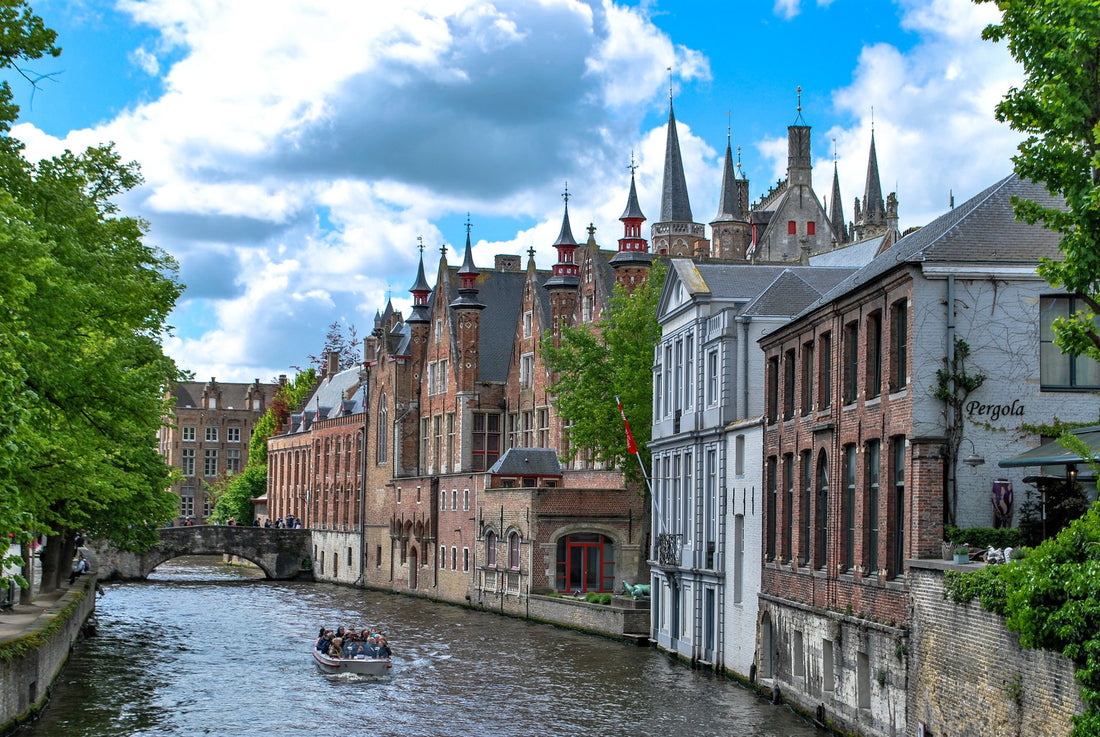
An important tip about Bruges: this city is relatively small and super walkable, but its medieval streets can be a labyrinth. Many travelers end up using more data than expected because they constantly consult the map. It's not a problem if you have an adequate plan, but it's something to consider. The good news is that coverage is excellent throughout the historic center, so your GPS will work perfectly even on the narrowest streets.
For intercity trains, especially the Eurostar connecting Brussels with Paris and Amsterdam, coverage is surprisingly good. You can work, make video calls, or simply browse without problems for almost the entire journey. This makes train travel much more productive, but it also means you'll consume data during these transfers.
Operators and coverage in Belgium
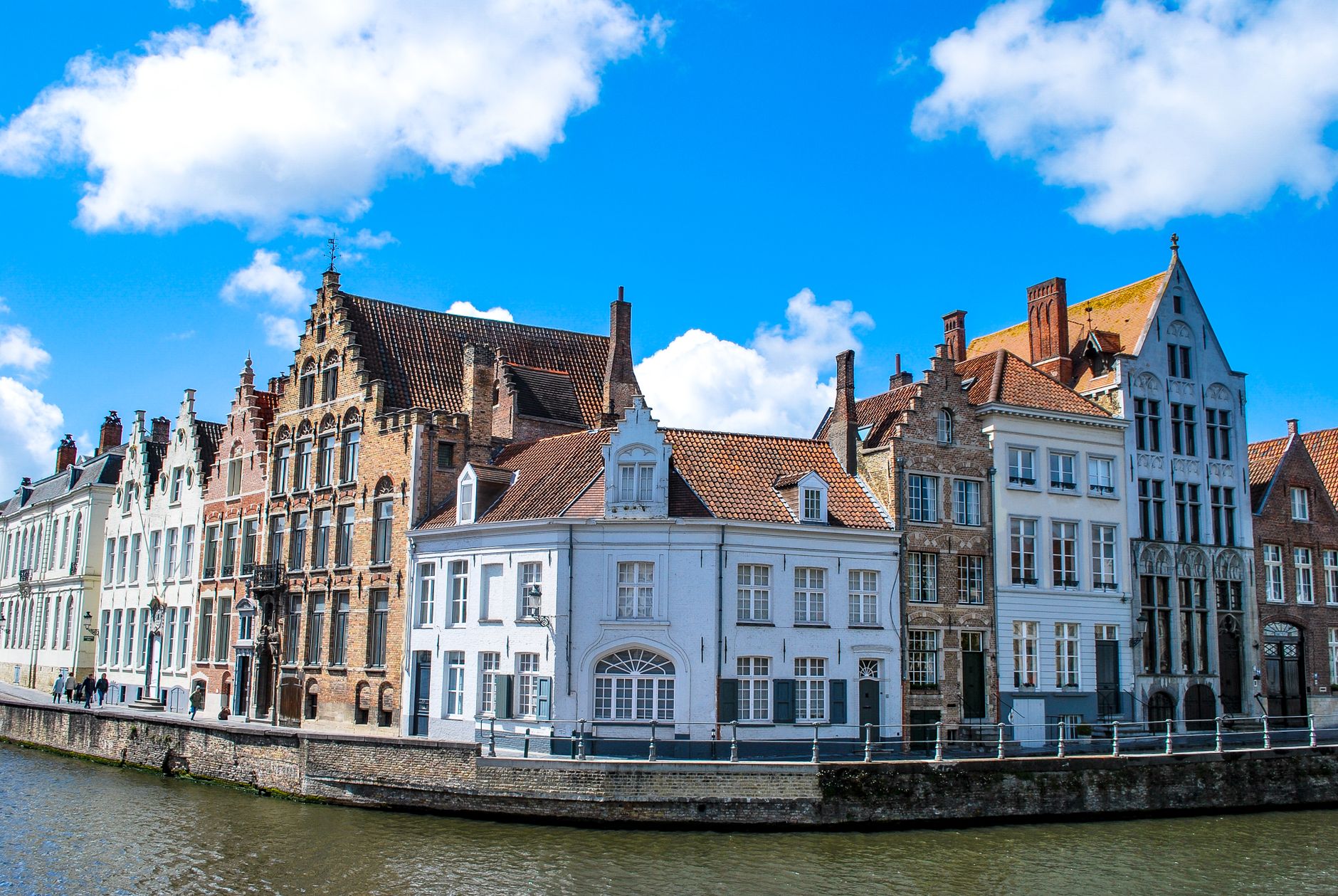
Belgium has three main operators: Proximus, Orange Belgium, and Base (now part of Telenet). When you purchase an international eSIM for Belgium, your provider has agreements with one or more of these operators, and your phone automatically connects to the available network with the best signal at any given time.
Proximus is the largest and oldest operator in the country, with the most extensive coverage. If your eSIM connects to Proximus, you will have signal virtually anywhere in Belgium, including rural areas, train tunnels, and historic buildings with thick walls. It is especially reliable in Brussels and on the main train routes. The average 4G speed is around 30-50 Mbps, more than enough for any normal use.
Orange Belgium offers very similar coverage in urban areas and is particularly strong in the Wallonia region (southern Belgium). If you plan to visit cities like Liege or Namur in addition to the three main ones, Orange usually provides very good results. Its speeds are comparable to Proximus and the connection stability is excellent for video calls.
Base/Telenet is the third largest operator but no less capable. In Brussels, Bruges, and Ghent, coverage is practically identical to the other two. The difference is more noticeable in very rural areas or inside some old buildings, where the signal can occasionally be a bit weaker.
The important thing is that most quality international eSIMs have agreements with at least two of these operators, so your phone will automatically switch to the network with the best signal. In practice, this means you'll have excellent coverage in the three main cities and on all popular tourist routes.
A specific detail about the Eurostar: coverage within the train is excellent in Belgian and French territory, with brief interruptions only in the longest tunnels (including the Channel Tunnel). If you work during the trip, consider downloading important documents before entering the tunnels, but in general, you should be able to stay connected without problems.
In terms of speeds, Belgium has one of the fastest 4G networks in Europe. It's not uncommon to get 50-80 Mbps in central areas of Brussels or Ghent, and even in Bruges (a smaller, more touristy city) speeds are more than adequate. 5G is gradually being rolled out, but for tourist trips, 4G is more than sufficient and has better overall coverage.
How to activate your eSIM step by step
Activating an eSIM for Belgium is much simpler than it seems, even if you've never used one before. The entire process takes less than 10 minutes and you can do it from home before you travel. Here's exactly how it works, step by step, so you arrive in Belgium with everything ready.
First, check that your phone is eSIM compatible. Most iPhones from XS onwards are, as are Samsung Galaxy S20 or later, Google Pixel 3 and higher, and many recent models from Huawei, Oppo, and Xiaomi. You can check this in your phone settings: look for the "Mobile Data" or "Cellular" section, and if you see an option to "Add Data Plan" or "eSIM," you're ready.
Once you purchase your eSIM from PuraSim, you'll receive an email with a QR code and specific instructions. This code is unique and can only be used once, so keep it safe. It's best to install it when you have stable Wi-Fi, preferably before you leave for your trip, although you can also do it at the airport before boarding.
To install the profile on iPhone: go to Settings > Mobile Data > Add Data Plan, scan the QR code you received, and follow the on-screen instructions. The system will ask you to label this plan (you can call it "Belgium" or "Travel") and choose which plan to use for mobile data. Select the new eSIM for data, but keep your original SIM as the primary line for calls and messages.
On Android, the process is similar but varies slightly depending on the brand: go to Settings > Connections > SIM Card Manager > Add Mobile Data Plan, scan the QR code, and set the eSIM as your default data plan. Some Samsung models will ask you to restart your phone after installation.
Here's the important part: the profile is installed immediately, but the eSIM doesn't activate until you arrive in Belgium and your phone detects the local network. This means that the validity period (e.g., 7 days) starts when you land, not when you install the profile. You can travel calmly knowing that you're not "spending" days of your plan.
When you arrive at Brussels Airport (Zaventem) or Charleroi, activate airplane mode for a few seconds, then deactivate it. This forces your phone to search for available networks. In less than a minute, you should see the signal and the name of the Belgian operator at the top of your screen. If it doesn't connect automatically, go to mobile data settings and make sure "data roaming" is activated for the eSIM (yes, even though it's not technically roaming, some phones require this option to be activated).
One final tip: take a screenshot of the QR code and instructions in case you need to reinstall the profile for any reason. Although rare, if you change phones during your trip or have any technical issues, having that information handy will save you headaches.
Roaming vs eSIM: cost comparison

If you're traveling from Latin America or Spain, you're probably wondering if it's worth buying an eSIM or simply activating your operator's roaming. The short answer: eSIM is significantly cheaper in almost all cases. But let's look at the concrete numbers so you can make an informed decision.
Latin American operators charge roaming rates ranging from 10 to 25 dollars per day in Europe. Some offer "roaming packages" that seem more economical, but when you do the math, they are still considerably more expensive than an eSIM. For example, a popular Mexican operator charges 12 dollars daily for roaming in Europe, which means 84 dollars for a week. An eSIM with 8 GB for the same period costs between 20 and 35 dollars depending on the provider.
Argentinian operators usually offer 7-day roaming packages for around 60-80 dollars, with limited data (usually 1-2 GB). If you need more data, the additional costs are prohibitive: they can charge up to 15 dollars per extra GB. With an eSIM, you get 5-10 GB for less than half that price, with no surprises or hidden charges.
In Colombia, major operators charge between 8 and 15 dollars daily for roaming in Europe, with quite restrictive data limits. A one-week trip can easily cost you 70-100 dollars just for roaming, versus 25-35 dollars for an eSIM with abundant data and no worries.
For travelers from Chile, rates are similar: between 10 and 20 dollars daily, with weekly packages around 60-90 dollars. Some operators offer "automatic roaming" that activates without you requesting it and can generate unexpected charges on your bill. The eSIM completely eliminates this risk because you pay in advance and know exactly how much you will spend.
If you're traveling from Spain, the situation is a bit different thanks to European "roam like at home" regulations. Technically, you can use your data in Belgium at no additional cost within certain limits. However, these limits depend on your plan: if you have a basic plan with few GB, you might run short. Furthermore, some Spanish operators apply speed restrictions or "fair usage" policies when you are roaming for an extended period. An eSIM gives you dedicated data without these limitations, which is useful if your Spanish plan is limited or if you travel frequently and want to separate personal consumption from travel consumption.
Beyond cost, there's another important factor: peace of mind. With traditional roaming, it's easy to exceed limits without realizing it, especially if you're making video calls or uploading content to social media. Many travelers return home with bills for hundreds of dollars in unexpected roaming charges. The eSIM completely eliminates this risk: you pay upfront, you know exactly how much data you have, and when it runs out, you simply stop having internet (or buy more data if you need it). No unpleasant surprises.
Finally, consider the flexibility. If your trip includes other European countries besides Belgium (Paris, Amsterdam, Germany), many regional eSIMs cover multiple countries for the same price. Traditional roaming charges for each country or region, multiplying the costs. A European eSIM gives you the freedom to move around without thinking about borders or additional fees.
Frequently asked questions
How many GB do I need for a week in Belgium?
For a week in Belgium, we recommend between 5 and 8 GB. This covers regular map usage (especially useful in Bruges and Ghent), social media, messaging with photos and videos, searching for restaurants and attractions, and occasional video calls. If you plan to upload a lot of videos to social media or stream, consider 10 GB or more. Remember that coverage is excellent throughout the country, so you'll make the most of your data without interruptions.
Does the eSIM work on the Eurostar between Brussels and Paris?
Yes, the Eurostar has excellent mobile coverage for most of the journey. Your eSIM will work normally while you are in Belgian and French territory, provided your plan includes both countries (most European eSIMs do). There will be brief interruptions in the longer tunnels, especially in the Channel Tunnel, but overall you will be able to work, make video calls, or browse seamlessly during the trip.
Can I use the same eSIM in Brussels, Bruges, and Ghent?
Absolutely. An eSIM for Belgium works throughout the national territory without restrictions or additional costs. You will have the same coverage and speed in the three main cities and in any town, road, or rural area you visit. You don't need to change plans or configure anything different when moving between cities. The Belgian network is uniform and high-quality throughout the country.
When should I activate my eSIM for Belgium?
You can install the eSIM profile on your phone before traveling (recommended), but it activates automatically when you arrive in Belgium and your device connects to the local network. The validity period starts from that moment, not from the installation. This means you can prepare everything calmly before the trip without worrying about "spending" days from your plan. Upon landing, simply toggle airplane mode on and off to force the connection.
Is eSIM or international roaming better in Belgium?
eSIM is significantly more economical for Latin American travelers. Traditional roaming can cost between $10 and $25 per day, totaling $70-175 for a week. An eSIM with enough data for the same period costs between $20 and $35 in total. Additionally, with eSIM, you pay upfront with no risk of surprise charges, whereas roaming can lead to unexpected bills if you exceed limits. For Spaniards with "roaming like at home," eSIM is still useful if your plan has little data or you want to separate travel consumption from personal use.
Activate your eSIM before you leave and arrive connected from the first moment. Coverage in Brussels, Bruges, Ghent, and throughout the country.
View eSIM plans →