South Korea is not only the land of kimchi, K-pop, and the dramas you've watched on Netflix. It is also one of the most technologically advanced destinations on the planet, with a telecommunications infrastructure that puts many Western countries to shame. If you're traveling to Seoul, Busan, or any corner of this incredible country, connectivity will not be an issue — as long as you arrive with the right eSIM.
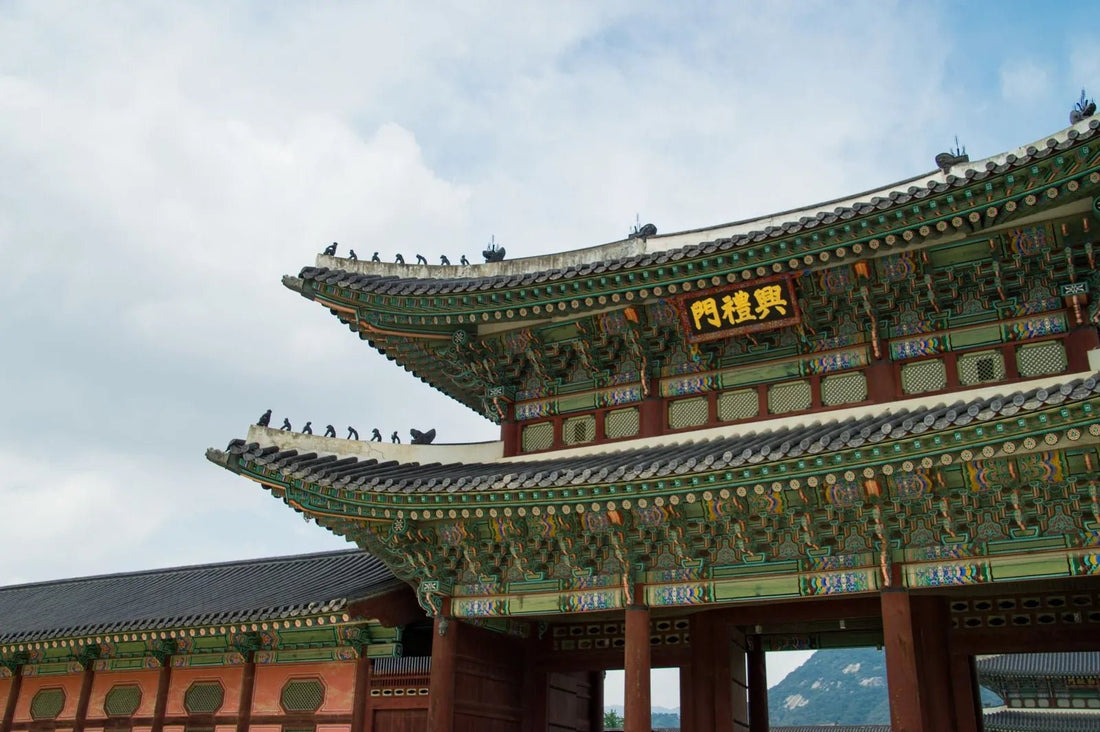
Millions of Latin American and Spanish travelers discover each year that South Korea is much more than a trendy destination: it is a complete sensory experience where Myeongdong street food, Joseon Dynasty palaces, Hongdae themed cafes, and Haeundae beaches in Busan blend into an unforgettable adventure. And to live it to the fullest, you need to be connected at all times.
In this guide, we tell you everything you need to know about mobile connectivity in South Korea: what network awaits you, how much data you really need, how eSIM works, and why it is the smartest option to avoid overpaying or losing signal at the most important moments of your trip.

1. South Korea's Mobile Network: World-Leading 5G
South Korea not only has good mobile coverage — it has the best in the world. The country pioneered the launch of commercial 5G networks in 2019 and has since built an infrastructure that covers practically the entire national territory. Download speeds in urban areas like Seoul and Busan can exceed 500 Mbps on 5G, something that is still science fiction in many Latin American and European countries.
The three major operators in the country — SK Telecom, KT (Korea Telecom), and LG U+ — have 5G coverage in all major cities and on the busiest routes between them. In Seoul, the network reaches even the deepest subway stations, underground shopping malls, and stadiums. In Busan, coverage is equally solid, from the port to Haeundae and Gwangalli beaches.
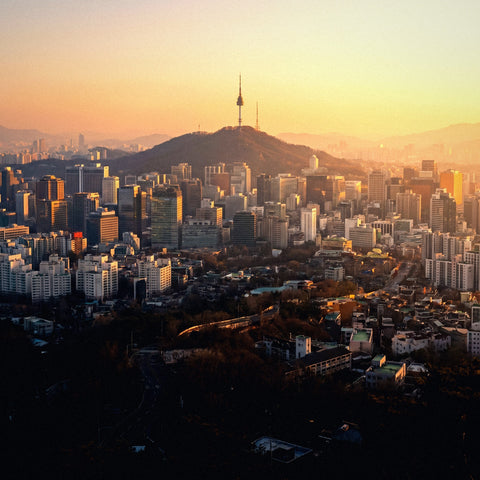
For the Spanish-speaking traveler, this means one very concrete thing: you will never have signal problems. You'll be able to use Google Maps while walking through the alleys of Bukchon Hanok Village, live stream from N Seoul Tower, check subway schedules in real time, and share photos on social media without waiting to get back to the hotel.
4G LTE coverage is the minimum standard in virtually any part of the country, even in rural areas and national parks like Seoraksan or Jeju. And in major cities, 5G is almost universally available. PuraSIM's eSIMs for South Korea use the networks of the most powerful local operators, ensuring you have access to this world-class infrastructure from the very first moment.
An important fact for those coming from countries with slower networks: the speed difference can be so remarkable that even activities that previously required Wi-Fi — like watching an episode of a K-drama or making an HD video call — can be done comfortably with mobile data. South Korea changes what you think is possible in mobile connectivity.
2. How many GB do you need? Guide by traveler type
This is the million-dollar question when planning a trip to South Korea. The honest answer is: it depends on how you travel. But if we're looking for a practical recommendation for most Spanish-speaking travelers spending between 7 and 10 days in the country, 10 GB is the sweet spot.
Let's look at why and how that consumption is distributed on a typical tourist day in Seoul:
- Google Maps or Naver Maps: 150-300 MB per day of intensive use with real-time navigation.
- Social media (Instagram, TikTok, WhatsApp): 500-800 MB if you regularly upload photos and videos.
- Kakao Maps and transport apps: 50-100 MB. They are essential for getting around Seoul and consume little data.
- Video calls (FaceTime, WhatsApp): about 200-400 MB per hour of HD call.
- Occasional streaming: 1-3 GB if you watch a full episode of a series in standard quality.
In total, an active traveler can consume between 1 and 1.5 GB per day. For a week, that adds up to between 7 and 10 GB. With the 10 GB from our recommended plan, you have a comfortable safety margin without upgrading to a more expensive plan you don't need.
What if I'm a light traveler? If you only use your phone for maps, WhatsApp, and occasional photos, and connect to hotel Wi-Fi at night, 5-6 GB might be enough. But keep in mind that in South Korea you'll want to document absolutely everything — Myeongdong street food, kids dancing in the streets of Hongdae, views from Bukhansan — and that drives consumption higher than you might think.
What if I'm a heavy traveler? If you stream constantly, live stream, work remotely from South Korea, or plan K-pop tours with lots of maps and searches, consider a 20 GB or unlimited plan. The 5G speed means consumption is faster than usual.

3. Seoul Connected: Neighborhoods, Subway, and Digital Experiences
Seoul is one of the largest and best-connected cities on the planet. With over 10 million inhabitants in the city and 25 million in the metropolitan area, the Korean capital has built a digital infrastructure that permeates everything: from public transport to night markets.
The Seoul subway deserves special mention. With 9 main lines and more than 300 stations, it is one of Asia's most efficient transport systems. And the best part for travelers: it has data coverage in absolutely all stations and carriages. While you're going from Itaewon to Gangnam, you can download the map of the next neighborhood, check reviews of the restaurant you're going to, or watch the latest episode of the K-drama you're following.
These are the neighborhoods you can't miss in Seoul and where you'll most need connectivity:
- Myeongdong: The epicenter of street food and K-beauty shopping. Here you'll need maps to find the best tteokbokki and hotteok stalls, and data to search for which skincare products to buy according to Korean reviews.
- Hongdae: The university and cultural area where street artists perform every weekend. Perfect for discovering live music and themed cafes. Many travelers live stream from here.
- Bukchon Hanok Village: The neighborhood of traditional Korean houses. Maps are essential because the neighborhood is a maze of narrow streets — and you'll want to photograph every corner.
- Gangnam: The financial and luxury district that inspired the most viral K-pop song in history. Here you'll find shops, high-end restaurants, and the best Instagrammable cafes.
- Itaewon: Seoul's most international neighborhood, with restaurants from all over the world and a very active nightlife. Ideal if after a week of Korean food you need something different.
For K-pop fans — and in South Korea, all travelers end up being at least a little bit K-pop fans — tours to agency headquarters (HYBE, SM Entertainment, YG, JYP) are almost mandatory. You'll need data to check schedules, queue virtually for the BTS cafe in Dongtan, and of course, share photos in real-time with your followers.
4. Busan and More Destinations: Beaches, Temples, and K-drama
If Seoul is the technological heart of South Korea, Busan is its soul. The country's second-largest city has everything you can imagine and more: Haeundae Beach — one of Asia's most famous —, the colorful Gamcheon Culture Village, the imposing Haedong Yonggungsa Temple built directly on the sea, and one of the world's largest seafood markets in Jagalchi.
The good news for the connected traveler is that Busan has 5G coverage as solid as Seoul. The city has invested massively in digital infrastructure, and connectivity in tourist areas is excellent. Even on beaches and viewpoints, you'll find a strong signal.
To get from Seoul to Busan, the most popular option is the KTX — the Korean high-speed train that covers the 325 km in just 2 hours and 15 minutes. You'll also have data coverage during the journey, although there may be occasional moments of weaker signal when crossing tunnels in the mountains.
Beyond Seoul and Busan, South Korea offers other unmissable destinations where you'll also need your eSIM:
- Jeju Island: The volcanic island south of the country, famous for its unique landscapes, lavender fields, and Mount Hallasan. Coverage is very good throughout the island.
- Gyeongju: The ancient capital of the Silla kingdom, full of royal tombs and Buddhist temples. It is known as "Korea's open-air museum."
- Incheon: In addition to being the gateway to the country through its international airport, Incheon has a fascinating Chinatown and the Songdo neighborhood, one of the world's most ambitious smart city experiments.
K-drama fans will find an authentic theme park in South Korea. Many locations of famous series — from "Crash Landing on You" to "Goblin" — are scattered throughout the country, and you'll need the Naver app to find them and data to navigate to them.
5. How to activate your eSIM for South Korea
One of the great advantages of eSIM over traditional physical SIM is the convenience of activation. You don't have to look for an operator store at Incheon Airport after a 12-14 hour flight from Latin America, or queue up waiting for someone to help you with a language you don't master. With a PuraSIM eSIM, everything is done from your phone, before you leave home.
The process is very simple:
- Check your phone's compatibility. The vast majority of smartphones launched since 2018-2019 are eSIM compatible: iPhone XS and later models, Samsung Galaxy S20 and above, Google Pixel 3 and above, and many more. If you're unsure, check your phone settings in the "SIM" or "Mobile" section.
- Choose your plan. For a week in South Korea, we recommend the 10 GB plan. If you plan more days or are a heavy user, consider 20 GB. View all available plans →
- Install the eSIM at home. You'll need Wi-Fi for this. You'll receive a QR code that you scan from your phone settings (on iOS: Settings → Mobile Data → Add Data Plan; on Android: Settings → Connections → SIM Manager). The process takes less than 5 minutes.
- Set up the eSIM for roaming data. Make sure the PuraSIM eSIM is selected as the line for data when you are outside your country. You can keep your local SIM to receive calls and SMS.
- Arrive in South Korea and connect. When you land in Incheon and your phone detects the Korean network, the plan automatically activates. In seconds, you'll have 5G or 4G LTE connection ready to use.
Expert traveler tip: Download offline maps of Seoul and Busan on Google Maps before you leave. Although with a PuraSIM eSIM you'll have more than enough data, offline maps are an additional safeguard for the first few minutes after landing, while the plan finishes activating.
Another important tip: in South Korea, the most useful apps are Naver Maps (better than Google Maps for local transport and bus), Kakao Maps, and Kakao T (for taxis). Download them before you travel and have them ready on your phone. We also recommend Papago, Naver's translation app, which is much more accurate with Korean than Google Translate.
Frequently Asked Questions
Do I need an eSIM to travel to South Korea?
It's not mandatory, but it's the most practical and economical option. With an eSIM, you avoid international roaming charges from your local operator, which can cost between 10 and 20 USD per day — meaning a 70-140 USD expense for just data on a one-week trip. With a 10 GB eSIM plan for South Korea, you pay much less and have more than enough data for your entire trip. Plus, activation is instant, and you don't have to waste time at the airport looking for a local SIM.
How many GB do I need for a week in South Korea?
For a week of active tourism in Seoul and Busan, we recommend a 10 GB plan. This covers using Google Maps and Naver Maps all day, social media with photo and video uploads, video calls with family and friends, local transport apps like Kakao Maps, and occasional streaming at night in the hotel. If you're a more relaxed traveler who primarily uses hotel Wi-Fi, 5 GB might be enough. If you work remotely or stream constantly, consider 20 GB or an unlimited plan.
Is there 5G coverage throughout South Korea?
South Korea was one of the first countries to launch commercial 5G networks and currently has the fastest and most extensive 5G coverage in the world. In major cities like Seoul, Busan, Incheon, Daegu, and Gwangju, you'll find 5G signal in practically all tourist neighborhoods, shopping centers, and transportation, including the subway. In rural areas and national parks, coverage is 4G LTE, which is still more than sufficient for typical traveler use.
Can I use the eSIM on the Seoul subway and the KTX train?
Yes. The Seoul subway has data coverage on all its lines, stations, and carriages — even in the deepest underground sections. The KTX, the high-speed train connecting Seoul to Busan, also has coverage for most of the route, although brief interruptions may occur when crossing tunnels in mountainous areas. In general, connectivity on Korean public transport is better than in most European and Latin American countries.
When should I activate my eSIM for South Korea?
We recommend installing the eSIM on your phone before leaving home, while you still have a Wi-Fi connection. The installation process requires an internet connection to download the eSIM profile. Once installed, data plan activation occurs automatically when your phone detects the South Korean network upon arrival in the country. This way, you land in Incheon already connected, with no queues or paperwork. If you install the eSIM at your departure airport, you will need the airport's Wi-Fi for the installation process.
Activate your eSIM before you leave and arrive connected from the very first moment. 5G coverage, no roaming, no surprises on your bill.
View eSIM plans →