In short: the Egypt eSIM is a digital card that you activate before leaving home by scanning a QR code. It connects you to Vodafone, Orange, or Etisalat as soon as you land in Cairo, without expensive roaming or queues for a physical SIM. With 5-10 GB, you'll be covered for a week among pyramids, the Nile, and the Red Sea, keeping your Spanish number and WhatsApp active throughout the trip.
You're planning your trip to Egypt, and amidst the excitement for the pyramids and Nile temples, a practical question arises: how do I get internet access without paying exorbitant roaming fees? The short answer is an eSIM for Egypt: a digital card you activate in 1 minute by scanning a QR code, without changing your physical card or dealing with airport procedures in Cairo. In this guide, you'll see why the Egypt eSIM is travelers' favorite option, how many gigabytes you need, how to activate it step-by-step, and what coverage to expect from Cairo to a Nile cruise or the Red Sea beaches.
Why carry data in Egypt from the moment you land
Egypt is a destination where being connected is not a luxury, but a travel tool. From the moment you step into the airport, you'll need Google Maps to navigate, translators for Arabic, and transport apps like Uber or Careem, which work wonderfully in Cairo and save you from haggling with taxis. Without data, you'll rely on hotel and cafe Wi-Fi, which is slow and intermittent and rarely reaches the temples or the desert.
An eSIM for Egypt solves this from the first minute. You activate it before leaving home, and as soon as you land, you automatically connect to the local network without looking for a store or filling out forms with your passport (in Egypt, buying a physical SIM requires registration and sometimes queues). Plus, you keep your Spanish number and WhatsApp active, so your family can reach you as always. If you're unsure, we'll help you understand what an eSIM is exactly and why it fits so well with a trip to Egypt.
Coverage and local networks: which operator you connect to
Mobile coverage in Egypt is solid in all tourist areas. Travel eSIMs don't create their own network: they rely on local operators through roaming agreements. In Egypt, the three major networks that eSIMs connect to are Vodafone Egypt (the country's largest coverage), Orange Egypt, and Etisalat Egypt (now also e&). There is a fourth, WE (Telecom Egypt), but the first three provide the best service for travelers.
In practice, 4G coverage is excellent in cities and tourist areas: Cairo, Giza, Luxor, Aswan, Hurghada, and Sharm el-Sheikh have stable signal. It drops in the middle of the desert and in some stretches of the Nile cruise between Luxor and Aswan. Even so, Vodafone Egypt maintains reasonable coverage for a good part of the river journey. These are the main networks (if you want full details of each operator and zone, we have a specific guide on internet in Egypt):
- Vodafone Egypt: the widest and most reliable network, ideal for the Nile and rural areas.
- Orange Egypt: very good in cities and on the Red Sea coast.
- Etisalat / e&: solid in Cairo, Giza, and major urban centers.
With PuraSIM, you connect to the best available network at each point, without having to configure anything manually.

How many GB do you need for your trip to Egypt?
The amount of data you need depends on your travel style: someone who only uses maps and WhatsApp doesn't consume the same as someone who uploads Instagram stories every day. A typical cultural trip to Egypt lasts between 7 and 10 days and combines city, temples, and often a few days at the beach. For most travelers, a 5 to 10 GB package comfortably covers a week of normal use.
| Type of trip | Duration | Recommended data |
|---|---|---|
| Cultural getaway (maps, WhatsApp, photos) | 5-7 days | 5 GB |
| Full trip Cairo + Nile + beach | 8-12 days | 10 GB |
| Intensive use (stories, videos, hotspot) | 7-10 days | 15-20 GB |
| Express trip / technical stop | 1-3 days | 1-3 GB |
If you're going to share your connection via hotspot with your partner or work remotely, move up a notch on the table. And if you want to make the most of every gigabyte without running out of data halfway through your cruise, read our tricks to save data with your travel eSIM. With PuraSIM, you can recharge in seconds if you run short, so you don't need to over-plan.
How to choose and activate your eSIM step by step (with QR)
Choosing your Egypt eSIM is simple: go to the store, select Egypt as your destination, choose the GB from the table above, and complete the purchase. In less than a minute, you'll receive your QR by email. Ideally, activate it before leaving Spain, using your home Wi-Fi, to arrive in Egypt with everything ready. You can choose your eSIM for Egypt and have it prepared in just a few clicks.
Activation with a QR is very fast. Follow these steps:
- iPhone: go to Settings > Mobile Data > Add eSIM > Use QR code and scan the code from the email.
- Android: go to Settings > Connections > SIM Manager > Add eSIM > scan the QR.
- Assign the eSIM to "Mobile Data" and leave your Spanish SIM as the primary line for calls and WhatsApp.
- Upon arrival in Egypt, activate data roaming only on the eSIM and deactivate data on your Spanish SIM to avoid extra charges.
PuraSIM Tip: scan and set up the QR at home, but do not activate data roaming until you land in Egypt. This way, the plan starts counting at the right moment, and you don't lose a single day of your gigabyte allowance.
The entire process takes little more than a minute. If you get stuck, our 24/7 Spanish-speaking support will guide you live.
Zone by zone: Cairo, the Pyramids, Luxor, Aswan, and the Nile cruise
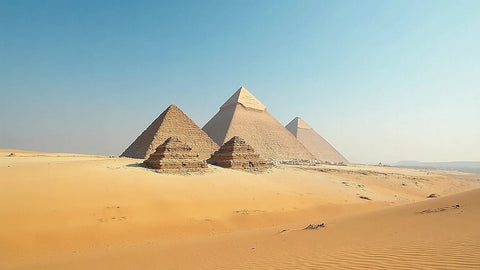
Egypt is explored in stages, and each has its own coverage reality. In Cairo and Giza (the pyramids of Cheops and the Sphinx), 4G signal is excellent: you'll be able to share photos live, order Uber, and use maps without problems. The connection is stable even on the Giza plateau, so don't worry about coverage near the pyramids.
In Luxor and Aswan, the major stops in Upper Egypt, coverage in the urban areas and main temples (Karnak, Philae, Abu Simbel) is good. The most delicate point is the Nile cruise between these two cities: sailing between banks and rural areas, the signal goes up and down. Vodafone Egypt usually maintains coverage for a good part of the journey, but there will be stretches without data: download offline maps and enjoy the scenery. Some boats sell their own expensive satellite Wi-Fi package on board; the eSIM is your cheap backup once the boat approaches the shore.
- Cairo / Giza: excellent 4G coverage, ideal for Uber and maps.
- Luxor / Aswan: good in the city and temples.
- Nile Cruise: intermittent between banks; use offline maps.
Red Sea: coverage in Hurghada and Sharm el-Sheikh
Many trips combine the culture of the Nile with a few days of relaxation in the Red Sea, and the question is inevitable: is there good signal on the beach? Yes. Hurghada, Sharm el-Sheikh, El Gouna, Marsa Alam, and Dahab are established destinations with very good 4G coverage in hotels, resorts, promenades, and commercial areas. You'll be able to share your diving and snorkeling photos as soon as you return to land.
Don't expect signal out at sea during diving excursions: several miles from the coast, no local operator reaches, just like in any country. For trips to reefs like Ras Mohammed or Giftun Island, download excursion information before setting sail and let your loved ones know you'll be disconnected for a couple of hours. On land, you'll instantly regain signal. Egypt is also one of the favorite destinations to escape to on special dates due to the good weather and lower crowds compared to summer; if you're looking at the calendar, check out our guide to eSIM destinations for Easter.
Visa, practical tips, and safety for your trip
Beyond connectivity, it's a good idea to arrive prepared. Most Spanish travelers need a visa for Egypt, which can be processed in three ways: a visa on arrival, which is purchased at the airport; an e-visa online through the official Egyptian government portal (the most convenient, applied for before travel); or at the consulate. The standard tourist visa allows up to 30 days of stay. Always verify updated requirements before departing.
With an active connection from landing, you can check your e-visa status, show reservations, and find your way without relying on airport Wi-Fi. Some golden tips for Egypt:
- Bargaining: in souks and bazaars, the initial price is just a starting point; research before negotiating.
- Offline maps: download Cairo, Luxor, and Aswan on Google Maps for stretches without coverage.
- Water: always drink bottled water and avoid ice of dubious origin.
- Safety: use official transport apps like Uber/Careem and keep digital copies of your passport.
Common myths and errors with the eSIM in Egypt
There are circulating ideas among travelers about Egypt and eSIMs that should be clarified before they complicate your trip. Here are the ones we get asked about most often:
- "I need a different eSIM for Cairo and another for the Red Sea": False. The eSIM automatically connects to the best available network in each area of the country, so a single data package covers your entire trip, without changing anything when moving from Cairo to Hurghada.
- "Buying a physical SIM upon arrival at Cairo airport is cheaper": Sometimes, but after a long flight, you'll have to queue at the Vodafone or Orange counter, show your passport, and fill out a registration form. With the eSIM already activated from Spain, you save yourself that queue right when you're most eager to get to your hotel.
- "The resort Wi-Fi in Sharm or Hurghada covers the entire hotel": In many all-inclusive resorts, free Wi-Fi only reaches the reception or lobby bar, not the rooms or the beach, and at peak times it's slow because all guests share it. The eSIM frees you from relying on that network.
- "Egypt is included in my Spanish operator's EU roaming plan": No. Egypt is outside the European Union, so your "Europe zone" roaming allowance does not apply here: it's billed as international data roaming, which is much more expensive. It's important to be clear about this before landing, not when you see the bill.
- "All iPhones have eSIM": Not all. Some models sold outside Europe or the US only come with a dual physical SIM. Before buying, check if your phone is compatible; if you have doubts about the differences with traditional roaming, we explain it in eSIM vs. roaming.
- "The desert road between Cairo and Hurghada has coverage all the way": Not always. There are stretches of the Ain Sokhna road with weak or no signal for several kilometers; if you're traveling by bus or private car, don't count on constant data on that particular stretch.
Prices: roaming vs eSIM in Egypt
The main reason to use an eSIM in Egypt is cost savings. Egypt is outside the European Union, so your Spanish operator's "like at home" rate does not apply: here, roaming is charged at international rates, which can skyrocket to several euros per megabyte. A surprise bill of hundreds of euros after the trip is, unfortunately, a classic. The eSIM eliminates this risk with a fixed price you know before you travel, with no commitment or surprises: check the current price for Egypt on the product sheet before buying.
| Option | Estimated Cost | Advantages / Disadvantages |
|---|---|---|
| Spanish operator roaming | Very high international rate per MB | Zero setup, but risk of exorbitant bill |
| Local physical SIM in Egypt | Economical | Requires passport registration, queues, and changing your number |
| PuraSIM eSIM | Fixed price, no surprises | QR activation in 2 min, no roaming, keep your number |
With PuraSIM, you know exactly what you're paying before you travel, you can share via hotspot, keep your number and WhatsApp, and have 24/7 Spanish support. For a destination as comprehensive as Egypt, it's the most convenient and affordable way to stay connected.
Conclusion
Egypt is best enjoyed connected: maps, translations, and sharing your journey in real-time, without expensive roaming. Manage your electronic visa in advance and ensure your data is sorted. Choose your eSIM for Egypt and land ready for the pyramids.
Frequently asked questions
Is there good coverage on the Nile and in the desert?
In the Nile cities (Luxor and Aswan), coverage is good. During the cruise between them, the signal is intermittent because you're sailing through rural areas; Vodafone Egypt usually maintains data for a good part of the journey. In the middle of the desert, download offline maps.
How many GB do I need for a week in Egypt?
For normal use for a week (maps, WhatsApp, social media, and photos), 5 GB is plenty. For a complete trip with a beach stay or if you share via hotspot, choose 10 GB. You can always recharge in seconds if you run short.
Does the eSIM work in the Red Sea, in Hurghada and Sharm?
Yes. Hurghada, Sharm el-Sheikh, El Gouna, and Marsa Alam have very good 4G coverage in hotels and tourist areas. The only exception is offshore during diving excursions, where no operator reaches.
Can I share data via hotspot?
Yes. PuraSIM eSIMs allow you to share your connection via hotspot with other devices. This is ideal if you're traveling as a couple or in a group and want to save money by buying a single, larger data package.
Do I keep my Spanish number and WhatsApp?
Absolutely. The eSIM only manages data: your Spanish SIM remains active for calls, SMS, and to keep your usual number and WhatsApp.
When should I activate the eSIM, before or after traveling?
Set up and scan the QR at home using your Wi-Fi, but don't activate data roaming until you land in Egypt. This way, the plan starts counting exactly when you need it. Activation takes just over a minute.