In short: A Guatemala eSIM gives you mobile data as soon as you land at La Aurora, with no roaming or physical SIM to find. Coverage is solid in Antigua and around Lake Atitlán, but spottier in the Tikal jungle. For a week visiting these three destinations, a 5-7 GB plan is usually enough for maps, messaging, and social media without worry.

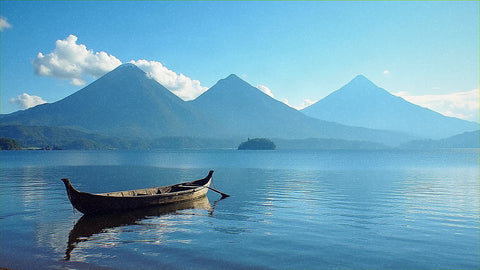
Guatemala blends three worlds into one trip: the cobblestone streets and volcanoes of Antigua, the Petén jungle with the Tikal pyramids peeking through the treetops, and Lake Atitlán, surrounded by Mayan villages where each shore has its own rhythm. It's a rewarding country to travel in, but also one where arriving without data can complicate your first steps: finding your hotel from the airport, notifying those waiting for you, or simply knowing if the bus you just took is going in the right direction.
That's why more and more travelers are arriving with an eSIM already installed before boarding the plane. In this guide, we'll tell you what coverage to expect in each area, how many GB you really need, how to activate your eSIM without complications, and what almost no one tells you before you set foot on Guatemalan soil.
What is an eSIM and why is it useful for Guatemala?
An eSIM is a digital profile from your carrier that is installed directly on your phone, without a physical card to insert. There's no need to search for a store upon arrival, no wasting time in line at a phone counter at Guatemala City airport, or risking losing the tiny SIM at the bottom of your backpack. You install it before leaving home and activate it whenever you want, usually upon landing.
The difference compared to your usual carrier's roaming is significant. With international roaming, the cost of data outside your country often skyrockets, and even if you use little, the feeling of "overspending" accompanies the entire trip. With a local eSIM for Guatemala, you pay for the data plan you've contracted, you know beforehand how many GB you have, and you avoid the typical bill shock when you return home. If you want to understand the difference in more detail, we have a complete comparison of eSIM vs. roaming and another explaining what data roaming is exactly and why it makes travel so expensive.
Furthermore, the eSIM works in parallel with your physical line: you can continue to receive calls and SMS on your usual number while using the data from your PuraSIM eSIM. You don't have to choose between being reachable and being connected.
Coverage in Guatemala: Antigua, Tikal, and Lake Atitlán
Mobile coverage in Guatemala is not uniform, and it's good to know this before planning your itinerary. In general, the more urban and touristy the spot, the better the signal; the further you venture into the jungle or rural mountain areas, the more likely the network will drop to 3G or disappear in stretches.
Antigua Guatemala
Antigua is, by far, the most connected of the three. Being a compact urban center and very touristy, 4G coverage is stable in almost the entire historic center, in the market, and at nearby viewpoints like Cerro de la Cruz. Here, you won't have problems making video calls, uploading photos, or browsing normally.
Tikal and Petén
Tikal is another story. The national park extends through dense jungle, and although the city of Flores and the town of El Remate (the usual starting points) have reasonable coverage, within the archaeological site itself the signal becomes intermittent. It's common to lose coverage between temples, especially when climbing Temple IV or venturing into areas further from the central complex. This is not an eSIM fault: it's due to the terrain itself and the lack of antennas in the middle of a nature reserve.
Lake Atitlán
The lake has mixed behavior. Panajachel, the most common entry town, has good coverage. But as soon as you cross by boat to towns like San Juan la Laguna, San Marcos, or San Pedro La Laguna, the signal can weaken, especially in areas further from the dock or on the streets climbing the side of the volcano. It's not uncommon to have a good signal on the shore and practically nothing ten minutes uphill.
| Area | Typical Coverage | What to expect |
|---|---|---|
| Antigua (historic center) | Stable 4G | Streaming, maps, and video calls without issues |
| Guatemala City | 4G / 5G in central areas | Good general urban coverage |
| Flores / El Remate (Petén) | Reasonable 4G | Good base before entering the park |
| Inside Tikal archaeological site | Intermittent or no signal | Download maps and tickets before entering |
| Panajachel (Atitlán) | Acceptable 4G | Decent connectivity near the dock |
| Lake villages (San Juan, San Marcos, San Pedro) | Variable, weaker | May fail as you move away from the shore |
PuraSIM connects your eSIM to the local networks with the best available infrastructure in each area through local roaming agreements, which helps maximize coverage where it exists. But no eSIM can invent antennas where they don't exist: in Tikal and the more isolated areas of the lake, nature reigns.

How many GB do you need for Guatemala?
It depends on your itinerary and how you use your phone, but for a typical week-long trip between Antigua, Tikal, and Lake Atitlán, a 5-7 GB plan covers the vast majority of travelers with normal use: maps active almost all day, WhatsApp, social media, and occasional browsing.
| Usage Type | Approximate Daily Consumption | Activity Example |
|---|---|---|
| Basic | 300-500 MB/day | Maps, messaging, occasional queries |
| Moderate | 0.8-1.5 GB/day | Social media, photos, continuous browsing |
| Intensive | 2-4 GB/day | Remote work, streaming, video calls |
If your plan is mostly to disconnect (photograph volcanoes, hike Tikal, sunbathe by the lake) you can adjust downwards. If, however, you're going to work remotely from a guesthouse with views of Atitlán or want to make frequent video calls, move up to the next tier. PuraSIM plans can be topped up if you run short, so you don't have to get it perfectly right from home: if you see the counter dropping fast, you can add data without changing your eSIM or number.
A trick many travelers don't use: download offline maps of Antigua, Tikal, and the lake area before you leave, and save data consumption for what really needs a live connection. We have a guide with more tricks to save data while traveling that might be useful, especially in areas with weaker coverage.
Check the full eSIM plans for Guatemala (the direct link is below) to see available data and duration options and choose the one that best suits your route.
eSIM, local physical SIM, or roaming: what suits you best in Guatemala
Upon arriving in Guatemala, you basically have three ways to get data: activate your home carrier's roaming, buy a local physical SIM, or use an eSIM already configured before you leave. Each has its logic, but for most short trips, the eSIM wins for convenience.
| Option | Advantages | Disadvantages |
|---|---|---|
| Home carrier roaming | No action needed upon arrival | Cost skyrockets depending on carrier; speed sometimes limited |
| Local physical SIM | Local rates, purchased in the country | Must find a store, wait in line, and you lose your usual SIM while using it |
| PuraSIM eSIM for Guatemala | Installed before traveling, keeps your number active, activated in minutes | Requires an eSIM-compatible phone |
If you've never used an eSIM and want to fully understand the differences compared to a traditional physical card, we have a dedicated comparison of international chip vs. eSIM that clarifies many doubts.
How to activate your eSIM for Guatemala step-by-step
Activating your eSIM takes minutes, and you can do it days before your flight:
- Buy your plan on purasim.com for Guatemala. You'll receive an email with the activation QR code.
- Install the profile: on iPhone, Settings → Cellular → Add Data Plan; on Android, Settings → Connections → SIM Manager.
- Scan the QR code or enter the data manually if your phone cannot scan.
- Select the PuraSIM eSIM as the default data line, so the phone uses that connection and doesn't try to use roaming.
- Activate data roaming within the eSIM itself (yes, it's a separate step and many people forget it): without this, the eSIM won't connect to local Guatemalan networks even if installed.
You can set it up at home and have it activate automatically when it detects the network upon landing, or activate it manually whenever you want to start using it. If this is your first time installing an eSIM and you want to see it with step-by-step screenshots, we have a complete guide on how to install an eSIM.
Before buying, check your phone's compatibility. Most iPhones from XS, Samsung Galaxy from S20, and Google Pixel from 3 support eSIM. You can check in Settings → General → About: if your model supports it, you'll see the option "eSIM" or "Add Cellular Plan."
When to travel to Guatemala (and why Holy Week in Antigua is special)
Guatemala has a dry season, approximately from November to April, which is usually the most comfortable time to move between Antigua, the lake, and Petén without rains complicating dirt roads. The wet season, from May to October, brings intense afternoon rains but also greener landscapes.
If your trip coincides with Holy Week, keep in mind that Antigua experiences one of the world's most renowned celebrations: processions over carpets of dyed sawdust and flowers that cover the streets of the historic center. It's a spectacle, but it also means closed streets, crowds, and hotels booked in advance. It's advisable to book early and arrive with connectivity sorted out, because locating your group in the crowd without data is much more complicated. If you're traveling precisely during those dates, check out our guide to destinations and tips for traveling during Holy Week.
Common mistakes and what almost no one tells you
After reviewing repeated questions from travelers going to Guatemala, there are several details that usually don't appear in standard guides:
- Activating data roaming within the eSIM is a separate step. This is the most common mistake: people install the profile, set it as the data line, and assume it's working. If you don't explicitly activate roaming for that eSIM, you won't be able to browse anything upon landing, even if everything else is correctly configured.
- In Tikal, lack of signal doesn't mean something is wrong. Download tickets, the park map, and your hotel's location in Flores before entering the site. Coverage there depends on the park's own infrastructure, not your carrier.
- Shared hotspot consumes much more than it seems. If you're in a group and only one person has the eSIM to share Wi-Fi with another traveler's laptop or tablet, consumption will quickly skyrocket. It's better to calculate a larger plan if you're going to share the connection across multiple devices.
- Airplane mode with Wi-Fi on saves you on long journeys. On road transfers between Antigua, the lake, and Petén (which can be long), activating airplane mode saves battery and data; only deactivate it when you need to check something specific.
- Not all "free Wi-Fi spots" in downtown Antigua are reliable. Many cafes and hostels offer open Wi-Fi, but actual speed varies by time of day. For video calls or work with deadlines, don't rely solely on accommodation Wi-Fi: have the eSIM as a real backup.
- No need to install it weeks in advance. You can buy it the night before flying, have it ready on your phone, and activate roaming just upon landing.
Guatemala as part of a longer Latin America route?
If your trip doesn't end in Guatemala and you continue to other countries in the region, you don't need to buy a different eSIM at each border if the plan allows: always check the specific plan's coverage before assuming it will continue to work when crossing. If your itinerary includes, for example, Peru and the route to Machu Picchu, we have a specific guide for eSIM for Peru and Machu Picchu with the peculiarities of coverage in that area, very different from Guatemala due to altitude and Andean terrain.
Planning connectivity destination by destination, instead of assuming that "one eSIM works for the entire continent," saves you from coverage surprises and running out of data halfway through your trip.
Frequently Asked Questions about eSIM for Guatemala
When should I activate the eSIM for Guatemala?
You can install it on your phone days before your flight. You can schedule the activation of data roaming within the eSIM for when you land, or do it manually as soon as you connect your phone at Guatemala City airport.
Is my phone compatible with eSIM?
Most smartphones manufactured since 2018-2019 are: iPhone XS and later, Samsung Galaxy from S20, Google Pixel from 3, among others. Check in Settings → General → About; if your model supports it, you will see the "eSIM" or "Add Cellular Plan" option.
Will I have coverage inside Tikal National Park?
This is the most limited area of the three. Flores and El Remate, the usual access points, have reasonable coverage, but within the archaeological site itself, the signal is intermittent due to the dense jungle. Download maps and tickets before entering the park.
What about the villages around Lake Atitlán, like San Juan la Laguna?
Panajachel usually has a good signal. In villages like San Juan la Laguna, San Marcos, or San Pedro, coverage can weaken as you move away from the dock or climb the streets on the hillside. This is not an eSIM fault: the lake's topography makes signal difficult in those stretches.
Can I keep my usual phone number while using the eSIM in Guatemala?
Yes. The eSIM occupies a virtual slot independent of your physical SIM, so you can continue to receive calls and SMS on your usual number while using data from your PuraSIM eSIM to browse.
What happens if I run out of data halfway through my trip?
You won't suddenly lose coverage. You can add a data top-up from the PuraSIM app or client panel; it applies in minutes, and you don't need to reinstall anything or change plans.
How many GB do I need if my route includes Antigua, Tikal, and Lake Atitlán in one week?
For normal use (maps, messaging, social media), a 5-7 GB plan is usually sufficient for seven days. If you plan to work remotely or make frequent video calls, it's better to upgrade to the next available data tier.
Activate your eSIM before you leave and arrive connected from the first moment, from Antigua to Tikal.
See eSIM plans for Guatemala →