In short: the eSIM for Guatemala gives you active mobile data from the airport, without expensive roaming or having to look for a store for a local SIM. Tigo, Claro, and Movistar's coverage is solid in Guatemala City, Antigua, and Lake Atitlán; in Petén and rural areas, it is more irregular. Install it before you leave and activate it upon landing.
If you're planning your trip and looking for clear information about the eSIM for Guatemala, its coverage, and its operators, this guide compiles what you really need to know before packing your bags: which networks work best, which areas have good signal and which don't, how much data you should contract, and how to avoid bill shocks from traditional roaming. No need to fill paragraphs with generalities: we go straight to what you'll find on the ground, from La Aurora airport to the temples of Tikal.
What coverage does an eSIM have in Guatemala?
Guatemala has a fairly developed 4G mobile network compared to other Central American countries, especially along the axis connecting the capital with Antigua and the western highlands. When you activate an eSIM, your phone automatically searches for the local network with the best available signal at any given moment, without you having to manually select an operator or struggle with configuration menus. It's the exact same logic as roaming with your Spanish operator, just without the roaming and its bill.
That said, it's worth being realistic: Guatemala has a very varied topography, with volcanoes, jungle, and mountainous areas that make antenna deployment difficult. Coverage is excellent in established urban and tourist centers, acceptable on main roads, and much more limited in remote villages, deep jungle sections, or high mountain areas. If your route includes trekking off the beaten path, it's a good idea to assume there will be stretches without signal and plan accordingly.
Mobile operators in Guatemala: Tigo, Claro, and Movistar
The Guatemalan market is mainly driven by three operators. Tigo has historically been the operator with the largest network deployment and presence in the country, which translates into the widest coverage outside major cities. Claro maintains a very competitive infrastructure, especially strong in urban areas and in the central tourist corridor. Movistar completes the trio with good coverage in major cities, although with less presence in rural areas than the other two.
| Operator | Main Strength | Technology | Areas where it excels |
|---|---|---|---|
| Tigo Guatemala | Largest geographical coverage in the country | 4G / LTE | Rural areas, highlands, secondary roads |
| Claro Guatemala | Very competitive urban network | 4G / LTE | Guatemala City, Antigua, tourist hubs |
| Movistar Guatemala | Good coverage in urban centers | 4G / LTE | Main cities and departmental capitals |
The real advantage of a travel eSIM over buying a local line is that you don't have to decide which of the three is best for you: the device itself selects the available network based on your location, always prioritizing the one with the best signal. You just worry about enjoying your trip.

Speed and bandwidth: what you can do with your connection
One of the most common questions before traveling is what bandwidth you'll actually encounter, beyond the "4G available" theory. In practice, speed depends a lot on where you are: in Guatemala City, Antigua, or established tourist areas, the connection is usually fast enough for video calls, real-time maps, uploading photos to social media, or streaming without constant interruptions. As you move towards rural roads, mountainous areas, or the interior of Petén, the bandwidth drops noticeably, and it's common to switch to speeds more typical of a basic data connection, sufficient for messaging and light browsing, but not always comfortable for high-quality video.
If your priority is to have good bandwidth for remote work or long video calls, concentrate those moments in large cities and towns, and save areas with less coverage for activities where you don't depend on being constantly connected: hiking, visiting ruins, or long minibus rides.
Coverage by area: where your eSIM works well in Guatemala
Guatemala City
The capital concentrates the best telecommunications infrastructure in the country. Here, coverage from all three operators is consistent in virtually all neighborhoods, including the airport, making it the most reliable place to count on having data from the first minute.
Antigua Guatemala
The country's quintessential tourist destination has very solid coverage thanks to the volume of visitors and its proximity to the capital. Both the historic center and the surrounding areas, including the viewpoints towards the Agua volcano, work well.
Lake Atitlán
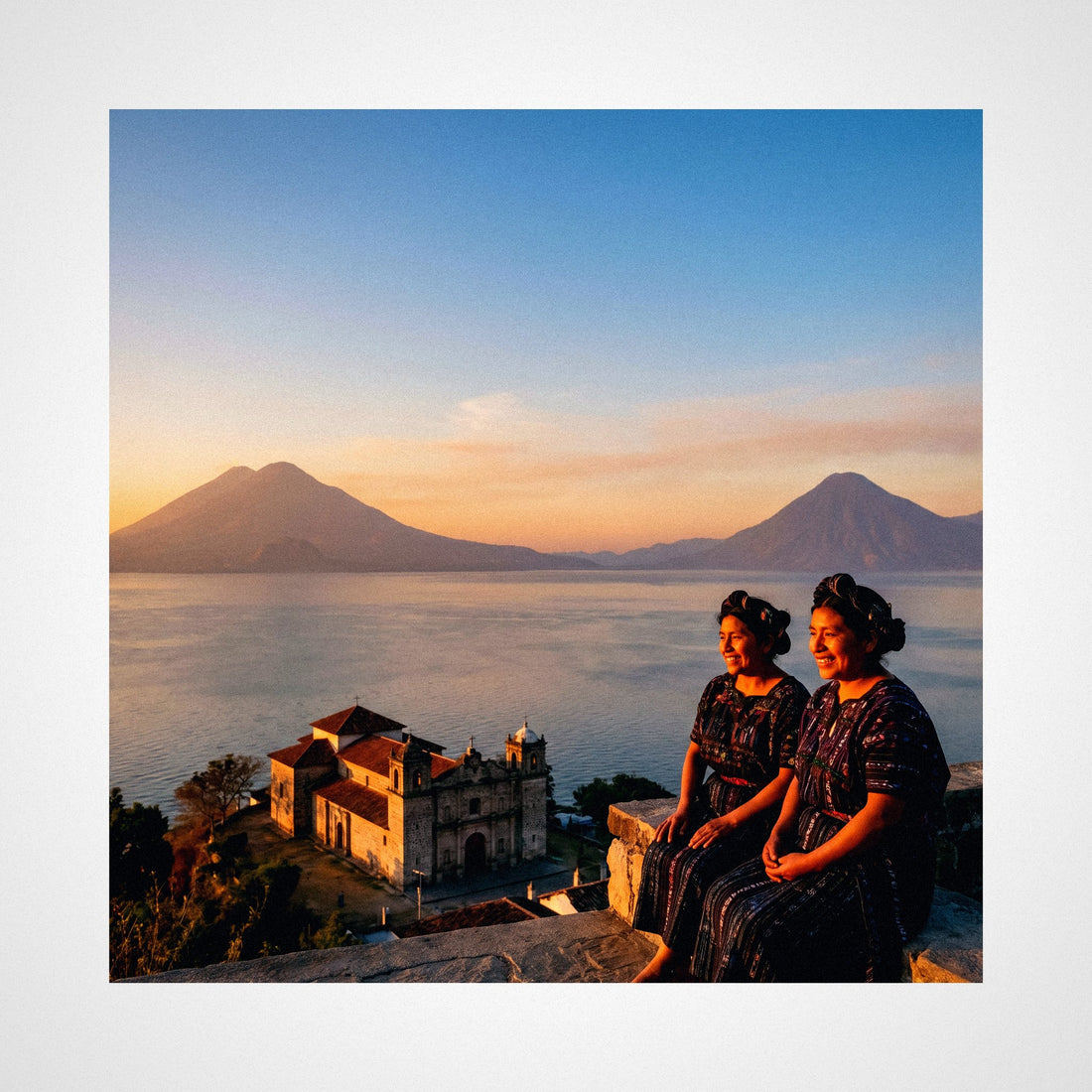
The main towns around the lake, such as Panajachel, San Pedro La Laguna, or Santiago Atitlán, have reasonably stable 4G coverage. On boat trips between towns or in the higher hiking areas around the volcanoes, it's normal for the signal to become more intermittent.
Tikal and Petén
Petén is the region where you'll notice the most contrast. Flores and its surroundings, as a common entry point, have acceptable coverage. Inside the Tikal archaeological park, there is basic coverage in the access areas and service area, although deep in the jungle, between temples, the signal can disappear in stretches: it's a good area to download maps and offline content before entering.
Semuc Champey and Las Verapaces
This is one of the most beautiful and at the same time most limited coverage areas in the country. The dirt road access and mountainous terrain make the signal intermittent, especially within the natural park itself. Cobal and Lanquín, as reference towns, have a bit more stability than the immediate surroundings of the pools.
Pacific Coast and Caribbean (Livingston, Río Dulce)
On the Pacific coast, destinations like Monterrico maintain reasonable coverage. In the Caribbean, Livingston and Río Dulce, being more isolated access areas (Livingston can only be reached by boat), have more limited coverage, and it's advisable not to rely on constant data while you're there.
How many GB do you need for your trip to Guatemala?
The amount of data you need depends primarily on your travel style, not just the number of days you'll be in the country. Light use (maps, messaging, occasional searches) consumes very little; if you also stream, make frequent video calls, or share many photos and videos on the go, consumption can easily skyrocket.
| Trip duration | Usage profile | What it usually includes |
|---|---|---|
| 5-7 days | Classic tourist | Maps, messaging, moderate social media |
| 10-14 days | Backpacker / multi-area trip | Constant map use, photos, on-the-go bookings |
| 3-4 weeks | Digital nomad / long stay | Remote work, video calls, occasional streaming |
To find out the exact price and available data packages right now, the most reliable way is to check directly on the eSIM for Guatemala page, as rates can be updated. If you're worried about running out of data halfway through your trip, without overbuying, take a look at these tips for saving data on your travel eSIM: small mobile adjustments that significantly stretch any package.
How to activate your eSIM for Guatemala step by step
The process is designed so you don't depend on having a connection when you arrive, so do it before leaving home:
- Purchase your eSIM at purasim.com and receive the QR code by email.
- Install the profile from your phone settings (with home Wi-Fi, no need to wait until the airport).
- Leave the eSIM installed but deactivated until you land in Guatemala.
- Activate mobile data when you get off the plane, and you're good to go, you have internet.
If it's your first time using an eSIM and you want to see it in more detail, we have a complete step-by-step installation guide with screenshots of the process on iOS and Android.

eSIM vs. roaming vs. physical SIM in Guatemala: what's best for you?
Before deciding, it's worth comparing the three real options you have for connectivity during your trip:
| Option | Cost | Management | When it makes sense |
|---|---|---|---|
| Roaming from your Spanish operator | Usually expensive outside the EU; check your rate | None, it just works | Very short trips where price isn't a concern |
| Local physical SIM | Generally inexpensive once purchased | Requires finding a store, paperwork, and changing the physical card | Long stays if you don't mind losing your number temporarily |
| PuraSIM eSIM | Check the current price on the product page | Installed from home, no store or physical card needed | Most trips: you arrive with data already active |
If you want to understand in more detail why traditional roaming is so expensive and what's behind the concept, we have an article dedicated to what data roaming is and another directly comparing eSIM versus roaming point by point. And if you're still debating between bringing an international physical chip or switching to eSIM, this comparison between international chip and eSIM clarifies it in five minutes.
Common mistakes (and what almost no one tells you) about eSIM in Guatemala
There are a number of details that are learned by stumbling upon them on site, so it's best to tell you about them before you leave home.
Confusing "having 4G" with "having a constant good signal." Just because an operator shows 4G coverage in an area doesn't mean the signal will be equally stable at all times: on mountain roads and forested areas, the connection comes and goes, so don't plan anything critical (a work video call, for example) assuming you'll have perfect signal at a specific point on your route.
Not checking if your phone supports eSIM beforehand. Not all phones, especially older models or versions sold outside Europe, have the feature activated. Check this in your phone settings before buying, not when you arrive at the airport.
Underestimating stretches without coverage on volcano excursions. If you plan to climb Acatenango or Pacaya, keep in mind that above a certain altitude, the signal is easily lost. Download offline maps of the route and inform someone of your itinerary before you leave, just as you would in any other country without guaranteed mountain coverage.
Not checking the APN if something fails. In rare cases, the phone needs you to manually confirm the APN settings of the profile for data to start working. It's a quick adjustment, but if you've never touched it, it might seem more complicated than it really is; our installation guide explains how to check it if necessary.
Thinking you only need a VPN for public Wi-Fi security. With your own mobile data (your eSIM), you greatly reduce the risk of connecting to dubious open Wi-Fi networks in hotels or cafes. Even so, if you're going to do banking transactions or handle sensitive information during your trip, it's advisable to add an extra layer of security; we tell you when it's worth it in our guide on eSIM, VPN, and travel privacy.
Buying more GB "just in case" unnecessarily. It's tempting to oversize your data package for fear of running out, but with some consumption adjustments (disabling automatic updates, lowering streaming quality, downloading offline maps), you can stretch a moderate package quite a bit without overspending.
Guatemala as part of a longer Latin American trip
Guatemala is rarely an isolated destination: many travelers combine it with Belize, Mexico, or head south to Honduras and the rest of Central America, and others include it as part of a broader Latin American itinerary. If your itinerary continues to South America afterwards, you might also be interested in our guide to eSIM for Colombia, including Medellín, Bogotá, and Cartagena, using the same zone-based coverage logic we've applied here.
In conclusion
The eSIM for Guatemala solves the real problem for any traveler: arriving and having data already working, without queues, expensive roaming, or relying on finding an open store upon landing. Tigo, Claro, and Movistar's coverage extends well across the main tourist corridor—the capital, Antigua, Atitlán—and becomes more irregular the further you venture into the jungle, mountains, or hard-to-reach areas like Livingston. Plan your data package according to your actual route, take into account stretches without signal in Petén and on volcano excursions, and land with peace of mind: no roaming, no stress.
Frequently Asked Questions
Does eSIM work in Antigua Guatemala?
Yes. Antigua is the country's most visited tourist destination and has some of the most stable coverage, both in the historic center and the surrounding areas.
How many GB do I need in Guatemala for 10 days?
It depends on your usage, but for a 10-14 day backpacking trip with maps, messaging, and moderate photos, a package designed for that time frame is usually sufficient. Consult the exact options available on the product page.
Does eSIM work in Lake Atitlán?
Yes, the main towns around the lake—Panajachel, San Pedro La Laguna, Santiago Atitlán—have reasonably stable 4G coverage. On boat trips or in high hiking areas, the signal can be more intermittent.
Does eSIM work in Tikal?
There is basic coverage in the access and service areas of the archaeological park. Inside the jungle, between temples, it's common to lose signal in stretches, so it's advisable to download offline maps before entering.
Which operator has the best coverage in Guatemala?
Tigo traditionally has the widest geographic network reach, especially outside cities, while Claro and Movistar are very competitive in urban areas. With a travel eSIM, you don't have to choose: the device connects to the available network with the best signal at any given moment.
What bandwidth can I expect in Guatemala?
In cities and established tourist areas, enough for video calls, real-time maps, and streaming without many interruptions. In rural, mountainous, or jungle areas, bandwidth drops significantly, and it's advisable to expect a more basic connection.
Are there internet restrictions in Guatemala?
No. Internet access is free, with no generalized blocking of social media, messaging, or services common for travelers.