
In summary: an eSIM for the Cayman Islands gives you internet as soon as you land at Owen Roberts Airport or disembark in George Town, without roaming and without searching for local stores. Grand Cayman has solid 4G/5G coverage with Flow and Digicel; on Cayman Brac and Little Cayman, the signal is weaker. It activates from home with a QR code in a minute.
What is an eSIM and why is it convenient in Cayman?
The Cayman Islands are synonymous with turquoise waters, record-breaking diving on the Cayman Wall, and cruise ships docking almost daily in George Town. They are also, if you depend on your Spanish operator, synonymous with Caribbean roaming that can be frightening when you check your bill upon return. An eSIM for the Cayman Islands is, simply, a data profile that you install on your mobile before flying and that activates itself upon arrival: there is no physical card, no need to look for a store with tourist prices in George Town, no queues at Owen Roberts Airport.
If you've never used one, the idea is simpler than it sounds: it's a digital chip integrated into the phone itself, not a card you insert. If you want to fully understand the concept before buying, we have a complete explanation of what a virtual eSIM is and how it works internally.
The real advantage over a local physical SIM is twofold: you keep your Spanish number intact for WhatsApp, calls, and bank verifications, and you use the eSIM only for data. You don't lose your line, you don't have to notify anyone of a new number, and you don't depend on the airport store having stock or being open when your flight lands.

Local operators and real coverage
The Caymanian market is dominated by two operators: Flow (Cable & Wireless / Liberty Latin America) and Digicel. Both provide 4G LTE coverage throughout Grand Cayman and much of the smaller islands, with 5G already active in the George Town and Seven Mile Beach areas. A travel eSIM automatically connects to the best available network at all times, without you having to manually adjust any operator settings.
Seven Mile Beach, George Town, and the tourist area
In the capital, on the Seven Mile Beach hotel strip, at the airport, and on the main roads connecting to Rum Point or West Bay, the signal is solid and stable. This is the area where most of the population lives and where both operators concentrate their investment, so you won't have any surprises when browsing, uploading photos to social media, or making video calls from the hotel.
Smaller Islands: Cayman Brac and Little Cayman
In the Smaller Cayman Islands, which are much smaller and less populated, coverage exists but is weaker. It's sufficient for maps, messaging, and social media without worries, but if you're diving at Bloody Bay Wall (one of the Caribbean's best coral walls, in Little Cayman) don't expect to have coverage underwater or in some stretches of coast far from the only urban center. This is normal in small Caribbean islands: the network is concentrated where people live, not across the entire surface.
A detail almost no one mentions: in the interior of Grand Cayman, in mangrove areas and on the Mastic Trail, dense vegetation can temporarily weaken the signal. It's not an area without coverage, but if you're going to hike that route, download the offline map beforehand instead of relying on live navigation.
Practical tip: George Town is one of the busiest cruise ports in the Caribbean, with several ships docking on the same day during high season. If you arrive by cruise, your eSIM connects to the terrestrial network as soon as you disembark, which is much more stable and cheaper than the ship's Wi-Fi.
How many GB to take to Grand Cayman
In Cayman, you'll mainly use your mobile for maps, diving or snorkeling reservations, messaging, and social media. The quick answer: for a weekend getaway or a cruise excursion, 1 to 3 GB will be more than enough; for a week of beach vacation, aim for 3-5 GB; and if you work remotely or share a hotspot with another device, go up to 10 GB. Hotel and restaurant Wi-Fi will help you stretch them quite a bit.
| Travel profile | Duration | Recommended data | Typical use |
|---|---|---|---|
| Cruise excursion | 1 day | 1 GB | Maps, photos, occasional messaging |
| Beach getaway | 3-4 days | 3 GB | Social media, diving reservations, GPS |
| Full vacation | 1 week | 5 GB | Normal use + light streaming |
| Remote work / hotspot | 2 weeks | 10 GB or more | Video calls, email, laptop hotspot |
Practical advice: rely on hotel Wi-Fi to upload heavy photos and videos and save mobile data for browsing and using maps on the jet ski or on the way to Stingray City. And if you have doubts about how long a gigabyte will actually last you on a normal beach day, check out our tips for saving data while traveling: with a couple of adjustments to your phone, you can stretch your plan much further than it seems.
Arriving by cruise to George Town
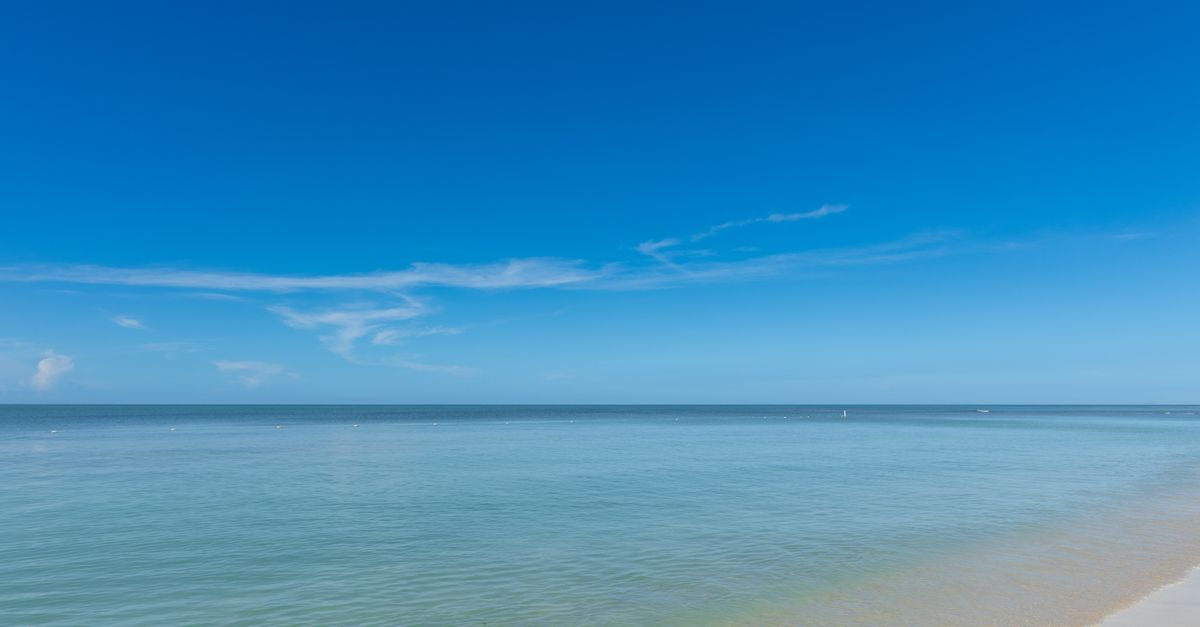
Many travelers arrive in Cayman by cruise through the Western Caribbean, and that's where the eSIM is particularly noticeable. Onboard Wi-Fi is often slow and expensive, and maritime roaming directly inflates any bill. However, as soon as you disembark in George Town and set foot on solid ground, the local eSIM connects to the terrestrial network of Flow or Digicel, and you browse at a fixed price throughout your stop, without depending on the ship.
The trick is simple: while the cruise is sailing, keep data roaming deactivated on your Spanish line so you don't accidentally connect to the ship's own network (it's usually charged separately and expensively); upon arrival in port, activate the eSIM data and you're good to go. Since disembarkation in George Town can be by tender boat (transfer boat) when there is no free dock for the ship, keep in mind that until you actually set foot on the dock, you may still not have a stable terrestrial signal: this is not an eSIM failure, it's simply that you are still on the water.
How to activate the eSIM step by step
Activating the eSIM takes just a minute and you do it from home, before flying. After purchase, you receive a QR code by email; you scan it and the plan is installed on your mobile, ready to use as soon as you arrive.
- Purchase the plan and receive the QR instantly in your email.
- Go to Settings > Mobile Data > Add eSIM and scan the QR with another device or from the email itself.
- Name the line, for example "Cayman Trip," so you don't confuse it with your Spanish line.
- Keep your main line for calls and WhatsApp, and use the eSIM only for data.
- Upon landing at Owen Roberts or disembarking from the cruise, activate the eSIM's data and roaming (not your Spanish line's).
If you prefer to see it in more detail or have any questions about specific mobile models, you have the complete guide on how to install an eSIM. And if your device is a bit old or you doubt if it supports eSIM, check it carefully at home before buying: almost all iPhones since the XS and mid-to-high-end Androids from recent years have it, but it's worth checking calmly at home, not in the check-in line.
eSIM versus roaming in the Caribbean
The Cayman Islands are a British Overseas Territory, but they are not part of the European Union or its free roaming zone, so your Spanish plan applies international roaming outside the EU, one of the concepts that most inflates bills when the destination is a luxurious Caribbean archipelago. Without a pre-contracted bonus, the cost per megabyte can quickly skyrocket, and even with a pre-contracted bonus, the limits are usually insufficient for a whole week of maps, social media, and documented diving photos.
To fully understand why this happens and what your operator actually charges when you cross borders, it will be useful to read what data roaming is explained without fine print. With a local eSIM, you pay a fixed price before traveling and know exactly how much you will spend, with no surprises when you return home. This is the same logic that applies to any destination outside the EU: total control of spending versus a pay-as-you-go rate. You can see the complete comparison in eSIM versus roaming.
Anti-bill trick: As soon as you land or disembark, check in Settings that data roaming is deactivated on your Spanish line and that only the eSIM has it active. This ensures that your home operator doesn't charge you anything while you're in Cayman.
Errors and myths: what almost no one tells you
There are three common ideas about travel eSIMs that should be debunked before you set foot in Grand Cayman.
"With an eSIM, I lose my Spanish number." No. The eSIM adds a second data line; your number remains active for calls and WhatsApp. They are two profiles coexisting on the same mobile, not a replacement.
"If I buy a regional Caribbean eSIM, I don't have to compare." Not always. If your trip is only to Cayman, a specific plan for the islands usually fits what you'll actually spend better than a regional plan designed for hopping between several countries. Compare before assuming that "regional" is always better.
"With an eSIM, I no longer need to download anything offline." False, and this is the one that causes the most headaches. Coverage in Cayman is good, but it's not infinite: on boat trips to Stingray City or Rum Point, in dense mangrove sections inland, or simply if your data plan runs out a day earlier than expected, it will be helpful to have the offline map of Grand Cayman and directions to your hotel or dive spot downloaded beforehand. It takes thirty seconds to do it on the airport Wi-Fi and avoids the headache of losing GPS on a poorly signposted road.
Another little-discussed detail: if you are going to make online banking transactions or use sensitive apps from the hotel's public Wi-Fi or on the cruise, it is important to know how to protect that connection. We have a guide on eSIM, VPN and privacy while traveling that explains when it's worth adding that extra layer and when it's not necessary to complicate things.
When you DON'T need to buy an eSIM
And here it's time to be honest: not everyone needs an eSIM to go to Cayman. If your Spanish operator already includes enough data for destinations outside the EU and your trip is a short weekend with little mobile use, it might be more worthwhile to activate that occasional bonus than to buy a new plan. And if your stay in Cayman is limited to a few hours of cruise stopover with an organized excursion and courtesy Wi-Fi at the meeting point, perhaps the hotel's Wi-Fi or the pickup point will be enough without spending on mobile data.
Where it almost always pays off is for stays of several days, diving trips where you need to book excursions and check weather reports frequently, or any plan where you depend on your mobile for work or constant communication. The key is to truly calculate how much you use your mobile, not to buy just to buy.
Layover in Miami and other US airports
Most flights from Spain to the Cayman Islands make a layover in Miami or, in some itineraries, in another US airport. If your layover is long or you are going to spend more than a day in US territory before or after Cayman, keep in mind that you will need different coverage: the Cayman eSIM does not work on American soil. For those segments, the eSIM for the United States will solve your connection at the airport and during the layover without depending on airport Wi-Fi, which tends to be slow during peak hours.
If your layover is short (less than two or three hours) and you only need to check your connecting flight, the free Wi-Fi at Miami airport will probably suffice; there's no need to activate mobile data for that.
Frequently Asked Questions
What is the capital of the Cayman Islands and is there good coverage?
The capital is George Town, in Grand Cayman. It is the area with the best coverage in the archipelago, with stable 4G LTE and 5G already active. There and on the neighboring Seven Mile Beach, your eSIM will work at maximum speed without interruptions.
Does the eSIM work in Cayman Brac and Little Cayman?
Yes, there is 4G coverage in the Sister Islands, although it is weaker than in Grand Cayman because these are more sparsely populated areas. It is sufficient for maps, messaging, and social media; for heavy video or live-streamed diving, rely on your accommodation's Wi-Fi.
Can I use the eSIM if I arrive by cruise?
Of course. Upon disembarking in George Town, the eSIM connects to the local terrestrial network, which is much more stable and cheaper than the ship's Wi-Fi. Keep your Spanish line's roaming turned off while cruising and activate the eSIM when you reach port to have data throughout your stop.
Do I need a document or registration to activate the eSIM?
No. The travel eSIM is purchased online and activated with a QR code, without registering your passport or signing contracts, unlike some local physical SIMs that do require identification in store. You receive the code instantly and install it in a minute, even before packing your suitcase.
How many GB do I need for a week at the beach?
For a week's vacation with normal use of maps, messaging, and social media, a 3 to 5 GB plan is usually sufficient, especially if you take advantage of the hotel's Wi-Fi for heavy use. If you plan to hotspot for your laptop or work remotely, go up to 10 GB.
What happens if I run out of data before returning home?
You can extend or purchase an additional plan from the same app or from our website without having to reinstall anything; the eSIM profile is already on your mobile, you just activate more data. That's why it's advisable to calculate with a margin instead of adjusting to the exact limit.
Does the Cayman eSIM also work for a layover in Miami?
No. Each destination eSIM covers the country or region for which it was purchased, so for a layover in the United States, you need a different eSIM, such as the one for the United States, or the airport Wi-Fi if the transit is short.
Conclusion
The Cayman Islands are a Caribbean paradise where traditional roaming can be very expensive, so arriving with your connection sorted saves you money and headaches. With a local eSIM, you'll be online from minute one in George Town, with a fixed price and 24/7 support in Spanish by email and WhatsApp if anything gets stuck during installation. PuraSIM has plans for more than 200 destinations, so if your route continues beyond Cayman, we'll probably have coverage for the next country on your itinerary too. Buy your eSIM for the Cayman Islands before you fly and activate data when you get off the plane or cruise.