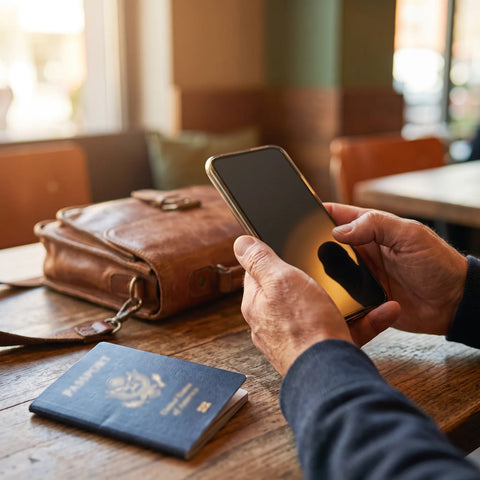
If you're planning a trip to the North Atlantic, internet access in the Faroe Islands will offer a double surprise, and it's a good idea to understand it before leaving home. The first surprise is a bad one: although the archipelago belongs to the Kingdom of Denmark, your Spanish mobile plan won't cover it for free, because these islands are outside the European Union. The second is excellent: despite being 18 remote islands battered by the Atlantic, mobile coverage is among the best you'll find in a natural destination. In this guide, I'll tell you how to take advantage of the second without falling prey to the first.
Your options for staying connected
In the Faroe Islands, you have four options: roaming with your existing plan (expensive, as the archipelago is outside the EU), Wi-Fi in hotels and cafes, a local SIM from Faroese Telecom or Hey, and a data eSIM. The eSIM is the most convenient, and coverage is surprisingly good.
The great thing about this destination is that, unlike other remote places in the Arctic, you will have signal for almost your entire trip. The dilemma isn't "will there be coverage?", but "how do I pay for it without getting ripped off?". Danish Krone, Danish passport, and flights from Copenhagen might lead you to believe this is "Europe for mobile purposes." It is not. This table gives you the general picture before we dive into the details.
| Option | Coverage | Estimated Cost | Ideal For |
|---|---|---|---|
| Roaming (Spanish plan) | Full local network, no price cap | Can be very expensive per MB | Occasional emergencies |
| Wi-Fi (hotel, cafe, ferry) | Only on premises or on board | Free or included | Uploading photos at the end of the day |
| Local SIM (Faroese Telecom or Hey) | National, with Faroese number | From around 200-250 DKK | Long stays and unlocked phones |
| Data eSIM | Local network, remote activation | From €10-20 for a few GB | Convenience and no hassle |
The Danish surprise: no European roaming here
Let's get straight to the expensive mistake. The Faroe Islands are an autonomous territory of the Kingdom of Denmark, with their own parliament, language, and currency, but they are not part of the European Union or the European Economic Area. When Denmark joined the European Community in 1973, the Faroes chose to stay out to retain control of their fishing waters, and they remain so. It's exactly the same case as Greenland: Danish territory, yes; EU territory, no.
The practical consequence? The European Roam Like At Home regulation, which makes your data work the same in Rome as in Madrid, does not apply here. Your roaming rates are not regulated or capped, and many operators place the Faroes in their most expensive international zone, with per-megabyte prices that can turn a couple of Google Maps routes into a three-figure bill. Before you fly, log into your provider's customer area and literally search for "Faroe Islands" in the list of zones: don't assume it appears next to Denmark. Here's my comparison of eSIM versus roaming and the real numbers for how much international roaming costs.

Real coverage: better than you imagine
And now for the part that will brighten your day. You might expect 18 islands of cliffs in the middle of the North Atlantic, with more sheep than people, to have laughable coverage. But it's quite the opposite: the Faroes are among the best-connected places you can travel to. Faroese Telecom (Føroya Tele), the historical operator, completed the deployment of 5G across all 18 islands with Ericsson and claims to cover 100% of the population, with national 4G since 2014.
Most notably, this network reaches far and wide. The deployment includes coverage in bridges, ferries, and underwater tunnels, and even extends offshore for the fishing fleet. Yes, you can drive under the ocean, inside a several-kilometer tunnel, and still have data. Where does it falter? In very narrow valleys, on some trails behind cliffs, and on the more sparsely populated smaller islands, where the signal might drop or disappear for a while.
| Area | Typical Coverage | Notes |
|---|---|---|
| Tórshavn and Klaksvík | Very good (5G) | The two main cities |
| Vágar Airport and roads | Very good | Connected from the moment you land |
| Underwater tunnels and bridges | Good | Covered in the network deployment |
| Small villages (Gásadalur, Saksun) | Good | May drop to 4G depending on the valley |
| Trails and cliffs | Patchy | Blind spots due to topography |
| Smaller islands and Mykines | Variable | Best to have downloaded maps |
Wi-Fi in hotels, cafes, and ferries
Faroese Wi-Fi is abundant and decent, which is logical in a country with very high broadband penetration. Hotels and guesthouses in Tórshavn offer network access for guests, cafes in the city center and by the harbor also do, and Vágar Airport has Wi-Fi while you wait. Many rural accommodations, even turf-roofed houses, have fiber or a good fixed connection. It's more than enough to empty your camera roll at night and make a video call home.
The problem is always the same: Wi-Fi is where you aren't. And in the Faroes, you'll spend your day on the road, climbing to a viewpoint, or waiting for the fog to clear in front of a waterfall. That's precisely when you need data: for navigation, for the hourly weather forecast (almost mandatory here), to check ferry schedules, and to announce that you'll be late. Ferries and some buses offer onboard Wi-Fi, but don't count on it working well with a full boat. If you're considering alternatives like a portable router, check my comparison of eSIM versus pocket Wi-Fi: in a destination with such good mobile network, carrying an extra device makes little sense.
Local SIM: Faroese Telecom and Hey
Two mobile companies operate in the Faroe Islands: Faroese Telecom (Føroya Tele), the historical provider with the widest coverage, and Hey, the second operator—formerly Vodafone Faroe Islands, and which also used the Nema brand—, which is cheaper and has a slightly less extensive network. Together, they share a small but well-equipped market, and both sell prepaid plans designed for temporary visitors.
Buying a local SIM is straightforward: there are sales points at Vágar Airport, stores in Tórshavn, and kiosks and gas stations scattered across the islands. You will be asked for your passport or ID card for the purchase, so have it with you. Tourist packs cost around 200-250 Danish Kroner (about €27-34) and include some data plus credit for calls, although prices vary, and it's advisable to check them on your travel day. The drawbacks are the usual: you need an unlocked phone, you have to remove your card and keep it safe without losing it, you lose your Spanish number for bank SMS, and you depend on store opening hours, which is relevant if you land at night. Here's the full comparison: eSIM versus local SIM.
eSIM for the Faroes: how it works
An eSIM is, in plain English, a digital card that is already integrated into almost all recent mobile phones. Instead of looking for a store upon arrival, you buy the plan online, receive a QR code, scan it, and connect within a couple of minutes, keeping your Spanish line active in parallel to receive calls and messages as usual. If this concept sounds like Greek to you, start with my explanation of what an eSIM is.
For the Faroes, it is especially well-suited for three specific reasons. First, it solves the real problem of this destination, which is not coverage but price: it gives you a fixed and known rate in advance, without any surprises from roaming outside the EU. Second, the local network here is so good that a digital card will work almost everywhere in the archipelago, including underwater tunnels. And third, logistics: many travelers arrive in Vágar, rent a car, and head to the west coast without time or desire to queue at a store. The only thing you need to check before buying is that your phone is compatible and unlocked, which can be verified with a couple of taps in the settings.

Tórshavn, Múlafossur, and key stops
Now for the beautiful part, which is ultimately the reason for the trip. Tórshavn is one of Europe's smallest and most charming capitals: the Tinganes district, with its red, turf-roofed houses on the harbor peninsula, is pure Nordic fairytale, and there you'll have plenty of signal and Wi-Fi. From there, you can visit the great classics, almost all within an hour's drive.
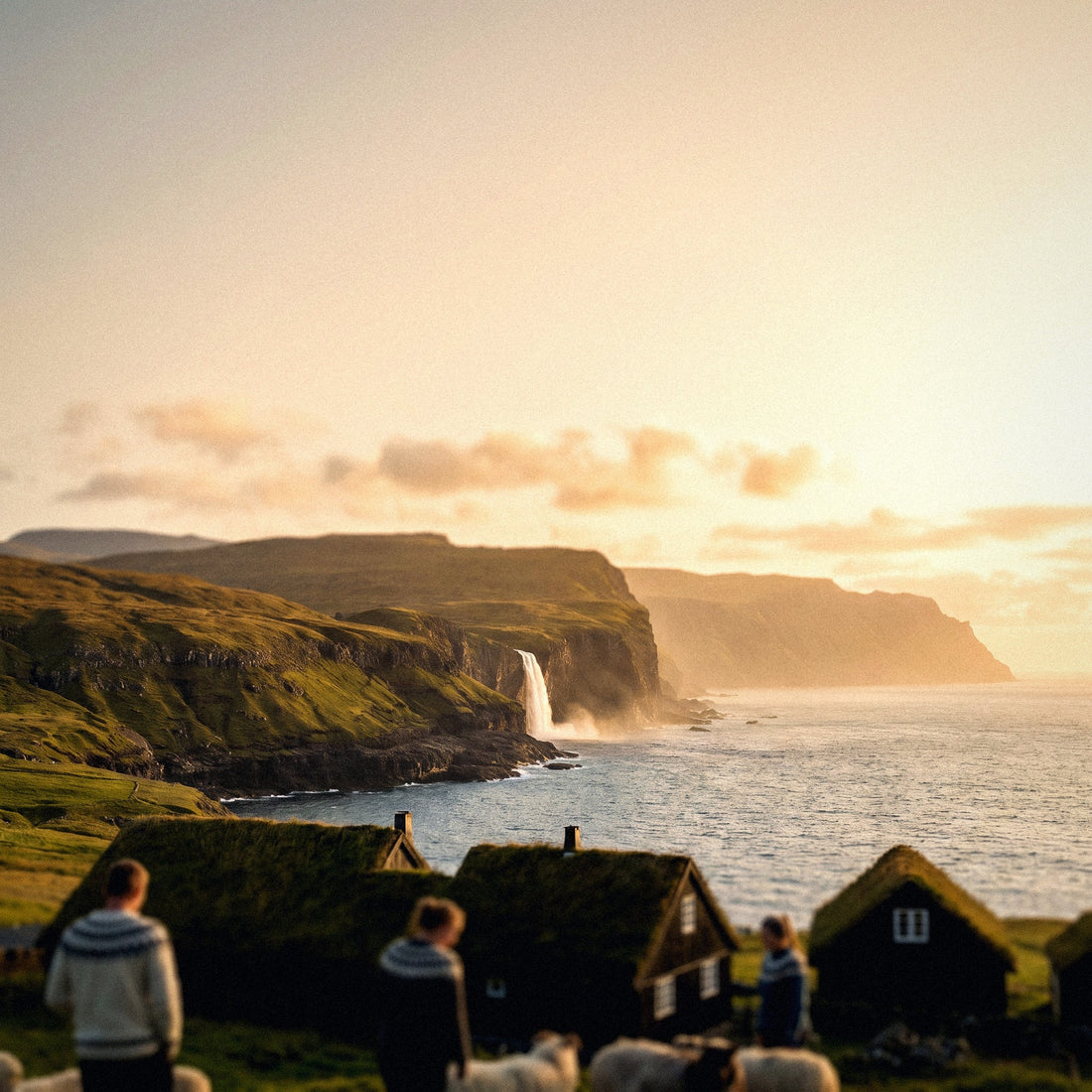
The photo you've seen a thousand times is the Múlafossur waterfall, in Gásadalur, where the water plunges directly into the ocean with the village and cliffs in the background. It's just a few minutes from the airport, through a tunnel excavated into the mountain that didn't exist until 2004. Then there's Saksun, a valley with a tidal lagoon and a solitary church; Sørvágsvatn, the lake that, due to an optical illusion from the Trælanípa cliff, appears to float above the sea; and Mykines, the island of puffins, accessible by ferry or helicopter only seasonally. A useful note: several trails cross private land and have an access fee or require a guide, and this information changes every year, so confirm it on the official tourism website before lacing up your boots.
Moving between islands: tunnels, ferries, and helicopter
Getting around the Faroes is an experience in itself and explains why having data really matters here. The main islands are connected by toll underwater tunnels—one of them with the famous underwater roundabout featuring sculptures—, by bridges, and by narrow single-lane roads with passing places. The tunnels have coverage, so you can continue using navigation while driving under the Atlantic.
For the smaller islands, there are ferries and, notably, Atlantic Airways' subsidized helicopter service, which links remote villages at low prices but with very limited seating. Here's the key: both ferries and flights depend on the weather, and Faroese weather changes every twenty minutes. Fog, wind, sun, and hail within the same hour are normal. Being able to check the forecast, connection status, and your reservation from your phone, while on the road, is what prevents you from missing a connection. And if you're driving, watch out for sheep: they cross without warning.
Travel tip: here, the plan is decided each morning by checking the weather forecast, not the agenda. Have offline maps downloaded, keep ferry and helicopter schedules handy, and always leave a day of margin before your return flight in case the sea or fog dictates otherwise.
When each option pays off
With all of the above, the decision simplifies quite a bit. The first thing I almost always rule out is traveling with roaming open and without checking anything: since the archipelago is outside the EU, it's the most expensive option and the one that causes the most headaches when the bill arrives. From there, choose based on how long you're staying and what kind of phone you have.
- Weekend trip or road trip (3-8 days): a data eSIM is the most practical. You activate it from home and land in Vágar already connected, ready to start your car.
- Long stay or work (several weeks): a local SIM from Faroese Telecom pays off, especially if you need a Faroese number to book boats, guides, or accommodation.
- Travelers from outside the EU (British, Latin American, or US line): don't even consider roaming from your country; the price difference with a local data bundle is enormous.
- Messaging and email only: hotel Wi-Fi might be enough if you're in an organized group and someone else is navigating.
The rule I apply: where the network is excellent but the European rate doesn't reach, it's smart to buy local coverage in advance instead of paying international prices for the same antenna. It's the same network; the only thing that changes is how much it costs you to use it.
How much data do I really need?
The good news is that a trip to the Faroes consumes less data than you might think, because you'll spend your day looking at cliffs and not your screen. Your data usage will be concentrated on navigation, weather forecasts, messaging, and uploading photos. Maps, which will be your star tool, consume little: Google Maps uses around 50-100 MB per hour of navigation, and by downloading offline maps via Wi-Fi before you leave, consumption drops almost to zero. What really drives up the bill is video. For a week-long trip, here are my recommendations.
| Profile | Typical Use | Data for 7 days |
|---|---|---|
| Light | WhatsApp, maps, and weather forecast | 1-3 GB |
| Medium | Daily navigation, photos, and social media | 3-5 GB |
| Heavy | Video, uploading content, and tethering | 5-10 GB |
For most people, a 3-5 GB package is just right for a week: it covers constant navigation, messaging, and a few daily stories. If you plan to upload video every day, increase to 10 GB. And a trick that significantly extends your data here: download island maps, music, and series via Wi-Fi the night before, because in a country where you drive eight hours a day, that's half of your potential consumption.
Frequently asked questions
Do I have EU roaming in the Faroe Islands because they are Danish?
No. The Faroes are an autonomous territory of the Kingdom of Denmark, but they are outside the European Union and the EEA, so Roam Like At Home does not apply. Your roaming rates are not capped and usually fall into the most expensive international zone.
Is there good mobile coverage across all 18 islands?
Yes, and it's the big surprise of the destination. Faroese Telecom deployed 5G across all 18 islands with Ericsson and claims to cover 100% of the population, with signal also in bridges, ferries, and underwater tunnels. It only fails in closed valleys and some trails.
What mobile operators are there in the Faroe Islands?
Two: Faroese Telecom (Føroya Tele), the historical operator with the widest coverage, and Hey, the second operator—formerly Vodafone Faroe Islands, also known as Nema—, which is slightly cheaper and has a somewhat less extensive network.
Do I need a passport to buy a local SIM?
Yes, it's advisable to carry it. At Vágar Airport and in stores, you will be asked for a valid identification document to purchase the card. With a digital card, you save yourself the paperwork and the queue, because you buy and activate it online.
How many GB do I need for a week in the Faroe Islands?
For normal use, between 3 and 5 GB is the most balanced: daily car navigation, weather forecast, messaging, and photos. For very light use, 1-3 GB is enough, and you only need 10 GB if you plan to upload video every day.
Is there coverage inside the underwater tunnels?
Yes. The local network deployment includes the underwater tunnels that connect the main islands, as well as bridges and ferries. You can continue using your navigation while driving under the ocean, which is unusual in remote destinations.
Can I make calls and use WhatsApp with a data eSIM?
WhatsApp, Telegram, and video calls work perfectly, as they use data. For regular phone calls, you keep your Spanish line active in parallel, so you continue to receive bank SMS while browsing with the local data package.
Conclusion
To summarize the internet in the Faroe Islands in two sentences: coverage is excellent, but European rates don't apply. The archipelago is Danish but not part of the EU, so uncontrolled roaming is the worst idea for your trip; Wi-Fi is good but doesn't follow you on the road; a local SIM card pays off for long stays; and a digital data plan solves the typical week without hassle. Whatever you choose, you'll almost always have a signal, even underwater.
If you want to fine-tune your choice for this specific destination, I'll leave you with my specific eSIM guide for the Faroe Islands, and once you've decided, you can get everything ready from your couch with PuraSIM's Faroe Islands eSIM and land in Vágar already connected, with your rental car and map waiting for you. Have a great trip to the North Atlantic.