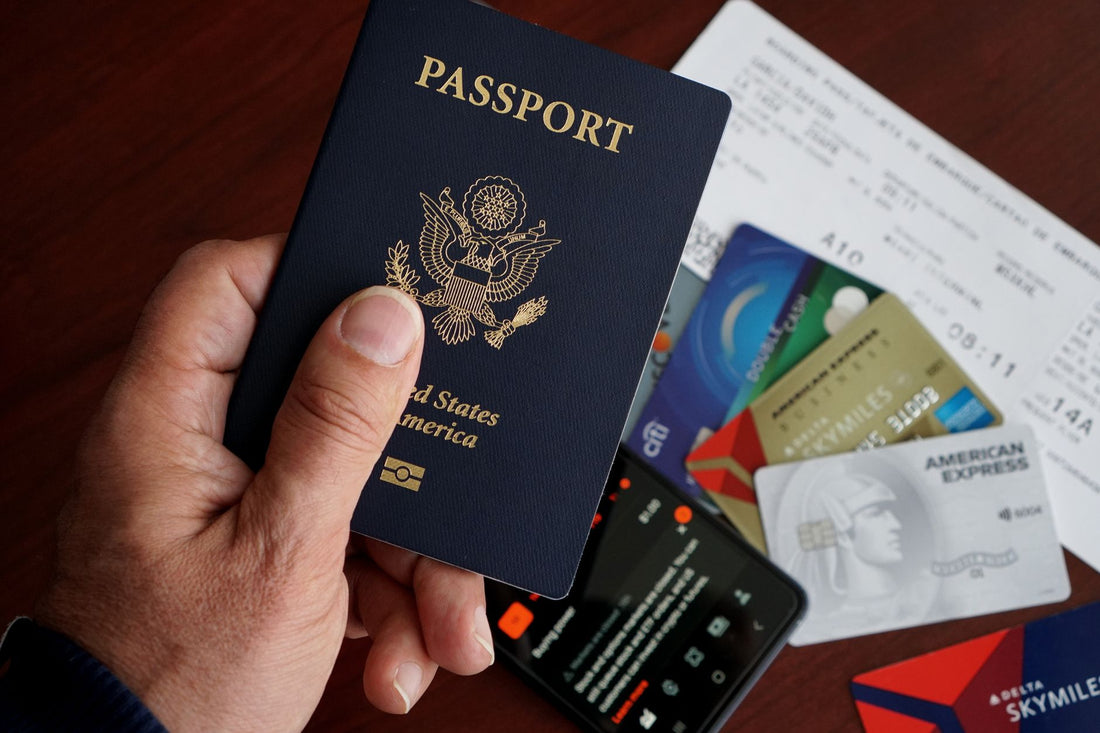
In short: to get the cheapest eSIM, always compare the price per GB (not the total plan price), adjust data to your actual usage, only use a multi-country pack if you visit three or more countries, and apply discounts to plans that were already a good value. Buy and install the eSIM at home, with Wi-Fi, before you leave.
We all want data abroad without the connection eating up half of our travel budget. The good news is that there are specific ways to get the cheapest eSIM without sacrificing coverage: taking advantage of sales, choosing the right pack, using discount codes, and avoiding mistakes that make you overpay. In this guide, I'll tell you the tricks that really work.
How to get the cheapest eSIM?
By comparing the price per GB, adjusting data to your actual usage, and taking advantage of packs and discounts. The price per GB varies greatly depending on the destination and brand, so the room to save is in not paying for data you won't use and choosing the right format for your trip.
The first rule is not to be swayed by the total price: a €3 plan can be very expensive if it only includes 500 MB, and a €12 plan can be a bargain if it includes 20 GB. The real savings come from three fronts: comparing carefully, choosing the right pack, and hunting for discounts. Compared to international roaming, whose cost per megabyte skyrockets as soon as you cross the border with your usual operator's plan, almost any well-chosen eSIM comes out on top. To fully understand the difference between both options, you can refer to the eSIM vs roaming guide.

Compare price per GB, not the total
This is the number one mistake hurried travelers make. Looking only at the final price is misleading, because a cheap plan might come with very little data. What matters is how much you pay per GB and if that GB lasts you for the days you need it.
To compare fairly, divide the plan's price by the GB it includes and also look at the validity period. Here's an illustrative example of how perception changes:
| Plan | Price | Data | Price per GB |
|---|---|---|---|
| "Bargain" small | €3 | 0.5 GB | €6/GB |
| Medium plan | €9 | 5 GB | €1.8/GB |
| Large pack | €18 | 20 GB | €0.9/GB |
As you can see, the "bargain" is the most expensive per GB. The key is to calculate your consumption before buying to choose the plan with the best data-price ratio for your trip. If you don't know how much you spend or how to stretch the GB you buy, here are practical tips: how to save data with an eSIM while traveling.
Multi-country packs: when they save you money
Regional packs—Europe, Latin America, Asia-Pacific—can significantly reduce costs if your trip involves several countries, because you buy one plan instead of several. But they can also be expensive if you only visit one country and end up paying for coverage in destinations you don't actually visit.
The rule is simple: if you're visiting three or more countries, a regional pack is usually the cheapest and most convenient option; if you're only going to one, a specific eSIM for that destination is almost always better. A real-world example of how to do the math: if your route starts in Peru with the ascent to Machu Picchu and then continues to Colombia, passing through Medellin, Bogota, and Cartagena, a multi-country pack for Latin America will be cheaper and prevent you from having to install a different eSIM at each border. On the other hand, if your European route touches several countries—for example, an Interrail trip combining France, Italy, and Germany—then the eSIM for Europe is worthwhile, because a single installation covers the entire journey without having to buy and activate a new plan every time you cross a border.
Tip: don't pay for a global pack covering 100 countries if your trip is to just one. The price per GB of a destination-specific plan is usually much lower.

Discount codes and sales
Discount codes exist and actually reduce the price, but it's wise to use them carefully. People often search for terms like "eSIM discount code," so offers are out there; the problem is that sometimes a big discount hides a plan with little data or a brand with questionable coverage.
Tips for taking advantage of them without falling into traps:
- Apply the code to a plan that already offered good value for its price per GB, not the other way around.
- Be wary of 70-80% discounts: they usually apply to an inflated starting price.
- Take advantage of seasonal sales (summer, back to travel) for large packs that you were going to buy anyway.
- Check the actual coverage for the destination before paying, no matter how cheap it is.
A discount is only good if the base plan was already reasonable. A 50% discount on something bad is still bad.
Mistakes that make you overpay
Many travelers end up paying too much due to avoidable oversights. The most expensive of all is not having anything prepared and accidentally having data roaming activated as soon as they land: the international roaming bill skyrockets per megabyte and can ruin the travel budget in a couple of hours of normal phone use.
Other common mistakes you can avoid:
- Buying a plan with much more GB than you'll use "just in case."
- Paying for a regional pack's coverage to visit a single country.
- Buying an eSIM at the destination airport at an inflated price instead of online from home.
- Not deactivating data roaming on your main SIM and consuming roaming without realizing it. If you're not sure what exactly that concept means, we explain it in what data roaming is.
Preparing everything at home, with Wi-Fi and at your leisure, is what saves the most money. Install the eSIM and make sure the profile is active before boarding the plane: that way you land already connected and don't have to wrestle with the airport's hotspot. The complete step-by-step guide is available in how to install an eSIM.
Cheap doesn't mean bad
Just because an eSIM is cheap doesn't mean it's bad, and just because it's expensive doesn't make it good. The price depends on the GB, validity, and countries covered, not on some magical quality. What does vary between providers is actual coverage and support when something goes wrong.
That's why smart saving isn't "buying the cheapest," but "paying the right price for what you need" with a brand that offers reliable coverage and support in English if a problem arises. A cheap plan from a brand without support can end up being expensive if you run out of data in the middle of your trip and no one answers you. If you're still not sure what an eSIM is exactly and why it's not the same as a physical card, it's worth reviewing it before buying: we explain it in what a virtual eSIM is. The ideal balance: good price per GB, solid coverage, and responsive support when you need it. PuraSim has coverage in over 200 destinations and 24/7 support via email and WhatsApp in all languages, so that peace of mind is covered no matter which plan you choose.
Checklist for paying the right price
Before buying your eSIM, give it a quick review to make sure you're paying the right price and not a cent more. These are five checks that will save you money and headaches.
- Calculate your GB based on the days and your usage, without overdoing it or falling short.
- Compare the price per GB, not the total price of the plan.
- Choose a regional pack only if you visit three or more countries.
- Apply discounts to plans that were already a good value to begin with.
- Install the eSIM at home and deactivate roaming on your main SIM.
With this routine, you'll avoid typical surcharges and travel with your connection sorted at the best price. And remember: you can always top up on the go if you run short, so there's no need to overbuy out of fear.
Myths and what almost no one tells you about eSIM sales
There are quite a few ideas floating around about eSIM sales that need to be debunked before they make you spend unwisely.
Myth 1: "the biggest discount is always the best buy." This is not true. A 60% discount on a plan you don't need is still wasted money. Before looking at the percentage, calculate how many GB you will actually use based on your travel days and how you use your phone (maps, social media, a few video calls). That number, not the discount percentage, is what matters.
Myth 2: "the sooner I buy, the cheaper it will be." Buying far in advance doesn't lower the price by itself, but it does give you time to compare calmly and avoid last-minute purchases at the airport, which is where you really overpay. What does make it cheaper is taking advantage of periods when there are usually more offers, such as before Holy Week or during summer vacations, when more plans are circulating and there's more room to compare prices between destinations.
Myth 3: "all eSIMs for the same destination cost more or less the same." False, and this is the mistake that costs the most money. Within the same country, you can find plans with very different prices per GB depending on the validity, the network they connect to, and whether or not they include backup data. Always compare the price per GB between two or three options before deciding; never stick with the first one you see.
What almost no one tells you: many local operators charge roaming by time blocks or by megabyte consumed, not proportionally, so a quick glance at a map at the airport with roaming activated can cost you more than a whole eSIM plan for the entire week. And if you're traveling to several destinations consecutively, check for recent changes in coverage or prices before you leave: because plans and coverage conditions change more frequently than it seems, and what was the cheapest option six months ago may not be today.
Frequently Asked Questions
What is the cheapest eSIM for travel?
There isn't a single answer: it depends on the destination and the GB you need. The way to find the cheapest is to compare the price per GB, adjust data to your actual usage, and take advantage of regional packs if you visit several countries. A specific destination plan usually wins for a single country.
Do eSIM discount codes actually work?
Yes, they exist and reduce the price, but use them wisely. Apply the code to a plan that already offered good value for its price per GB and be wary of huge discounts on inflated prices. A 50% discount on a bad plan is still a bad deal.
Does a cheap eSIM mean bad coverage?
Not necessarily. The price depends on the GB, validity, and countries covered, not on the quality of the network. What does vary between providers is actual coverage and support. Choose a brand with solid coverage and support in English, even if it's not the cheapest on the market.
Is it worth buying an eSIM at the destination airport?
Almost never. At the airport, prices are usually inflated, and you waste time in queues after your flight. It's cheaper and more convenient to buy the eSIM online from home, install it with Wi-Fi, and activate it upon landing. That way, you arrive already connected and for less money.
How do I avoid accidentally paying for roaming?
Deactivate data roaming on your main SIM before landing and only use the eSIM for browsing. Keep your Spanish SIM for calls and SMS. This way, you won't consume roaming accidentally, which is the most expensive and avoidable expense of all when traveling.
Is it better to buy a multi-country pack or an eSIM for each destination?
It depends on how many countries you plan to visit. If your route passes through three or more countries, a regional pack is usually cheaper than adding individual plans, because you pay once for coverage across the entire area. If your trip is to a single country, a destination-specific eSIM almost always wins, with a better price per GB than regional coverage that you won't fully utilize.
When is the best time to buy a cheaper eSIM?
There isn't a magical date when prices drop on their own, but there are times with more offers, such as before Easter or summer, when more plans circulate and you have more to compare. What always influences the final price is when you install it: do it calmly from home and not at the last minute at the airport.
Conclusion
Getting the cheapest eSIM isn't a matter of luck, but of method: compare the price per GB, adjust data to your usage, choose packs only when they're worth it, and apply discounts to plans that were already a good value. Prepare everything at home and deactivate roaming to avoid surprises. Compare all PuraSim plans and travel connected, paying only what's fair.