
In summary: San Marino is not part of the EU, so "roam like home" doesn't apply and your operator may charge you international roaming even though the country is surrounded by Italy. A San Marino eSIM with local or regional data avoids the surcharge, works on the same Italian network that covers the microstate, and can be activated in a minute, before you even leave home.
You ascend Mount Titano, enter Guaita Tower, and your mobile alerts you: "welcome to another network." You've been in Italy all morning enjoying your EU roaming, and without crossing any visible border, your data counter changes rules. This happens because San Marino is an independent country, not a neighborhood of Rimini, and your mobile plan knows it even if you don't. We explain why this occurs, which network you will actually use, and how to resolve it without bill shock.
Why San Marino doesn't count as EU roaming
San Marino is an independent republic, one of the world's oldest microstates, barely 61 km² and entirely landlocked within Italy, just a few kilometers from Rimini. That's the key: it looks like Italy, it feels like Italy, but legally, it isn't. San Marino is not part of the European Union nor the community roaming regime, so the famous "roam like home" that covers you when traveling from Spain to any EU country ceases to apply the moment your mobile registers on a Sammarinese network or on an Italian antenna marked as foreign for your operator.
It's one of the most common traps for travelers taking a day trip from the Adriatic Riviera: you leave Rimini with data at national prices, enter San Marino by bus or car, and suddenly see the international roaming alert on your screen. You haven't done anything wrong; you've simply left the EU without realizing it, something that only happens in a handful of places in Europe (San Marino, Andorra, Monaco, the UK after Brexit). If the concept in general is confusing, it's worth first understanding what data roaming is and why it changes depending on the country, not on how far away it is. The practical consequence: if you don't prepare anything, you pay more for something as basic as opening Google Maps in Liberty Square. A San Marino eSIM solves this problem at its root, because you buy a fixed-price data plan, instead of being at the mercy of your Spanish operator's automatic routing.

Which operators and networks you'll use
The Sammarinese mobile market is tiny but functional. The main operator is TIM San Marino, a local subsidiary of the Italian giant TIM. But due to the country's size, much of the coverage you'll actually use comes from the Italian infrastructure of TIM, Vodafone, and WindTre, whose antennas in the province of Rimini provide service well into Sammarinese territory.
This has a curious consequence that almost no one anticipates: as the signals from both sides of the border overlap, it's common for your mobile to oscillate between a "San Marino" antenna and an "Italy" antenna without you moving much. You'll see the network welcome message appear and disappear a couple of times as you walk around. It's not a phone malfunction: it's the country's own geography, so small that the cells of both operators overlap.
The good part is that the network quality is the same as in any well-covered area of Emilia-Romagna: stable 4G throughout the territory and 5G already deployed in several locations. The problem is never the signal, it's the bill. A travel eSIM connects to these exact same antennas, but with a fixed data plan, so you get the usual coverage without the roaming surcharge.
Useful tip: as San Marino relies on the Italian network, some eSIMs designed for Italy also provide service here without advertising it. Always check that San Marino is explicitly listed in the covered countries before purchasing.
Real coverage in San Marino City and the castelli
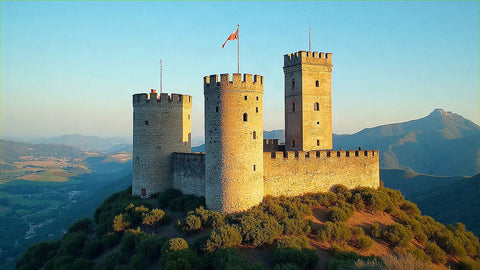
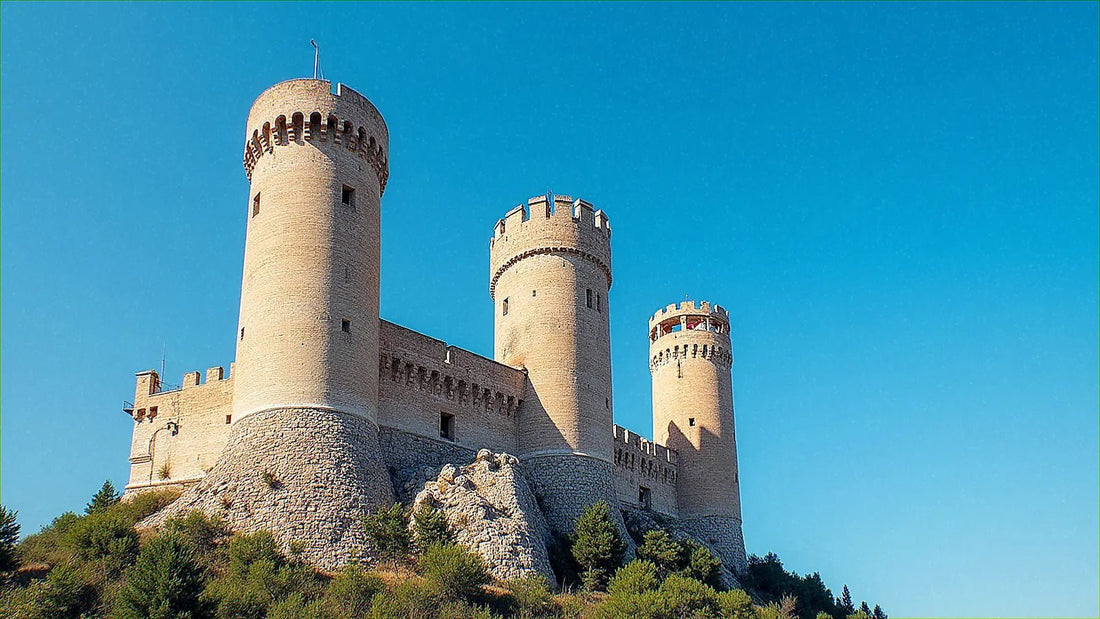
San Marino City, perched on Mount Titano, is where you'll spend most of your day as a tourist and also the best-covered area of the country. In the historic center, at the three towers (Guaita, Cesta, and Montale), and in Liberty Square, the 4G signal holds up perfectly for maps, photos, and social media without interruptions, even when ascending on the cable car from Borgo Maggiore.
The rest of the country is organized into nine municipalities or "castelli": in addition to the capital, Borgo Maggiore, Serravalle, Domagnano, Fiorentino, Acquaviva, Chiesanuova, Montegiardino, and Faetano. All enjoy good coverage because the territory is so compact that no area is far from an antenna; only on some mountain road stretches can the signal fluctuate for a few seconds, which is anecdotal in a country that can be crossed from end to end by car in less than twenty minutes. For those directly searching for "san marino internet" before traveling: connectivity will not be your problem. With a one or two-day visit, and an active eSIM, you'll have more than enough for navigation, social media, and VoIP calls without once checking the coverage icon.

eSIM, roaming, or physical SIM: what suits you here
For a microstate like this, where most visits last hours, not days, it's important to understand which option fits each profile. We explain it in depth in eSIM vs. roaming, but here's the summary applied to this destination: your Spanish operator's roaming is the most expensive option precisely because San Marino is not in the EU, and it only makes sense if you're going to be there for less than an hour. A local physical SIM would have to be purchased at a TIM San Marino store, with line activation procedures for a visit that might only last an afternoon: it's not worth it. And a virtual eSIM is installed before leaving home, doesn't affect your Spanish number, and activates just upon arrival: it's the option that makes sense for a short trip like this.
Our honest recommendation: for San Marino alone, you don't need a large or expensive plan; it's a country that can be explored in a few hours. What you do need is for the plan to explicitly cover the country, because being so small, some "Italy" eSIMs omit it from their coverage list without warning.
The trick if you combine Italy and San Marino
Almost no one travels "only to San Marino." It's common to combine it with Rimini, Bologna, the Adriatic Riviera, or a longer route through Italy. If this is your case, you'll want an eSIM that covers both Italy and San Marino, or directly a Europe eSIM that includes the microstate within its regional coverage: this way you have a single plan for the entire trip and don't have to change anything when crossing the invisible border of Titano. Compare the most common scenarios:
| Your route | Best option | Why |
|---|---|---|
| San Marino only (day trip) | San Marino eSIM | Plan adjusted to the destination, without overpaying for countries you won't visit |
| Italy + trip to San Marino | eSIM that includes both countries | A single active plan, no changes when crossing the border |
| Grand European tour with a stop here | Multi-country Europe eSIM | Covers San Marino along with the rest of your route on the continent |
| Returning to Spain afterwards | Your usual Spanish line | Upon landing home, you don't need an eSIM, you return to your usual plan |
An honest note: if your visit is a two or three-hour stop within a much longer trip through Italy, and your Italy eSIM already includes the microstate in its coverage list, don't buy anything separately; it's more cost-effective to extend that same eSIM than to duplicate plans for such a short time. Save the specific San Marino purchase for when it's your only destination that day or when your Italy plan doesn't explicitly cover it.
How many GB do you really need
San Marino can be explored in a short time, so data consumption is usually low if you're just visiting. As an approximate guide, without invented figures: on a day trip, you'll be fine with just over half a GB for maps, photos, and some social media browsing; if you also move around Rimini or the Adriatic coast for a weekend, you'll need a bit more, especially if you upload videos frequently; and if San Marino is just a stop on a European tour, calculate based on the total days of the trip, not this specific destination, which barely impacts the overall total.
What consumes the most data, by far, isn't maps: it's uploading videos to social media from Titano with Guaita Tower in the background, something almost everyone who goes up there does. If you want to stretch your plan, here are specific tricks to save data with your travel eSIM, such as downloading the offline map before climbing the mountain, where the uneven terrain means the app takes longer to load new tiles.
How to activate your eSIM before leaving home
Activation is a quick process and should be done with Wi-Fi, before leaving home. Purchase your eSIM and receive the QR code instantly via email; with Wi-Fi, go to Settings > Mobile Data > Add eSIM and scan it; name the line (e.g., "San Marino") to distinguish it from your Spanish line and leave it installed without activating data yet, so the plan doesn't start running prematurely. Upon arrival in the microstate, activate the eSIM's data and its data roaming, and you'll be browsing with the local network without affecting your original plan.
If this is your first time installing an eSIM and you want to see it step-by-step, we have a complete guide on how to install an eSIM, valid for iOS and Android. A detail many people forget: check that your mobile is unlocked before purchasing, because a carrier-locked device may reject any eSIM that isn't from your usual provider, which you'll discover too late if you don't check at home.
Public Wi-Fi and privacy in the microstate
San Marino City thrives on tourism, so there's free Wi-Fi in most bars and restaurants in the historic center, especially around Liberty Square. It's useful for saving data, but an open network shared by hundreds of tourists daily is exactly where you should be careful about which apps you open, especially if you're going to do any banking. If you prefer to browse with your own data with an extra layer of privacy, check out eSIM and VPN for private travel: for a day trip it's not essential, but on a route with several countries and several hotel Wi-Fi networks, it makes a difference.
What almost no one tells you about San Marino
Details about the microstate that are not found in most guides:
- Myth: "if I have EU roaming activated in Italy, I'm already covered in San Marino." It's the opposite: EU roaming stops applying the moment you enter, precisely because it's not EU territory. This is the most common mistake for those coming from Italy without stopping to think about it.
- There is no physical border control when crossing from Italy; just a welcome sign to the Republic. It's easy to enter without realizing you've changed countries, and your mobile usually warns you before any sign on the road.
- The cable car between Borgo Maggiore and the City is the most convenient way to go up if you come by car: you park below, avoid queues looking for a spot in the historic center, and go up in a few minutes with views of the entire plain towards Rimini.
- San Marino uses the euro despite not belonging to the European Union, thanks to a specific monetary agreement. This is not the same as being in the single telecommunications market, and that is precisely the distinction that complicates your data plan.
Frequently asked questions
Is San Marino included in free EU roaming?
No. San Marino is an independent country outside the European Union, although it is completely surrounded by Italy. European "roam like home" does not apply, so your operator may charge you international roaming as soon as your mobile connects to a local network. A travel eSIM avoids this surcharge with a fixed-price plan known in advance.
Does an Italy eSIM work in San Marino?
Sometimes yes, because the microstate largely relies on Italian infrastructure. But don't assume coverage: verify that San Marino is explicitly listed in the plan's covered countries before purchasing, or directly choose an eSIM that includes both destinations.
Will I notice worse internet because it's such a small country?
No. Relying on Italian networks in the Rimini area, connectivity is good: stable 4G in San Marino City and at the three towers, with 5G already present in several locations. The only thing that changes compared to being in Italy is the rate, not the signal.
When does the eSIM plan start counting?
Normally, when it first connects to a network at the destination. That's why it's advisable to install it with Wi-Fi at home, but not activate the data until you arrive. This way, you take advantage of each day of the plan exactly when you are actually using the internet on your trip.
Can I still receive WhatsApp with my Spanish number?
Yes. WhatsApp is associated with your phone number, not the line that has data activated at that moment, so messages and calls work through the eSIM. You can leave your Spanish line just for SMS or occasional calls.
Is an eSIM worth it for a visit of just a few hours?
It depends on your itinerary. If San Marino is a short stop within a longer trip through Italy and your Italian eSIM already covers it, you don't need to buy anything extra. If it's your only destination for the day, or your current plan doesn't explicitly include the country, then it is worth it: the cost is predictable, whereas roaming outside the EU can skyrocket without warning.
Do I need a passport or anything special to enter with my mobile?
There is no physical border control between Italy and San Marino, so you don't need any special procedures. The only thing that changes is the network your phone connects to, not the entry process into the country.
Conclusion
San Marino is a tiny country with a big trap: it looks like Italy in every way except on your data bill. As it does not belong to the EU, your Spanish plan is not protected by EU roaming, so without preparation, you could end up paying extra for browsing for ten minutes in Liberty Square. With an eSIM for San Marino, you arrive connected to the Titano towers from the first minute, avoid the roaming surcharge, and if your route continues to Italy or the rest of Europe, you solve everything with a single, well-chosen plan.