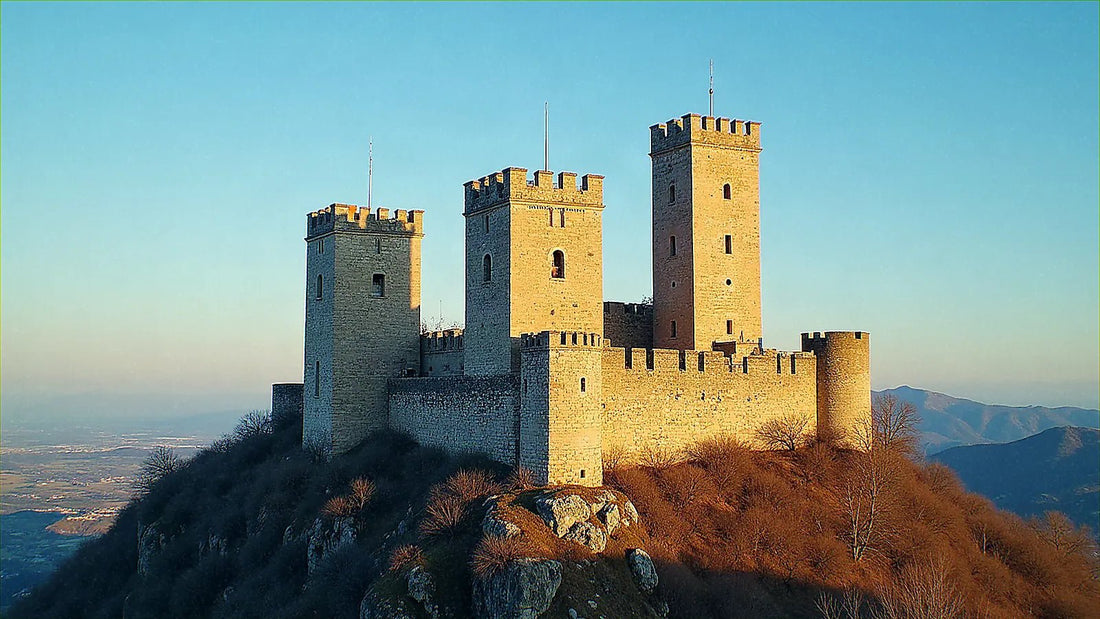
If you're planning a trip to the Adriatic coast and want to squeeze in an excursion to Europe's most curious microstate, sooner or later the question arises: how to get internet in San Marino without getting a strange charge on your bill. And it's a legitimate concern, because the Republic of San Marino is an independent country that is not part of the European Union, yet your mobile behaves there in a way that surprises almost everyone. I'll explain it simply.
San Marino is not the EU: what that means for your mobile
San Marino is an independent country surrounded by Italy and does not belong to the European Union, so European roaming is not guaranteed by regulation. In practice, many Spanish operators treat it as an EU zone because mobile phones usually connect to Italian networks. Check your plan before you go.
Let's get into the details. San Marino has about 61 km² and some 34,000 inhabitants, it is surrounded by Italian territory between Emilia-Romagna and Le Marche, it uses the euro due to a monetary agreement with the EU, and it has no border controls. But it is not a member of the Union or the European Economic Area.
This matters because the European "roam like at home" rule, which makes your plan work the same in Lisbon or Berlin, applies to EEA countries. San Marino is outside this, so no operator is obliged to give you your home data. Coverage reaches there, but the bill depends on a commercial decision by your company, not a law.
Here, you are not protected by a European rule: you are protected (or not) by your operator's pricing policy. And that varies from one company to another, and even between plans from the same company.
Mobile coverage in San Marino
The good news is that, in terms of network, San Marino is much better served than its size suggests. The local operator is TIM San Marino, heir to San Marino Telecom since the mobile business passed into TIM's hands in 2016, and it is the only one authorized to install antennas within the territory. Italian operators (Vodafone, WindTre, Iliad, and TIM Italia itself) cover the country from antennas located across the border.
And there's a fact I love to share: in December 2018, TIM and Nokia completed the deployment of eight 5G sites that made San Marino the first European country with 5G coverage throughout its territory. Today, you have solid 4G everywhere and 5G in much of the country.
The practical nuance is different: you don't control which antenna your phone connects to. When you're up in the Città, you might end up registered on TIM San Marino or an Italian network coming from the valley, and your phone will jump between them without warning you. This lottery is precisely what determines how you are billed, and that's why it's advisable not to leave it to chance.

Option 1: roaming with your Spanish operator
This is the default option: you do nothing and your phone connects automatically. The problem is that "doing nothing" here can be free or expensive, depending on the fine print of your contract. Many Spanish operators include San Marino in their European zone, alongside similar cases like Monaco or the Vatican; others leave it out and bill it as an international destination.
That's why my advice takes five minutes: check your operator's country list or call customer service and ask literally about San Marino, not Italy. Have them tell you which zone it's in and what happens if your mobile registers on the local network.
And even if it's included, watch out for fair use limits that cut down on gigabytes outside Spain. Here I compare eSIM vs. traditional roaming and here I break down how much it costs to connect abroad.
| Network your phone connects to | Owner | What it usually means for your bill |
|---|---|---|
| TIM San Marino | Sammarinese operator (non-EU country) | Depends on the operator: may be outside the European zone |
| TIM, Vodafone, WindTre, or Iliad Italia | Italian operators (EU country) | Normally billed as Italy, i.e., European zone |
Option 2: Wi-Fi in hotels, museums, and cafes
San Marino is an intensive tourist destination, and this is reflected in the free connectivity. Hotels in the historic center offer Wi-Fi, bars and restaurants usually have networks for customers, and there are public access points in central areas and some museums. If your plan is to go up, see the towers, eat, and come down, this might be enough.
But let's be realistic. Public Wi-Fi is good for sending photos and checking email while sitting down, not for moving around. Exactly when you need your mobile most (the schedule of the last bus to Rimini, the parking lot where you left your car, the funicular entrance) you are walking up a cobbled hill, far from any router.
Add security: on an open network shared with dozens of tourists, avoid banking operations and purchases. And add speed: at midday, with the historic center full, these networks are as strained as you would expect. My honest summary is that Wi-Fi is a great complement for downloading heavy things at night in the hotel, but a pretty bad primary plan. If a portable router tempts you, here's my in-depth comparison: eSIM vs. pocket Wi-Fi.
Option 3: local SIM or Italian prepaid SIM
The classic path of the experienced traveler: buy a physical card upon arrival. In San Marino, the prepaid offer for tourists is very limited, because the market is tiny and those who go there usually stay a few hours, not a few weeks. It's not a destination with a tourist SIM counter every 200 meters.
What does work is buying an Italian prepaid SIM in Rimini, Bologna, or any passing city before heading up. TIM, Vodafone, WindTre, or Iliad stores sell generous data packages at reasonable prices, and since Italian operators cover San Marino from across the border, the signal reaches. You will need a passport or ID: in Italy, identification of the holder is mandatory.
The usual trade-offs apply: time in the store, paperwork, changing the SIM tray, ending up with a new number nobody knows, and the risk of losing your Spanish card at the bottom of your backpack. For a multi-month trip, it pays off; for a half-day excursion from the Adriatic coast, it's a lot of hassle for little advantage. Here's the full comparison: eSIM vs. local SIM.
Option 4: travel eSIM (my recommendation)
This is where San Marino's nuance resolves itself. With a digital card, you contract data before leaving home, install it by scanning a QR with your Wi-Fi, and it activates when you arrive. You no longer depend on the lottery of which antenna your phone connects to, because the data goes through its own plan with a fixed rate, whether you know which zone your operator has put you in or not.
The advantages accumulate: you keep your Spanish number active for bank SMS and calls, you know the price beforehand without a surprise bill, and you don't waste a minute looking for a store. If you've never used one, start here: what an eSIM is and how it works, and then move on to the destination guide, eSIM for San Marino step by step.
The only real requirement is that your phone is compatible. Most mid-range and high-end models from recent years are, but it's worth checking before buying. Another key detail here: many plans are sold as covering Italy or Europe, so confirm that San Marino is explicitly listed as a covered country.

Quick comparison of all options
With everything laid out, this is the picture I use to decide in two minutes. Each option has its ideal scenario and none always wins, although for a short visit the order is quite clear:
| Option | Main advantage | Disadvantage | Ideal for |
|---|---|---|---|
| Roaming with your operator | Zero hassle, works automatically | Depends on whether your plan includes San Marino | Those who have already checked their zone |
| Public and hotel Wi-Fi | Free | Static use only, slow at peak times, insecure | Heavy downloads at night |
| Italian prepaid SIM | Plenty of gigabytes for little money | Store visit, paperwork, and new number | Long trips to Italy |
| Travel eSIM | Fixed price and instant activation | Requires compatible phone | Excursions and short trips |
My quick rule: if your company confirms in writing that San Marino is included in your European zone, don't change anything and save yourself the trouble. If they say no, if the answer is ambiguous, or if you don't want to risk which antenna your mobile catches up in the mountains, contract data separately. It takes five minutes from your couch and eliminates the only awkward variable of this destination.
How much data do you need for San Marino
San Marino is almost always visited in a short format, so a huge plan isn't necessary. What does change a lot is how you use your phone: opening Maps three times is not the same as live-streaming the Adriatic views from Cesta Tower:
| Visit type | Typical usage | Recommended data |
|---|---|---|
| Half-day trip from Rimini | Maps, messaging, occasional photos | 1 GB |
| Full day or overnight in the Città | Normal browsing and social media | 2-3 GB |
| One week base on the Adriatic coast | Video, uploading content, daily maps | 5-10 GB |
A tip that saves gigabytes: if San Marino is just one stop on a trip through Italy, choose a plan that covers both countries instead of contracting two things. You will spend much more time in Italian territory (arriving, eating on the coast, sleeping in Rimini or Bologna) than within the microstate, so the same package will serve you for the entire journey.
And another general tip: download everything heavy at the hotel, with Wi-Fi. Offline maps, your travel playlist, podcasts. Save your mobile gigabytes for what really needs them: navigating, checking schedules, and sharing some photos.
Half-day trip from Rimini: where your phone works
The classic works: from Rimini or any point on the Adriatic coast, there are direct buses that take you to the heart of the Republic in less than an hour. You go up to the Città, tour the historic center, and come down with the views captured on camera. A perfect half-day plan to fit into a beach holiday.
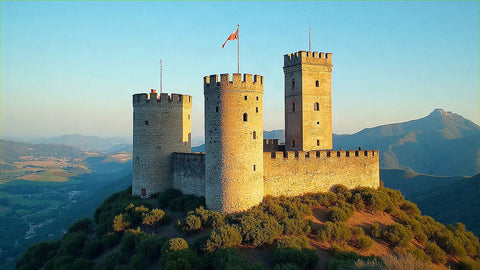
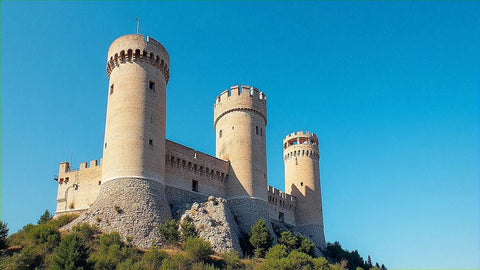
Up there, the script is well-known. Mount Titano and the historic center have been a UNESCO World Heritage Site since 2008, and their symbol are the three towers: Guaita, the oldest, built on the rock; Cesta, at the highest point of the mountain, about 755 meters, with its museum of ancient weapons; and Montale, which cannot be visited inside but crowns the walk through the forest. On clear days, you can see the Adriatic from the battlements.
Add the souvenir stamp they put in your passport at the tourist office, the country's philatelic fame, and slightly cheaper purchases because San Marino applies its own tax regime instead of Italian VAT. Throughout all this, your mobile acts as a guide and a bus schedule.
Tips to avoid connection issues on Mount Titano
Even with good coverage, climbing a medieval fortress with meter-and-a-half thick walls has consequences. These habits have saved me more than one afternoon and take two minutes to implement:
- Download the offline map of San Marino and Rimini before heading up: inside the towers and on excavated staircases, the signal drops.
- Save the return bus schedule as a screenshot. This is the data most people search for in a hurry and the worst time to run out of data.
- Manually set the network if your plan only covers Italian operators: in mobile network settings, you can choose the company manually instead of leaving it on automatic.
- Disable automatic backups of photos and videos, or your plan will evaporate uploading material to the cloud.
- Carry a power bank: your mobile searching for a network between two countries consumes more power than usual, and the slopes feel long without GPS.
With that, you cover almost all contingencies. And if you still lose signal at some point, don't worry: San Marino can be walked from end to end, and everyone there knows how to direct you to the bus stop.
Frequently Asked Questions
Almost all the questions I get about this destination stem from the same misunderstanding: assuming that a country surrounded by Italy functions like Italy.
Do I have free EU roaming in San Marino?
It is not guaranteed. San Marino does not belong to the European Union or the European Economic Area, so the "roam like at home" rule does not apply by law. Many Spanish operators include it in their European zone anyway, but confirm this with yours before traveling.
Is San Marino in the European Union?
No. It is an independent republic surrounded by Italy, about 61 km² in size. It has agreements with the EU and uses the euro, but it is not a member state nor part of the European Economic Area, so it is outside the European mobile roaming regulations.
What network does my mobile connect to in San Marino?
It can connect to the local operator, TIM San Marino, the only one authorized to install antennas in the country, or to Italian networks (TIM, Vodafone, WindTre, or Iliad) broadcasting from across the border. The phone chooses automatically and may switch during your visit.
Is there good mobile coverage and 5G?
Yes, very good for its size. In December 2018, TIM and Nokia completed the deployment that made San Marino the first European country with 5G coverage throughout its territory. Today, you have stable 4G everywhere and 5G in much of the country.
Does an Italian eSIM work for San Marino?
Not always. Since San Marino is a different country, some Italian plans do not include it and others do. Before buying, check that San Marino is explicitly listed in the plan's covered countries, or purchase a destination-specific plan directly.
Can I buy a prepaid SIM there?
The prepaid offer for tourists within San Marino is very limited, because the market is tiny. It's common to buy an Italian SIM in Rimini or Bologna before heading up, with a passport or ID for the mandatory holder registration.
How many gigabytes do I need for a half-day trip?
1 GB is more than enough for maps, messaging, and a few photos. If you plan to record video of the views from the towers, upload it to social media, or stay overnight in the Città, increase it to 2-3 GB and don't worry about the meter.
Do I need a passport or is there border control?
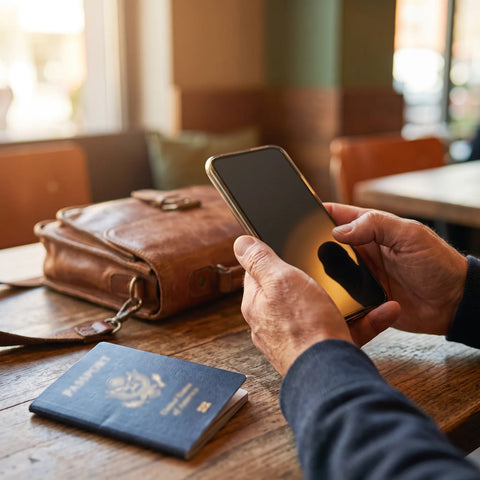
There is no border control between Italy and San Marino: you cross without formalities. Still, carry valid identification for any procedures, and if you want a souvenir, you can get a San Marino stamp in your passport at the tourist office for a small fee.
Conclusion
The summary fits in one sentence: San Marino is not in the EU, but you get there via Italy, and that mix is what creates the doubt. If your operator confirms that it includes it in the European zone, go ahead. If you're not sure, don't let the bill be decided by the antenna your phone connects to at the top of Mount Titano.
My advice is to sort it out from home with a fixed-price data plan: install the PuraSIM San Marino eSIM before leaving, scan the QR with your Wi-Fi, and go up to see the three towers thinking only about the views.