Tajikistan was the trip that most made me rethink my relationship with my phone. Here you don't look at your phone to pick a restaurant: you look at it to see if there's any village left before the next mountain pass. Having internet in Tajikistan is perfectly possible —Dushanbe works, the western roads too—, but as soon as you head up the Pamir Highway you enter whole days without a single bar. In this guide I compare the four options you have, I tell you where there's real coverage, why the country's network is slow and sometimes finicky, and what you should download before you leave.
How to get online in Tajikistan: your 4 options
In Tajikistan you have four ways to get connected: roaming from your carrier, very expensive because you're outside the EU; the accommodation's Wi-Fi, useful but slow; a local SIM with passport registration; and a travel eSIM, which is the one I recommend for almost every itinerary.
It's worth understanding the map before you choose. Tajikistan is a mountainous country with the population concentrated in a few valleys: the antennas are where people live and where the main roads run, and the rest is rock at four thousand meters. So the "which plan" decision only solves half your adventure; the other half is solved by what you have downloaded on your phone. No option will give you signal at Ak-Baital: choose for convenience and price, not expecting miracles.
| Option | Approximate cost | Requirements | Where it works |
|---|---|---|---|
| Roaming (your carrier) | Up to 12-18 €/MB outside the EU | None, already active | Wherever the local network reaches |
| Accommodation Wi-Fi | Free | Being inside | Cities; almost none in the Pamir |
| Local Tajik SIM | 130-160 TJS (12-15 $) for 30-80 GB | Passport and in-store registration | Cities and main roads |
| Travel eSIM | Plans from a few euros | Compatible and unlocked phone | Rides on the local networks |
Roaming from your home country: why the bill is going to hurt
I'll start by ruling out what I don't recommend except in an absolute emergency. Tajikistan is outside the European Union, so the "roam like at home" rule doesn't apply at all: you pay international destination rates and Central Asia usually falls into the most expensive tiers on every list. With Movistar, browsing outside the EU can reach 12.10 €/MB; Vodafone sets caps of up to 18.15 €/MB, and calls run around 3 to 6 € per minute. Translated: at 12 €/MB, a single gigabyte would exceed 12,000 €.
Some carriers sell daily travel passes, but before you trust that, check in your customer area whether Tajikistan is included in the covered zone, because many packages cover the US or Japan and leave this region out. My practical advice is simple: travel with your home line active to receive bank SMS codes, but with mobile data turned off and a spending cap set in the app. It's a minute of settings that saves you a three-figure shock when you get back. If you want the full breakdown, it's in my guide on how much international roaming costs and in the comparison eSIM vs roaming.

Hotel, guesthouse and homestay Wi-Fi: use it, but don't rely on it
Wi-Fi will get you through plenty of evenings, especially at the start and end of your trip. In Dushanbe, hotels and hostels in the center offer free connections, and the cafés along Rudaki Avenue are a classic spot to reply to emails. The same goes for Khujand, Bokhtar, and Kulob. Even in Khorog, the capital of the Pamirs, you'll find places with a decent enough connection to download maps and check in with home.
The problem is twofold. First, quality: the country's bandwidth is limited, and a long video call can turn into a stream of frozen pixels; expect video uploads to be slow. Second, geography: in the homestays of the Wakhan Valley or Murghab, electricity often comes from a small solar panel or a generator that shuts off at ten at night, so Wi-Fi is neither available nor expected. Add to that the fact that open networks aren't safe for logging into your bank without a VPN. If you were thinking of a portable router as a backup, I compare both options in eSIM vs. pocket Wi-Fi: in high mountains, neither works magic.
Local SIM: Tcell, Megafon Tajikistan, Babilon-M, and ZET, with your passport
The Tajik market is split between four carriers: Tcell, Megafon Tajikistan, Babilon-M, and ZET-Mobile. Tourist packages are reasonable: a Tcell SIM costs about 20 TJS (just over $2), and typical data bundles range from 130 TJS ($12) for 30 GB to 160 TJS ($15) for 80 GB.
The catch is the paperwork. Every line is registered in your name: the seller scans your passport and, depending on the store, takes biometric data. It gets sorted in a while, but you need to be in a city during business hours, and don't assume there's a counter open when you land. Also, don't buy from informal stalls: a poorly registered line will stop working within a few days. If you're staying a month, a local SIM pays off; for a standard trip, many of us prefer not to lose half a morning in a store. You have the full comparison in eSIM vs. local SIM. Breakdown by carrier:
| Carrier | Best coverage area | Strong point | Ideal for |
|---|---|---|---|
| Megafon Tajikistan | Long routes and remote areas | Best rural reach | Road trips and the Pamirs |
| Tcell | Dushanbe, Khujand, Bokhtar | Solid urban network and some 5G | City stays and remote work |
| Babilon-M | Dushanbe and surroundings | Competitive rates | Stays in the capital |
| ZET-Mobile | Urban centers | Cheap packages | Tight budgets |
eSIM: the option I recommend for this trip
For the vast majority of itineraries through Tajikistan, my recommendation is an eSIM. It's a digital SIM you install by scanning a QR code: no physical card, no hunting for a store, no depending on whether the clerk speaks English or the airport counter is open. You buy it before you leave home, install it over your living room Wi-Fi, and when you land you just turn on the data.
In a destination like this, the advantage is very concrete. You arrive with maps loaded for your first taxi in Dushanbe, you can message your Pamir driver if he's running late, and you keep your local number active in the other slot for bank or airline SMS. Plus, you control the cost upfront: you pick the gigabytes you want, and there are no surprises when you get back home. The only requirement is a compatible phone —almost all iPhones from the XS onward and most mid-to-high-end Androids— and unlocked from your carrier. If you've never used one, I explain it step by step in what is an eSIM, and you have the country-specific guide in eSIM for Tajikistan.
Slow and sometimes restricted internet: the unvarnished truth
Time to be honest, because this is information almost no commercial guide gives you. Tajikistan has one of the slowest mobile connections in the world: in the global Speedtest index it has appeared as low as 139th out of 143 countries (February 2025), with a median mobile download speed of around 9 Mbps. Fixed-line has improved —about 45 Mbps on average and ranked 117th out of 153 in March 2026— but mobile remains modest. And it's not cheap by regional standards: a gigabyte costs around $1.65, almost ten times what it costs just across the border in Kyrgyzstan. You notice it when uploading photos or opening videos: this is not European 4G.
The other half of the story is control. Since 2016, all international traffic in the country passes through a single state gateway, and blockages —sometimes temporary, sometimes prolonged— of social networks, YouTube, and messaging apps have been documented, which authorities usually attribute to "technical problems." I can't guarantee what will be accessible on the day you go: it changes. The sensible move is to install a trusted VPN before you travel, have it set up and tested, and don't count on being able to download it once you're there.

Coverage in Dushanbe, Khujand, and the western roads
Where people live, things work better than you might fear. 4G is the standard in cities and along the main corridors, and operators have been investing heavily for a couple of years: Megafon Tajikistan built more than 450 new 4G base stations in 2025, and Tcell modernized hundreds of sites in the same period. Even so, 4G coverage doesn't reach the entire population: a significant part of rural areas is still left out.
5G exists, but take it with a grain of salt: Megafon, Tcell, and ZET-Mobile have launched it commercially in specific areas of Dushanbe, and Tcell has also switched on some stations in Khujand and Bokhtar. We're talking about dozens of antennas across the country, not a nationwide network; don't plan anything around it. By region: Dushanbe and the Hisor Valley work well, northern Sughd with Khujand and the Seven Lakes has reasonable signal in the villages, and the roads toward Kulob or the Uzbek border keep a connection for almost the entire route. In short, if your trip stays in the west of the country, you'll be connected almost all the time. And if you're unsure, ask at your accommodation which network works best on the next stretch.
The Pamir Highway: prepare for several days without signal
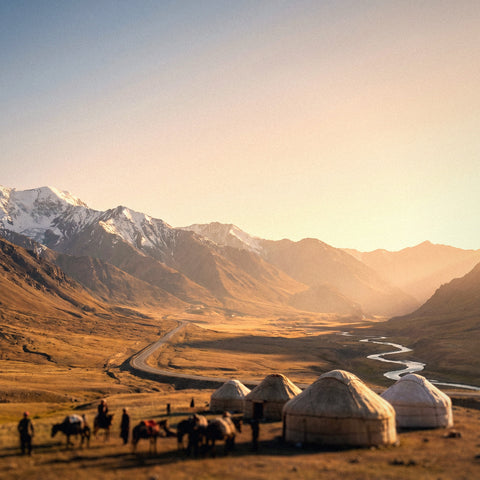
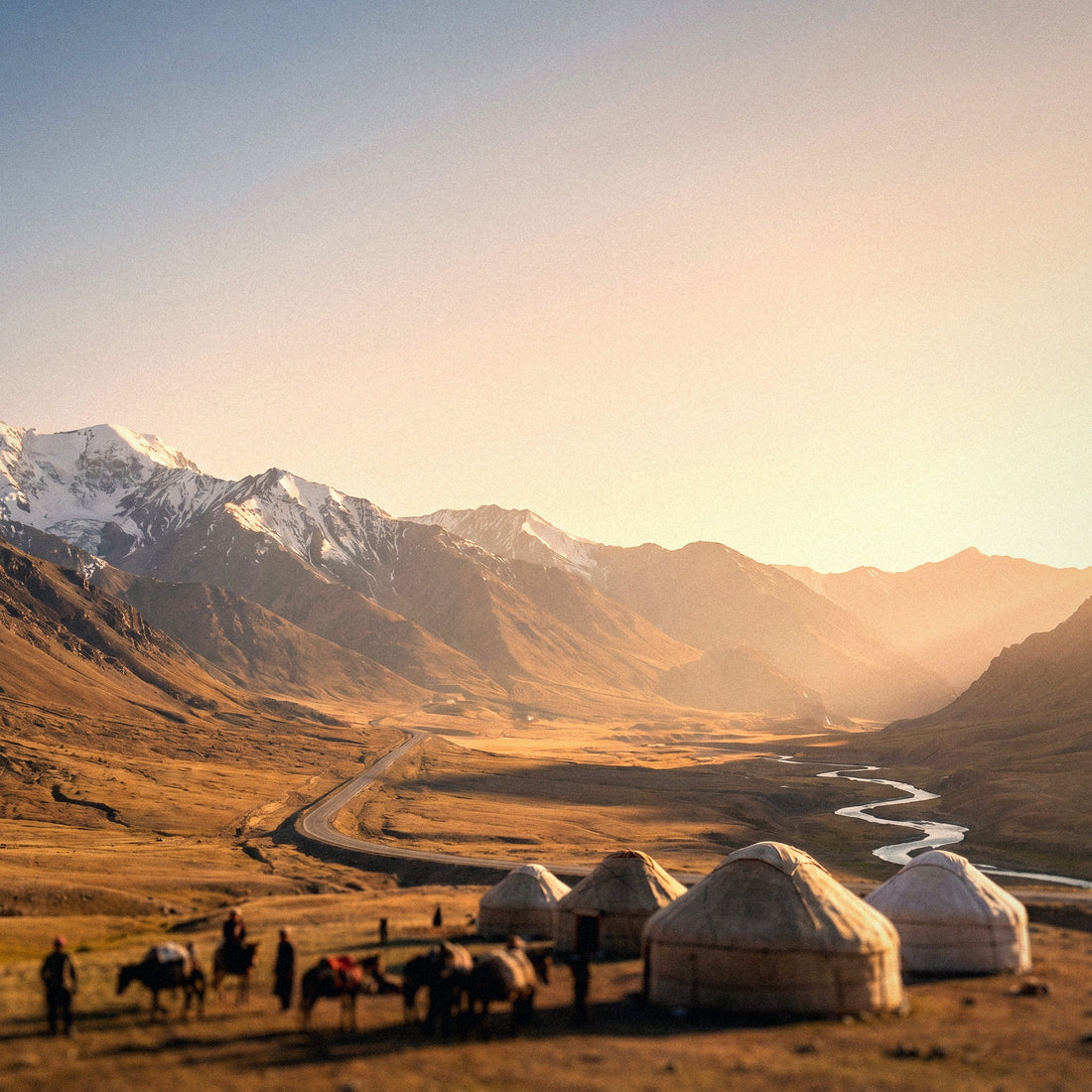
And now the part that defines this destination. The Pamir Highway (M41) is a road of more than a thousand kilometers that crosses plateaus above four thousand meters and culminates at the Ak-Baital Pass, at 4,655 meters. Up there there are no antennas because there's no one to serve: the stretches between Kalaikhum and Khorog, and especially between Khorog, Murghab, and Lake Karakul, are almost total silence. You'll spend two, three, or more days without data, and that includes not being able to let anyone know you're running late.
Signal reappears in patches: in Khorog there's coverage and Wi-Fi, in Murghab there's something but it's weak, and on some random pass a bar might sneak in. Travelers carrying two SIMs from different operators improve their chances, though it's no guarantee either. Add the altitude factor: cold and GPS drain the battery much faster than you're used to.
My rule on the Pamir is to assume the phone is a camera with offline maps. Anything that needs a network gets done in Khorog, and anything that doesn't, waits.
Accepting that in advance turns the problem into one of the best parts of the trip.
Wakhan, Karakul, Iskanderkul and the Fann Mountains: GBAO Permits and Official Warnings
The most beautiful spots are exactly the worst connected. In the Wakhan Valley, with Afghanistan on the other side of the Panj River, coverage is spotty and in some places your phone will latch onto networks in the neighboring country: be careful, because that can trigger unexpected roaming charges if you leave your home line on. At Lake Karakul, at almost 3,900 meters, and in Bulunkul or Yashilkul, don't count on anything. Iskanderkul, more accessible from Dushanbe, has some signal around the lake but cuts out once you head into the canyons. And in the Fann Mountains — Kulikalon, the Alauddin Lakes, the Chimtarga circuit — you lose it after the last village.
Two notes that aren't about the network but affect you just the same. First: to enter the autonomous region of Gorno-Badakhshan (GBAO), which is the entire Pamir, you need a separate permit from your visa, processed with the e-visa or through an agency, and they'll ask for it at road checkpoints. Second: the border strip with Afghanistan is a sensitive area and several governments maintain specific travel advisories. Check the official travel recommendations from the Ministry of Foreign Affairs shortly before you leave, because both permits and access points change.
How Much Data You Need and How to Get Everything Ready
The calculation here is different from a European trip: you'll spend entire days without using a single megabyte, whether you want to or not, and many people buy huge plans they never use. Maps and messaging use little data; what drives up usage is video, which will also be slow.
| Travel Profile | Main Use | Recommended Data |
|---|---|---|
| 1 week: Dushanbe and the Fanns | Maps, chat, some social media | 3-5 GB |
| 2 weeks including Pamir Highway | GPS and photos, with days offline | 5-10 GB |
| Remote work from Dushanbe | Email, calls and cloud | 15-20 GB |
Before heading into the mountains, spend ten minutes on this:
- Download offline maps of the entire region, not just the starting town: Organic Maps works very well in the Pamir.
- Save your tracks and open them in airplane mode to check they show up without data.
- Take screenshots of bookings, permits and phone numbers.
- Download Russian offline in your translator: it will get you out of more jams than English.
- Install and test your VPN before you go.
- Bring a power bank and a car charger: high-altitude cold drains your phone.
- Tell someone your route and when you expect to have signal again.
With that routine, losing contact stops being a scare: it's exactly what you planned for.
Frequently Asked Questions
Here are the most common questions about getting connected in Tajikistan.
Is there coverage on the Pamir Highway?
Very little and patchy. There's signal in Khorog and some in Murghab, but between Kalaikhum, Lake Karakul and passes like Ak-Baital (4,655 m) you can be days on end without a network. Bring offline maps and tracks.
Does my home carrier's roaming work in Tajikistan?
Yes, your phone will connect to local networks, but the country is outside the EU and "roam like at home" doesn't apply. Data can cost between 12 and 18 €/MB: keep it turned off and use it only in emergencies.
Do I need my passport to buy a local SIM?
Yes. Every Tajik line is registered to a person: the seller scans your passport and some stores take biometric data. Do it at an official store, never at an informal stall, or it will stop working within a few days.
Is the internet censored in Tajikistan?
Partly. Since 2016, international traffic passes through a state gateway and there have been documented blocks, sometimes temporary, of social networks, YouTube and messaging apps. You won't know what will be accessible during your specific week: bring a VPN installed and tested.
Do I need the GBAO permit for the Pamir?
Yes. The entire autonomous region of Gorno-Badakhshan requires a separate permit from your visa, processed with the e-visa or through an agency, and they'll ask for it at road checkpoints. Verify requirements and timelines before you leave.
Is there 5G in Dushanbe?
It exists, but it's token. Megafon, Tcell and ZET-Mobile have activated it in specific areas of the capital, and Tcell also in Khujand and Bokhtar. That's a few dozen antennas across the whole country: the real standard is 4G.
Which carrier covers the mountains best?
Megafon Tajikistan has the best reputation for long routes and remote areas. Tcell works well in cities, Babilon-M focuses on Dushanbe and ZET-Mobile is the cheapest. None cover the high Pamir plateau.
Is there Wi-Fi in the homestays in the Wakhan?
Usually not. Power typically comes from a solar panel or a generator that gets turned off at night, so neither reliable Wi-Fi nor guaranteed outlets. Arrive with a full battery and assume a couple of days disconnected.
Conclusion
To sum it up: having internet in Tajikistan is easy in Dushanbe, Khujand and the western roads, and simply impossible in much of the Pamir. Add to that a slow network with occasional restrictions, and you have the picture. Roaming is the expensive and unnecessary plan; Wi-Fi, an urban supplement; the local SIM, the option for those staying weeks; and the eSIM, the convenience of landing with your maps already working.
If you want to skip the paperwork and arrive connected from your first taxi, without hunting for a store with your passport in hand, take a look at the PuraSIM eSIM for Tajikistan: choose it, install it at home and activate it when you land. The rest — the Ak-Baital, the Wakhan, the days without signal — let it happen. Safe travels.