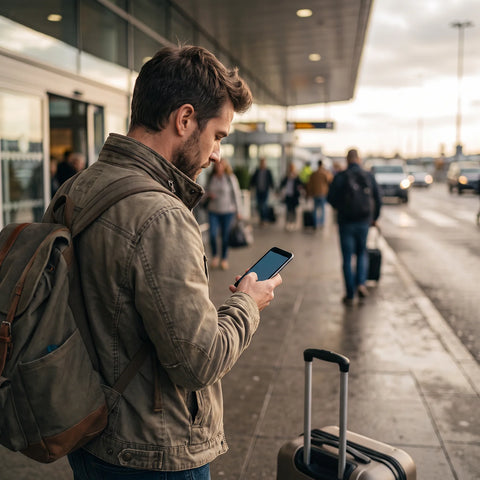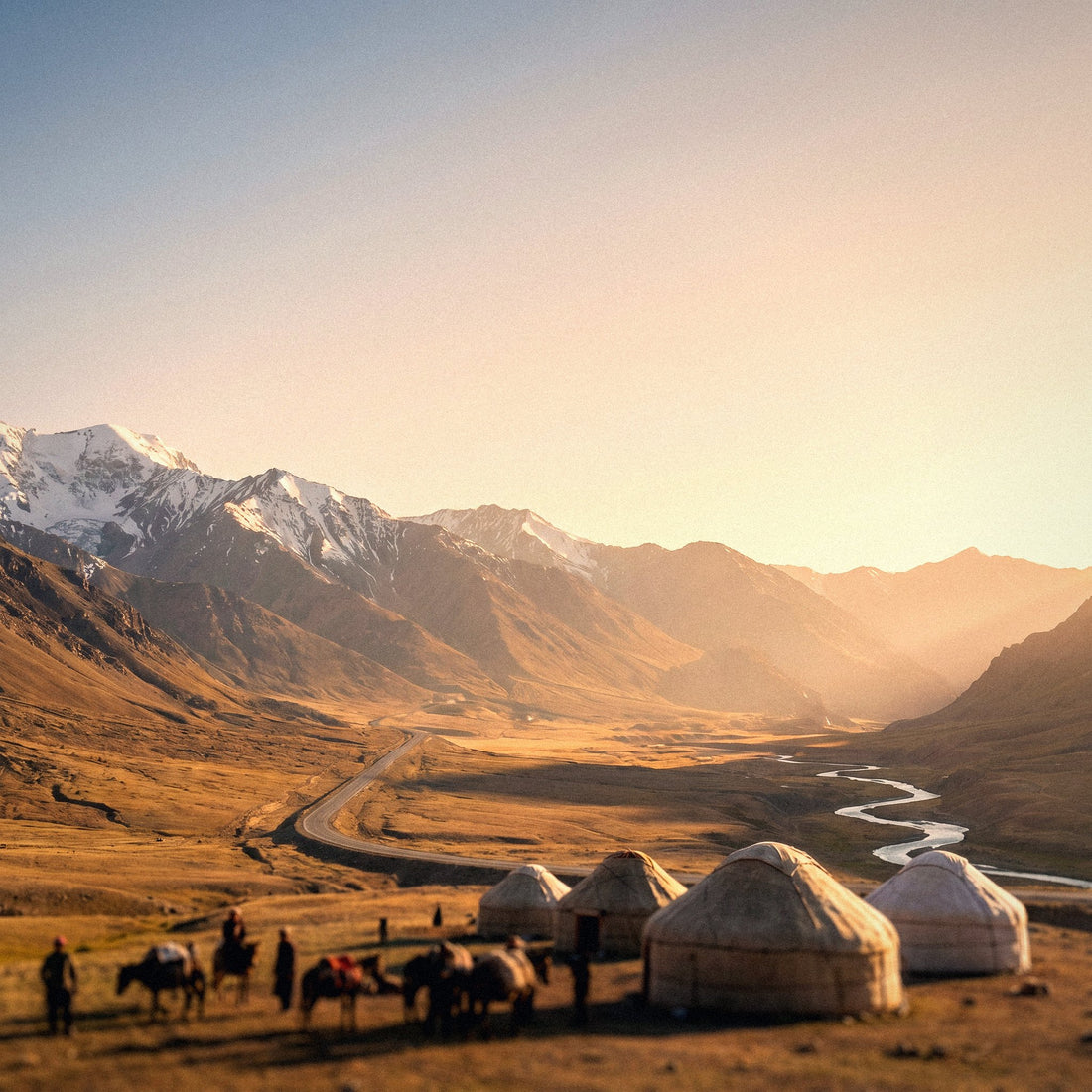
In summary: an eSIM for Tajikistan gives you mobile data from the moment you land in Dushanbe, without roaming or a physical SIM to search for at your destination. It covers cities well with Tcell and Megafon, but on the Pamir Highway, coverage is inherently intermittent: it's part of the journey, not a network failure.

Tajikistan is not a beach and hotel Wi-Fi destination. It's the Pamir Highway, lakes at 4,000 meters, and valleys that seem unchanged for a century. Precisely for this reason, arriving with your connection sorted before boarding the plane makes the difference between losing your first afternoon looking for a mobile operator store in Dushanbe or heading straight out to explore. With a Tajikistan eSIM installed beforehand, you land, activate the data plan, and immediately have maps, messaging, and a translator working while you queue for a taxi.
Does an eSIM work in Tajikistan?
Yes, it works normally as long as your phone is compatible. An eSIM is essentially a SIM card that, instead of coming in plastic, is installed via software: you scan a QR code, the profile is saved on your mobile, and you're good to go. There's nothing to insert, nothing to lose along the way in a trekking backpack. If you've never used one, we explain it calmly in what an virtual eSIM is.
The big advantage over buying a physical Tajik SIM as a tourist is twofold: time and convenience. Acquiring a local prepaid SIM involves locating an official Tcell or Megafon store, presenting your passport, and, in many cases, waiting for them to register the number in your name. In a country where English is not always spoken outside tourist areas, this process can take longer than you'd like on your first day of travel. With an eSIM, on the other hand, the QR arrives by email, and you install it calmly at home, with Wi-Fi, before packing your suitcase.
The only real requirement is that your mobile supports eSIM: most iPhones from the XS and many mid-to-high-end Androids from recent years allow it. Check your phone settings or the manufacturer's website to see if yours is compatible before purchasing, to avoid a surprise at the airport.

Operators and coverage: Tcell and Megafon
The Tajik mobile market is dominated by two names: Tcell and Megafon Tajikistan, with a smaller presence from operators like ZET Mobile. A travel eSIM relies on these local networks to provide coverage wherever it exists, and it does so automatically: you don't manually choose the operator; the profile connects to the available network in each area.
Decent 4G/LTE coverage is mainly concentrated in the two large cities: Dushanbe, the capital, where you'll spend most of your time connected at a reasonable speed, and Khujand, in the north of the country, the second-largest city and a common transit point if you enter or exit via Uzbekistan. Outside these hubs, quality drops rapidly: in medium-sized towns, you might only have 3G, and in rural areas of the south and east, the signal becomes scarce even before reaching the Pamir Mountains.
As a quick reference between the two main operators:
| Operator | Where it works best | Typical technology | Strong point |
|---|---|---|---|
| Tcell | Dushanbe and major cities | 4G/LTE in cities, 3G elsewhere | More consistent urban coverage |
| Megafon Tajikistan | Dushanbe, Khujand, and Pamir region | 4G/LTE in cities | Better presence in remote eastern areas |
| ZET Mobile | Occasional presence, less coverage | Variable | Complementary, not primary |
No eSIM or local SIM will give you coverage where there is physically no antenna, so treat it as what it is: a country with limited infrastructure outside its two major cities, and plan accordingly.
Connection in the Pamir and the mountains
The Pamir Highway, the legendary M41, is the reason why most travelers searching for "Tajikistan eSIM" are planning this trip. And here it's important to be honest: it crosses one of the most isolated regions on the planet, and for long stretches between villages, you won't have a signal from any operator, regardless of the SIM you have. That's not an issue with your eSIM; it's the topography of the Pamir.
What you will get is coverage in the inhabited areas you pass through: Khorog, the capital of the Gorno-Badakhshan autonomous region, usually has reasonable connectivity; Murghab, already on the plateau, has a more limited but present signal in the village. Between these points, expect total disconnection for hours, sometimes an entire day of driving.
Pre-preparation here is worth more than any data plan. Before leaving Dushanbe: download offline maps of the entire route (Maps.me or Google Maps offline), save a digital and paper copy of your GBAO permits, write down emergency contacts, and notify a trusted person of your approximate itinerary and dates. When the eSIM regains coverage in a locality, it reconnects automatically, without you having to touch anything or reactivate the plan.
Backpacker tip: In the Pamir, treat connectivity as a welcome extra, not a guarantee. Everything essential—maps, reservations, downloaded translator—should be ready before leaving Dushanbe, where 4G works normally.

If high-altitude trekking is your thing and this trip is part of a longer journey through mountain ranges, you might also be interested in our guide to eSIM for Peru and the Machu Picchu route, where something similar happens: good city coverage, total silence in the mountains.
How many GB do you need for Tajikistan?
Since much of the trip will be without real coverage—whether in the Pamir or simply moving between small villages—you don't need to contract a huge package "just in case." For a two or three-week adventure-focused trip, with most of the time spent on the road and in the mountains, 3 to 5 GB is usually more than enough for connections in Dushanbe, Khujand, and intermediate stops with a signal.
If your profile is different—you work remotely and need to upload files, or you generate a lot of social media content from every point with coverage—calculate a larger margin, because consumption will be concentrated in short, intense bursts each time you regain network access.
In fact, the typical consumption pattern on this type of trip is not a constant trickle, but peaks: you arrive in a village after two days without a signal and, suddenly, photos, accumulated messages, notifications, and pending downloads all synchronize. That peak can consume more data than you expect if you don't control it. Downloading maps and heavy content in Dushanbe with Wi-Fi, before hitting the road, significantly reduces that actual expense. We have several more tricks in how to save eSIM data on a trip that apply particularly well to routes of this type.
eSIM vs. roaming: prices in Tajikistan
Tajikistan is outside the European Union, so roaming from a Spanish operator here is not included in any community flat rate. The cost can exceed several euros per day or be charged per megabyte consumed, with the fine print of each company making the difference between a reasonable bill and a shock upon return. On a long adventure trip, where you won't be checking your data meter every two hours, that risk is significant.
A travel eSIM works differently: you pay for the gigabytes in advance, you know exactly how much you're going to spend before leaving home, and there are no surprises when the bill arrives. If you want to understand in detail why traditional roaming gets so expensive outside the European Union, we explain it in what data roaming is, and if you're looking for a direct comparison between the two options, you have eSIM vs. roaming with all the nuances.
Always check the current price with your Spanish operator before leaving: roaming rates outside the EU change frequently and vary greatly depending on the company and the plan you have contracted.
Activating your eSIM for Tajikistan step-by-step
The entire installation process is done before you fly, calmly and with Wi-Fi at home. Installing the profile does not consume data: you only need a connection to scan the QR code. You activate mobile data afterward, when you land and want to start using it.
- Purchase your eSIM for Tajikistan and receive the QR code by email.
- At home with Wi-Fi, go to Settings > Mobile Data (or Mobile Networks) > Add eSIM and scan the code.
- Label the new line as "Tajikistan" to avoid confusing it with your usual SIM.
- Upon landing in Dushanbe, activate mobile data for the eSIM and deactivate roaming for your Spanish line.
- Check that your phone shows the local network (Tcell or Megafon) and that you have internet.
If it's your first time installing one, we have the complete process with screenshots in how to install an eSIM, valid for any destination, not just Tajikistan.
Common mistakes and what almost no one tells you
Beyond the basics, there are a number of details that people discover the hard way, usually halfway through their trip, and that should be taken into account before leaving.
Confusing "no coverage" with "broken eSIM"
The most common mistake: arriving in the Pamir, having no signal for hours, and thinking the eSIM has failed. In reality, it's the physical absence of antennas in that area, not a problem with the installed profile. As soon as you reach a locality with a network, the connection returns on its own without you having to reinstall anything.
Not turning off roaming on your Spanish line by mistake
If you don't explicitly deactivate roaming on your main SIM, some mobile phones alternate between data networks depending on the available signal, and you could end up consuming roaming data without realizing it while thinking you're using the eSIM. Check this as soon as you land.
Buying the eSIM just before boarding
Installing the profile requires stable Wi-Fi, and the Wi-Fi at the departure airport or on the plane is not always reliable for scanning a QR code with guarantees. Do it with plenty of time, at home, one or two days before traveling.
Thinking in "just in case" GB instead of actual usage
Contracting the largest package "so I don't run out" doesn't make sense if you're going to spend half the trip without physical coverage. Adjust the plan to the actual days in cities and areas with a network, not to the total duration of the trip.
Not informing about your route in the Pamir due to relying solely on your mobile
The eSIM gives you data where there's a signal, but it doesn't replace basic mountain safety: informing someone of your itinerary, carrying physical GBAO permits, and not relying on your mobile as the only safety net in areas without coverage.
Forgetting about privacy on hostel and guesthouse Wi-Fi networks
If you also use hotel or guesthouse Wi-Fi in cities to save data, keep in mind that these are shared and not always secure networks. If you're doing sensitive tasks (banking, work), it's a good time to review eSIM and VPN to protect your privacy while traveling.
Frequently asked questions
Is there coverage on the Pamir Highway?
Very intermittent. You will have a signal in the inhabited localities you pass through, such as Khorog or Murghab, but in the long stretches of plateau between villages, there is no coverage from any operator, neither local nor with an eSIM. Download offline maps and have permits and emergency contacts saved on your phone before leaving Dushanbe.
Which operator provides the best coverage in Tajikistan?
Tcell and Megafon lead the market. Tcell works well in Dushanbe and major cities, while Megafon has a better presence in the Pamir region. With a travel eSIM, you don't manually choose the operator: the profile connects to the available network with coverage in each area.
How many GB do I need for a trip to the Pamir?
Since much of the trip is spent without a signal in the mountains, 3-5 GB is usually enough for use in Dushanbe, Khujand, and stops with coverage. The bulk of consumption occurs when regaining network after days offline, so downloading maps and offline content in the capital significantly reduces actual data usage.
Do I need to register my passport to use the eSIM?
No. Local prepaid SIMs usually require you to present your passport and register the number at an official Tcell or Megafon store. The travel eSIM is installed via software with the QR you receive by email, without paperwork or visits to operators at your destination.
Can I keep my Spanish number active at the same time?
Yes. The eSIM coexists with your usual SIM in dual mode: you browse with the eSIM's data and keep your Spanish number for SMS and calls. Remember to deactivate roaming for that main line as soon as you land to avoid unexpected charges.
Does the eSIM work as soon as I land, or do I have to wait?
If you have already installed it before flying, you just need to activate mobile data upon arrival in Dushanbe, in a matter of seconds. All the Wi-Fi installation work was done beforehand at home, so there are no additional formalities at the airport.
Does the same eSIM work if I continue traveling to another country after Tajikistan?
No: each destination eSIM is designed for that country's networks. If your route continues to another destination after your Central Asia adventure, you will need a different plan for that next stage, with the local coverage of the new country.
Conclusion
Tajikistan rewards the prepared traveler, and connectivity is one more piece of that preparation, not the most important one. With an eSIM, you land in Dushanbe with data ready, you sort out maps and messaging without searching for operator stores, and you rely on Tcell and Megafon networks in areas with coverage, knowing beforehand that the Pamir will be, above all, a real disconnection. Install your eSIM for Tajikistan before flying and dedicate that energy to what truly matters on this trip: the roof of the world, without the added burden of a surprise roaming bill.