First of all, let's clarify what confuses half the internet: if you're looking for internet in Niger, we're talking about the Sahelian country whose capital is Niamey, not Nigeria. They are two different countries, with different currencies, different languages, and different connectivity realities. I'm assuming you're coming to work—an NGO, a mission, a mining project, or a family visit—because Niger is not a holiday destination today, and that's why this article is about genuinely connecting, not about postcards.
Niger is not Nigeria: which country are you looking for?
To get connected in Niger, the practical thing is to bring an eSIM activated from home and turn it on upon landing in Niamey. 4G coverage works well in the capital and the southern axis, is irregular inland, and simply doesn't exist in the Sahara. A local SIM is cheap but requires in-person registration with a passport.
I start with the confusion because I encounter it all the time. Niger is a landlocked, French-speaking country of about 26 million inhabitants, with its capital in Niamey, telephone prefix +227, domain .ne, and currency West African CFA franc (XOF). Nigeria is its southern neighbor: English-speaking, with over 200 million inhabitants, capital in Abuja, prefix +234, domain .ng, and naira as its currency. The demonym also changes: people from Niger are Nigeriens; people from Nigeria are Nigerians.
The confusion is not innocent when it comes to buying connectivity. If you're looking for data plans and end up reading about MTN, Glo, or 9mobile, you're looking at Nigeria: those operators do not exist in Niger. And if you buy a data card for the wrong country, you'll land with a plan that won't connect to any network. Always check for the +227 prefix and the capital city's name before paying: it's the fastest filter I know.
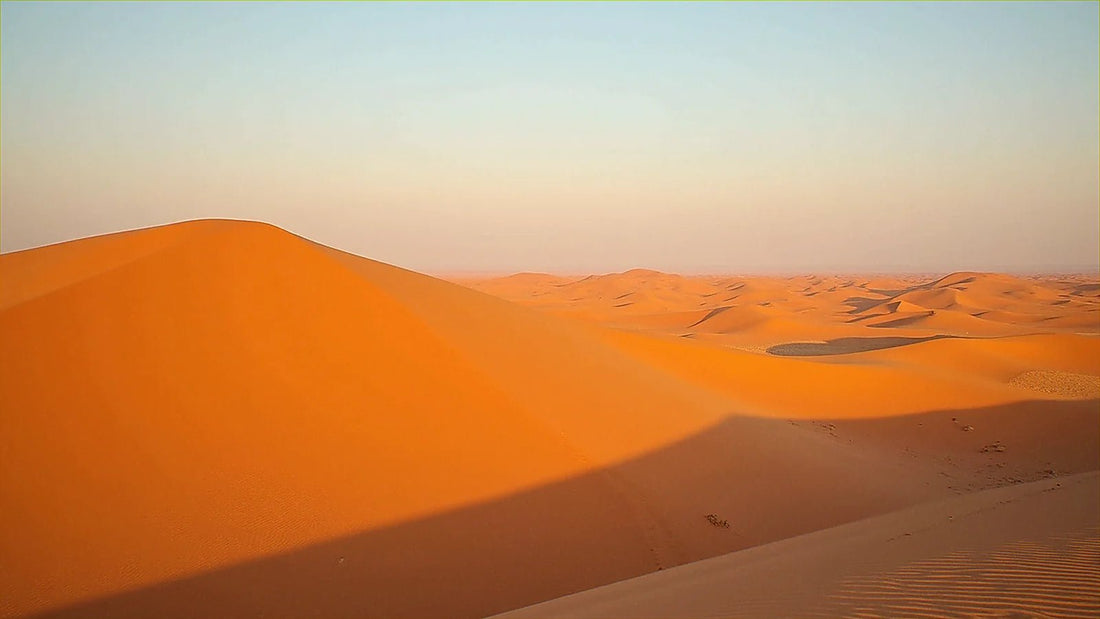
Geographically, Niger is enormous—larger than France and Spain combined—and divided into two worlds. The southern third, along the Niger River and the border with Nigeria and Benin, concentrates the population, cities, and practically all telecommunications infrastructure. The northern two-thirds are Sahara: the Aïr Massif, the Ténéré Desert, the Djado. Almost no one lives there, and, as you'll see, there's no mobile network worth mentioning.
Safety: what the Ministry of Foreign Affairs says and which areas are not recommended
I cannot write a connectivity guide for Niger without putting this first, because it conditions everything else. The Ministry of Foreign Affairs maintains very restrictive travel recommendations for Niger, with a disclaimer against traveling to the country and specific warnings about terrorist risk and the kidnapping of foreigners. The repeatedly highlighted areas are the western border with Mali and Burkina Faso (Tillabéri region, the so-called "three borders" area), the Diffa region in the southeast near Lake Chad, and the entire north, including the Agadez region and the desert.
I insist on one point: do not trust this article or any other for the safety part. Consult the official Niger country profile on the Ministry of Foreign Affairs website the day before buying your ticket and again the day before you fly, because it changes. And register with the Traveler Registry of the MAEC: it's free, takes two minutes, and allows the consulate to know you're there if something goes wrong. Spain maintains an embassy in Niamey; save their emergency number on your phone and also on paper.
Just because there's coverage in a place doesn't mean it's a good idea to go there. This is the most dangerous mental trap in this country: the network map and the security map do not coincide. There are towns along the southern axis with decent 4G in areas where humanitarian organizations only move with strict protocols. If you're with an NGO, a mining company, or a mission, their security department takes precedence over anything you read here. If you're going on your own, reconsider.

Real coverage: Niamey, the southern axis, and the emptiness of the Sahara
Nigerien connectivity can be summarized in one sentence: it works where people live and disappears where the sand begins. In Niamey, you'll have reasonable 4G in the city center, administrative districts, Plateau hotels, and around the Niger River. Don't expect European speeds: we're talking about an experience that works for WhatsApp, email, maps, browsing, and video calls if conditions are right, but that degrades in the evenings and during power outages. 5G is practically non-existent for the average user.
The southern axis—the national road connecting Dosso, Birni N'Konni, Maradi, Zinder, and Diffa, plus Tahoua and Tillabéri—has coverage in cities and along much of the corridor, with drops to 3G or even 2G between towns. This is where 90% of the country's economic life takes place, and where the three operators compete for customers.
Beyond that, the map empties out. In the Ténéré, the Aïr, the Djado plateau, and the tracks towards Libya and Algeria, there is no mobile coverage except for isolated pockets around Agadez, Arlit, and Bilma. Those who truly operate there do so with satellite phones (Thuraya or Iridium) or satellite internet terminals, not mobile data. If your work takes you north, satellite communication is not a luxury: it's plan A, and it's worth knowing that the import and use of satellite equipment may require authorization.
Two structural causes explain prices and quality: Niger is landlocked, so all its international traffic enters via terrestrial cable from Benin, Nigeria, or Burkina Faso, which increases bandwidth costs; and the electricity grid is fragile and highly dependent on imports from Nigeria, with outages that bring down antennas.
Internet outages: what you need to know before you go
I've verified this because it's a real planning factor and almost no one mentions it: Niger has suffered internet outages associated with episodes of political instability. In February 2021, after the second round of presidential elections, authorities cut internet access for days, something documented by digital rights organizations like Access Now. In July and August 2023, with the coup that ousted President Bazoum, there were connectivity disruptions and the NetBlocks observatory reported a gradual restoration of service by the end of August. As early as 2019, during a previous coup attempt, a similar blackout was recorded.
The pattern, common in several countries in the region, is to first shut down access to social media and, if things escalate, the entire connectivity. The practical consequence for you is simple: no type of card will save you from a nationwide outage. Not a local SIM, not an eSIM, not the hotel Wi-Fi, because they all depend on the same networks.
What you can control is not being left in the dark if it happens. Always have an alternative channel: contact numbers on paper, a meeting point agreed with your team, and, if you work outside Niamey, a shared satellite phone.
Download everything critical before leaving home: offline maps of Niamey and your route, your documents, tickets, insurance, the consulate letter, and emergency contacts. And inform someone in Spain of your daily plan with specific times, so that a twelve-hour silence isn't automatically interpreted as an emergency if it's just a network failure. It's a cheap habit that saves you and your loved ones scares.
The four ways to get connected, compared
On paper, you have four paths, and each has a very clear traveler profile. I've put them in a table and then I'll break them down one by one.
| Option | Estimated cost | Setup | Suits… |
|---|---|---|---|
| Spanish plan out-of-bundle | Very high, per MB or per day | None, activates automatically | Stays of 24-48 hours with minimal use |
| Hotel or office Wi-Fi | Included | None | Work from a fixed base in Niamey |
| Local SIM (Airtel, Zamani, Moov) | Very low per GB | Shop, passport, and registration | Long missions, months on the ground |
| Data eSIM | Medium, no surprises | Before flying, via QR | Visits of days or weeks, direct arrival |
Wi-Fi deserves a separate paragraph because in Niger it's weaker than people expect. In international hotels in Niamey, it works, with ups and downs and shared among guests; in mid-range accommodations and inland, it's slow or purely decorative. And it depends on electricity: when the power goes out, if the generator doesn't cover the router, you're left with nothing. Relying solely on hotel Wi-Fi for a work mission is an unnecessary risk.
Regarding portable Wi-Fi routers like pocket Wi-Fi, which work so well in Asia, they make little sense here: there's no established rental market, you'd have to bring it from Europe with its own card, and you add one more device to charge, lose, or have seized at customs. If you want details on when they're worth it and when they're not, I cover it in the comparison of eSIM vs. pocket Wi-Fi. Fewer gadgets and fewer formalities is exactly what you want in this destination.
Your Spanish plan outside the EU: the expensive surprise
There's no fine print here: Niger does not belong to the European Union or the European Economic Area, so "Roam Like at Home"—that European rule that lets you use your home data allowance without extra charges—does not apply. Nor is it an outermost region like the Canary Islands, Guadeloupe, Martinique, Reunion, French Guiana, or Mayotte, where you would still be within the community umbrella. In Niger, you directly enter the most expensive zone of your Spanish operator's plan, often called "Zone 3," "Rest of the world," or similar.
Out-of-bundle prices in these zones are charged per megabyte, and we're talking about figures ranging from around €2 per MB to over €12 per MB depending on the operator and contract. In translation: a WhatsApp video that downloads automatically, a few background updates, and a map loading can leave you with a three-figure bill in an afternoon. Some operators offer daily bundles for sub-Saharan Africa, but these usually cost around €10-€20 per day for very little data.
If you decide not to buy anything before flying, go to your phone's settings and deactivate data roaming before taking off, not when you land. The first network connection happens as soon as you turn off airplane mode.
It's worth calmly comparing numbers: I've broken down tariffs and common pitfalls in how much international roaming costs, and the direct comparison with the alternative is in eSIM vs. roaming. Call your operator and ask for the exact rate for Niger in writing, with the country code in front: it's the only way to ensure they don't tell you the rate for Nigeria.

Local SIM: Airtel, Zamani, and Moov with prices in CFA francs
The Nigerien market is shared by three private operators supervised by ARCEP, the national regulator. Airtel Niger is the leader in market share and geographical reach. Zamani Telecom is the former Orange Niger, rebranded after a change of ownership, and maintains a good urban network. Moov Africa Niger, part of the Maroc Telecom group, competes with aggressive pricing. There was also a public operator, Niger Télécoms, with a residual presence.
Prices are among the lowest you'll ever see, with the currency pegged to the euro at a rate of 655.957 XOF per euro:
| Bundle | Airtel Niger | Zamani Telecom | Moov Africa | Equivalency |
|---|---|---|---|---|
| Day (24 h), 500 F | up to 600 MB | 600 MB | 650 MB | ≈ €0.76 |
| Week, 1,000 F | ≈ 1 GB | 1 GB | 1.2 GB | ≈ €1.52 |
| Week, 3,000 F | ≈ 5 GB | 5 GB | 5.2 GB | ≈ €4.57 |
| Month, 5,000 F | ≈ 6 GB | 6 GB | 6.2 GB | ≈ €7.62 |
| Month, 10,000 F | ≈ 16 GB | 16 GB | 17 GB | ≈ €15.25 |
| Month, 20,000 F | ≈ 40 GB | 40 GB | 42 GB | ≈ €30.50 |
Tariffs are activated by USSD codes from the phone's keypad and topped up with scratch cards sold on any corner or with mobile money. There are often bonus promotions, such as the 100% extra on Mondays, Wednesdays, and Fridays announced by Airtel.
The downside isn't the price, it's the process: card registration is mandatory and in-person, with a passport and sometimes biometric data collection, at an official store. That means queuing, cash in CFA francs, French or Hausa to communicate, and an unlocked mobile phone. I compare it in detail in eSIM vs. local SIM. For a long stay, it pays off; for four days, it's time you don't have.
The option I recommend for a work trip
If your trip lasts from a few days to a few weeks, my recommendation is clear: buy a digital card before leaving Spain, activate it with your home Wi-Fi, and arrive in Niamey connected. This is a card that downloads to your mobile, without plastic, and connects to the local networks available in the country. If you've never used one, here's an explanation of what an eSIM is and how it works internally.
The specific reasons for this destination, not generic ones:
- You arrive connected. At Diori Hamani airport, you'll have maps, contacts, and transportation from minute one, without having to look for an operator's store.
- You save yourself the in-person registration with passport and biometrics, which on a short trip is half a morning wasted.
- You keep your Spanish number active in the other slot, for bank SMS, verifications, and work calls.
- Fixed cost. You pay upfront, you know the limit, and there are no surprise bills upon your return.
- You don't carry extra cash or negotiate in CFA francs in a store that might be closed on the day you arrive.
The data you need depends heavily on your profile, and in Niger, actual consumption is usually low because the network doesn't support video marathons:
| Profile | Days | Recommended data | Typical usage |
|---|---|---|---|
| Layover or lightning visit | 1-3 | 1-3 GB | Maps, messaging, email |
| Short work mission | 5-10 | 5-10 GB | Email, cloud, brief video calls |
| Cooperation or project | 2-4 weeks | 15-20 GB | Reports, photos, daily meetings |
| Family visit or diaspora | Variable | 10 GB or more | Long video calls with Spain |
For specific installation steps, mobile compatibility, and troubleshooting, refer to the eSIM for Niger guide. Check everything with your home Wi-Fi, never at three in the morning in an unfamiliar terminal.
On the ground: Niamey, Kouré, the Aïr, the Ténéré, and Agadez
Niamey is where you'll spend most of your time and where you'll be best connected. The Niger River divides the city and offers its best views: the Kennedy and Friendship bridges, pirogues at sunset, green riverbanks contrasting with the Harmattan dust. The Grand Market and the Boubou Hama National Museum concentrate what little classical sightseeing still makes sense, always adhering to the security protocols provided. In these neighborhoods, 4G holds up well.
About 60 km southeast lies Kouré, home to the last wild population of West African giraffes, a subspecies that only survives here. For years, it was the star excursion from the capital. It's worth noting that in August 2020, an attack in that same area claimed the lives of eight people, including six French aid workers, and since then, visits have been marked by security restrictions. It's not a plan to improvise.
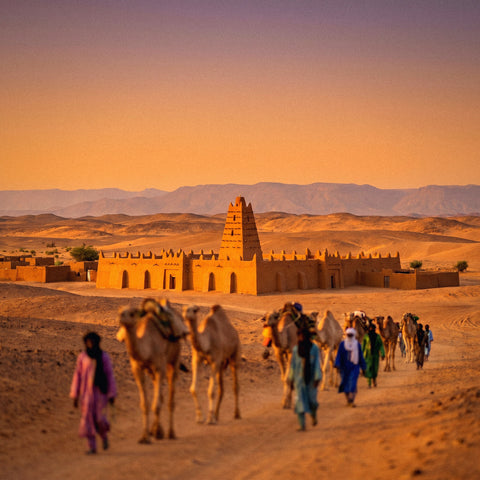
And then there's the north, which is the great sorrow of this country. The Aïr Mountains and the Ténéré Desert —a UNESCO World Heritage site and on the list of endangered heritage since 1992— were the icon of Saharan tourism: salt caravans to Bilma, endless dunes, the mythical Ténéré Tree. Agadez, with its great mud mosque and unmistakable minaret, is also a World Heritage site and was the gateway to all that.
Today, none of that is normally accessible: the region is advised against, Saharan trekking agencies have not operated as before for years, and economic activity revolves around mining —uranium in Arlit and Akokan— and routes that have nothing to do with leisure travel. Mobile coverage there, quite simply, you won't have it: only around urban centers and mining facilities.
Frequently Asked Questions
These are the questions I get asked over and over about this destination. If yours isn't here, write to me and I'll add it.
Are Niger and Nigeria the same country?
No, they are two distinct and neighboring countries. Niger is Francophone, its capital is Niamey, it uses the West African CFA franc (XOF), has prefix +227, and about 26 million inhabitants. Nigeria is Anglophone, its capital is Abuja, it uses the naira, has prefix +234, and over 200 million inhabitants. They are constantly confused because the name only changes by one syllable, but they share little more than a border and a river. Their mobile operators are not the same: in Niger, there are Airtel, Zamani, and Moov; in Nigeria, MTN, Glo, and Airtel Nigeria. Buying the wrong country's SIM card is a common and costly mistake.
Is it safe to travel to Niger right now?
The Ministry of Foreign Affairs advises against travel to Niger, with warnings of terrorism and the risk of kidnapping of foreigners. The areas highlighted include the western border with Mali and Burkina Faso, the Diffa region near Lake Chad, and the entire north, including Agadez and the desert. Always consult the official updated Foreign Affairs information before deciding anything, as the situation changes, and register with the MAEC Traveler Registration system. If you are traveling for work, your organization's safety rules take precedence over any general recommendation.
Is there mobile coverage in the Ténéré Desert or the Aïr?
No. Outside the urban centers of the north, there is no mobile network. There are coverage bubbles around Agadez, Arlit, and Bilma, but the Ténéré tracks, the Aïr massif, and the Djado plateau are completely blank. Those who work there use satellite phones (Thuraya, Iridium) or satellite internet terminals, and it's advisable to check if the equipment requires import or usage authorization. Expecting mobile data in the Nigerian Sahara is not optimism; it's a planning error with serious consequences.
Can the government cut off the internet while I'm there?
It has happened several times and is a real risk that needs to be planned for. In February 2021, there was a multi-day internet outage after the presidential run-off, documented by Access Now. In July and August 2023, during the coup, disruptions were recorded, and NetBlocks reported gradual restoration in late August. In 2019, something similar happened during a coup attempt. No type of SIM card protects you from a national outage, because they all depend on the same networks: what helps is having contacts on paper, agreed-upon plans, and a satellite channel if you leave Niamey.
Does my Spanish plan work in Niger without extra charges?
No: Niger is outside the European Union, so your data allowance does not travel with you. It is not the EU, EEA, or an outermost region, so the European roaming without surcharge rule does not apply. You enter the most expensive zone of your plan, where data is charged per megabyte and can range from around €2 to over €12 per MB depending on the operator. Daily bundles for sub-Saharan Africa are around €10-€20 per day for very little data. Deactivate data roaming before you take off if you haven't arranged anything.
How much does a local Nigerian SIM cost and what documents are required?
Data is very cheap, but registration is mandatory and requires an in-person passport. With Airtel, Zamani, or Moov, around 5,000 FCFA (≈ €7.60) gets you about 6 GB for 30 days, and 10,000 FCFA (≈ €15.25) gets you around 16-17 GB. Daily bundles start from 100 FCFA. To activate it, you need to go to an official store with your passport, provide your details, and sometimes undergo biometric registration, in addition to having cash in francs and an unlocked phone. It pays off if you're staying for weeks or months; for a short visit, the hassle outweighs the savings.
What do I need besides connectivity before flying to Niger?
Mandatory visa, yellow fever vaccination certificate, and cash in CFA francs. The visa must be obtained in advance and cannot be arranged upon arrival; the yellow fever certificate is required at entry. Bring euros to exchange and some local cash, as card payments are hardly available outside international hotels. Add travel insurance with medical evacuation coverage, a first-aid kit, serious sun protection, and digital and paper copies of all your documents. Avoid photographing official buildings, military installations, or bridges: it's a guaranteed problem.
Conclusion
To summarize the important points: Niger is the country of Niamey and the CFA franc, not Nigeria; the Foreign Ministry maintains very restrictive recommendations and there are entire areas advised against, starting with the north and the borders; mobile coverage is reliable in the capital and in the southern axis, irregular inland, and nonexistent in the Sahara; and the country has experienced internet outages linked to political events, so it's advisable to have a backup plan that doesn't depend on the network.
For the part you can control, my advice is always the same for complicated destinations: arrive prepared. Leave your Spanish plan out of the picture, forget about improvising procedures at an operator's store, and land with data working from the first minute. If it suits you, here's the eSIM for data in Niger, ready to install before leaving home. Prepare your connection calmly on the sofa and dedicate the trip to what you went there to do, which is already quite a lot in this destination.