If you've made it this far, you've already decided to buy data and just need to know how much: how many GB you need for Niger without overdoing it or falling short. And Niger is a different kind of destination because almost no one goes there for a vacation. People go to work—cooperation, NGOs, missions, uranium mining—or to see family. Be careful, it's not Nigeria: we're talking about Niger, capital Niamey, in the heart of the Sahel. That travel profile changes the number, and almost always for the better.
The number, straight up
For a 10-day work stay in Niger, usually based in Niamey, most people will find 3 GB to be more than enough. If you make daily work video calls or upload many photos, increase to 5-7 GB. Outside Niamey there is no network: you won't use any data there.
That's the short answer, and I like to give it first so you don't have to search. Niger is one of those destinations where the temptation is to buy a huge package "just in case" and then arrive and not use even half of it, because much of the country simply has no coverage. Connection is concentrated in Niamey and the southern axis, and there, consumption is like a normal city: maps to get around, WhatsApp with the team and at home, some social media, and email.
First of all, it's worth framing the trip. This article doesn't compare how to connect—you can find that in the destination's internet guide—but only answers how many gigabytes to buy. If you want the complete picture of the cluster, I'll leave you the general hub on how much data you need for travel, which works for any country. Here we go into detail for Niger, which has its own rules.
Niger is not Nigeria: clarifying the destination
I'm clarifying this early because it's the most common mistake and affects what you buy. Niger is the landlocked Sahelian country, capital Niamey, crossed by the Niger River, with its north occupied by the desert. Nigeria, on the other hand, is the coastal giant next door, with its capital Abuja and Lagos as a major metropolis. They are similar in name and in almost nothing else: different official languages (French in Niger, English in Nigeria), different operators, and different coverage.
This matters for data for a practical reason: packages, networks, and availability are not interchangeable. A plan designed for Nigeria, with its well-covered large cities, does not reflect what you will find in Niger, where connectivity is much more concentrated and fragile. If you buy "for Nigeria" thinking it's the same, or if you look for coverage in Lagos when you're going to Niamey, you're in for a surprise.
Simple mental rule: Ni-ger, with capital Niamey, both start with a short "Ni". Nigeria has the extra syllable. When you configure your data destination, make sure it says Niger (code NE) and not Nigeria (NG). It's a thirty-second oversight that prevents you from running out of connection on the first day, which is precisely when you need it most to get oriented.
Why you'll use less data in Niger than you think
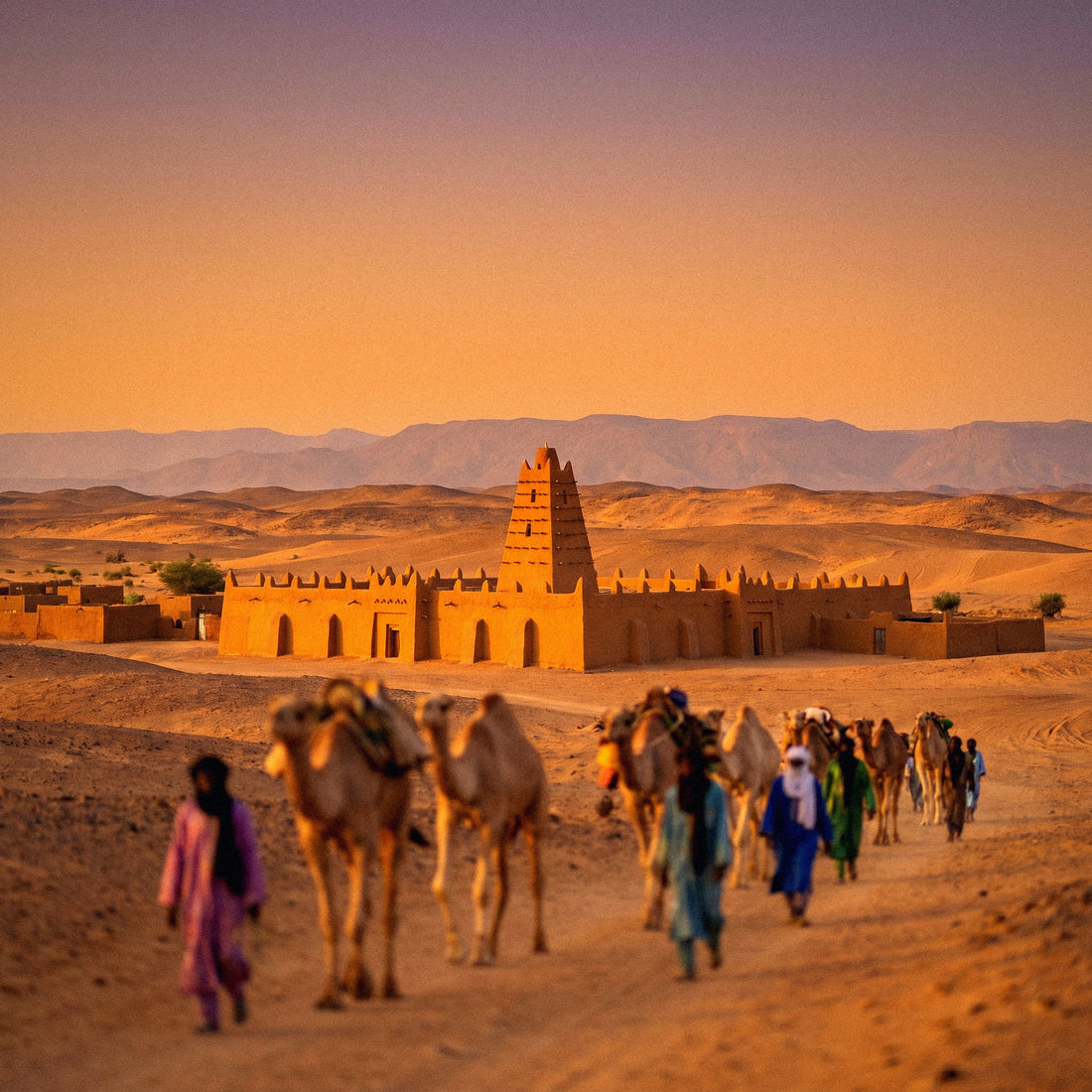
Here's the particularity that makes this destination unique. On most trips, you spend more than expected; in Niger, the opposite usually happens, and for a geographical reason: much of the country has no coverage. The Ténéré Desert, the Aïr Massif, and much of the area around Agadez—the great icons of Saharan tourism—are not normally traveled today and, moreover, have no signal. There are no antennas in the Sahara: no matter how much data you have, you won't consume any there.
The result is that your actual spending is concentrated during the hours you spend in Niamey and the southern axis, where there is usable network. And there, consumption is moderate and urban: checking maps, messaging, checking email, an occasional video call. There isn't that constant drip of streaming on the go that skyrockets the bill on a European city trip.
Before any gigabyte calculation: check the official travel recommendations from the Ministry of Foreign Affairs. For Niger, they advise against most travel within the country and raise the alert even in Niamey. Data is the least of your worries if the area is not safe.
Translated into numbers: if you're going to be mostly in the capital and on short trips in the south, plan for those connected hours, not for the total days of travel. Days in the desert, long journeys, or base camps without coverage are days of almost zero expense.
How much each mobile activity consumes
To decide wisely, it helps to see what each activity consumes. These figures are approximate—they depend on quality, cache, and background use—but they serve to give you a realistic idea. The important thing: what really consumes data is video and video calls; the rest, in normal work use, is barely noticeable.
| Activity | Approximate Consumption |
|---|---|
| Maps (Google Maps navigation) | 5-10 MB/hour |
| WhatsApp (text and voice) | Text almost none; voice call ~1 MB/min |
| Social media (Instagram/TikTok scroll) | 300-720 MB/hour |
| Uploading photos (10 photos to the cloud) | 30-50 MB |
| Video call (WhatsApp/Meet) | 200-600 MB/hour |
| Music streaming | 40-100 MB/hour |
| YouTube video at 480p | ~300 MB/hour |
| YouTube video at 1080p | ~1.5 GB/hour |
Notice the jump: half an hour of maps a day for a month is a few hundred MB; a single HD movie consumes that in one sitting. That's why, on a work trip to Niger—where leisure video is rare and evenings are spent on other things—consumption tends to be low. If you want a complete breakdown by app, you can find it in the data usage statistics by activity.
How many GB based on your profile and days
This is the table that really matters. I've cross-referenced four typical profiles of someone traveling to Niger with the most common durations. These are calculated assuming that much of the time you will be without coverage or based in Niamey, so these are honest, not inflated, figures. Choose your row, look at your column of days, and you have your starting number.
| Profile | 5 days | 10 days | 15 days | 30 days |
|---|---|---|---|---|
| Aid worker for maps and WhatsApp (essentials) | 1 GB | 2 GB | 3 GB | 5 GB |
| Diaspora: photos, social media, and calls home | 3 GB | 5 GB | 7 GB | 12 GB |
| Mission / telework with daily video calls | 4 GB | 7 GB | 10 GB | 20 GB |
| Team or family sharing a hotspot | 5 GB | 10 GB | 15 GB | 25-30 GB |
How to read it: the aid worker row covers someone who uses their mobile to navigate, coordinate via WhatsApp, and send some emails; this is the most common use in the field and the most contained. The diaspora usually relies more on photos and family video calls, hence the jump. The mission profile with daily video meetings consumes the most, because video calls are one of the heaviest activities. And if you're going to share the connection with a team or family, multiply: each connected device adds up. If in doubt between two figures, go with the lower one and recharge if necessary, which will almost never be necessary.
Real coverage: Niamey, the southern axis, and the northern void
Understanding where there's a signal is what prevents you from buying too much. Three networks operate in Niger: Airtel, which has the widest reach in Niamey; Zamani (formerly Orange), with weaker 4G according to the regulator itself; and Moov, competitive in price and which has been expanding its 4G in the capital. The quality is not first-world: there is slowness during peak hours and coverage drops quickly as you leave the central neighborhoods.
| Area | Data Coverage |
|---|---|
| Niamey (central neighborhoods) | Reasonable 4G, better with Airtel |
| Southern axis (Dosso, Maradi, Zinder) | Irregular 3G/4G in urban centers |
| Roads and rural areas in the south | Intermittent, often only 2G/3G |
| Agadez (city) | Basic and limited |
| Aïr, Ténéré and great northern desert | No signal |
Two warnings that affect your connection. One: for a local SIM, they ask for your passport to register it, which is a normal procedure in the region. Two: during periods of political instability, there have been internet outages, so don't rely on being always connected for anything critical. If you want to see how to connect step-by-step—networks, SIM, and alternatives—you can find it in the guide to internet in Niger, and if you prefer to arrive with data already active, check out the Niger eSIM. If you're still not sure what this technology is, here's an explanation of what an eSIM is.
Calculate your own consumption before you leave
The table gives you a starting point, but the most reliable data is in your pocket. Before traveling, check your consumption from the last month in your phone's settings and you'll have your true average. On Android: Settings > Network & internet > SIM > Data usage. On iPhone: Settings > Mobile Data, and scroll down to the total for the period. That real number is worth more than any manual estimate.
Now adjust it to your trip. At home, you use data all day because you don't always have Wi-Fi; in Niger, it's the opposite: you'll spend hours without coverage and, when available, you'll use it more functionally. An honest trick: take your daily average from home, subtract the video entertainment you won't be repeating there, and multiply it only by the days you'll actually be connected in Niamey and the south, not by the total days of the trip.
Example: if at home you use 4 GB a month, that's about 130 MB a day. But much of that is YouTube and TV shows. In the field, your functional use might stay at 50-80 MB per connected day. Ten days based in the capital rarely exceed 1 GB. That's why I insist on low figures: I'd rather you have two euros of data left over than buy a giant package you won't even touch.
How to make your data last in Niger
With a few adjustments, the figure drops even further, and you forget about monitoring the counter. The most cost-effective approach in a destination with irregular coverage like this is to prepare your phone at home, with good Wi-Fi, before leaving. This way, you arrive with the heavy stuff already downloaded and only consume the minimum on the ground.
- Offline maps: download Niamey and the southern areas you'll be visiting on Google Maps or Maps.me. Navigating without data and spending zero is the biggest saving.
- Backups only via Wi-Fi: disable automatic photo and video uploads to the cloud using mobile data. This is the number one silent expense.
- Minimum video quality and autoplay disabled on social media; in a country where you won't be watching much video, this is easy to manage.
- Data saver mode activated in the system and in apps like WhatsApp, to curb automatic downloads.
A couple of specific points for Niger. If you use a VPN at any point—some people use it for work or due to network outages—be aware that it adds some extra consumption. And download at home anything you absolutely need (documents, emergency contacts, offline translator with its language) because you might not always have a network to download it there. You can find more ideas in my tips for saving data while traveling.
What happens if you run out
Don't worry: running out of data in Niger isn't a big deal, and it's almost always the right move. If you use up your data, recharging is just a couple of taps away, and you'll be connected again in minutes. What you can't get back is the money from a huge package you bought out of fear and only used a quarter of. That's why my advice is to start with just enough and only expand if your own consumption demands it.
There's an extra reason in this destination not to overdo it: with so many areas without coverage and potential network outages, the real risk isn't overspending, but planning your trip as if you'll always be online. You won't be. Keep important things stored locally and treat the connection as a useful extra, not as something guaranteed 24 hours a day.
If you still prefer a margin, the sensible rule is to add 20-30% to your profile's figure, never double. For a 10-day aid worker trip, that's going from 2 to 2.5-3 GB; no more is needed. And if you're unsure whether you'll use a lot, start with the low tier: you'll see that, between the desert without antennas and busy evenings, the counter barely moves.
Frequently asked questions
Quick questions I get about data for this destination, answered to the point.
How many GB do I need for 10 days in Niger?
Most people will find 2-3 GB more than enough for 10 days if based in Niamey and using maps, WhatsApp, and email. Increase to 5-7 GB only if you make daily work video calls or handle many photos.
Does this apply to Nigeria or only to Niger?
Only to Niger (capital Niamey), not to Nigeria. They are different countries with different operators and coverage. Always ensure you configure the destination as Niger (NE) and not Nigeria (NG) to avoid losing connection.
Will I have coverage in the Ténéré Desert or Agadez?
In the desert, no: there is no signal. The Aïr, the Ténéré, and much of the north lack coverage, and are not normally traveled today. Agadez city has basic coverage. That's why you'll use less data than you imagine.
Do I need my passport to get data there?
For a local SIM, yes: they ask for your passport to register it. This is the usual procedure in the region. If you arrive with data already activated in advance, you avoid queues and paperwork as soon as you land.
What if there's an internet outage in the country?
This can happen during periods of political instability and affects all networks equally. It's not about your data package. Have important things downloaded locally and don't rely on being always connected for anything critical.
Is it worth buying a large package "just in case"?
Not in Niger. With so many areas without coverage, a large package will be half-unused. Start with the figure for your profile, and recharge in a couple of taps if you run short. It's more cost-effective.
Is it safe to travel to Niger?
Always consult official Foreign Affairs recommendations first. For Niger, they advise against most travel within the country and maintain a high alert even in Niamey. This article assumes you are traveling for work with an organization that manages your safety.
Conclusion
If you take away one idea, let it be this: in Niger, you'll use little data because half the country has no coverage, so buy for what you'll use in Niamey and the south, not for the total days. For a typical 10-day work trip, 2-3 GB is more than enough for essential use; increase to 5-7 GB if there are daily video calls. Start small and recharge if needed: it will almost never be necessary.
And before gigabytes, prioritize safety: check official Foreign Affairs recommendations, as there are extensive areas where travel is advised against. If you're clear on that and want to be connected from minute one, check out the Niger eSIM from PuraSIM and choose the size you determined from the table. Have a good trip and good work.