If you've made it this far, it's because your trip to Libya is already halfway planned—almost certainly for work, as few people go there for tourism—and you just need to decide how many GB to buy. I'll get straight to the point: in Libya, the number isn't determined by what you'd like to consume, but by how unreliable the network is. Here's an honest, low figure, with a warning up front: you can't depend on being connected all the time.
The quick figure for Libya
For 10 days in Libya, most professionals will find 3-5 GB to be more than enough. Not because you use little data, but because you'll spend many hours without decent coverage or connected to the Wi-Fi at your accommodation or office. Buy modestly and top up if necessary; buying too much is a waste of money.
I'm telling you this bluntly because it's what really happens on the ground. Libya is not a destination where you'll be using mobile data from sunrise to sunset: between network outages, blackouts that leave cell towers without power, and the fact that you'll spend much of your day at a base, hotel, or office with its own Wi-Fi, your actual SIM usage will be low compared to what you'd spend in, say, Italy or Thailand.
My initial recommendation for a one or two-week work trip is 3 GB if your trip is short and you rely heavily on Wi-Fi, and 5 GB if you need to move around, call home daily, and use maps in the city. Beyond that, only increase if your job involves uploading photos or videos. If you want the complete picture of how to size data for any trip, you can find the general cluster method in the guide on how much data I need for travel. This article is the version applied to a country where the golden rule is: budget little and have a plan B for when the network simply isn't there.
Why Libya changes the numbers
The key to understanding the figure is that in Libya, the bottleneck isn't you, it's the infrastructure. The country has been divided for years between rival administrations—the west with Tripoli, the east with Benghazi—and this is reflected in the network: irregular quality, outages, and clear differences between regions. There are only two dominant operators, Libyana and Almadar (Al-Madar Aljadeed), both state-owned, and neither offers the reliability you're used to in Europe.
Several things push your consumption down, even if it sounds counterintuitive:
- Outages and blackouts. Power outages frequently hit cell towers, so even in areas with good coverage, you'll be without signal for hours. That's data you don't spend.
- Ordered blackouts. Authorities have decreed national internet blackouts during exam periods or political events. No SIM or eSIM can bypass them.
- Limited geographical coverage. The network reaches 90% of the population but covers less than 20% of the territory. Outside coastal cities, there's almost nothing.
- Plenty of base Wi-Fi. Accommodations, field offices, and compounds usually have their own connection, which absorbs much of the heavy usage.
All this explains why I recommend such a contained figure. If you want details on how to connect—which operator works best in each area, how to activate your line—you can find it in the sister guide on internet in Libya. Here we'll stick to gigabytes.
How much data each app uses
Before translating your profile into gigabytes, it's worth seeing where the numbers come from. These are real consumption figures per activity; you'll be surprised how little essential services (messaging, maps, email) use and how much video consumption skyrockets. In a destination like Libya, it's logical to live in the upper half of this table and leave the lower half for Wi-Fi.
| Activity | Approximate Consumption | Notes |
|---|---|---|
| Messaging (WhatsApp, Telegram) | 5-10 MB/hour | Text only, almost free |
| Maps and navigation (basic map) | 5-10 MB/hour | With downloaded map, almost 0 |
| Email and web browsing | 10-30 MB/hour | Without watching videos or heavy photos |
| Voice call over internet | 150-300 MB/hour | WhatsApp, Teams, etc. |
| Upload 10 photos | 20-50 MB | Depends on size |
| Music streaming | 40-150 MB/hour | Depending on quality |
| Video call | 300-700 MB/hour | The biggest data hog |
| Social media (feed, stories) | 350-600 MB/hour | Autoplay skyrockets it |
| Video 480p | 500-600 MB/hour | Save it for Wi-Fi |
| Video HD 720p | more than 1 GB/hour | Unthinkable with this network |
If you want a more detailed breakdown with more apps, you can find it in the data usage statistics by activity. The lesson for Libya: with messaging, maps, and email, you can last weeks with very little; video is the only thing that will drain your plan.
How many GB depending on your profile and duration
This is the table you came looking for. I've crossed the real profiles of those who travel to Libya—people in energy and business, press, humanitarian personnel, and the highly specialized traveler who enters with an agency—with typical durations. The figures already account for the fact that much of the heavy usage will be via Wi-Fi at the base or hotel, and that there will be occasional days with little to no network.
| Profile | 5 days | 10 days | 15 days | 30 days |
|---|---|---|---|---|
| Energy / Business (base with Wi-Fi) | 2 GB | 4 GB | 6 GB | 10 GB |
| Press / Reporting (photos, some video) | 4 GB | 7 GB | 10 GB | 20 GB |
| Humanitarian / NGO (calls, email) | 3 GB | 5 GB | 8 GB | 15 GB |
| Traveler with agency (maps, WhatsApp) | 2 GB | 3 GB | 5 GB | 8 GB |
Read this as a comfortable ceiling, not a minimum. If your day involves an office or base with Wi-Fi and you only use your mobile line for WhatsApp and a few maps, you'll be well below this. The press profile is the only one that truly increases, because uploading images and clips is heavy—and will also contend with a slow network. My advice is to start with the row that corresponds to you and top up on the fly if you see you're running low, rather than buying too much "just in case." In Libya, "just in case" rarely gets used.
Real-world profiles on the ground
It's worth detailing each profile, because consumption changes a lot depending on your purpose. These are the four types of travelers who genuinely go to Libya today:
- Energy and business. Personnel from oil companies, engineering firms, or logistics. You usually operate from a compound or office with Wi-Fi, and you use your mobile line for WhatsApp with the team, calls home, and maps when moving around the city. Low and predictable consumption: 2-4 GB per week or two is more than enough.
- Press and reporting. The most intensive profile. Uploading photos, sending video clips, occasional live broadcasts. Here, a margin is advisable, although the irregular network will hinder you more than your data plan. This is the only case where thinking of 7-10 GB or more makes sense.
- Humanitarian and NGO. Coordination via email and messaging, occasional video calls with headquarters, some geolocation. Medium-low but constant usage, often from poorly covered areas. 5-8 GB for long stays.
- Highly specialized traveler. Almost always enters with an agency and managed visa, in a closed group and with a pre-arranged route. Maps, WhatsApp, and little else; the rest will be viewed offline. This person uses the least data.
Honest rule for all: in Libya, your data package is a tool for emergencies and coordination, not for entertainment. Size it accordingly and you won't overspend.
Whatever your case, the low figure is the correct one precisely because the network won't let you spend more even if you wanted to.
Calculate your own consumption before you go
The most reliable way to get it right isn't to rely on a generic table, but to check your own history. Your phone keeps an exact count of what you spend, and extrapolating it takes just a minute.
On an iPhone: Settings > Mobile Data and scroll down to see the consumption for the period (remember to reset the statistics on the 1st of the month for a clean figure). On Android: Settings > Network & internet > SIM / Data usage, and check the monthly total and which app is using it. With that, you can calculate:
- See how many GB you use per month in your normal life.
- Divide by 30 to get your daily consumption.
- Subtract what you do at home over Wi-Fi and what you will also do over Wi-Fi in Libya (Netflix, backups, updates).
- Multiply by the number of travel days and add a small buffer.
For Libya, also apply an extra cut: for much of those days, the network will not be available or will be so slow that you will consume less than you think. If your calculation gives you 6 GB, it is very likely that 4 GB will be ample. This exercise, more than any blog recommendation—including mine—is what gives you the true figure, because it is based on your habits and not on an invented average.
How to extend data with an irregular network
In a country where connection comes and goes, extending your data isn't just about saving money: it's about having essentials working when the network is struggling. These adjustments make a difference and can all be done in five minutes before you leave:
- Offline maps, no exceptions. Download the cities and routes you'll be using on Google Maps or Maps.me. This is the first thing I do, and in Libya, it's almost mandatory, because outside cities, there won't be a network to load them.
- Backups only via Wi-Fi. Photos, iCloud, Google Photos, and Drive: ensure they don't upload anything via mobile data. This is the mistake that consumes the most gigabytes without you realizing it.
- Data saver mode activated. Both the system's and each app's (WhatsApp, social networks). Prevents automatic downloads and autoplay.
- Video and music, low quality or downloaded. Download your playlist and some podcasts before you leave.
- App updates, Wi-Fi only. One afternoon of updates can drain an entire data plan.
Be aware of a detail specific to Libya: if you ever use a VPN—common for work with sensitive data—keep in mind that encrypting traffic adds a small amount of extra consumption. It's not dramatic, but it counts. You can find the complete list of tricks in the guide on how to save data on a trip.
If you run short (and the payment problem)
It's worth repeating: it's better to run short and top up than to overbuy. If you buy 4 GB and realize you're using it quickly, adding more is a matter of moments; on the other hand, the gigabytes you buy in excess and don't use won't come back. And in Libya, with so much time without an effective network, overspending is the most likely outcome if you let yourself be guided by "better safe than sorry."
This is where an eSIM works in your favor compared to a local SIM, and it's not a minor detail in this particular country. In Libya, paying with a foreign card is practically unfeasible: the system works with cash, and buying and topping up a local SIM involves paperwork, documentation, and dealing with bills. With an eSIM contracted and paid for from home before you fly, you arrive with active data without depending on a store or an ATM that won't accept your card. If you want to see how it works and which plan fits, I detail it in the guide for eSIM for Libya.
My way of doing it:
- I purchase a modest package according to the table above and pay for it from my home country.
- I monitor my consumption during the first few days to gauge my actual usage rate.
- If I see I'm running low, I top up online, without needing cash or local paperwork.
This saves you the biggest logistical headache in the country regarding connectivity: not having a way to pay on the ground.
Coverage by area, security, and Foreign Affairs
Gigabytes are useless if there's no cell tower or if, frankly, you shouldn't even be there. That's why I'll conclude with a realistic map of the network and a reminder that precedes any figure: always consult official Foreign Affairs recommendations before traveling. The Ministry of Foreign Affairs advises against all travel to Libya and designates areas of extreme risk.
| Area | Strongest Operator | Network Reality |
|---|---|---|
| Tripoli and coastal west | Libyana | Irregular 4G, outages due to blackouts |
| Benghazi and east | Almadar (Al-Madar) | 4G in city, somewhat more stable |
| Misrata, Sabha, and other cities | Both | Urban coverage; almost none outside |
| Desert routes (Kufra, deep south) | Practically none | No coverage: take everything offline |
| Areas advised against by Foreign Affairs | — | Not a data issue: do not go |
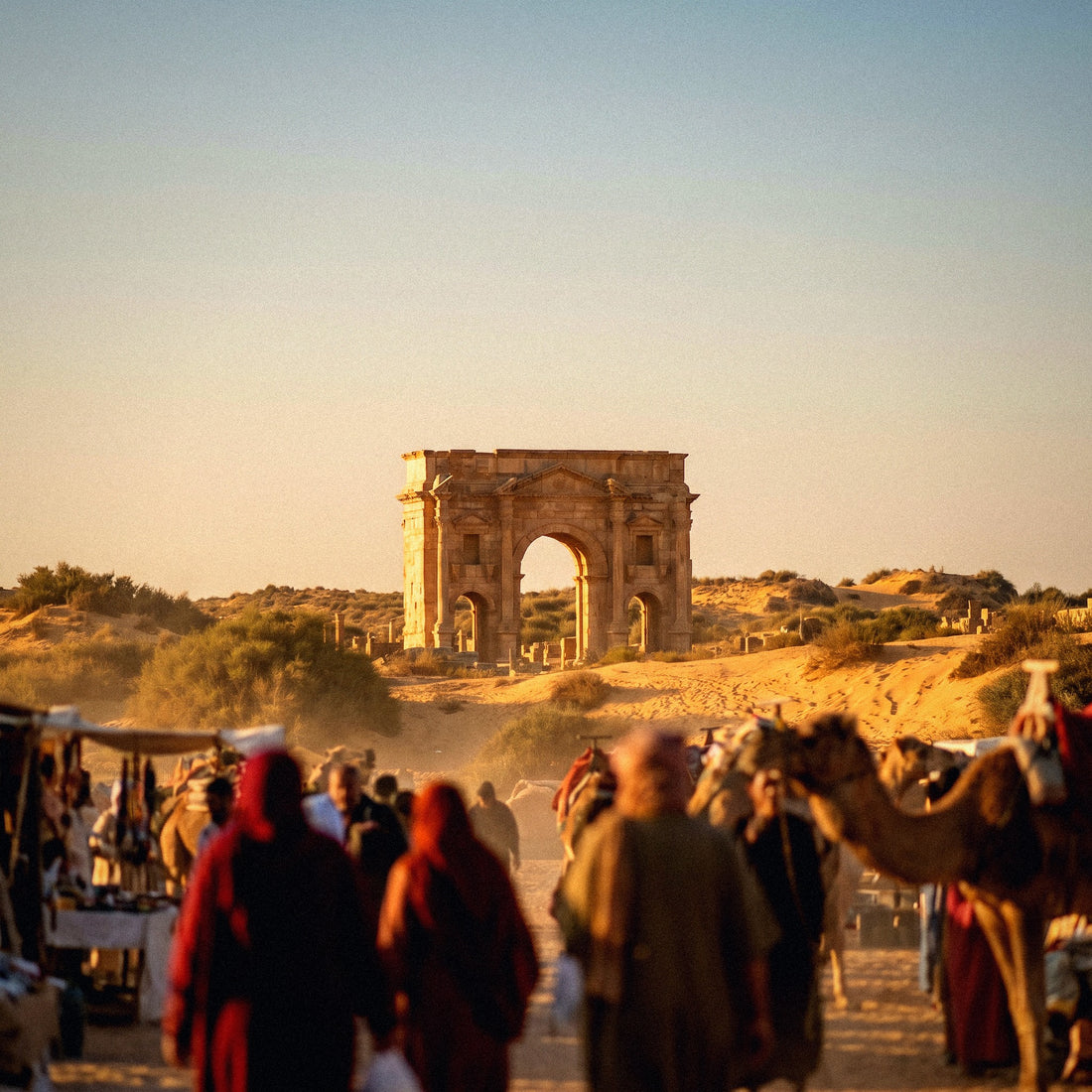
The heritage that in another scenario would make Libya a dream destination—Leptis Magna, Sabratha, the Ghadames oasis in the desert—today remains, for the most part, within or near discouraged areas. If you enter, it will be with an agency and managed visa, following their route and security rules. The practical conclusion regarding data is the same one that runs through the entire guide: buy little, have maps downloaded, and assume that there will be stretches, sometimes entire days, when there will simply be no network.
Frequently asked questions
How many GB do I need for 10 days in Libya?
Most people will find 3-5 GB to be sufficient. A business professional relying on Wi-Fi at their base will be fine with 3-4 GB; only press or those uploading a lot of content will need closer to 7 GB. Remember that there will be days without network access, so you won't use as much data as in another country.
Can I rely on always having internet in Libya?
No, and this is the central warning of this guide. There are outages due to blackouts, irregular quality, and even national internet blackouts ordered by authorities, which no eSIM can bypass. Treat connectivity as intermittent and have important maps and documents downloaded to your phone.
Does Libyana or Almadar work better?
It depends on the area. Libyana usually works better in Tripoli and the west; Almadar (Al-Madar) tends to be more stable in Benghazi and the east. Both are state-owned and neither offers European reliability. A good eSIM relies on the network available at each point.
Do I need more data for fieldwork?
Only if your work involves uploading photos or videos. Coordination by email, messaging, and calls uses little data. Reporting is the only profile that truly uploads a lot, and even then, a slow network will hinder you before you run out of data. Adjust according to the table by profile.
Can I buy or top up a local SIM there?
It's cumbersome. Paying with a foreign card is unfeasible —the country runs on cash— and buying a local SIM involves paperwork and documentation. That's why it's practical to arrive with an eSIM already paid for from home and top it up online if you run short.
What do I do if I run out of data in the middle of my trip?
Top up online in a couple of taps. This is the advantage of contracting little data initially: you don't risk money and only extend it if you truly need it. Find Wi-Fi at your accommodation or office to calmly top up if the mobile network is weak.
Does the eSIM work in the desert or remote routes?
No, because there's no network to use. Coverage extends to less than 20% of the territory and is concentrated on the coast. On routes like Kufra or the deep south, you'll be without a signal; the eSIM will work again when you return to an urban area. Bring offline maps, no matter what.
Is it safe to travel to Libya?
The Foreign Office advises against it in any case. There are areas of extreme risk, a fragmented political situation, and roads with mines in some places. Always consult updated official recommendations, and if you travel, do so with an agency and managed visa.
Conclusion
If you take away one idea, let it be this: in Libya, the figure is low and honest. For a business trip of one or two weeks, 3-5 GB covers most people, and only press profiles need to get close to 7-10 GB. The limit is not set by you, but by a network that comes and goes, with cuts, outages, and large areas without coverage. Buy modestly, download your maps, and top up on the go if you need to.
And before the gigabytes, first things first: check the Foreign Office recommendations and, if you travel, do so with an agency and managed visa. Once you're clear on that, get your connectivity sorted from home —without relying on cash or a local shop— with an eSIM for Libya and arrive with active data from the moment you land.