You've decided to buy data for your trip, and now you only have one question: how many GB do you need for Gabon. Good news: here, the answer goes against the grain of almost any other destination. Gabon is jungle in nearly 90% of its territory, with isolated lodges that rely on satellite Wi-Fi, so you will spend whole days without coverage and using zero data. This article doesn't explain how to connect — for that, you have the internet guide for the country — but rather exactly how many gigabytes to buy so you don't run short or waste money.
How many GB do I need for Gabon: quick and honest answer
For 10 days in Gabon, most people will be fine with 3 GB: you will spend several days in the jungle with no coverage, using zero data. If you work online from Libreville or upload many videos, go up to 5 GB. And if you rely on the lodge's satellite Wi-Fi for everything, plan for 5-7 GB.
I know this is surprising. You're used to being sold 20 GB packages "just in case," but Gabon is not a high-consumption destination, and I prefer to tell you clearly: it's hard to use a lot here even if you want to. The reason is simple. Your trip is divided between two worlds that barely touch. On one hand, a couple of cities with decent 4G — Libreville, Port-Gentil — where your phone works like at home. On the other, the jungles of Loango, Ivindo, or Lopé, where there are no towers and the only internet is the accommodation's satellite.
The result is that your actual data-use days are fewer than the duration of your trip. A three-night safari in Loango means three days of almost zero mobile data consumption. That completely changes the calculation compared to an urban destination where you're connected 24 hours.
If you want the general framework for estimating gigabytes for any trip, you can find the hub article on how much data you need for travel. Here we go into the specific details for Gabon, which is a rare case and deserves its own numbers.
Why Gabon uses less data than you think
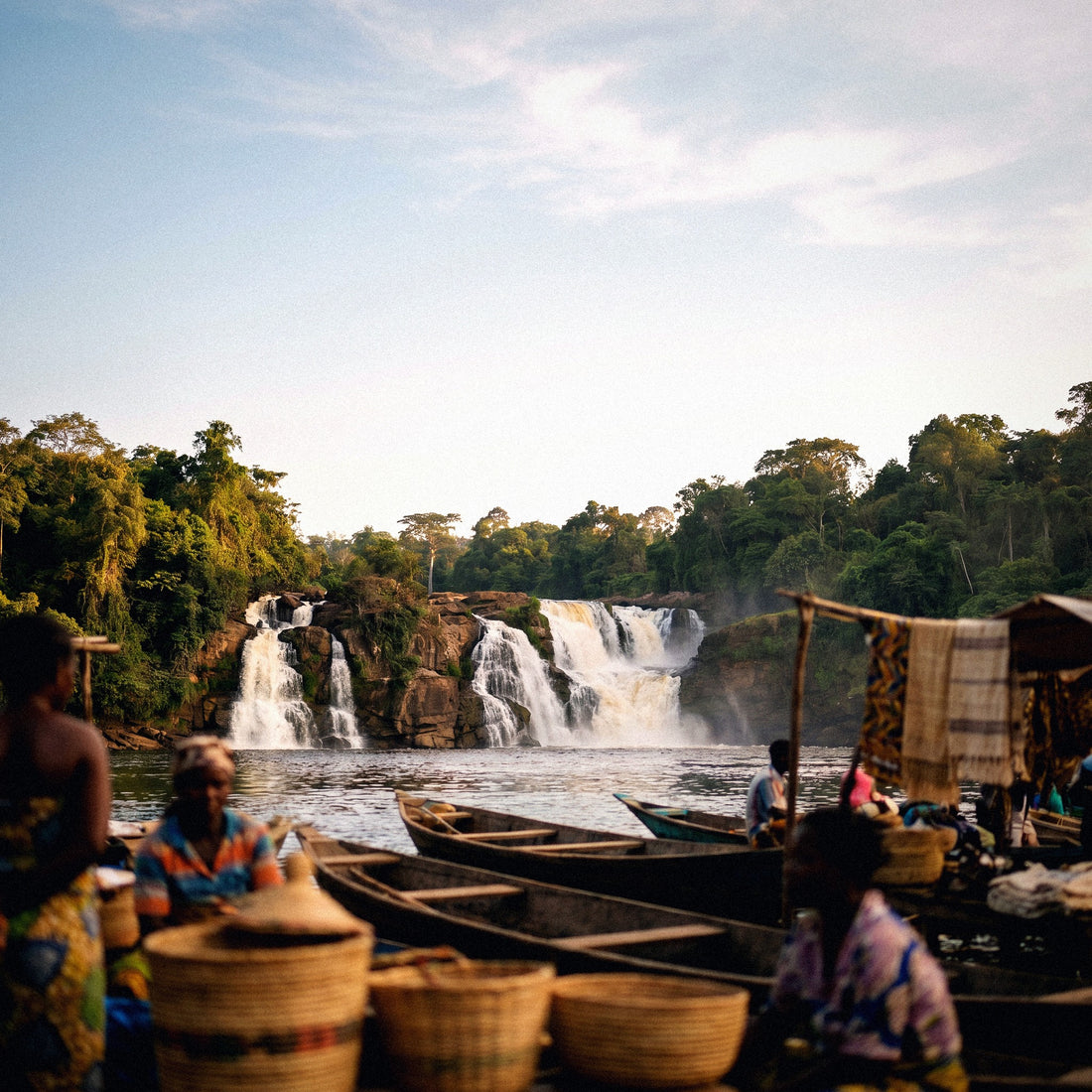
Gabon's particularity is geographical rather than technical. It's one of the most forested countries on the planet, and the ecotourism that attracts most travelers occurs precisely where no operator reaches: Loango National Park with its elephants and buffaloes coming to the beach, the Ivindo waterfalls, the jungle gorillas. All of that is off-grid.
In these areas, connectivity is limited to the lodge's satellite Wi-Fi, which often only covers common areas and has limited bandwidth. You won't be making 4K video calls from the jungle; you'll send a couple of messages when you return to the dining area. And honestly, that disconnection is part of what you came for.
What does this mean for your gigabytes? That the bulk of your consumption will be concentrated in urban areas: arrival and departure days in Libreville, a night in Port-Gentil, airport waits, and journeys with coverage. There you will use maps, WhatsApp, social networks, and perhaps some online booking. The rest of the time, your data card sleeps.
That's why it's important to separate two questions: how you connect (roaming, local SIM, or eSIM) and how much data you buy. The first is answered by the internet guide for Gabon. The second is what you're reading, and the key is not to project your home consumption onto a trip that, by design, will have you disconnected for half your stay.
How much data each mobile activity consumes
Before choosing a number, it's good to see where gigabytes come from. The usual surprise is that the apps you use most while traveling — maps and messaging — consume very little, and what drives consumption up is video. These are real consumption figures per activity, useful in any destination and especially in Gabon, where you'll want to be precise:
| Activity | Approximate Consumption | Notes |
|---|---|---|
| Google Maps (navigation) | 3-5 MB/hour | With satellite view, it goes up to 15-20 MB/hour |
| WhatsApp (text and photos) | 5-10 MB/day | Text messages are almost zero |
| WhatsApp (voice call) | 18-30 MB/hour | Very efficient |
| WhatsApp (video call) | 300 MB/hour | Up to 480 MB/hour in HD |
| Social media (Instagram/TikTok) | 100-150 MB/hour | Up to 1 GB/hour watching reels |
| Uploading photos | 3-5 MB per photo | About 30-50 photos per GB |
| Music streaming | 50-150 MB/hour | Depending on selected quality |
| Video (YouTube/Netflix) | 0.5-3 GB/hour | 0.5 GB at 360p; 3 GB in HD |
The takeaway is clear: with maps and messaging, it's almost impossible to deplete 3 GB in a normal stay. The one who overuses gigabytes is always the one watching series or uploading reels without reducing quality. If you want a complete breakdown with more apps, you can find the data usage statistics by activity. With this table, you can already guess which category you fall into.
Recommendation by profile and duration
This is the table you've been waiting for. I've adjusted it to Gabon's reality, subtracting the days in the jungle without coverage, so the numbers are lower than what you'd see for a purely urban destination. Find your row — how you use your phone — and your column — how many days you're staying —:
| Traveler Profile | 5 days | 10 days | 15 days | 30 days |
|---|---|---|---|---|
| Tourist (maps and WhatsApp) | 1 GB | 2 GB | 3 GB | 5 GB |
| Photos and social media | 2 GB | 3 GB | 5 GB | 8 GB |
| Digital nomad / remote work | 5 GB | 8-10 GB | 12-15 GB | 20+ GB |
| Family sharing a plan | 3 GB | 5 GB | 8 GB | 12 GB |
An important note for the digital nomad row: these numbers assume you will be working from Libreville or Port-Gentil, not from the jungle. If your plan is to telework between safaris, don't count on mobile data for video calls; you'll depend on the lodge's satellite Wi-Fi, which is usually too limited for demanding meetings. Buy gigabytes for city days and consider park days as lost.
Rule of thumb for Gabon: count only the days you'll be in an urban area, calculate your normal consumption there, and add a 20% buffer. Jungle days don't add to gigabytes because there's no network to use.
For a couple or family sharing, my advice is a single, slightly larger plan on one phone acting as a hotspot in the city, instead of several small plans that go unused.
The coverage map: where you'll have signal and where you won't
Knowing where there's network helps you distribute consumption wisely. In Gabon, Airtel dominates with the widest 4G footprint, concentrated along the coast and in cities. Outside of those areas, coverage drops rapidly. This is the realistic picture by zone:
| Zone | Coverage | What to expect |
|---|---|---|
| Libreville | Solid 4G (15-40 Mbps) | Video calls, streaming, everything fluid |
| Port-Gentil | Good 4G | Well-connected oil city |
| Franceville / Oyem | 4G / 3G | Functional for basics |
| Highways N1 and N2 | Intermittent | Long stretches with no signal |
| Loango Park | 2G or none | Lodge's satellite Wi-Fi |
| Ivindo (waterfalls) | Practically none | Total disconnection |
| Lopé | Very weak | Sometimes only in common area |
The practical conclusion is that your actual consumption window is cities and journeys with coverage. Download everything you can while in Libreville — maps, tickets, booking confirmations, some music — and arrive in the jungle having done your homework. That way, you don't depend on the lodge having a good satellite day.
Also consider travel: Gabon is traversed by car on long roads where your phone loses signal at times. This isn't wasted gigabyte time, but it's good to have navigation downloaded so the map doesn't go blank in the middle of nowhere.
Calculate your own consumption before traveling
The tables give you a starting point, but the most reliable data is already in your pocket: your own history. Before buying anything, take two minutes to check how much data you actually use in a normal month. It's the most honest method there is, because it doesn't depend on external estimates but on how you use your phone.
On an iPhone, go to Settings, then Cellular Data, and scroll down to see the period's consumption. It's advisable to reset the statistics on the 1st of a month to get a clean figure. On Android, the usual path is Settings, Connections or Network, and Data Usage, where you'll see the total for the cycle and a breakdown by app.
With that monthly number, the calculation is straightforward: divide it by 30 to know your daily usage, and multiply it only by the days you'll be in an area with coverage in Gabon. Remember that at home you're connected to Wi-Fi a good part of the time, so your purely mobile consumption is a conservative reference, which might go up a bit on a trip.
An extra tip: notice which apps consume most of your data. If you see that video and social media dominate the list, you know where to cut back during the trip. If maps and messaging are at the top, breathe easy: you're one of those who will have plenty of gigabytes in Gabon.
How to stretch your data in Gabon
Even if you buy little, a few adjustments will make those gigabytes last twice as long. And in Gabon, where you'll also want to arrive in the jungle with the important things already downloaded, these habits are invaluable:
- Offline maps: Download the entire area you plan to cover in Google Maps while you have 4G in Libreville. Navigating with an already saved map uses almost no data.
- Lower video quality: Set YouTube and Netflix to 480p. Going from HD to standard definition can cut consumption from 3 GB/hour to less than 1.
- Backups only over Wi-Fi: Disable automatic photo uploads to the cloud on mobile data. This is the silent drain that consumes the most gigabytes without you noticing.
- Disable autoplay for videos on Instagram, TikTok, and X. Don't let things load that you won't even watch.
- Data saver mode: Activate it in your phone's settings and within each app. It limits background data usage.
With these five habits, a small plan will last your entire stay without hassle. If you want the complete manual with more tips, check out the guide on how to save data on your trip. The winning combination in Gabon is simple: download heavily in the city, live disconnected in the jungle, and reserve data for what truly needs it.
Internet blocks and VPNs: the extra tip almost no one gives
There's a particularity about Gabon that doesn't appear in consumption tables but is worth keeping on your radar. The country has a history of internet restrictions during political moments: there were outages during the 2016 elections, a national blackout for several days during the 2023 coup, and social media suspensions have been decreed for 2026. This isn't common on a quiet trip, but it might coincide with your stay.
What does this mean for your gigabytes? Two things. First, if there's a temporary block, you might not be able to use certain apps even if you have plenty of data, so don't buy extra gigabytes thinking about consumption you might not be able to do. Second, if you decide to use a VPN to bypass a block, that VPN consumes some extra data, between 5% and 15% more, because it encrypts and redirects all your traffic.
My advice is not to obsess: the most likely scenario is a trip without incidents. But if you're traveling during an election period or time of tension, have a VPN installed just in case and add a small margin to your plan. Having data ready from the moment you land gives you flexibility to react; if you're interested in how an eSIM works for this, check out the data plans for Gabon. Better prepared than disconnected in the middle of an unforeseen event.
What happens if you run short (and why it's better than having too much)
Here's the part no store wants to highlight, but it's the truth: it's much better to run short and recharge than to buy too much. If you contract 3 GB and see that it's running out, topping up takes minutes, and you only pay for what you actually use. If you contract 15 GB "to not worry," it's most likely that you'll return home with half of it unused, especially in a destination like Gabon where the jungle forces you to disconnect.
Moreover, recharging is almost instantaneous. You don't need to look for a store or a document: you add more data from your phone and continue. That's why the sensible strategy is to start with the plan indicated by the tables for your profile and only expand if you truly approach the limit. Expired gigabytes are not refunded, and paying for data you don't use is a waste of money.
There's one reasonable exception: if you're a digital nomad and genuinely plan to work remotely from the city for several weeks, a generous plan from the start is worth it to avoid interrupting work. For other profiles — which are the majority — the rule is clear: buy what you need, travel relaxed, and recharge if necessary. In Gabon, where half the stay is pure disconnection, running short is incredibly difficult if you follow the figures above.
Frequently asked questions
How many GB do I need for 10 days in Gabon?
For 10 days, most people will be fine with 3 GB. A tourist using maps and WhatsApp will be more than covered with 2 GB; if you take many photos and use social media, go for 3 GB; and if you work remotely from the city, go up to 8-10 GB. Remember that jungle days do not consume mobile data.
Will I have coverage in Loango National Park?
Practically no: in Loango, mobile signal is 2G or entirely nonexistent. Your only connection will be the lodge's satellite Wi-Fi, which often only covers common areas and has limited speed. Arrive with maps and essential information already downloaded from the city.
Do I need a VPN in Gabon?
Not usually, but it's advisable to have it installed in case of a temporary block. Gabon has implemented internet shutdowns and social media suspensions during periods of political tension. If you travel during such times, a VPN gives you leeway, though it consumes an extra 5-15% of data.
Can I buy a local SIM in Gabon?
Yes, with Airtel or Gabon Telecom by presenting your passport. It's a valid option if you're staying for a long time, but it involves paperwork and visiting a physical store upon arrival. An eSIM saves you that step and works from the moment you land; here we explain what an eSIM is.
Is lodge Wi-Fi sufficient?
For messages and email, yes; for video calls or demanding remote work, no. It's satellite Wi-Fi, with limited bandwidth and sometimes only available in common areas. Don't rely on it for important meetings: handle those in the city, where 4G works well.
What happens if I run out of data?
You can top up from your mobile in a matter of minutes. That's why it's better to start with a smaller plan and only expand if you get close to the limit, rather than overbuying. However, you'll need coverage to top up, so do it when you're in an urban area.
Does Google Maps work offline in the jungle?
Yes, if you download the maps beforehand with coverage. Google Maps allows you to save entire areas to navigate offline using almost no data. This is essential in Gabon, where you'll lose signal on roads and in parks. Download your entire route while you have 4G in Libreville.
Conclusion
Gabon is one of those rare destinations where the honest answer is "less than you think." Between cities with 4G and the jungle without coverage, your actual consumption is concentrated on a few days, so 3 GB is more than enough for a typical 10-day trip, and with 5 GB, even those who upload many photos or spend more time in Libreville will be comfortable. Only digital nomads who telecommute from the city need to think about larger figures.
The strategy that never fails: download heavily in the city, experience the jungle disconnected—that's what you came for—and buy a plan that fits your needs with the option to top up. Start with a plan that matches your profile and only expand if necessary; it's very difficult to run short here. If you've already made up your mind, check out the data plans for your trip to Gabon on our digital card for Gabon and arrive connected from minute one.