If you're planning a trip to Mali, chances are you've already decided to buy data and just need to know how many GB you need for Mali without buying too much or too little. Almost no one goes there for tourism these days: those who land in Bamako usually do so for an NGO, an international mission, gold-related business, or to visit family. I'll get straight to the numbers and tailor them to what you'll actually use on the ground.
Mali right now: who travels and why it changes the calculation
It's important to be clear from the start: Mali is not a normal tourist destination today. The security situation has practically halted leisure travel, and the Ministry of Foreign Affairs advises against travel to the north and center of the country (Timbuktu, Gao, Mopti, Dogon Country) altogether. Before buying your ticket, always check official travel recommendations from the Ministry, as they determine where you can and cannot travel.
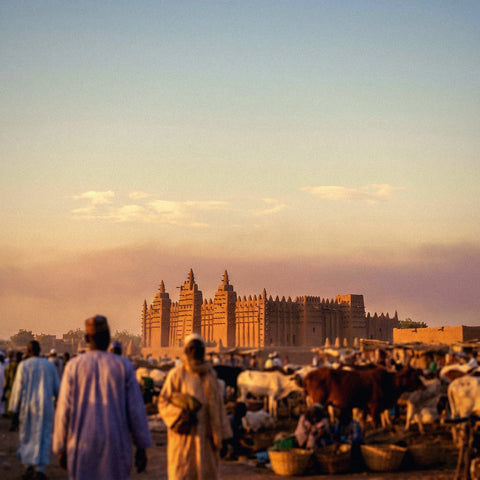
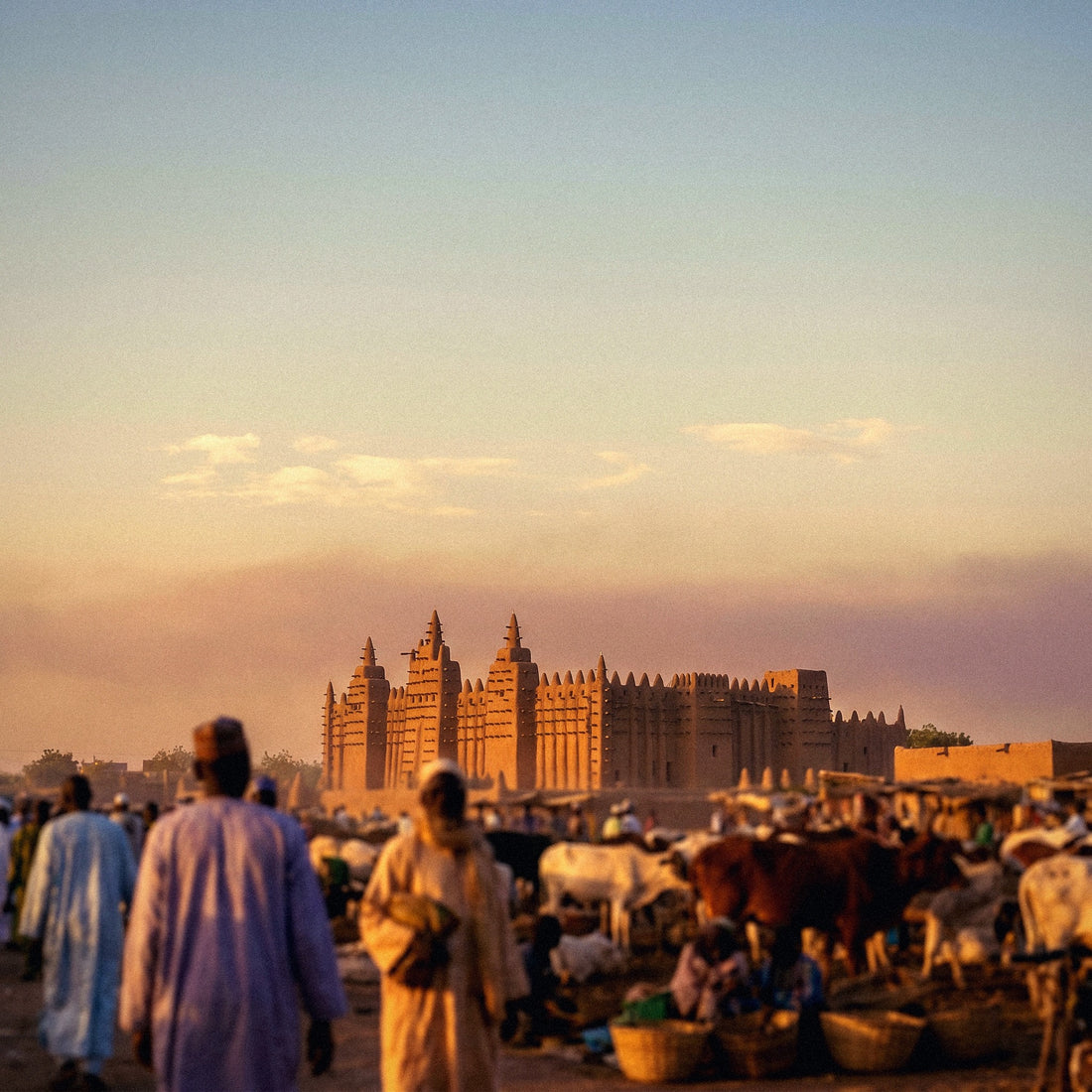
Why am I telling you this in a data guide? Because it radically changes how much you'll spend. The typical traveler to Mali no longer explores the Niger River or the Great Mosque of Djenné, taking photos and uploading them to social media. Today, it's NGO personnel, international mission members, people in the gold business, or diaspora returning to see family. Most have a fixed base in Bamako and workdays, not excursions.
This means more contained and predictable consumption: messaging, email, urban maps, and video calls, almost always from the capital. And it also means that much of the country has no data coverage, so there, simply put, you won't spend any data. If you want a complete map of how much data to take based on your trip type, you can find it in the hub on how much data you need for travel; here, I'm focusing specifically on Mali.
For 10 days working in Bamako, most people will be fine with 3 to 5 GB if they use hotel or office Wi-Fi for long video calls. If you rely on mobile data for daily video meetings, estimate 8 to 10 GB. Outside the capital, you'll barely spend any data: there's almost no coverage.
Recommendations by profile and duration
This is the table you've come to see. I've designed it for the profiles that truly travel to Mali today, not for a postcard tourist. The key lies in one question: will you make long video calls using Wi-Fi at your accommodation or office, or relying on mobile data? If you have reliable Wi-Fi where you're staying, you'll easily stay within the lower range of the table.
| Profile | 5 days | 10 days | 15 days | 30 days |
|---|---|---|---|---|
| Base with Wi-Fi (NGO / mission / hotel): messaging, maps, email, video over Wi-Fi | 1 GB | 2 GB | 3 GB | 5 GB |
| Diaspora / family visit: WhatsApp, photos, some social media, short video calls home | 2 GB | 3-4 GB | 5 GB | 8-10 GB |
| Business / gold with travel: maps, email, some video calls, stretches without coverage | 2 GB | 3 GB | 5 GB | 8 GB |
| Remote work with daily video calls on mobile data (without reliable Wi-Fi) | 5 GB | 8-10 GB | 12-15 GB | 25-30 GB |
Notice the jump: the last profile uses five times more data than the first, and the only difference is where you make video calls. It's not magic, it's just basic math. If you're unsure between two rows, choose the lower one and top up later: it's cheaper and you won't be stuck with unused, expiring data. In the following sections, I'll break down where these numbers come from so you can fine-tune them for your specific case.
How much data each activity really consumes on your phone
Gigas don't just disappear: they're consumed by specific apps. And on a work trip to Mali, the distribution is very uneven. Messaging and maps consume very little; video, in any form, is what will drain your data package. Here are real figures per hour or per action, so you know where to be vigilant.
| Activity | Approximate consumption | Note |
|---|---|---|
| Maps navigating (Google Maps) | 3-5 MB/h (10 with traffic) | 0 if downloaded |
| WhatsApp: text and voice notes | 5-15 MB/day | almost nothing |
| WhatsApp: voice call | 20-30 MB/h | very cheap |
| Video call (WhatsApp / Zoom) | 300-500 MB/h | the biggest expense |
| Email and browsing | 10-20 MB/h | light |
| Social media with video (Instagram / TikTok) | 600-900 MB/h | drains quickly |
| Uploading a batch of 30 photos | 100-150 MB | better over Wi-Fi |
| Streaming music | 40-70 MB/h | 150 in high quality |
| Video / streaming | 1 GB/h (SD) · 3 GB/h (HD) | avoid with data |
The takeaway is simple: you can chat, check maps, and browse email for days with very little data, but half an hour of video on social media or a long meeting using data will empty your tank. For detailed figures on these activities, refer to the mobile data usage statistics by activity. With this table in mind, you can recalculate your own recommendation.
Bamako yes, the rest almost no: actual coverage
Here's the peculiarity that makes Mali unique: coverage is very uneven, and that saves you data without you having to do anything. In Bamako, 4G works reasonably well (10-30 Mbps in the center, ACI 2000, Hamdallaye), sufficient for messaging, maps, and video calls. But as soon as you leave the capital, the signal drops dramatically, and in much of the country, there's simply no data.
| Area | Data Coverage | What to expect |
|---|---|---|
| Central Bamako (ACI 2000, Hamdallaye) | 4G, 10-30 Mbps | messaging, maps, and video calls OK |
| Residential neighborhoods of Bamako (Badalabougou, Sotuba) | Variable 4G/3G | email and maps yes, video barely |
| Regional capitals (Kayes, Sikasso, Ségou) | Irregular 3G/4G | messaging yes, little else |
| Roads and rural areas | 2G voice, almost no data | don't count on data |
| North and center (Timbuktu, Gao, Mopti, Dogon Country) | none / travel advised against | Foreign Ministry advises against travel |
The two usable network operators are Orange and Moov Africa (Malitel). Orange typically has the widest footprint and is what many expats use by default; Malitel is sometimes cheaper for data bundles. To purchase, you'll need your passport, as SIM card registration is mandatory. If you want the full picture of how to get connected there (roaming, local SIM, or alternatives), I explain it in the guide to internet in Mali; this article only addresses data allowances.
Video calls and remote work: the consumption that matters
If you're working from Bamako, video calls are the variable that determines your data package. A video meeting consumes around 300-500 MB per hour; one hour daily for two weeks is over 4 GB just for that. Therefore, the best money-saving decision is not to compromise on quality, but to reserve long meetings for when you have Wi-Fi at the hotel or office.
Practical rule: If you make video calls over Wi-Fi, a month of work in Bamako fits within 5 GB. If you make them daily using mobile data, the same month will cost you 25-30 GB. The difference isn't the country: it's where you connect.
Specific tips that actually work without cutting you off: set your camera to standard quality instead of HD, turn off your video when you're not speaking, and if you only need to listen, switch to an audio call (this drops from 300 to about 30 MB per hour). For daily use, WhatsApp voice messages and audio notes cover almost everything with ridiculous consumption. Save actual video calls for when they're truly necessary. With this discipline, most work profiles will comfortably stay within the lower range of the table and avoid overbuying data, thinking they'll consume it, when in reality, they'll use Wi-Fi.
Calculate your own usage before flying
The most honest way to get your data allowance right isn't to trust someone else's table, but to look at your own. Your phone has been tracking exactly how much you spend for months, so use it as a baseline and adjust it up or down depending on how your trip to Mali changes your usage.
On Android, go to Settings, Network & internet, Data usage, and check your mobile data consumption for the last month. On iPhone, go to Settings, Mobile Data, and scroll down to the breakdown by app (it's good practice to reset statistics at the beginning of the month for a clean reference). Divide that total by 30, and you'll have your average daily consumption at home.
Now adjust it for your trip. Upwards: if you won't have Wi-Fi in Bamako but do at home, add the work video calls you used to make when connected. Downwards: in Mali, you'll spend hours without coverage outside the city, you won't be watching Netflix on data, and you'll probably use social media less than in your normal routine. For most, daily consumption in Bamako ends up being quite similar to home, minus leisure video. Multiply your adjusted daily usage by the number of travel days, add a 20-30% buffer, and you'll have your own figure, not a made-up one. If it comes out much lower than the table, trust your instincts: nobody gives away data for buying too much.
Tips to make your data last in Bamako
With just a few adjustments made before you leave, the same amount of data will last you twice as long. The idea is simple: make sure video and large transfers go over Wi-Fi, and mobile data is reserved for light usage. Prepare all of this the night before your flight, with a good connection, and in Mali, you'll only have to worry about your work.
- Downloaded maps. Download the Bamako area and the routes you'll use in Google Maps with Wi-Fi. Offline navigation consumes zero data.
- Backups only over Wi-Fi. Photos, Google Drive, iCloud, and app updates should be restricted to Wi-Fi. A phone video syncing can consume hundreds of MB without you realizing it.
- Data saver mode. Activate it in your system settings: it cuts down on background app data consumption.
- Low video quality. On social media and video calls, use standard quality and disable auto-play.
- Download before you leave podcasts, music, and documents you'll need.
With these habits, a modest data package lasts much longer than it seems. You can find an extended list with more specific tips in the guide on how to save data on your travel eSIM. There's no need to obsess: simply activating data saver and downloading maps will help you avoid major surprises.
Internet outages and restrictions: leave some leeway
A detail specific to Mali that's worth keeping in mind: during periods of instability, there have been restrictions and outages of internet access or social media. This is not a daily occurrence, but it explains why it's worth having a little leeway and not buying a package that's precisely calculated to the millimeter. If the network is slow one day or a service doesn't load, it's not your card: it's the country's situation.
Therefore, two practical tips. First, have a backup communication plan: agree with your family or organization on an alternative channel (email, a different messaging app) in case the usual one temporarily fails. Second, don't rely on a single connection method. Combining hotel Wi-Fi with your own data gives you flexibility if one of them fails.
As for VPNs, many people who work there use them for privacy or to access corporate tools. Keep in mind that an active VPN all day adds some consumption (not much, but it adds up) and its availability can vary depending on the moment. If you know you'll need it, add a little to your calculation and configure it before traveling. To understand how a digital card works and why it fits well in this context, refer to the guide on what an eSIM is.
If you run short: top up, don't overbuy initially
Here's the most honest advice in the whole article, even though we sell larger packages: it's better to come up a little short and top up than to significantly overbuy. If you buy just enough and one day find you're spending more than expected, adding data is just a couple of taps on your phone. On the other hand, the data you buy and don't use doesn't come back: it simply expires.
The math is clear for Mali. If you're debating between 3 and 8 GB for ten days in Bamako, start with 3 GB. If you have Wi-Fi at your accommodation, you won't even use half of that. And if it turns out video calls consume more than you thought, you can top up without drama and only pay for what you truly need. Buying out of fear of running short is the most expensive and common mistake.
Before you travel, check two things: that you can top up your line remotely (without relying on buying a physical card on the street) and that you know how to do it. With that resolved, the smart strategy is clear: a slightly conservative package, data saving activated, video calls over Wi-Fi whenever possible, and a timely top-up if needed. This way, you don't waste money or get cut off at the worst moment.
Frequently asked questions
How many GB do I need for 10 days of work in Bamako?
3 to 5 GB will be plenty if you make long video calls over Wi-Fi. Messaging, maps, and email consume very little. Only if you rely on mobile data for daily video meetings should you increase to 8-10 GB.
Is there coverage outside Bamako?
Very weak or nonexistent. Bamako has decent 4G, and regional capitals have irregular 3G. On roads and in rural areas, the signal is 2G or nonexistent, and the north and center, besides lacking coverage, are advised against by the Ministry of Foreign Affairs.
Which operator has a better network, Orange or Malitel?
Orange typically has the widest footprint and is the default choice for many expats in Bamako. Moov Africa (Malitel) is sometimes cheaper for data bundles. For a work stay in the capital, both are suitable.
Do I need my passport to buy a SIM card?
Yes, passport registration is mandatory for a local SIM in Mali, and it cannot be skipped. Bring the physical document, not a copy. A digital eSIM saves you that hassle and is active before you land.
Can the internet be cut off during my trip?
It has happened during periods of instability. While not a daily occurrence, it's advisable to have some leeway, an agreed-upon alternative communication channel, and not rely on a single connection method.
How much data does a video call consume?
Between 300 and 500 MB per hour for standard video. This is, by far, what consumes the most. Switching to an audio call drops it to about 30 MB per hour, and making them over Wi-Fi doesn't cost you mobile data.
Is this enough for working with daily video calls?
Yes, but calculate 8-10 GB for ten days if you make them over mobile data, or 25-30 GB for a full month. With Wi-Fi in the office or hotel, that consumption drops to a fraction.
What if I run out of data?
Topping up is a matter of seconds from your phone. That's why it's better to buy a slightly smaller package: unused data expires, and adding more when needed is cheaper than overpaying upfront.
Conclusion
For a business trip to Mali, the honest figure is low: 3-5 GB covers ten days in Bamako for most, and only goes up to 8-10 GB if you live off video calls on mobile data. The key is not the country, but where you connect: with Wi-Fi at your accommodation, you'll almost always have enough. Outside the capital, there's barely any coverage, so you won't spend there. Buy on the low side, activate data saving, reserve video for Wi-Fi, and top up if necessary. And always check the travel recommendations from the Ministry of Foreign Affairs before you travel. If you're clear on this, get your connection ready before taking off with PuraSIM's Mali eSIM and land in Bamako with data already, without queues or passport procedures.