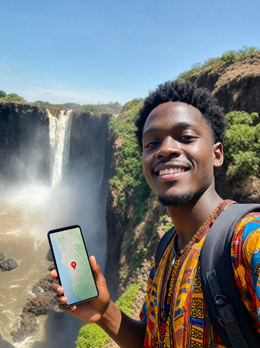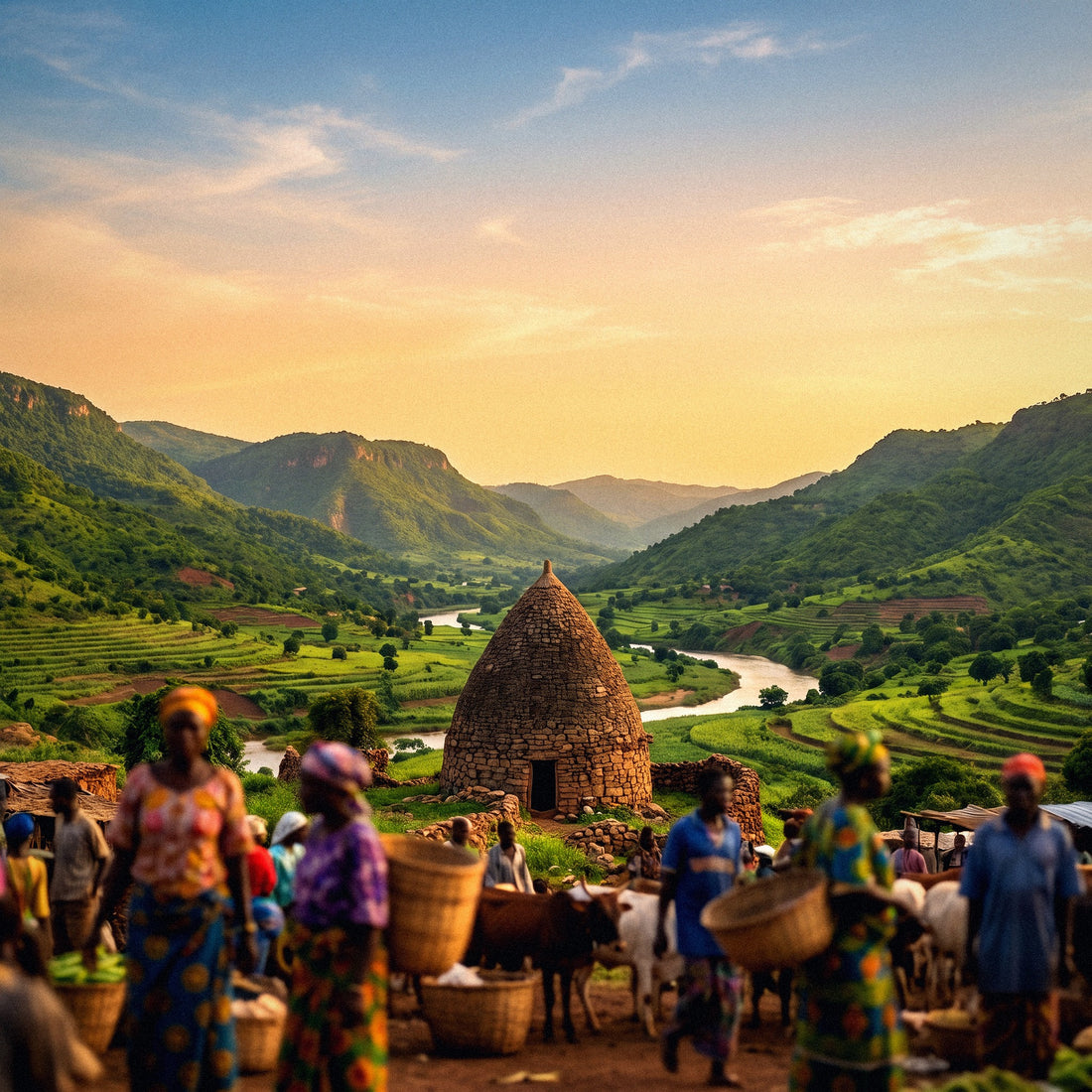
If you're wondering how many GB you need for Guinea, let me start with the important part: we're talking about the Republic of Guinea, with its capital in Conakry, in West Africa. It's not Guinea-Bissau, nor Equatorial Guinea, nor Papua New Guinea. These are four distinct countries with similar names, and confusing them means you might buy a data package for the wrong place. This article is about one thing only: what size data plan to buy for a trip to Guinea-Conakry, whether it's an adventure in Fouta Djallon or a work trip and visit to the diaspora.
The quick estimate for Guinea (Republic of Guinea, capital Conakry)
For 10 days in Guinea, most people will be fine with 3 GB if you're using maps, WhatsApp, and the occasional photo. If you upload a lot of stories or work remotely with video calls, estimate 5-8 GB. In Fouta Djallon, you'll use less than expected: there are long stretches with no coverage.
I'll explain with more nuance because Guinea isn't a destination where you'll be glued to your phone all day. Outside of Conakry and major cities, the signal appears and disappears, so your phone spends many hours not consuming data even if you think it is. That's why the figures you'll see here are lower than those for a trip to Europe or a hyper-connected Asian capital.
My honest default recommendation: 3 GB for a relaxed week or ten days, and 5 GB if you share a lot or rely on your phone for work. A long stay of a month will go up to 8-12 GB with normal use. I prefer to give you a realistic number so you can top up if necessary, rather than selling you a huge package that you'll only half-use. If you want a general framework for how to size data for any country, check out the hub on how much data I need for travel, and here we'll delve into the specifics for Guinea. In the following sections, you'll see why this destination lowers the numbers and a table by profile to give you your exact figure.
Why Guinea changes the number: Conakry, Fouta, and the interior
Guinea's particularity is the uneven coverage between the coast and the interior. In Conakry and cities like Kindia, Labé, or Kankan, you have reasonable 4G with Orange, which is the dominant operator and the only one with extensive 4G/LTE coverage; MTN covers urban centers and the main road well but leaves gaps. As soon as you go up to the Fouta Djallon massif for hiking, visiting the Ditinn or Kambadaga waterfalls, and walking among the mountains, the signal becomes weak or disappears. For your data, that's good news: where there's no coverage, you don't spend.
| Area | Coverage | Expected consumption |
|---|---|---|
| Conakry (capital) | Reasonable 4G (Orange and MTN) | Normal, you'll spend more here |
| Cities (Kindia, Labé, Kankan) | Good in the core area | Normal |
| Main road | Acceptable, with gaps | Low and intermittent |
| Fouta Djallon (mountains and waterfalls) | Weak or none | Almost zero |
| Îles de Los | Irregular depending on location | Low |
| Interior and villages | Scarce | Almost zero |
Translated into a plan: a trip that combines a few days in Conakry with excursions to Fouta consumes fewer GB per day than a purely urban one. Many travelers return with 1-2 GB untouched precisely because of the mountain days. The Îles de Los, off Conakry, have irregular coverage depending on the spot, so expect to be disconnected at times there too.
Another factor: in Guinea, you'll use your phone a lot for light things (maps, messaging, some searches) and little for video in 4G, because the speed isn't always enough for smooth streaming. This keeps consumption low. If you want to understand how to connect on the ground (local SIM, roaming, or digital alternative), I break it down in the internet in Guinea guide; this article sticks to gigabytes.
How much each app actually consumes
Before choosing a size, it's good to see what consumes your data and what barely counts. These are average real consumption figures; they vary with network quality, but they'll help you calculate smartly. The surprise is usually twofold: messaging consumes almost nothing, and video takes almost everything.
| Activity | Approximate consumption | Note |
|---|---|---|
| Maps (navigation) | 3-5 MB/hour | Download them offline and consumption drops almost to zero |
| WhatsApp (chats and voice notes) | 2-5 MB/day | Text is practically free |
| WhatsApp voice call | 30-40 MB/hour | Ideal for talking to home |
| WhatsApp video call | 150-300 MB/hour | Low resolution if you're tight on data |
| Social media (feed and stories) | 100-150 MB/hour | With many reels, it goes up to 300-600 |
| Uploading photos | 3-5 MB/photo | Schedule backup only over Wi-Fi |
| Music streaming | 70-150 MB/hour | Download playlists before leaving |
| Video 480p / 1080p | 0.5-0.7 GB / 1.5-3 GB per hour | By far the biggest consumer |
The quick takeaway: maps and WhatsApp barely weigh anything, so a messaging and navigation traveler spends very little. Someone who browses social networks for a good while each day will already notice the jump, and someone who watches series or uploads long videos multiplies everything. You have more details in the mobile data usage statistics by activity.
How many GB per profile and days (the important table)
This is the table that solves the purchase. Cross-reference your profile with your travel days, and you'll have your figure. The times without coverage in Fouta and the interior have already been discounted, so these are numbers for Guinea, not generic. If you're torn between two options, err on the side of caution: topping up is easy, and traveling with less prepaid data is cheaper.
| Profile | 5 days | 10 days | 15 days | 30 days |
|---|---|---|---|---|
| Tourist (maps and WhatsApp) | 1.5 GB | 3 GB | 4-5 GB | 8-10 GB |
| Photos and social media | 3 GB | 5-6 GB | 8-10 GB | 15-20 GB |
| Digital nomad / remote work | 5-7 GB | 10-12 GB | 15-20 GB | 30-40 GB |
| Family or group sharing | 5-8 GB | 10-15 GB | 18-25 GB | 35-50 GB |
How to read it: the maps and WhatsApp tourist is the most common case for an adventure trip, and 3 GB for ten days is more than enough. The photos and social media profile goes up because stories and scrolling consume data. The remote work profile assumes almost daily video calls, email with attachments, and some cloud use. And the family or group row is the sum of several phones using the same plan: in this case, it's wise to have plenty of data. If your trip mixes city and mountains, put yourself at the lower end of your row, because the days in Fouta barely count.
Adventure in Fouta and the Îles de Los
The classic trip to Guinea is for nature and trekking, and this profile consumes less data than people fear. Days hiking in Fouta Djallon among waterfalls, villages, and viewpoints mean many hours with your phone searching for a signal and not finding it. For your gigabytes, that means zero consumption. What you will do is take photos and some videos, which will be uploaded when you get coverage back in Labé or returning to Conakry.
In my calculations, a two-week adventure traveler in Guinea rarely exceeds 4-5 GB. The mountains disconnect you, and that saves you data even if you don't intend to.
Specific tips for this profile:
- Download offline maps for the Fouta area and Conakry before leaving: you'll navigate without consuming data.
- Keep your routes and points of interest saved, because in the middle of the mountains you won't be able to search for them.
- Schedule photo backups only over Wi-Fi at your accommodation, so they don't upload using mobile data.
- Reserve a small buffer to contact home via WhatsApp when you regain signal.
For the Îles de Los, expect intermittent coverage depending on the island's location. It's a good place to truly disconnect: you don't need a large plan, just enough to share a few photos when you return to the coast. In summary, the Guinean adventure is one that leaves you with plenty of gigabytes to spare.
Work trip or diaspora visit
The other main reason to fly to Guinea is for work or a family visit by the diaspora, and here consumption changes. If you're coming for meetings, mining, NGOs, or projects, you'll rely on your phone for email, video calls, and document sharing, almost always from Conakry, where there is decent 4G. This usage is similar to that of a digital nomad: 10-12 GB for ten days will keep you comfortable, more if you make many video calls.
If you're traveling to visit family, the pattern is different: many WhatsApp calls and video calls with relatives here and there, constant photos and audio. That adds up, especially video. For a month-long stay connecting daily with Spain, estimate 8-15 GB depending on how many video calls you make. Keep in mind that at relatives' homes there will often be Wi-Fi, which significantly reduces your mobile data usage.
A practical note for both cases: in Guinea, it's common to receive small files and stickers via WhatsApp all day. This weighs little, but long voice notes and family video calls are what really move the needle. If you know you'll be on video calls a lot, move up a step in the table. And if you work with cloud storage, activate synchronization only when you have Wi-Fi to avoid emptying your plan with automatic backups.
Calculate your own consumption before leaving
The most reliable way to get it right is to check how much you spend, not to rely on others' averages. Your phone already records this. On Android, go to Settings, Network & internet, Data usage; on iPhone, in Settings, Mobile Data, and scroll down to see your usage for the period. Look at what you spent last month with normal mobile data usage (not Wi-Fi) and you'll have your real daily average.
With that number, the calculation is straightforward:
- Divide your monthly consumption by 30 to get your daily expenditure.
- Multiply it by the number of travel days.
- Subtract the days in Fouta or the interior, where there will be almost no signal.
- Add a 10-15% buffer and you have your figure for Guinea.
Example: if you use 6 GB per month at home, that's about 200 MB per day. For ten days, that would be 2 GB, but if three of those days are in the mountains with no coverage, you'll be closer to a real 1.5 GB. Also adjust for travel habits: on the road, you usually use maps more and video less than at home. This honest method is worth more than any table, because it's based on how you use your phone. If your calculation gives you a strange number, compare it with the profile table above and take the higher of the two.
Tips to extend your data in Guinea
In Guinea, it's easy to spend even less than indicated in the table if you take four precautions. The network won't always be perfect, so these adjustments also improve your experience, not just your gigabyte bill.
- Offline maps for Conakry, Fouta, and your route: this is the number one trick for a nature trip.
- Backups and photos only via Wi-Fi: disable automatic uploads with mobile data in your gallery and cloud.
- Lower video quality to 480p and disable auto-play on social media; that's where the biggest data leak hides.
- Activate your system's and browser's Data Saver Mode, which compresses and slows down background processes.
- Download music and episodes over Wi-Fi before leaving the city.
A single HD streaming indulgence can consume more than three entire days of maps and WhatsApp. If you control video, you control 80% of your consumption.
With these habits, a traveler using maps and messaging can finish a week in Guinea having used less than 1 GB. You'll find more ideas in the guide on how to save data on your travels. The important thing is not to obsess: the idea is to travel peacefully, not to count megabytes at every step. With downloaded maps and video under control, you're more than covered.
If you run short: top up, don't overbuy
My underlying advice is to err on the low side. It's better to buy a modest plan and top up if needed than to pay upfront for a huge package that you'll leave unused. Running out of data in Guinea isn't a disaster: if the plan runs out, it can be extended or another one purchased in minutes from your phone, without having to find a physical store.
Why I prefer this strategy:
- You pay for what you use, not for what you feared you might use.
- If your trip is extended or you change plans, you can top up without penalty.
- You avoid the classic huge plan wasted due to mountain days without signal.
The only precaution is not to run it down to zero just when you need your phone for something important, like airport transfers or a reservation. Leave a small margin and top up a day in advance when you see it drop below 20%. Almost all apps notify you when you reach that point, so you don't have to keep an eye on it. In a country where you'll be disconnected quite a bit, starting with 3 GB and extending if usage demands it is, almost always, the smartest and cheapest move.
SIM with passport and official recommendations
Two practical warnings before concluding. First: in Guinea, registering a local SIM requires your passport. Operators are obliged to identify the owner, so if you buy an Orange or MTN card on the ground, you'll have to show your document and wait for registration. A digital option that activates before you fly saves you this process and gets you connected upon landing; if you don't know how this format works, I explain it in what an eSIM is.
The second warning is common travel sense: check your country's official travel recommendations before going to Guinea (in Spain, those of the Ministry of Foreign Affairs). The situation can change, and it's good to be up-to-date on safety, health, and internal travel. Having your phone operational from arrival also helps you navigate with maps and be reachable.
Regarding operators, for your data calculations: Orange offers the best coverage outside Conakry, including Fouta, and is the only one with extensive 4G; MTN works well in cities and on the main road. Whichever way you choose to connect, the amount of GB you need doesn't change: it depends on your usage profile and the number of days, not the network brand. With that decided, all that remains is to choose the size.
Frequently asked questions
Quick questions that always come up before buying data for Guinea.
Is Guinea the same as Guinea-Bissau or Equatorial Guinea?
No, they are different countries. This article is about the Republic of Guinea, with its capital Conakry, in West Africa. Guinea-Bissau (capital Bissau) and Equatorial Guinea (capital Malabo) are two other countries, and Papua New Guinea is in the Pacific. Make sure to purchase the "Guinea" plan specifically for the correct destination.
How many GB do I need for 10 days in Guinea?
3 GB is more than enough for a normal traveler. If you use maps, WhatsApp, and an occasional photo, ten days are easily covered with 3 GB, especially if you include days in Fouta with no coverage. Increase to 5-8 GB if you make many video calls or frequently share photos and use social media.
Will I have coverage for hiking in Fouta Djallon?
Weak and intermittent in the mountains. In the Fouta Djallon massif and near the Ditinn and Kambadaga waterfalls, the signal is weak or non-existent. Download offline maps before heading up. The good news for your plan: where there's no coverage, you don't use data.
Do I need a passport for a SIM card in Guinea?
Yes, it's mandatory for a local SIM. Orange and MTN register each card with the holder's document. If you prefer to avoid the hassle and arrive connected, a digital option like an eSIM for Guinea activates before you fly, without on-the-ground paperwork.
Orange or MTN, which one is better?
Orange, especially outside of cities. It's the dominant operator and the only one with widespread 4G, offering the best coverage inland and in Fouta. MTN works well in Conakry and on the main road but has more gaps. For data volume, whichever you choose, the GB amount is the same.
Can I share data with my family?
Yes, by using your phone as a hotspot. You can share the connection with other devices via Wi-Fi. Keep in mind that multiple phones using the same plan will consume significantly more data: look at the "family or group" row in the table and opt for a generous plan if there are several of you.
What happens if I run out of data in Guinea?
You can extend or top up in minutes. You won't be stranded: you can add more data from your phone without searching for a physical store. That's why I recommend starting with a modest plan and topping up if needed, instead of overpaying upfront.
Conclusion
For Guinea, the Republic of Guinea with its capital Conakry, the short answer is reassuring: it's a destination where data consumption is low. With 3 GB, you can cover an adventure trip of one or two weeks through Fouta Djallon and the Iles de Los, because the mountains disconnect you for a good part of the time. If you're coming for work or to visit the diaspora and depend on video calls, aim for 5-12 GB depending on the number of days. Monitor your actual consumption, download offline maps, and manage video usage, and you won't go wrong.
My final advice: start with a modest plan and expand if usage demands it, rather than buying too much. Once you have a clear idea of your needs, choose your eSIM for Guinea and take off already connected, without queues or a passport to register a card. Have a great trip to Conakry and Fouta.