If you've already decided to buy data and just need to know how many GB you need for Chad, this guide gets straight to the point. Here, I won't repeat the comparison of how to connect; I'll give you a well-reasoned figure for a country where connectivity is the exception, not the rule, and where much of the journey takes place without coverage.
The quick figure for Chad
For 10 days in Chad, 3 GB is more than enough for most people, and almost all of it will be consumed in N'Djamena: outside the capital, there's hardly any signal, and on expeditions to the Ennedi or Ounianga Lakes, you'll spend entire days without coverage, with a satellite phone being the only real option.
I'll be honest with you from the first line, because this is what makes this destination different: Chad is not a country where you'll be "burning through" data. It's one of the countries with the lowest internet penetration in the world, mobile coverage is concentrated in the capital and a handful of cities, and many travelers come for humanitarian work, missions, oil, or highly specialized expeditions. This means your data consumption will be concentrated on the days you spend connected in N'Djamena, not on the trip as a whole.
If your trip is a two or three-week desert expedition, you could be looking at less than 2 GB of actual usage, because physically there won't be a network to use it. If, on the other hand, you're staying in the capital for work, with meetings, email, and some video calls, the number goes up. Before deciding, check the general guide on how much data you need for travel to gauge your starting profile.
Why Chad changes the numbers
In most destinations, the calculation depends on your consumption. In Chad, it depends, above all, on where you will be. And this is what almost no one tells you: here, coverage is so uneven that the map dictates more than your habits.
The overall picture is tough. Internet penetration in the country is around 13% by the end of 2025, one of the lowest on the planet. And data is expensive relative to income: a Chadian can spend around 21% of their income on mobile telephony, compared to a global average of close to 5%. For you, as a traveler with an eSIM, the absolute price is manageable, but the underlying message is the same: the network is not designed for watching videos all the time.
In Chad, you don't use the gigabytes you want, you use the gigabytes that coverage allows you to use. And outside the capital, it allows very few.
Added to this is the fact that Chad has experienced social media shutdowns and blockages for long periods in the past. If there were restrictions at any point, some travelers resort to a VPN, which adds some data usage. Always consult the official recommendations of the Ministry of Foreign Affairs before you leave and check the connectivity situation in the internet guide for Chad.
Where there is coverage and where there isn't
Before buying a single gigabyte, locate yourself on the map. Data coverage in Chad depends on two main operators, Airtel and Moov, and both concentrate their 3G/4G in N'Djamena and major cities. As soon as you move away, the signal drops. This table gives you the real picture by area:
| Area | Data Coverage |
|---|---|
| N'Djamena (capital) | Acceptable in 3G/4G (Airtel, Moov) |
| Cities (Moundou, Abéché, Sarh) | Irregular, slower 3G/4G |
| Zakouma National Park (safari) | Very limited or none |
| Ennedi Massif (UNESCO) | None: satellite phone only |
| Ounianga Lakes (UNESCO) | None: satellite phone only |
| Border areas and Lake Chad | Discouraged by Foreign Affairs |
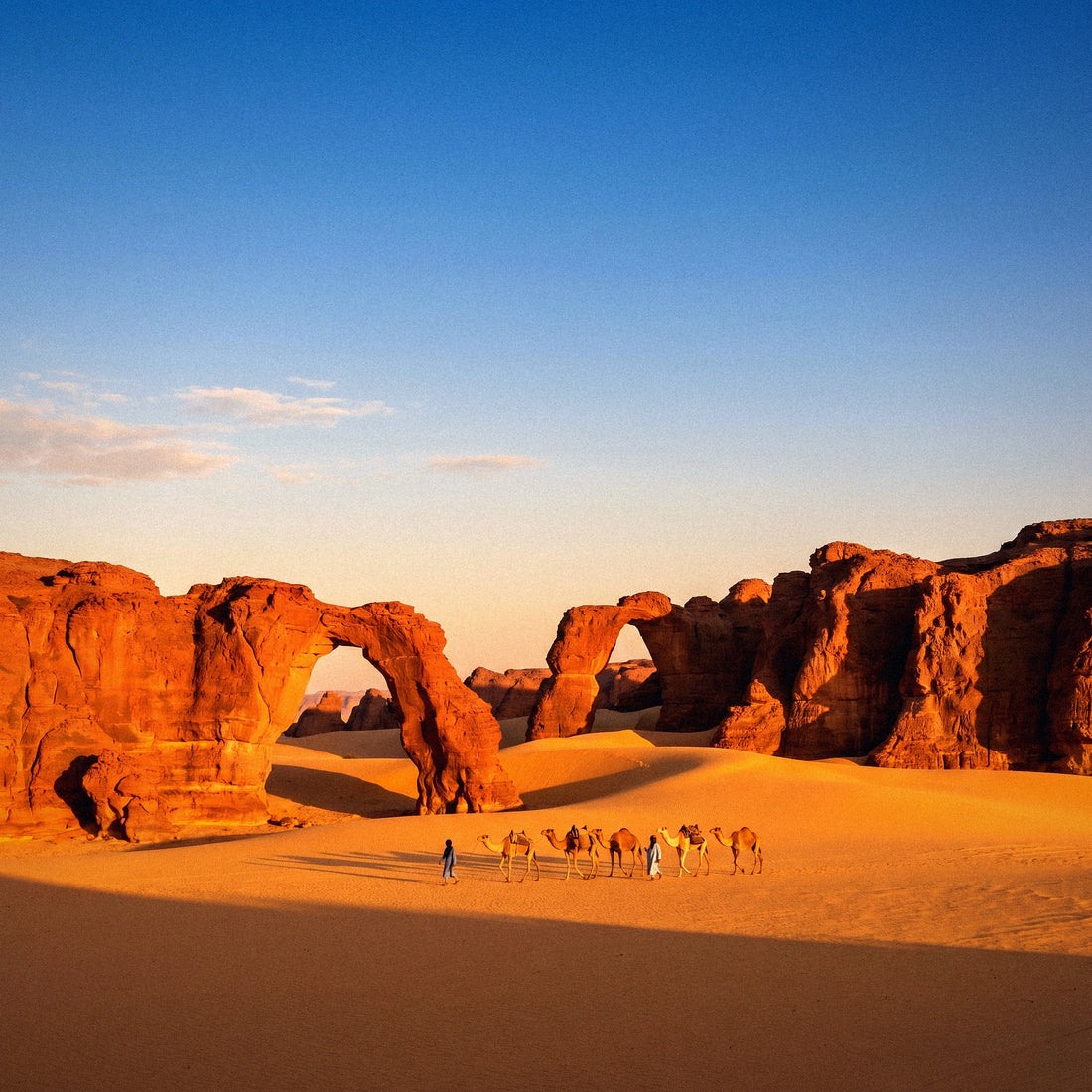
I want to make it crystal clear: in the Ennedi Massif and the Ounianga Lakes, both World Heritage Sites, you can spend weeks on an expedition with absolutely no mobile coverage. There, a satellite phone is not a luxury; it's the only thing that works. Zakouma National Park, a benchmark for high-end safari tourism, is equally sporadic with almost non-existent signal. Don't buy data thinking about those days: you won't use any there.
How much data each app uses
To put figures to your real consumption on the days you do have network, this is the reference. These are approximate but realistic figures of what each application consumes, measured per hour or per day of use:
| Activity | Approximate Consumption |
|---|---|
| Google Maps (navigation) | 3-5 MB per hour |
| WhatsApp (messages and photos) | 1-5 MB per day |
| WhatsApp voice call | 18-30 MB per hour |
| WhatsApp video call | 300-480 MB per hour |
| Social media (scroll, stories) | ~720 MB per hour |
| Uploading a photo | 2-5 MB per photo |
| Music streaming | 72-144 MB per hour |
| Video streaming (SD quality) | ~1 GB per hour |
Notice the order of magnitude: maps and text WhatsApp barely consume anything, while video and video calls skyrocket. In a destination like Chad, where the network also doesn't encourage video viewing, the bulk of your consumption will be messages, some calls, and email. If you want the details by app, you have the full breakdown in the mobile data usage statistics by activity. With these numbers in mind, the recommendation by profile in the next section is no longer a mystery.
Recommendation by profile and duration
This is the table you've been looking for. I've adjusted it to the reality of Chad, where many days there will be no network and therefore no consumption. These are honest and purposefully low figures: I'd rather you run a little short and top up than pay for gigabytes that coverage won't let you use.
| Profile | 5 days | 10 days | 15 days | 30 days |
|---|---|---|---|---|
| Tourist using maps and WhatsApp | 1 GB | 2 GB | 3 GB | 5 GB |
| Photo and social media user | 2 GB | 3 GB | 5 GB | 8 GB |
| Digital nomad / remote worker | 3 GB | 5 GB | 8 GB | 15 GB |
| Family sharing | 3 GB | 5 GB | 8 GB | 12 GB |
An important nuance for this destination: if your trip includes a long desert expedition, reduce these figures yourself. An aid worker or geologist who spends two weeks in the Ennedi and only three or four days connected in N'Djamena will consume less than a "map tourist" from the table, because most of the time they will be without a network. On the other hand, someone who stays working in the capital with daily video calls should look at the remote work row. Choose the row that resembles you and, if in doubt between two, stick with the smaller one: topping up takes just a minute.
How to calculate your own consumption
Don't just rely on a table: your phone already knows how much you spend. The most honest and reliable trick is to look at your own history before traveling and extrapolate. In ten minutes, you'll have your personal number, which is worth more than any average.
On Android, go to Settings, Network & internet, Data usage, and check your consumption for the last full month. On iPhone, go to Settings, Mobile Data, and check the current period (it's a good idea to reset the statistics at the beginning of the month to get clean data). Note down the GB for a normal month and do the math:
- Divide your monthly consumption by 30 to find your daily usage.
- Multiply it by the days you will be with coverage in Chad, not by the total days of your trip.
- Subtract the days of expedition without network: those don't count.
- Add a small 20% buffer just in case.
This calculation is especially useful here because it corrects the classic mistake: paying for the entire trip when in reality you will only consume data on a fraction of the days. Also keep in mind that at home you use a lot of video over Wi-Fi that you won't be playing in Chad, so your travel figure is usually much lower than your daily usage. With your real number and the profile table, the right package almost chooses itself.
How to stretch your data in Chad
With the network available, every MB counts. These are the adjustments that truly make a difference and allow you to make a small package last throughout your trip:
- Offline maps: download the N'Djamena area and your routes on Google Maps via Wi-Fi before you leave. Navigation will still work without data and without relying on coverage that doesn't exist outside the city.
- Lower video quality: if you watch anything, set it to SD. Switching from HD to standard definition can cut consumption by half or more.
- Backups only via Wi-Fi: disable automatic photo and video uploads to the cloud. This is the silent drain that consumes the most gigabytes.
- Disable auto-play for videos on social media and automatic file downloads on WhatsApp.
- Data saver mode: activate it on your system and within each app; it limits background consumption.
With these habits, a traveler using maps and WhatsApp can easily spend more than a week with 1 or 2 GB. You'll find more practical ideas in the guide on how to save data with your eSIM, and they all apply particularly well to a destination with a network as limited as Chad.
What happens if you run out
Here's my most unpopular and honest advice: in Chad, it's better to run short and top up than to buy too much. Buying a huge package "just in case" makes no sense when you'll spend days unable to use a single MB. Flexibility is worth more than size, and topping up takes minutes.
With an eSIM, if you see you're running low, you can add another package directly from your phone as soon as you have coverage, without changing anything physical or looking for a store. This allows you to start small and expand only if you really need it. Compare the two strategies:
| Strategy | Advantage | Risk |
|---|---|---|
| Buy just enough and top up | You don't overpay; you adapt to days with network | Topping up when you're out of coverage is not immediate |
| Buy too much | Total peace of mind | You pay for gigabytes that coverage won't let you use |
The only caveat: if your plan is to go on a long expedition without network for days, make sure your package and communication are sorted out beforehand, because once in the Ennedi, you won't be able to top up anything. For everything else, start small. If you want to understand why an eSIM gives you this freedom, take a look at what an eSIM is.
The special case: oil, NGOs, and expeditions
This deserves its own section because it represents the real profile of most people who travel to Chad. Almost everyone who goes there does so for humanitarian personnel, religious missions, the oil sector, or highly specialized desert expeditions. And each has a different data calculation than the classic tourist.
If you are an aid worker or missionary, your base is usually in N'Djamena or a city, with occasional Wi-Fi access in the office or residence. Your eSIM covers travel and communications when Wi-Fi fails: 3 to 5 GB per month is more than enough, because the bulk will be messages, email, and a few calls. If you work in the oil sector, many camps have their own satellite connectivity, so your eSIM consumption is reduced to transit through the capital.
And if you're on an expedition to the Ennedi, Ounianga, or a safari to Zakouma, I insist on the essential: don't buy data for those days. For weeks there will be no network, and a satellite phone will be your only link. Reserve your data package for your entry and exit days in N'Djamena, which is where you'll really use it. Once you have a clear number, check the specific options in the eSIM for Chad.
Frequently asked questions
The most common questions about how much data to bring to Chad, with direct answers:
How many GB do I need for 10 days in Chad?
For 10 days, 2 or 3 GB is more than enough for most people. Almost all of it will be consumed in N'Djamena; outside the capital, there's hardly any coverage, so you don't need a large package.
What about for a two-week desert expedition?
Less than 2 GB, and only for the transit days in the capital. In the Ennedi or Ounianga Lakes, there is no mobile coverage; only a satellite phone works there.
Is there 4G in Chad?
Yes, but concentrated in N'Djamena and major cities. Airtel and Moov offer 3G/4G in the capital and hubs like Moundou or Abéché; in the rest of the country, the signal is irregular or non-existent.
Is internet expensive in Chad?
Expensive relative to local income. The absolute price of 1 GB is affordable for a traveler, but it is one of the countries with the lowest internet penetration in the world, and data significantly impacts local budgets.
Do I need data in Zakouma National Park?
Don't count on it. Zakouma is high-end safari tourism that is very sporadic and with almost no coverage. Download maps and everything you need via Wi-Fi before entering.
Should I buy less and top up, or buy too much?
Buy less and top up. With an eSIM, you can add more data from your phone as soon as you have a network signal. Buying too much means paying for gigabytes that lack of coverage won't let you use.
Can I make WhatsApp calls without using much data?
Yes: a video call uses 300-480 MB per hour, but a voice call only uses 18-30 MB. If you're short on data, opt for voice calls and messages instead of video.
Is it safe to travel to Chad?
Always consult official Foreign Affairs recommendations. Border areas and Lake Chad are discouraged. Connectivity is just one detail within a planning process that should prioritize safety.
Conclusion
With Chad, the rule is simple and counter-intuitive: buy little. For most trips, 2 or 3 GB will more than cover the days you're connected in N'Djamena, and on desert expeditions, you won't use any data because, simply put, there's no network. Choose your row in the profile table, subtract the days without coverage, and start with a conservative amount: topping up from your phone is instant as soon as you get a signal again. First and foremost, always check official Foreign Affairs recommendations and remember that border areas and Lake Chad are discouraged. If you're clear on this, travel with just enough data and take the plunge with PuraSIM's eSIM for Chad, without overpaying.